
Notinhalloffame List Update: 251-275 on Football Revised
The problem with running a Hall of Fame-related website is that many of the big ones we cover all have announcements within months of each other. The backbone of what we do is list-related, resulting in a long push to revise what we already have, specifically now with our Football and Basketball Lists.
At present, we have a minor update as we have completed the next twenty-five of the 2024 Football List, which you can comment on and vote on:
The new 251 to 275:
251. Larry Brooks
252. Jon Morris
253. Ed Danowski
254. Dennis Harrah
255. Jim David
256. Ken Gray
257. William “Pudge” Heffelfinger
258. Jeff Van Note
259. Troy Vincent
260. Frankie Albert
261. Charles Follis
262. NaVorro Bowman
263. Jessie Armstead
264. Ray Wietcha
265. Clem Daniels
266. Henry Thomas
267. Josh Sitton
268. Randy Cross
269. Travis Frederick*
270. Bill Lee
271. James Farrior
272. Lawrence McCutcheon
273. Rich Saul
274. Chris Samuels
275. Bud McFadin
*Denotes First Year of Eligibility.
Rankings are impacted annually based on your comments and votes.
Thank you all for your patience. We will soon unveil more changes to the football and basketball lists.
289. Rich Saul
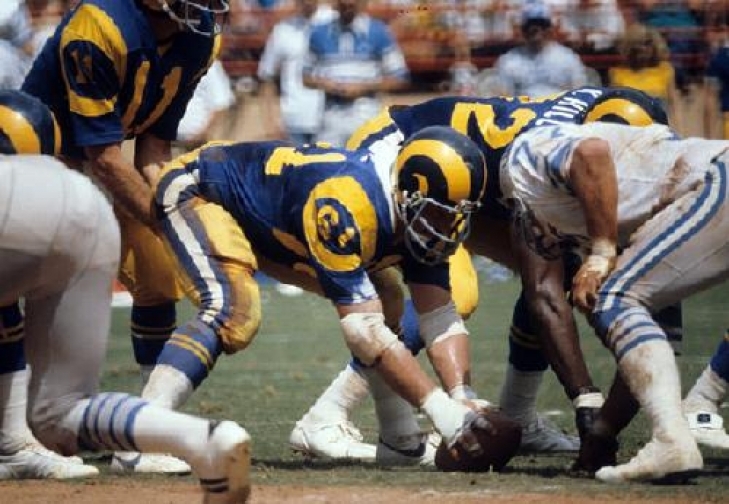
Rich Saul did not accomplish that much in the first half of his career, where he bounced around the Rams O-Line for the first five years, but there was definite value in the former Michigan State Spartan. Saul became the starting Center in 1975, and from 1976 to 1981, he made the Pro Bowl and was clearly among the upper echelon of Centers for the last half of the 70s. The Rams went to Super Bowl XIV, and he was part of the reason they succeeded during that time frame.
30. Rich Saul

Rich Saul arrived in Los Angeles as an eighth-round pick from Michigan State in 1970 and spent his first several seasons on the bench. He played special teams and backed up at multiple spots on the offensive line before winning the starting center job in 1975. Once he took over the position, he became a steady presence in the middle of the line. Saul was a smart, physical blocker who made the line calls and helped the Rams stay among the better rushing teams in the league.
Beginning in 1976, he earned a Pro Bowl selection every year through 1981, a six-year run that covered the peak of his career. Those teams won the NFC West repeatedly and reached Super Bowl XIV after the 1979 season. Saul started at center in that game against Pittsburgh and played on an offensive line that included other longtime Rams such as Tom Mack, Dennis Harrah, and Jackie Slater. In 1980, he earned Second-Team All-Pro honors while the Rams continued to contend. He was known for his quickness off the ball and his ability to execute cut blocks in the run game.
Saul remained the starter through the 1981 season even as the Rams began to slip from their earlier form. He played in every game that year and closed out his career after a 6-10 finish. In his 12 NFL campaigns, he appeared in 176 games and started 106, a stretch of durability that included consecutive regular-season appearances for most of his time in Los Angeles.
He retired after 1981. With the Rams, he finished as a six-time Pro Bowl center who helped the franchise reach the Super Bowl and remain competitive throughout the late 1970s and early 1980s. His consistency at the position and the recognition he earned over those six seasons marked him as one of the more reliable interior linemen of his era.
Saul later remained connected to the game in the Los Angeles area. He is remembered as the center who anchored the Rams’ line during one of the more successful stretches in franchise history.
