
Michigan State names it 2026 Hall of Fame Class
Regular visitors of notinhalloffame.com know that we are slowly working on the top 50 of every major team in the NHL, NBA, NFL, and MLB. Once that is done, we will examine how each team honors its past players, coaches, and executives. Eventually, we will do the same with major college programs. As such, it is important to us that Michigan State has announced the six players and a coach that will be inducted into its Athletic Hall of Fame Class of 2026.
The event will take place on September 11, with the inductees being honored the following day during the football game against Eastern Michigan.
The Class of 2026 members are:
Lindsay Bowen, Women’s Basketball, 2002-06. Bowen was a four-time Big Ten Selection and the 2003 Big Ten Freshman of the Year. She recorded 1,739 Points as a Spartan.
Dan Currie, Football, 1955-57. Currie helped take Michigan State to National Championships in 1955 and 1957 and in ’57 was a Consensus All-American. He also helped take MSU to a Rose Bowl win in 1956. He played nine seasons in the NFL, seven of which were in Green Bay, where he helped the team win two NFL Championships.
Walt Drenth, Track & Field Coach, 2000-20. Drenth led the women’s track team to five cross country conference titles and the 2014 National Championship. He was also a six-time Big Ten Coach of the Year, and his athletes won two individual NCAA Titles and 37 Big Ten Titles.
Tico Duckett, Football & Men’s Track & Field, 1989-92. Playing at Running Back, Duckett rushed for 4,176 Yards and 26 TDs, his best season coming in 1990, when he rushed for a conference-leading 1,394 Yards. For his efforts, he was named the Big Ten Offensive Player of the Year. Duckett also competed for the Spartans in the 55-m and 100-m dash.
Sue Latter-Addison, Women’s Track & Field, 1975-78. A pioneer in school history, Latter-Addison was part of the inaugural women’s track team and later would win the 44-yard and 88-yard Big Ten Titles, while also helping the Spartans win the conference title. She later won the National Title in the 800.
Kalin Lucas, Men’s Basketball, 2007-11. Playing at Point Guard, Lucas was the 2009 Big Ten Player of the Year and guided the Spartans to the National Championship Game against North Carolina and back to the Final Four a year later. The two-time First Team All-Big Ten Selection had 1,996 Points, which is enough for fifth all-time in program history. Lucas went on to play professionally for 14 years in countries such as Greece, Turkey, Israel, Serbia, Italy, Kuwait, and the UAE. He also played one game each for the Memphis Grizzlies and the Detroit Pistons in the NBA.
Leah O’Connor-Falland, Women’s Cross Country & Track Field, 2011-15. O’Connor-Falland won two National Championships, the 2014 Outdoor Steeplechase and 2015 Indoor Mile. She also helped Michigan State win the 2014 National Championship.
We here at Notinhalloffame.com would like to congratulate the impending members of the Michigan State University Athletic Hall of Fame.
289. Rich Saul
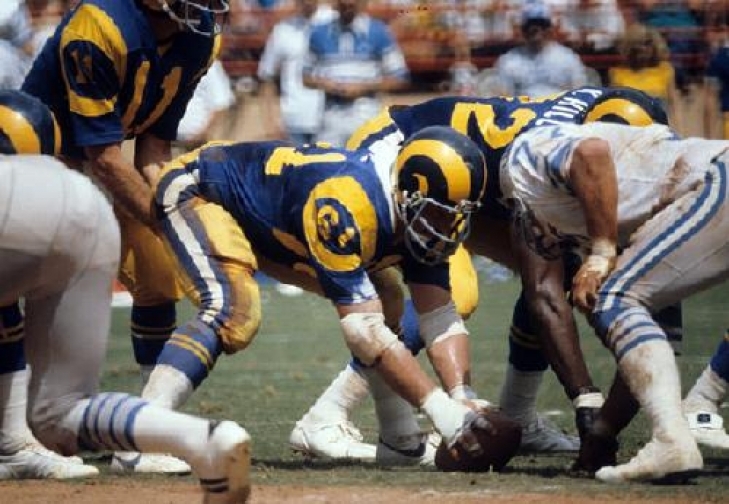
Rich Saul did not accomplish that much in the first half of his career, where he bounced around the Rams O-Line for the first five years, but there was definite value in the former Michigan State Spartan. Saul became the starting Center in 1975, and from 1976 to 1981, he made the Pro Bowl and was clearly among the upper echelon of Centers for the last half of the 70s. The Rams went to Super Bowl XIV, and he was part of the reason they succeeded during that time frame.
309. Fred Arbanas
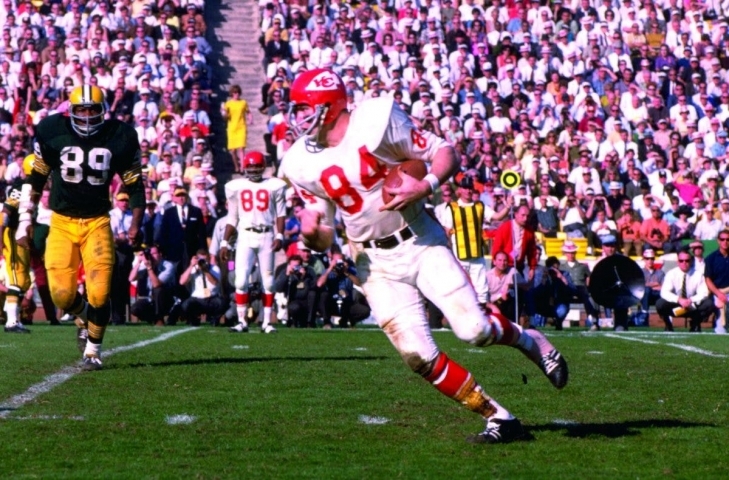
Like many in the early '60s, Fred Arbanas was drafted by both the NFL and the AFL, but usually, those who chose the AFL were drafted higher by the new organization. This wasn't the case with Arbanas, who was a 7th Round Selection by the Dallas Texans, where the St. Louis Cardinals in the 2nd Round.
No matter, as Arbanas would go on to the All-AFL Team at Tight End. He was an AFL All-Star as a rookie, and with the Texans, he helped them win the Championship, but the organization relocated to Kansas City, where it was rechristened the Chiefs. Arbanas continued his elite status at TE, earning four more AFL All-Star selections and three First Team All-Pro honors(1963, 1964 & 1966). He helped Kansas City win the AFL title in 1966 and 1969, the latter when he won his only Super Bowl Ring (IV).
Arbanas retired after 1970, recording 3,101 Yards and 34 Touchdowns, both high numbers for someone who played his position in the 1960s.
241. Carl Banks
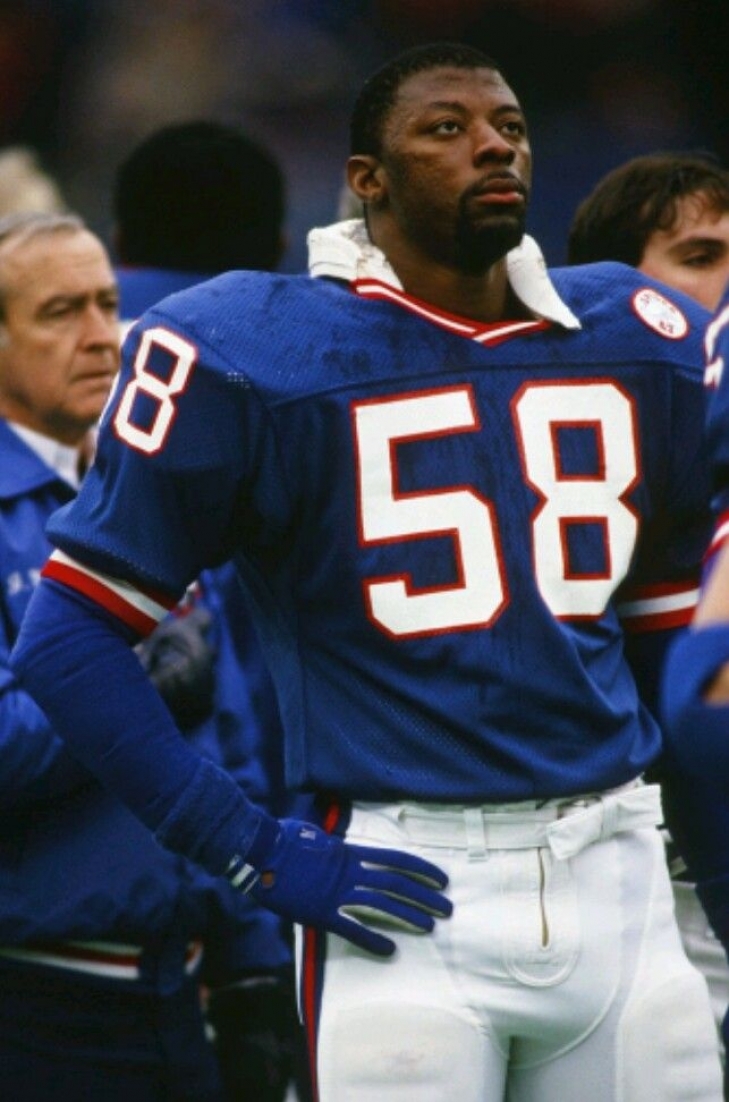
Drafted 3rd Overall in 1984 from Michigan State, the New York Giants would have a longtime fixture in their Linebacking corps in Carl Banks. Banks was an All-Rookie Selection, and he later earned Pro Bowl honors and First Team All-Pro honors in 1987, the year after he played a major role in their Super Bowl XXI win. Banks would again hoist the Lombardi Trophy high four years later in Super Bowl XXV.
Banks may have been only chosen for one Pro Bowl, but he was easily in contention for many others. A master at closing in on Tight Ends and eliminating them from plays, he was named to the 1980s All-Decade Second Team. Banks finished his career with Washington and later the Cleveland Browns.
252. George Saimes
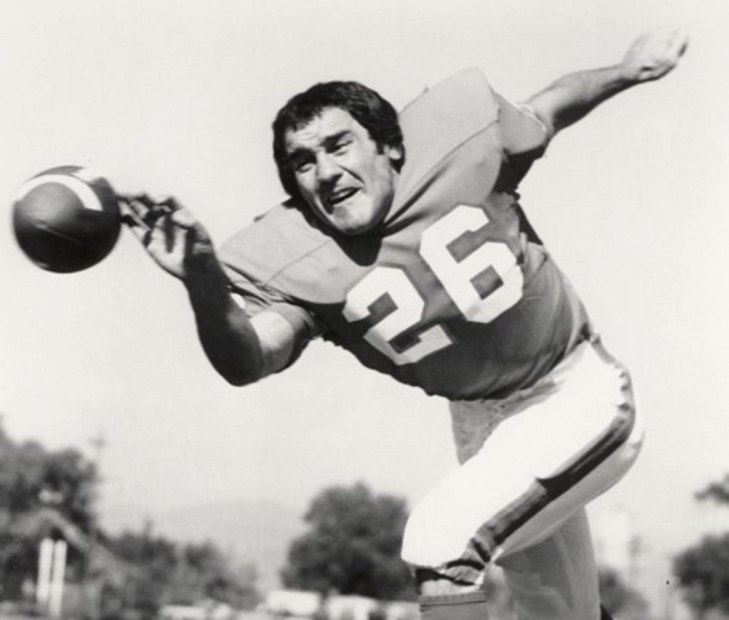
Born (and died) in the most football-like city on this planet, Earth (Canton, Ohio), George Saimes would sign with the Buffalo Bills in 1963 after playing collegiately at Michigan State.
Saimes wasted no time securing a starting Defensive Back job with Buffalo, and in his second season, he earned the first of three First All-Pro Selections (the others coming in 1965 and 1967). In 1964, Saimes also began a five-year streak of AFL All-Star Selections, though he treasured more that he and the Buffalo Bills won the AFL Championship that season and the year after.
Saimes would play for the Bills until 1969 and joined the Denver Broncos for three years after. He is a member of the AFL All-Time Team.
Writers of his day called him one of the best open-field tacklers, a skill that never goes out of style!
297. Ray Wietecha
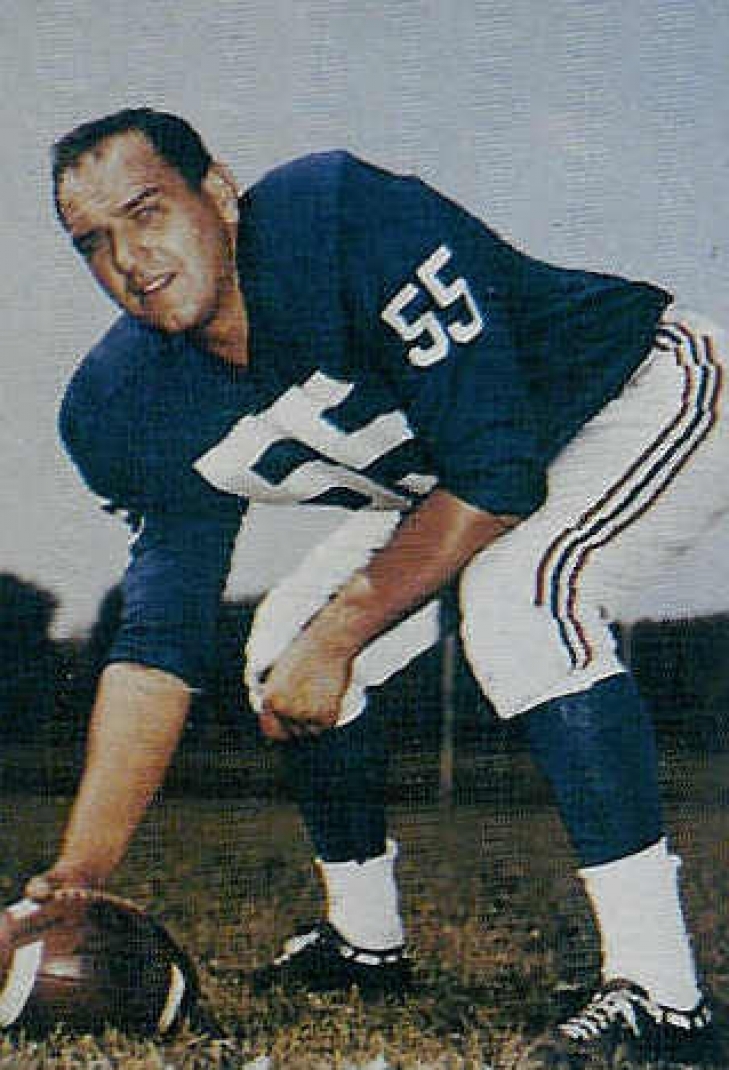
Ray Wietecha played his entire 10-year NFL career with the New York Giants, where he was the literal centerpiece (he played Center) of a robust Offensive Line. Helping the G-Men win an NFL Championship in 1956, Wietecha had strong individual seasons, earning four Pro Bowls and a First Team All-Pro nod. In his last season (1962), he was named a Second Team All-Pro and arguably could have continued his playing career, but he elected to become a coach instead.
He would later win two Super Bowl Rings under the legendary Vince Lombardi as the Green Bay Packers Offensive Coordinator.
213. Andre Rison
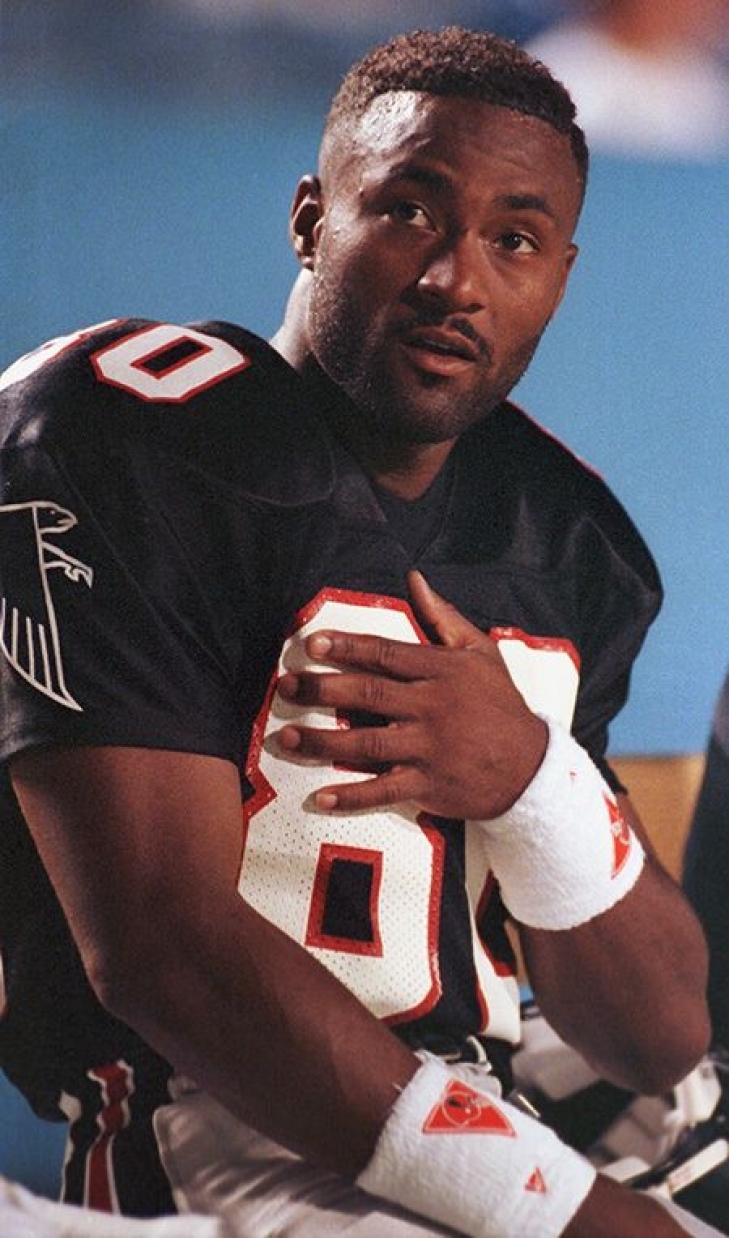
While it can be argued that Andre “Bad Moon” Rison will always be best known for his tumultuous relationship with Lisa “Left Eye” Lopes (she infamously burned his house down), we here at Notinhalloffame.com think of Rison as a flashy Wide Receiver who backed up his smack talk.
Rison had a good rookie season for the Indianapolis Colts, where he was named to the All-Rookie Team with an 820 Yard year. That was his only year in Indianapolis, as he was traded to the Atlanta Falcons for the first overall pick in the next draft. The Colts chose Jeff George, who flamed out as an NFL Quarterback, but Rison's best days as a Wide Receiver were set to begin.
Rison went to four straight Pro Bowls with Atlanta, and the first saw him named a First Team All-Pro. Rison spent four years with Atlanta, accumulating over 1,000 Yards and posting four seasons with ten-plus touchdowns, including a 15-TD year that saw him lead the NFL. He signed with the Cleveland Browns as a Free Agent, but he declined, bouncing to four other teams (Green Bay, Jacksonville, Kansas City, and Oakland). One of those seasons in Kansas City saw him generate a fifth Pro Bowl and fifth 1,000-yard season in the NFL.
Rison likely could have played longer in the NFL, but he was viewed as too dramatic for the return. He played two more years in the CFL with the Toronto Argonauts and won a Grey Cup there.
58. Ed Budde
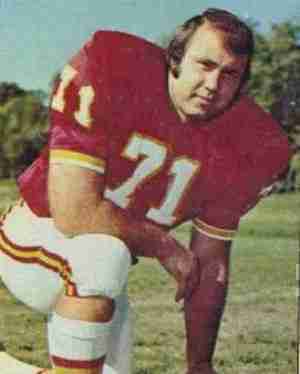
Len Dawson was one of the great quarterbacks in the American Football League, but a big reason he could do what he did was that Ed Budde helped him stay upright.
As the Left Guard during the first good run of the Kansas City Chiefs, Ed Budde was a punishing blocker who captained the Chiefs’ O-line. He was a multiple-time AFL All-Star and later earned two Pro Bowl selections. Powerful and agile, Budde helped Dawson and company win Super Bowl IV and was considered one of the best linemen in the AFL. He has a spot in the Kansas City Chiefs Hall of Fame, but without a previous nomination to the Football Hall of Fame, the trip from Kansas City to Canton seems long.
Should Ed Buddle be in the Hall of Fame?
245. Derrick Mason
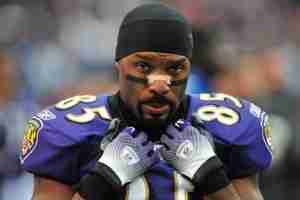
Although Derrick Mason produced strong career statistics and had multiple seasons tabulating over 1,000 Receiving Yards, it is hard to make a strong case for Mason to receive a Hall of Fame induction. Mason was the star receiver for both Tennessee and Baltimore, though he played in an era when the game opened up, and stars were perceived as superior at Wide Receiver. Only earning a trip to the Pro Bowl twice and one All-Pro Selection reflects that fact, though that was primarily from his Punt and Kick Returning. Still, that was the season (2000) in which he led the NFL in All-Purpose Yards.
319. Julian Peterson