

The University of Florida names its 2026 Athletic Hall of Fame Class

Regular visitors of notinhalloffame.com know that we are slowly working on the top 50 of every major team in the NHL, NBA, NFL, and MLB. Once that is done, we will examine how each team honors its past players, coaches, and executives. Eventually, we will do the same with major college programs. As such, it is important to us that the University of Florida has announced the eight names who will be part of their Athletic Hall of Fame.
The event will take place on October 9, prior to their home game against South Carolina.
The Class of 2026 members are:
Dedric Dukes, Men’s Track & Field, 2012-15. Dukes won five NCAA Championships as a Gator (2014 200m, and two 4x100 relay and two 4x400 teams). He was a 17-time All-American.
Vernon Hargreaves, Football, 2013-15. In 2015, Hargreaves was an All-American cornerback and a three-time All-SEC Selection. Over his career, he had 10 Interceptions and 121 Combined Tackles, and in his All-American Junior season, he was a Finalist for the Jim Thorpe Award and went on to the NFL, where he played six seasons with the Tampa Bay Buccaneers, Houston Texans, and Cincinnati Bengals.
Vernon Maxwell, Men’s Basketball, 1984-88. Maxwell is still the all-time scoring leader in Gators history, having scored 2,450 points in 120 Games. He was a three-time All-SEC Selection who took Florida to its first two NCAA Tournaments in program history. Maxwell would play 13 seasons in the NBA, most notably winning two NBA Championships with the Houston Rockets.
Mike Meagher, Women’s Lacrosse, 2010-13. Meagher joined Florida for their inaugural program, where she was named the 2012 and 2013 Ensign C. Markland Award as the nation’s top Goalkeeper.
Andrew Moten, Men’s Basketball, 1983-87. Moten scored 1,930 Points with the Gators and, along with Maxwell (his fellow M&M boys partner), helped the school reach its first NCAA Tournament. He averaged 15.4 Points per Game for Florida and was a three-time SEC Selection. He was drafted by the New Jersey Nets, but did not make the team, though he did play professionally in leagues in Venezuela and Brazil.
Logan Shore, Baseball, 2014-16. Shore played three seasons with the Gators, peaking in his junior year, when he was the SEC Pitcher of the Year and Golden Spikes Finalist. He had 30 wins, 248 strikeouts and a 2.41 ERA for the school. He was a second-round pick by the Minnesota Twins and made it as high as Triple-A Toledo of the Detroit Tigers in 2021.
Bridget Sloan, Women’s Gymnastics, 2013-16. Before she competed for Florida, Sloan already had an Olympic Silver Medal for the United States in Team Competition and won all-around gold at the 2009 World Championship. With Florida, she won a staggering nine NCAA World Championships, striking Gold in the 2013 and 2016 All-Around, the 2013, 2014 & 2015 Team Competition, 2013 & 2015 Balance Beam, and in the 2014 and 2016 Uneven Bars. Sloan also won the coveted Honda Sports Award in 2013 and 2016.
Kelsey Stewart, Softball, 2013-16. Stewart led the Gators to a Women’s College World Series Championship in 2014 and 2015, and would overall collect 557 Hits with a .391 Batting Average.
We here at Notinhalloffame.com would like to congratulate the impending members of the University of Florida Athletic Hall of Fame.
161. Cam Newton
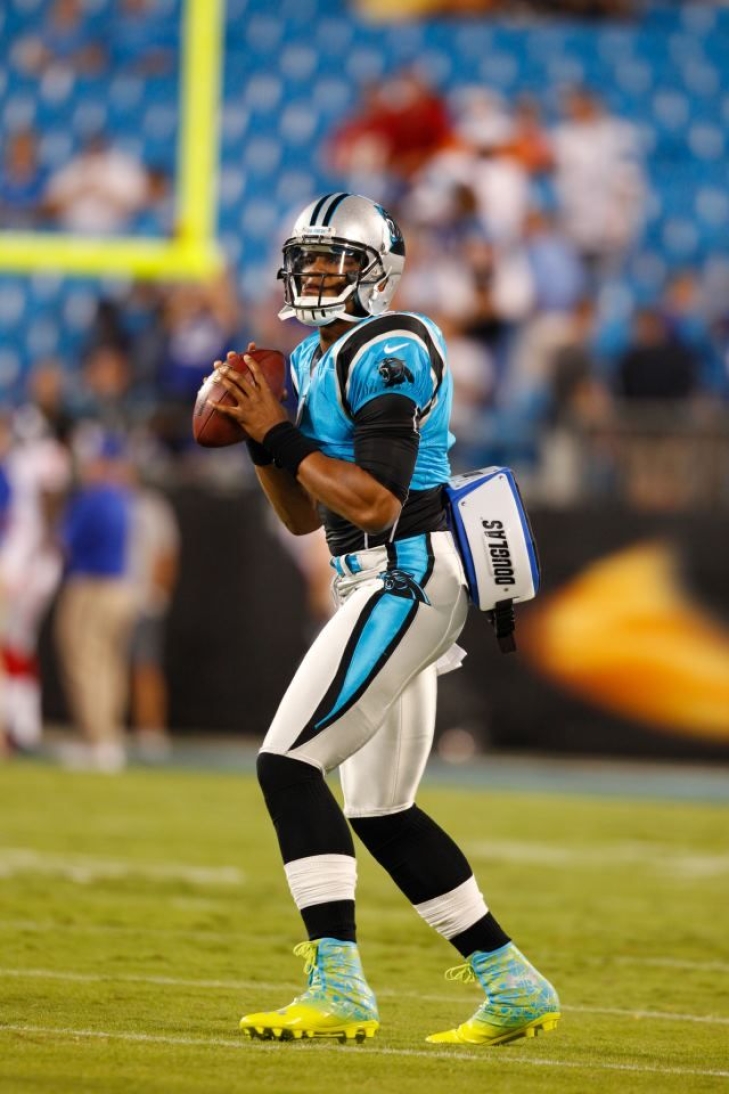
Cam Newton turned his college career around after flaming out at the University of Florida and avoiding expulsion. Transferring to small Blinn College, Newton started that season (2009) and led the school to a NJCAA National Championship. Newton then joined Auburn and put forth one of the best seasons in Tigers history. He dominated as a passer and runner and led Auburn to a BCS Championship and won the Heisman. NFL teams were gushing over his ability, and the Carolina Panthers, who held the number one pick, grabbed him.
Newton looked like a potential Hall of Fame inductee for the first five years of his career. He swept all the Offensive Rookie of the Year Awards and threw for over 4,000 Yards, which was his career-high. Though his 21-17 TD-INT ratio was pedestrian, he more than made up for it with 14 TDs on the ground. This was his first Pro Bowl year.
After a solid sophomore season, Newton went to his second Pro Bowl in 2013 and took Carolina to the Playoffs. He (and the team) struggled in 2014, as Newton battled injuries, but in 2015, Newton had the pro season of his life. He earned the “Superman” nickname, going 15-1, with 3,837 Passing Yards and a league-leading TD-INT ratio of 7.1 (35-10) and rushed for another 10 Touchdowns. Newton won the MVP but had the ultimate prize ahead of him: Super Bowl 50.
Newton and the Panthers fell to the Denver Broncos 24-10, and Newton did not have a good game, throwing an interception and fumbling twice. The second fumble, which was in the fourth quarter, was the second time that Denver’s Von Miller got to him, and these events happen to every great QB. Newton was destroyed in public perception because of his perceived lack of effort in not diving to recover the ball and how he walked away from the postgame press conference. Sadly, this is what he is mainly known for.
In the years that followed, Newton’s large frame began to accumulate injuries. After a rotator cuff injury in 2017, it was clear that he was not the same thrower, though his legs were still powerful. Newton’s passing numbers continued to decrease, and his season was shut down after 14 Games due to more shoulder problems in 2018. He only played in two Games in 2019 due to a foot injury. Newton was given permission to seek a trade, but when suitors came, the team released him. He signed with New England for 2020, where he was their starter. Newton rushed for 12 TDs but only threw for 8. He was released the following season during training camp and signed again with Carolina but lost all five starts. That was the end of Cam Newton’s playing career.
Newton compiled overall numbers of 32,382 Yards, and 194 Touchdown Passes, with 5,628 Rushing Yards and 75 Touchdowns. That last number is the key to any Hall of Fame shot, as those TDs on the ground are better than many HOF Running Backs.
45. Maurkice Pouncey
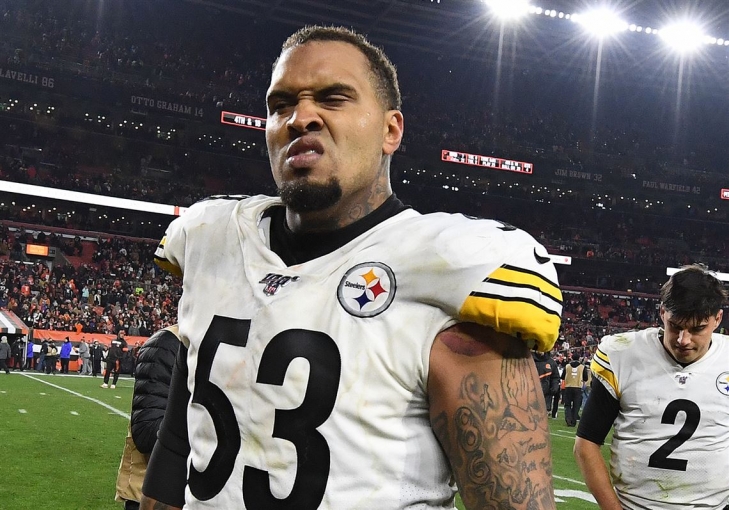
Along with his twin brother Mike, Maurkice Pouncey was a star Offensive Lineman, who helped the Florida Gators win the National Championship in 2009. Pouncey, an All-American, was selected 18th Overall in 2010 by the Pittsburgh Steelers, where he played center for 11 years.
Pouncey proved to be one of the top Centers of the 2010s, winning All-Decade honors with three First Team All-Pros. Protecting Ben Roethlisberger and opening holes for Steelers runners, Pouncey was also chosen for nine Pro Bowls.
Pouncey retired after the 2020 season, alongside his brother, though it is Maurkice who clearly has the far better Hall of Fame chance of the two.
135. Fred Taylor
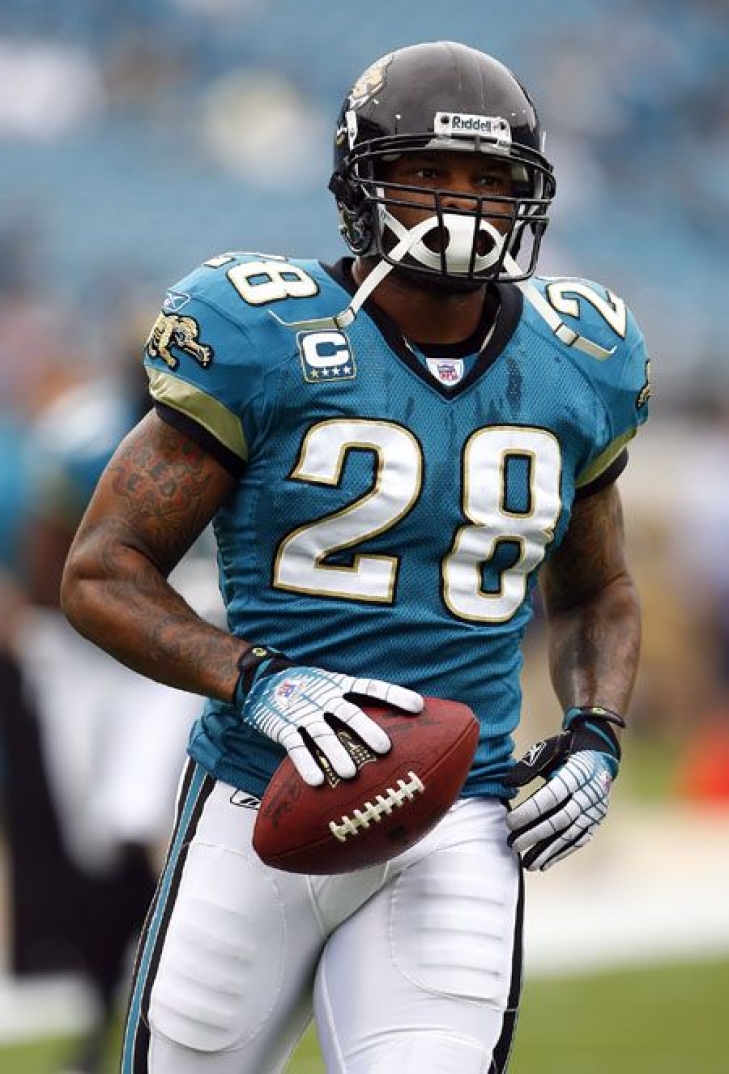
When you think of the state of Florida and the game of football, Fred Taylor is one of those names that should come up in the conversation. He is from the state; he played his college ball at the University of Florida (where he helped them win the National Championship), and he played professionally for the Jacksonville Jaguars for the first 11 years of his career.
Taylor made the All-Rookie team with a career-high 14 Rushing Touchdowns and 1,223 Yards on the ground, and provided he was healthy, he was going to get you at least 1,000 Rushing Yards. He did that six more times in his career, peaking at 1,572 in 2003 and earning a Pro Bowl in 2007. He played with the Jags until 2008, then finished his career in New England for two years. He retired with 11,695 Rushing Yards.
While Taylor never finished higher than sixth in Rushing Yards in a season, he was in the top ten in Yards per Attempt eight times, which is an impressive feat indeed.
133. Lomas Brown
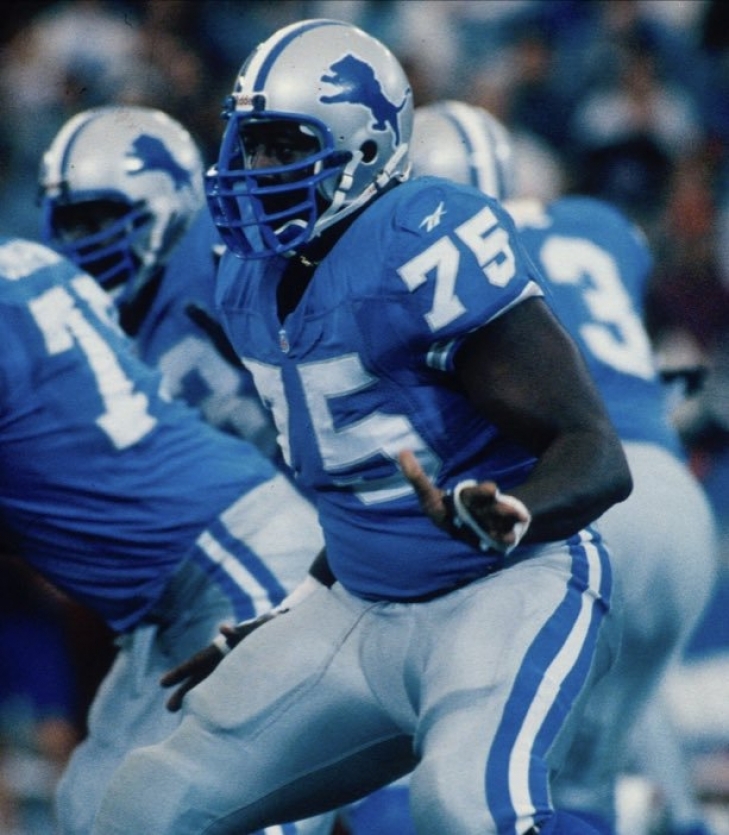
Lomas Brown played his first eleven seasons with the Detroit Lions, where his first six of seven Pro Bowls would take place. The Left Tackle would appear in seven straight Pro Bowls and would start in 251 of his 263 career games.
At the end of his career, he would assist the Tampa Bay Buccaneers in winning their first Super Bowl.
Although he is a seven-time Pro Bowler, Brown did six of those for a Lions team that was average at best and didn't get much national attention. Perhaps that is why he is so under the radar, given his accomplishments.
116. Wilber Marshall
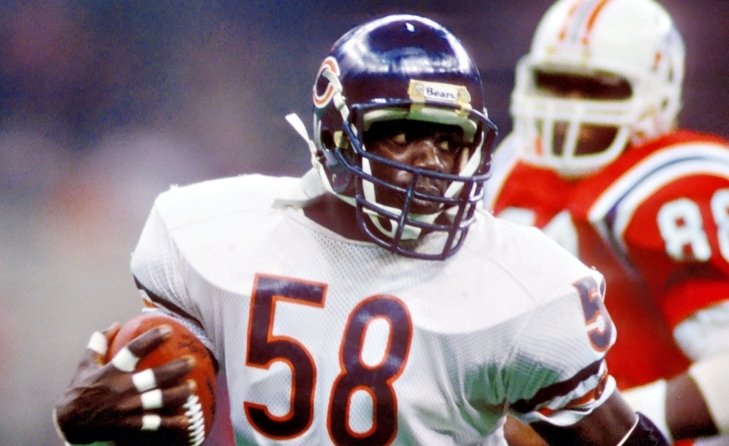
There was a time when a case could be made that Wilber Marshall was the best Linebacker in football. In 1985, he was a member of the most dominant team of the decade, the Super Bowl XX Champion Chicago Bears. The year after, he was a First Team All-Pro, led the league in Approximate Value (23), and was a Pro Bowler for the first time. Marshall was overshadowed by some of his teammates (William Perry & Richard Dent), but those in the know saw Marshall as one of the most versatile outside linebackers in the NFL.
Marshall would later join the Washington Redskins, and he was a significant cog in their dominant defense. Winning Super Bowl XXVI, Marshall was a First Team All-Pro the season after and was the NFC Defensive Player of the Year. He finished his career with a season in Houston, Arizona, and the New York Jets.
125. Rick Casares
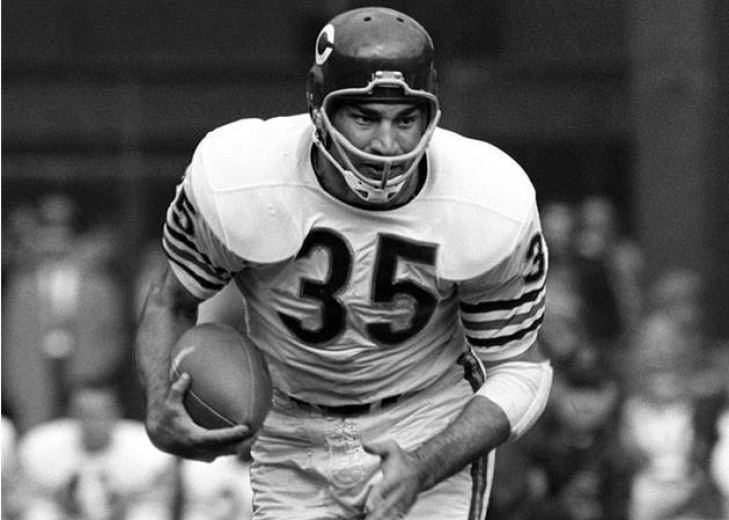
Rick Casares was drafted in the 2nd Round by George Halas' Chicago Bears in 1954, and after he served a year in the military, he became one of the elite Fullbacks of the National Football League. Casares was a straightforward rusher who finished in the top ten in Rushing Yards in his first six seasons (1955-60), the first five of which would garner him a Pro Bowl Selection. Casares' best season by far was in 1956, when he led the league in Rushing Yards (1,126) and Rushing Touchdowns (12) and took the team to the NFL Championship Game, though they were destroyed by the New York Giants.
Casares would win that title in 1963, though he was not a star player at the time. He would finish his career with a season each in Washington and Miami.
