

9. Michael Irvin
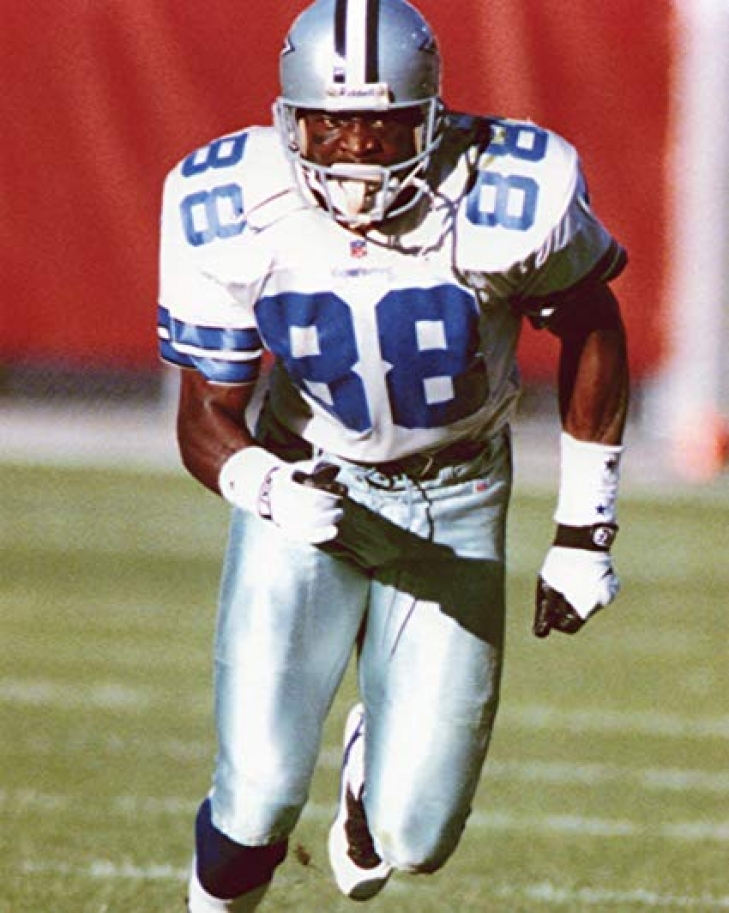
Arriving in Dallas as the 11th overall pick in 1988, the former Miami Hurricane brought an uncompromising swagger and physical dominance to a franchise on the brink of transformation. Long before Troy Aikman and Emmitt Smith joined the fold, Michael Irvin set the culture, using his frame, ferocious competitive edge, and elite hand-fighting at the line of scrimmage to establish himself as the team’s emotional engine.
"The Playmaker" exploded onto the national stage in 1991, putting together a breakout campaign that signaled the dawn of a new dynasty. Irvin led the NFL with 1,523 receiving yards on 93 catches, averaging an extraordinary 16.4 yards per reception and earning First-Team All-Pro honors. That dominant year launched a historic five-year run of Pro Bowl selections from 1991 through 1995. During this peak stretch, Irvin was utterly unshakable, clearing 1,200 receiving yards in each of those five seasons—highlighted by a monster 1995 campaign in which he set career highs with 111 receptions, 1,603 receiving yards, and 10 touchdowns.
Beyond his eye-popping individual numbers, Irvin possessed a rare ability to dictate the physical tempo of an entire game from the receiver position. He turned the slant route into an unstoppable art form, routinely taking violent hits across the middle of the field, only to pop back up and flex in the face of opposing secondaries. His relentless work ethic in practice became legendary throughout the organization, pushing Aikman and the rest of the roster to match his standard of perfection every day.
When the postseason was at its most intense, Irvin boosted his performance to legendary levels. He was a crucial high-pressure weapon during the Cowboys' journey to three Super Bowl victories (XXVII, XXVIII, and XXX), often beating single coverage on important third downs. In 16 playoff games, Irvin recorded 87 receptions for 1,315 yards and eight touchdowns, notably scoring two vital touchdowns in Super Bowl XXVII that significantly widened the game's margin against Buffalo. He also achieved two more 1,000-yard seasons in 1997 and 1998, showing his continued effectiveness as a prolific outside receiver.
A sudden spinal cord injury sustained on the Philadelphia turf early in the 1999 season brought his playing career to a premature end at age 33. Over 12 seasons in Dallas (1988–1999), Irvin played 159 games, with 750 receptions, 11,904 yards, and 65 touchdowns. He was enshrined in the Cowboys Ring of Honor in 2005 and the Pro Football Hall of Fame in 2007.
7. Troy Aikman
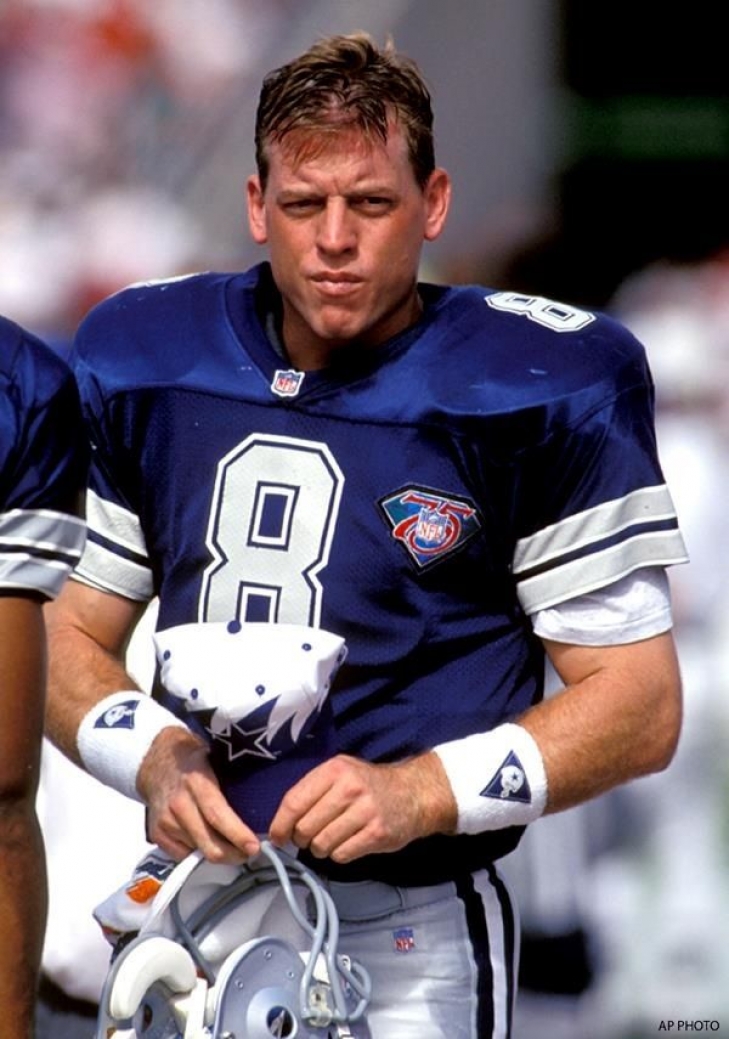
The Dallas Cowboys held the first overall selection in 1989, and it was widely anticipated that Troy Aikman, the Consensus All-American and Heisman finalist, would be the chosen player. Troy Aikman joined North Texas as the foundational element of head coach Jimmy Johnson's reconstruction. During his twelve-season career exclusively with the Dallas Cowboys, Aikman evolved into an elite quarterback in significant contests, employing exceptional accuracy and unwavering composure in the pocket to lead the most prominent dynasty of the 1990s.
Aikman had a classic quarterback’s build, a quick and reliable throwing style, and outstanding ball placement. Instead of focusing on flashy, high-volume stats, he was particularly skilled at reading defenses under intense pressure. Working within Norv Turner’s offensive system that emphasized sustained drives, Aikman threw precise middle-range passes through tight coverage, helping playmakers like Michael Irvin, Jay Novacek, and Emmitt Smith gain extra yards after catching the ball while keeping mistakes to a minimum.
What made Aikman truly formidable was his unwavering mechanical discipline and textbook footwork inside a collapsing pocket. He rarely made a mental mistake, executing play-action fakes with surgical timing that froze linebackers and opened massive passing lanes. When games hung in the balance, Aikman elevated his performance; during Dallas's championship run, his accuracy on third-and-long conversions set the gold standard for NFL quarterbacks.
Aikman experienced a challenging rookie season in 1989, with a record of 0-11 as a starting quarterback for a 1-15 team. He promptly improved, contributing to Dallas's resurgence to relevance in 1991 and subsequently leading the team to sustained dominance in 1992. During that season, he amassed 3,445 passing yards and 23 touchdowns, culminating in an outstanding MVP performance at Super Bowl XXVII, where he recorded 273 passing yards and four touchdowns in a decisive 52–17 victory over Buffalo.
Following his breakout in 1992, Aikman delivered another esteemed postseason performance in 1993, overcoming a concussion sustained midseason to achieve a passer rating of 106.8 during the playoffs. He concluded this successful run with a second consecutive Lombardi Trophy victory over Buffalo, while leading the NFL with a 69.1% completion percentage. The 1994 season was characterized by Aikman’s ongoing injuries, yet he nonetheless secured his fourth consecutive Pro Bowl selection and guided Dallas back to the NFC Championship Game. In 1995, under the guidance of head coach Barry Switzer, Aikman recorded a career-high 3,304 passing yards during the regular season, skillfully navigating locker room turbulence to lead his team to a 27–17 victory over Pittsburgh in Super Bowl XXX. He thereby became the first quarterback in NFL history to win three Super Bowls within a four-year span.
As the decade drew to a close, Aikman remained a steadfast presence, carrying the weight of a changing franchise. Despite challenges like a struggling offensive line and ongoing health concerns, he continued to impress. In 1996, he earned his sixth straight Pro Bowl selection, throwing for 3,126 yards, and in 1997, he surpassed 3,000 yards again, marking his fourth time in five years. Even as injuries like back problems and concussions accumulated—leading to his retirement after the 2000 season as a dedicated "Lifer"—Aikman's resilience and sharp pre-snap reads kept him at the top of his game until his final play under center.
Transitioning seamlessly from the pocket to the booth, Aikman forged a premier second career as an Emmy-nominated lead color analyst, serving as the voice of NFL marquee matchups on FOX for two decades before taking over ESPN's Monday Night Football booth in 2022.
When Aikman hung up his cleats, he held virtually every franchise passing record, finishing with 32,942 yards and 165 touchdowns across 165 games. His postseason legacy remains historic: in 16 career playoff starts, he posted an 11-5 record, completing 63.7% of his passes with 23 touchdowns against just 11 interceptions.
In 2005, Aikman was inducted into the Dallas Cowboys Ring of Honor alongside his longtime dynasty brothers, Emmitt Smith and Michael Irvin. In 2006, during his first year of eligibility, Aikman was enshrined in the Pro Football Hall of Fame.
12. DeMarcus Ware
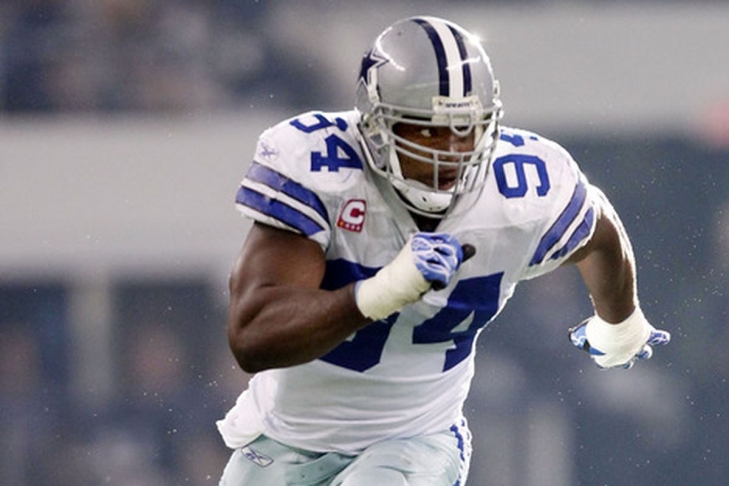
Plucked from tiny Troy University with the 11th overall pick in 2005, the explosive edge rusher made a seamless transition to outside linebacker in Bill Parcells' 3-4 defense. DeMarcus Ware immediately proved that his elite traits translated to the pro level, posting an eight-sack rookie year that set the stage for one of the most dominant pass-rushing runs in modern NFL history.
His major breakthrough came in his second season in 2006, when he recorded 11.5 sacks and three forced fumbles. This performance began an impressive run of seven straight Pro Bowl selections from 2006 to 2012, a period during which Ware dominated opposing tackles with a lethal mix of quick dip-and-bend speed and leverage-driven strength.
During this incredible run of elite play, Ware earned First-Team All-Pro honors four times (2007, 2008, 2009, and 2011) and claimed two NFL sack titles. His finest individual campaign came in 2008, when he recorded a monster 20.0-sack effort, forced six fumbles, and led the league with 27 tackles for loss. He paced the NFL in sacks again in 2010 with 15.5 takedowns, ultimately topping the league in tackles for loss three times (2008, 2010, and 2011) as the undeniable centerpiece of the Dallas defense.
Beyond those sack titles, Ware nearly achieved a third in 2011 with 19.5 sacks, marking his second season with at least 19 takedowns—an accomplishment achieved by only a few pass rushers in league history. He earned a spot on the NFL 2000s All-Decade Team and received two Butkus Awards as the top linebacker of the pro game, regularly disrupting opposing strategies with consistent double-digit sacks and 32 forced fumbles in Dallas.
Cap's injuries forced his release after an injury-hampered 2013 season, prompting Ware to join the Denver Broncos. He earned two more Pro Bowl nods in Colorado and served as a crucial veteran leader alongside Von Miller, capping his playing career with a Super Bowl 50 victory before retiring with 138.5 total career sacks.
In his nine seasons in Dallas (2005–2013), Ware played in 141 games, compiling 117.0 sacks and 32 forced fumbles, and left as the organization's all-time leader in quarterback takedowns. The Cowboys inducted him into the Ring of Honor in 2023, complementing his official entry into the Pro Football Hall of Fame.
6. Tony Dorsett
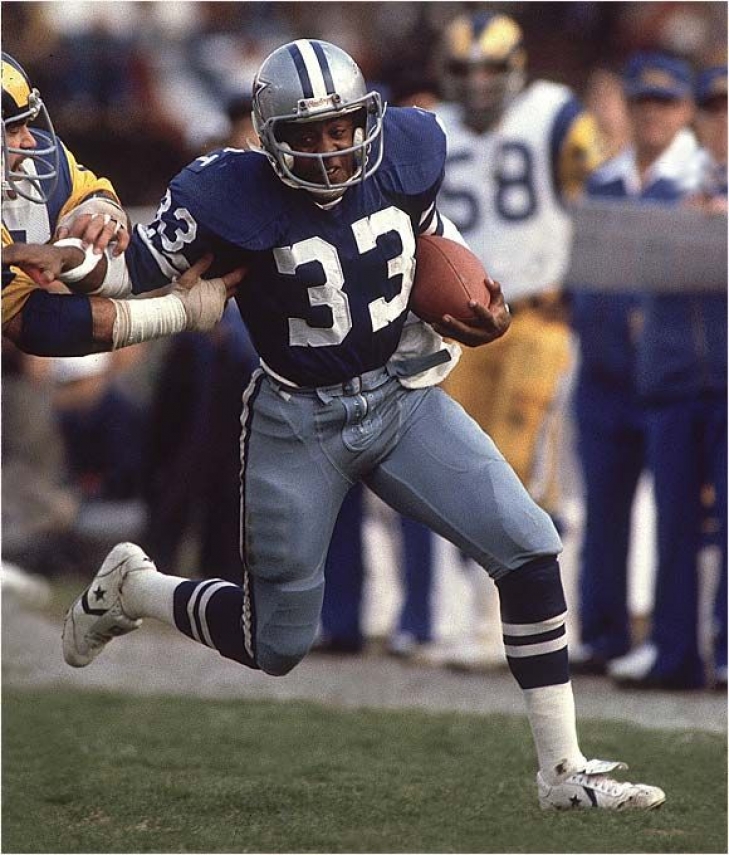
With the second overall pick in the 1977 NFL Draft, the Dallas Cowboys selected Tony Dorsett from Pittsburgh, who had captured the 1976 Heisman Trophy and a national championship. He arrived in Dallas with superstar expectations. Head coach Tom Landry immediately integrated him into the offensive backfield, where his explosive acceleration and open-field vision transformed the Cowboys into an unstoppable championship force during the late 1970s and 1980s.
Dorsett relied on exceptional acceleration, an impressive hesitation move, and superior breakaway speed. Serving as the primary ball-carrier within Landry's flex offense, he demonstrated a distinctive ability to penetrate interior holes prior to executing plays toward the boundary without diminishing his momentum. In addition to his rushing instincts, his reliable hands rendered him a formidable receiving threat out of the backfield on screen passes and swing routes.
What rendered Dorsett particularly formidable was not merely his innate speed on the track, but also his remarkable capacity to adjust gears seamlessly without modifying his stride. Operating within Tom Landry's sophisticated flex system, he exhibited a precise hesitation step at the line of scrimmage, which enticed linebackers to overcommit before he burst through secondary lanes. His low center of gravity and exceptional lateral agility enabled him to nullify angles posed by approaching tacklers, converting standard off-tackle sweeps into dynamic, full-field breakthroughs.
Dorsett's entry into the league in 1977 marked the culmination of an effort to restore Dallas's offensive prowess following their loss in Super Bowl X two years earlier. He received the AP Offensive Rookie of the Year accolade after rushing for 1,007 yards and scored four touchdowns during three playoff games, including a score in Super Bowl XII, thereby facilitating Dallas's victory over Denver. Over the subsequent four years, Dorsett functioned as the primary offensive force for Dallas, propelling the team to four consecutive NFC Championship Game appearances and surpassing 1,300 total yards from scrimmage in each season.
By the early 1980s, Dorsett had refined his game into an all-purpose masterpiece, peaking with his First-Team All-Pro selection in 1981 when he amassed a career-high 1,646 rushing yards. On January 3, 1983, he etched his name into NFL history by busting loose for an iconic 99-yard touchdown run against the Minnesota Vikings—a league record that can only be tied, never broken. Even as the Cowboys navigated evolving defensive schemes, Dorsett remained remarkably consistent, stringing together five consecutive 1,000-yard rushing seasons from 1981 through 1985 while earning four Pro Bowl selections (1978, 1981–1983).
After 11 seasons in Big D, Dorsett spent his final active season with the Denver Broncos in 1988 before retiring. He departed Dallas as the franchise's all-time leader in rushing yards (12,036), receiving yards by a back (3,432), and touchdowns (85)—benchmarks that stood until Emmitt Smith rewrote the record books a decade later.
In 1994, during his first year of eligibility, Dorsett was enshrined in the Pro Football Hall of Fame. That same year, the franchise permanently honored his career by placing him in the Dallas Cowboys Ring of Honor.
8. Larry Allen
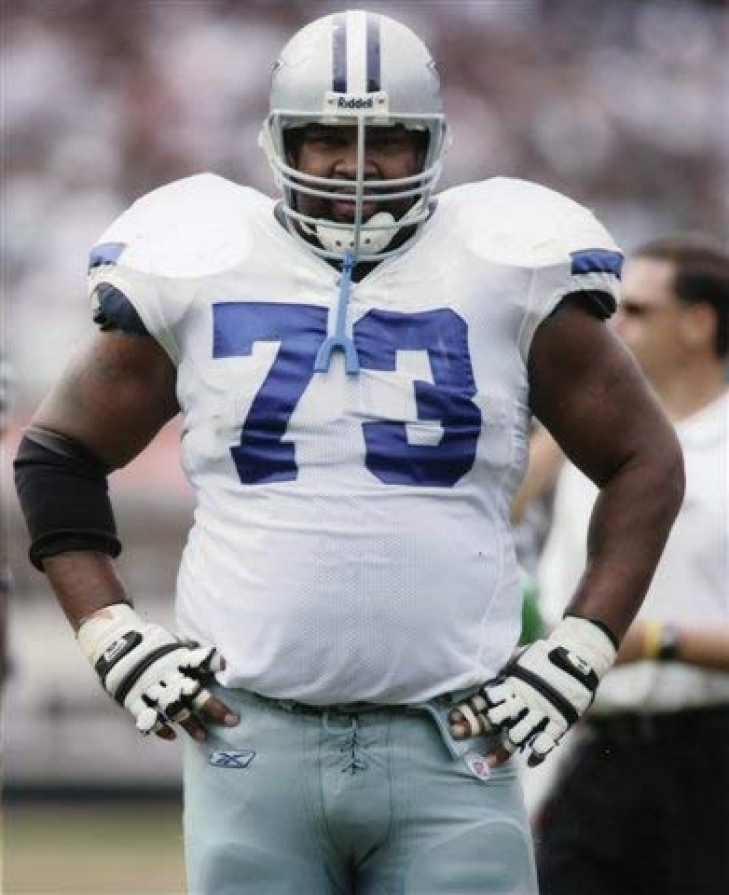
The selection of Larry Allen in the second round of the 1994 NFL Draft out of Division II Sonoma State proved to be one of the greatest drafting triumphs in franchise history. The hulking lineman made immediate history as the first player ever drafted from his school, bringing a terrifying blend of raw bench-press power and freakish open-field athleticism to a Dallas front line already considered standard-setting across the league.
His versatility paid immediate dividends for the defending champions. Pressed into service at right tackle as a rookie after starter Erik Williams was injured, Allen earned All-Rookie team honors for dominant edge blocking. The following season, he moved inside to right guard, anchoring the interior pocket and opening vast lanes for Emmitt Smith as Dallas marched to victory in Super Bowl XXX. That position change launched a three-year streak of Pro Bowl selections from 1995 to 1997, along with consecutive First-Team All-Pro nods in 1996 and 1997.
In 1998, Allen was moved to left tackle by the coaching staff, where he continued to excel, earning another Pro Bowl and First-Team All-Pro honors. In 1999, he transitioned to left guard—his permanent position—and kept dominating opposing defensive lines. Known for his legendary strength, including a bench press of 700 pounds, Allen's real prowess was his mobility. Opponents feared his pull into the flat on sweep plays, where he often took out secondary defenders in space. His switch to left guard resulted in three more straight First-Team All-Pro selections, completing a streak of six consecutive All-Pro honors across three different positions.
After earning ten total Pro Bowl selections during his 12 seasons in Dallas (1994–2005), Allen spent his final two NFL campaigns with the San Francisco 49ers, adding an eleventh Pro Bowl nod to his mantle in 2006 before calling it a career.
With Dallas, Allen started 170 of his 176 games and was also chosen for the 1990s, 2000s, and 100th Anniversary Teams. The Cowboys inducted Allen into the Ring of Honor in 2011, paving the way for his official enshrinement into the Pro Football Hall of Fame in 2013.
11. Jason Witten
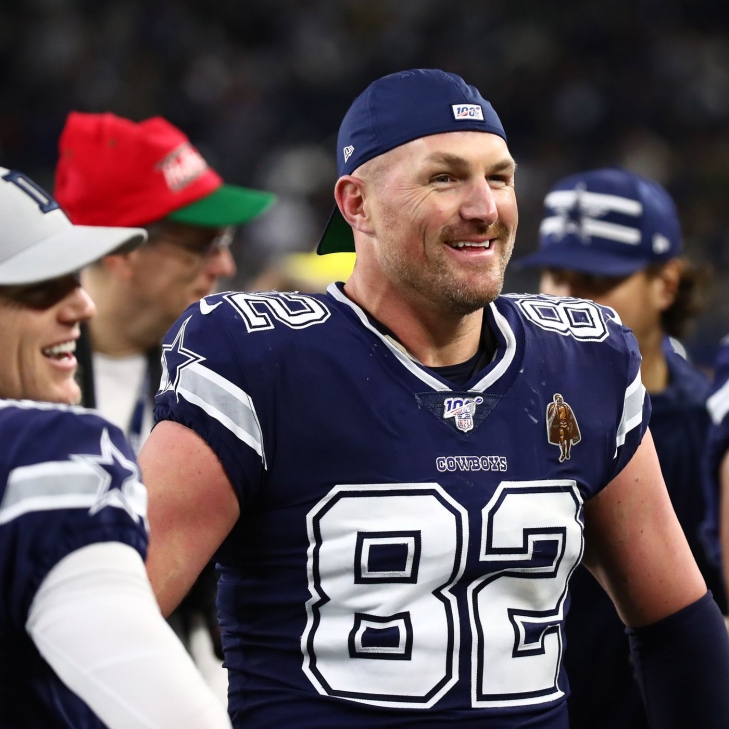
Drafted out of Tennessee in the third round of the 2003 NFL Draft, the 20-year-old tight end quickly made a strong start with Dallas, beginning to reshape the position for a new generation. After a promising rookie season that earned him All-Rookie honors, Jason Witten truly shined in his second year, catching 87 passes for 980 yards and six touchdowns in 2004. That remarkable season earned him his first Pro Bowl and cemented his role as a reliable, high-volume target for the Cowboys' passing game.
That early breakout sparked an impressive ten-year period of consistent aerial output and physical superiority. From 2004 to 2014, Witten was selected for the Pro Bowl ten times within 11 seasons, missing only in 2011. He often took advantage of single coverage in the middle of the field, surpassing 1,000 receiving yards four times (2007, 2008, 2010, and 2012)—a remarkable feat for an inline tight end.
His standout individual campaigns occurred in 2007 and 2010, both earning him First-Team All-Pro honors. In 2007, Witten achieved career highs with 96 receptions for 1,145 yards, acting as Tony Romo's primary target and helping Dallas win the NFC East title. He was equally impressive in 2012, setting a then-NFL single-season record for tight ends with 110 receptions for 1,039 yards, earning Second-Team All-Pro recognition that year, complementing his 2008 honor.
Witten's consistent performance was rooted in his legendary toughness and classic tight end skills. He took great pride in his run-blocking at the point of attack, making him an every-down player who was rarely taken off the field. His reputation as an iron man was cemented in a 2007 game against Philadelphia, when he took a hard hit, lost his helmet, yet still ran another 30 yards to help set up a touchdown. Over 16 seasons with Dallas, Witten missed only one game, playing through injuries like fractured jaws, sprained ankles, and a lacerated spleen, never missing a snap.
After taking a break after the 2017 season to work in broadcasting, Witten unretired and returned to Dallas in 2019, where he caught 63 passes and scored four touchdowns. He ended his playing career with a brief season with Las Vegas in 2020, then officially retired as a Cowboy in 2021 by signing a one-day contract.
Across 16 seasons in Dallas (2003–2017, 2019), Witten appeared in a franchise-record 255 games, retiring as the organization's undisputed all-time leader in receptions (1,215) and receiving yards (12,977) while adding 60 touchdown catches. He is likely to be enshrined in both the Cowboys Ring of Honor and the Pro Football Hall of Fame.
3. Roger Staubach
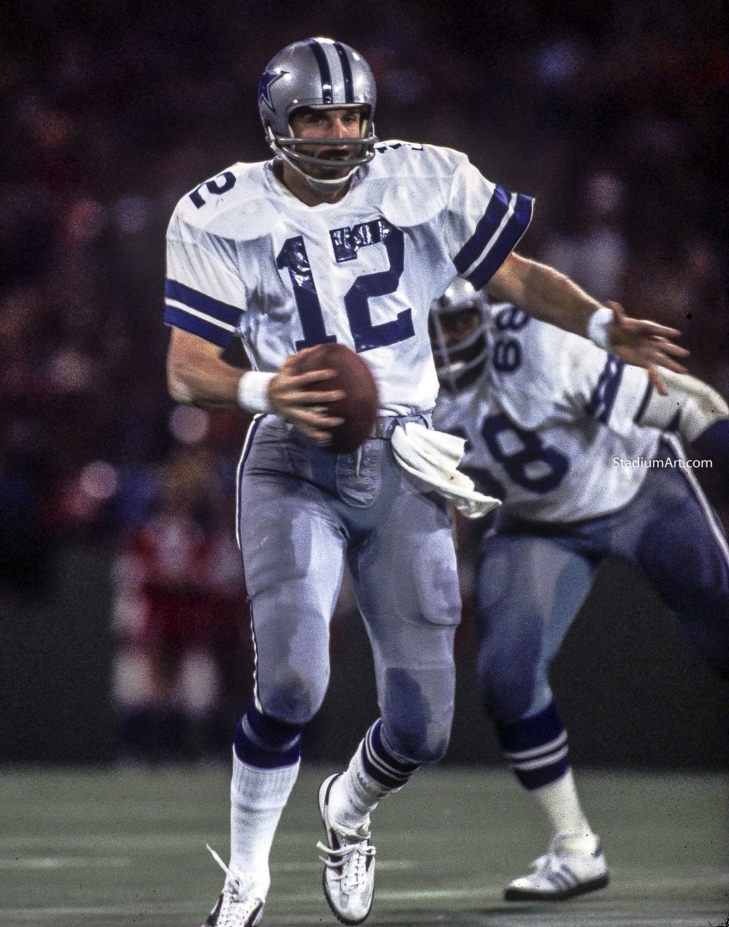
While a case could have been made for Roger Staubach to be at #1, #3 for this team still means you are an absolute legend.
Drafted in the tenth round of the 1964 NFL Draft from the Naval Academy—where he won the 1963 Heisman Trophy—Roger Staubach had to wait five years to start his professional football journey while fulfilling his active-duty military commitment, including a tour of duty in Vietnam. When he finally arrived in Dallas as a 27-year-old rookie in 1969, "Captain Comeback" quickly made up for lost time, leading the team through a string of exciting victories and guiding America's Team to the top of professional football.
Staubach infused Tom Landry's disciplined offense with a fervent and competitive spirit. He exhibited a robust arm, precise accuracy over long distances, and exceptional scrambling skills, rendering him particularly dangerous when plays deviated from the expected. Esteemed for his calm disposition under pressure, Staubach often transformed late-game fourth-quarter deficits into memorable comeback victories, notably coining the term "Hail Mary" through his legendary 50-yard game-winning touchdown pass to Drew Pearson during the 1975 playoffs.
What truly distinguished Staubach’s playing style was his remarkable ability to transform chaotic, broken plays into devastatingly explosive gains. Reluctant to accept a sack or an inconsequential throwaway, Staubach demonstrated swift lateral footwork and exceptional vision while maneuvering outside the pocket. He would deftly spin away from unblocked pass rushers, prolong plays for five or six seconds, and execute precise throws at full speed toward the sideline.
Defenses confronted an insurmountable dilemma: if they retreated into coverage, Staubach would tuck the ball and scramble downfield to secure vital first downs; if they advanced to contain him, he would drop a precise pass over their heads. His unwavering physical determination and steadfast refusal to concede defeat earned him 23 fourth-quarter comeback victories throughout his career, setting the benchmark for exceptional quarterback performance under pressure.
After spending his initial two seasons sharing responsibilities at quarterback, Staubach assumed full control of the starting position in 1971 following his mid-season substitution of Craig Morton. He remained undefeated in all ten of his regular-season starts, led the National Football League (NFL) with an impressive 104.8 quarterback rating, and received his inaugural Pro Bowl selection. He concluded the remarkable season by guiding Dallas to its inaugural franchise championship in Super Bowl VI, where he was named Super Bowl Most Valuable Player (MVP) in a 24–3 victory over Miami.
After missing most of 1972 due to a shoulder injury—only to come off the bench in the playoffs to orchestrate a renowned 30–28 comeback victory over San Francisco—Staubach returned as the full-time leader in 1973, leading the NFL in touchdown passes (23) and passer rating (94.6) while earning his second Pro Bowl invitation.
Between 1975 and 1979, Staubach distinguished himself by securing five consecutive Pro Bowl selections and guiding the Cowboys to three Super Bowl appearances within four years. The zenith of this period was reached during the 1977 season, when Staubach led the NFC in passing yards with 2,620 and achieved a passer rating of 87.0, spearheading Dallas's formidable postseason campaign that concluded with a victory over Denver in Super Bowl XII.
Staubach reached his ultimate personal passing peak during his final two seasons. He led the National Football League in passer rating in 1978 with a score of 84.9 and in 1979 with a score of 92.3. During the 1979 season, at the age of 37, he attained career highs with 3,586 passing yards and 27 touchdown passes, culminating in a memorable 35–34 comeback victory over the Washington Redskins in the regular-season finale before retiring at the pinnacle of his career.
Staubach appeared in 131 regular-season games, recording an impressive 85–29–0 as a starter with a .746 winning percentage. He threw for 22,700 yards and 153 touchdowns, adding 2,264 rushing yards and 20 rushing touchdowns. In 1983, he was honored with induction into the Dallas Cowboys Ring of Honor, and in 1985, he was inducted into the Pro Football Hall of Fame on the first ballot. The NFL also included him in the 1970s All-Decade Team and the 100th Anniversary All-Time Team.
1. Emmitt Smith
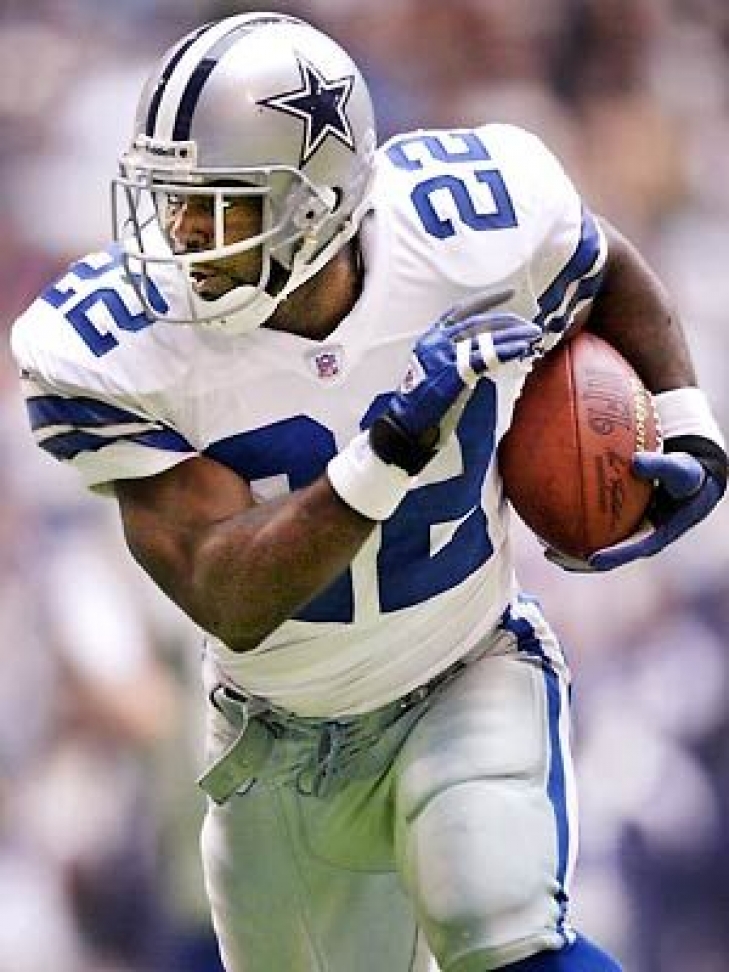
When you look at "America's Team," you have a team that not only had a lot of eyeballs on it but also produced a plethora of Hall of Famers. Choosing the greatest Dallas Cowboy wasn't easy, but in the end, we decided on the player who, statistically speaking, is the greatest Running Back of all time.
Emmitt Smith arrived in Dallas as the 1990 17th pick amidst skepticism surrounding his modest height and top-end speed. The former Gator quickly silenced critics by capturing NFL Offensive Rookie of the Year honors, embarking on an unprecedented run that cemented him as the cornerstone of the 1990s Cowboys dynasty and the all-time leading rusher in football history.
Smith had exceptional vision, a low center of gravity, and lateral agility. Instead of depending on pure speed, he mastered setting up blocks behind Dallas’ formidable offensive line, pushing the hole to displace linebackers before executing a decisive cut. Smith handled contact with ease, powered through initial tackles, and demonstrated legendary durability to sustain heavy workloads week after week.
Smith distinguished himself from others of his era through his exceptional, almost telepathic understanding of blocking schemes and outstanding body control upon contact. He excelled at the “press"—initially slashing toward a designated gap just enough to attract linebackers into the wash, then planting his outside foot, dropping his hips, and executing a jump-cut into a nearby lane before defenders could adjust. Instead of taking direct hits at full speed, he rolled off arm tackles, kept a low center of gravity, and kept his legs moving to gain two or three yards after contact on nearly every run.
His legendary physical toughness was exemplified in the memorable 1993 regular-season finale against the New York Giants. Despite playing with a separated shoulder, Smith had 32 touches for 229 yards in total, including 41 yards on a vital game-winning drive in overtime, securing the division title and home-field advantage. His readiness to endure punishment and stay central to team strategies centered on defense established him as the premier high-usage, clutch player.
After his rookie season, when he was named Offensive Rookie of the Year, Smith began a remarkable period of individual success in the NFL. In 1991, he won his first rushing title with 1,563 yards, then improved in 1992 to 1,713 yards and led the league with 18 rushing touchdowns. Playing alongside quarterback Troy Aikman and wide receiver Michael Irvin—known as the"Triplets"—Smith led a dominant offense that ended with a 52–17 victory over Buffalo in Super Bowl XXVII. He became the first player to earn both a league rushing title and a Super Bowl ring in the same season.
In 1993, following a contract holdout that prevented him from participating in the initial two games of the regular season, Smith demonstrated exceptional value. Over the course of merely 14 games, he led the National Football League (NFL) in both rushing yards (1,486) and scrimmage yards (1,900). He was conferred the AP NFL Most Valuable Player (MVP) award, guided Dallas to victory in Super Bowl XXVIII with a remarkable performance of 132 yards and two touchdowns, and was subsequently named Super Bowl MVP—becoming the sole player in NFL history to achieve the feat of winning the regular-season MVP, Super Bowl, Super Bowl MVP, and league rushing title within a single season.
Smith achieved his highest statistical performance during the 1995 season. Operating behind "The Great Wall of Dallas," he secured his fourth rushing title with a career-best 1,773 rushing yards and broke the NFL single-season record with 25 rushing touchdowns, in addition to 62 receptions for 375 yards. His fourth consecutive First-Team All-Pro selection culminated in a commanding postseason run, finalized by his two-touchdown performance against Pittsburgh in Super Bowl XXX, which secured the franchise's third Lombardi Trophy in four years.
As the Cowboys underwent roster changes in the late 1990s, Smith remained a reliable workhorse, recording 11 consecutive 1,000-yard rushing seasons. On October 27, 2002, against the Seattle Seahawks, he surpassed Walter Payton to become the NFL's all-time career rushing leader.
After 13 seasons in Dallas (1990–2002), Smith played his final two professional seasons with the Arizona Cardinals (2003–2004) before retiring from football. His time in Dallas yielded 17,162 rushing yards, 153 rushing touchdowns, and 3,012 receiving yards. He remains the NFL's all-time leader in both career rushing yards (18,355) and rushing touchdowns (164).
Smith was inducted into the Dallas Cowboys Ring of Honor in 2005 and joined the Pro Football Hall of Fame in Canton in 2010 on his first ballot.
5. Mel Renfro
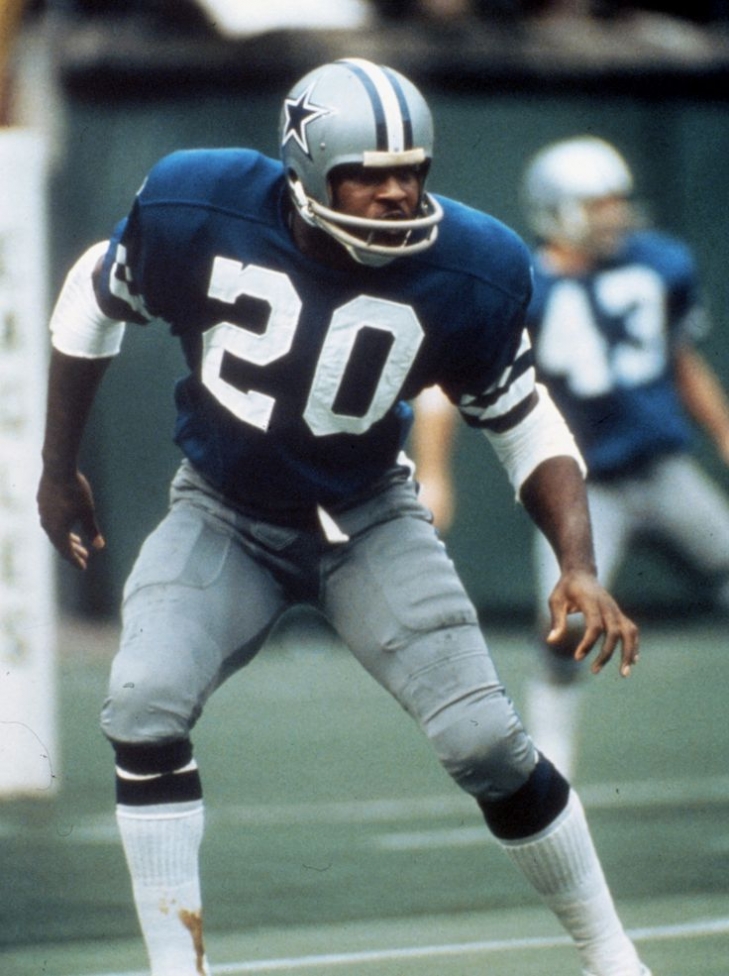
Taken in the second round (17th overall) of the 1964 NFL Draft from Oregon, Mel Renfro joined the Dallas team with a background as a standout collegiate running back and track star. Head coach Tom Landry quickly saw how his speed and natural instincts on the field could boost the Dallas secondary, so he transitioned him into a defensive back. During an impressive 14-season career all with Dallas, Renfro proved Landry's foresight true by becoming one of the most talented and adaptable players in NFL secondary history.
Renfro demonstrated exceptional acceleration, seamless hip transitions, and superior ball-tracking instincts developed through experience on the track and in the backfield. He transitioned effortlessly from safety to cornerback during his career, effectively neutralizing deep vertical threats and compelling opposing quarterbacks to avoid his side of the field. His background as a ball-carrier enhanced his threat level following turnovers, as he reliably converted interceptions and kickoff returns into immediate scoring opportunities.
Renfro made an immediate impact during his rookie season in 1964, leading the National Football League in punt returns (29), punt return yards (418), kickoff returns (40), and kickoff return yards (1,017), while also intercepting seven passes. This outstanding debut earned him his first Pro Bowl selection and initiated an impressive streak of ten consecutive Pro Bowl appearances from 1964 to 1973. He reached his personal statistical zenith in 1969, leading the NFL with 10 interceptions for 222 return yards and one touchdown, thereby earning First-Team All-Pro honors.
Renfro dedicated the initial phase of his career to establishing himself as the premier free safety within the league; however, Tom Landry’s defensive scheme necessitated utmost adaptability. In 1970, Landry made the strategic and decisive choice to reassign Renfro to the position of cornerback to better contend with the league's swift split ends. The transition was executed flawlessly. Leveraging his exceptional speed in track recovery and meticulous boundary technique, Renfro effectively covered half the field for opposing passers. His proficiency in restricting primary targets through man-to-man coverage permitted Landry to fully activate the formidable capabilities of the "Doomsday Defense" front line.
Beyond his individual accolades, Renfro was the common denominator across the most iconic era in franchise history. He played in an astounding 21 playoff games for Dallas, appeared in four Super Bowls, and served as a steadying veteran presence as the secondary transitioned between generations. He started at cornerback in Dallas's victory over Miami in Super Bowl VI and contributed to another championship triumph in Super Bowl XII against Denver to cap off his career.
Renfro hung up his cleats following the 1977 season and played all 174 of his career games exclusively in Dallas. His 52 career interceptions remained the Dallas Cowboys' all-time franchise record for decades, while his 62 total takeaways (including 10 fumble recoveries) showcased his relentless nose for the football.
Over his career, Renfro recorded 52 interceptions, 13 fumble recoveries, and 2,246 return yards. In 1981, the franchise recognized his immense contributions by inducting him into the Dallas Cowboys Ring of Honor. His career reached the ultimate pinnacle in 1996, when he was enshrined in the Pro Football Hall of Fame.
4. Randy White
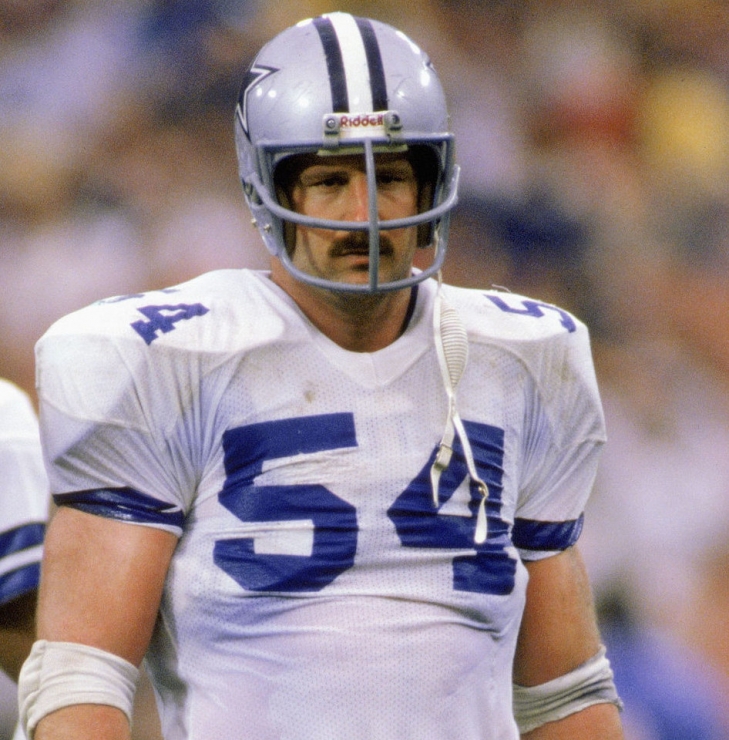
Selected second overall in the 1975 NFL Draft from Maryland—where he was awarded the Outland Trophy, Lombardi Award, and ACC Player of the Year honors as a distinguished college athlete—Randy White joined Dallas as a highly valued defensive prospect. Following two transitional seasons playing at linebacker, White was repositioned to right defensive tackle in 1977, a move that unlocked his full potential and initiated a legendary career, earning him the nickname "The Manster" (a combination of man and monster).
White established a new standard for interior defensive line performance. Demonstrating exceptional strength in the weight room, explosive initial speed, and a hand technique infused with martial arts, he consistently outpaced interior offensive linemen before they could establish their blocks. White was a persistent and relentless player who transformed quickness into power, forcefully disengaging from double-teams to collapse pockets, disrupt rushing plays, and pursue ball carriers from behind.
What distinguished White from nearly all defensive tackles of his era was his pioneering collaboration with renowned martial artist Dan Inosanto, integrating hand-fighting and strike-redirection techniques into his pass-rush repertoire. While conventional defensive tackles depended on sheer bulk, White employed rapid hand strikes, swim moves, and rip-swipes to deflect guards' hands before they could execute punches.
His low-center-of-gravity anchor enabled him to resist double-teams during running plays, while his relentless pursuit effort ensured that plays were never finished. Whether positioning himself directly over the center in Tom Landry's "Flex" defense or executing stunt rushes alongside the defensive end, White consistently maintained the opposing interior offensive lines in a continuous state of challenge throughout all four quarters.
In 1977, White's shift to right defensive tackle sparked an immediate breakout, taking over from Bob Lilly and anchoring Dallas' "Doomsday II" defense. This led to his first Pro Bowl and First-Team All-Pro selections. He reached the peak of his career in Super Bowl XII, dominating the Denver Broncos' offense in a 27–10 win. White recorded a sack and helped lead a defense that forced eight turnovers, sharing Super Bowl XII Co-MVP honors with teammate Harvey Martin—the only time in NFL history two players shared the award.
Building on his Super Bowl breakout, White embarked on a dominant six-year period, cementing his status as the top interior lineman in professional football. In 1978, he achieved a career-high 16.0 unofficial sacks and helped Dallas return to Super Bowl XIII. The following year, he recorded 10.0 sacks and earned another First-Team All-Pro honor, leading a defensive line that secured three straight NFC East titles.
When sacks officially became a stat in 1982, White did not slow down; he logged 6.0 sacks in an abbreviated nine-game strike season to earn his fourth First-Team All-Pro honor. In 1983, he delivered a statistical masterclass, racking up 12.5 official sacks and forcing three fumbles across 16 starts. Opposing coordinators routinely slid double-team help his way, yet White continually blew up backfields, recording double-digit sacks in three different seasons while disrupting both passing windows and running lanes.
White maintained his dominance into the mid-1980s, achieving his sixth and seventh First-Team All-Pro honors in 1984 with 12.0 sacks and in 1985 with 10.5 sacks. His tenth straight Pro Bowl appearance in 1986 cemented a ten-year run of top-tier performance rare among interior defenders.
Although sacks did not become an official NFL statistic until 1982, film reviews and team records credit White with 111.0 career sacks over his tenure—making him one of the most prolific interior pass rushers in league history.
In 1994, White received a double crown of football immortality: he was inducted into the Dallas Cowboys Ring of Honor and elected to the Pro Football Hall of Fame in his first year of eligibility. The NFL also named him to the 1980s All-Decade Team.
2. Bob Lilly
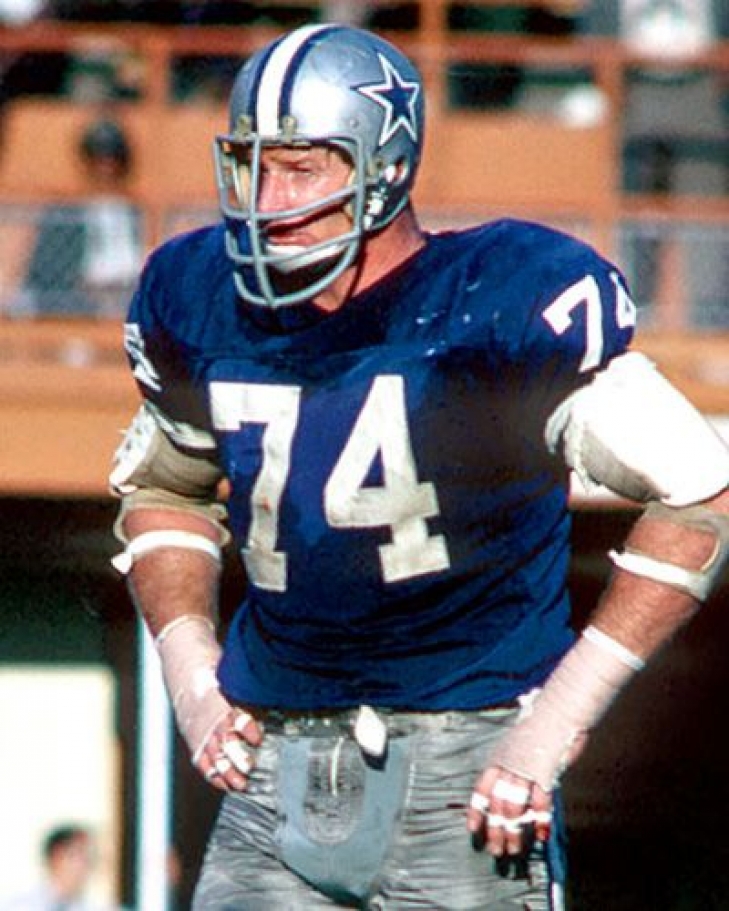
There was serious consideration for Bob Lilly to be named number #1, but #2 is a damned good rank for a storied franchise like the Dallas Cowboys.
Bob Lilly, the first-ever college draft pick for the Dallas Cowboys(13th overall in 1961) from TCU, did more than just lead an expansion team—he became its defining figure. Known as "Mr. Cowboy," the legendary defensive lineman was the cornerstone of Coach Tom Landry’s defense, establishing a career that solidified his role as the foundation of America's Team.
Standing at 6 feet 5 inches and weighing 260 pounds, Lilly possessed a rare combination of explosive quickness, unwavering power, and instinctual awareness. Operating from a distinctive four-point stance, he employed aggressive hand-fights and an unblockable lateral reach to penetrate interior double-teams. Whether collapsing the pocket during passing downs or pursuing ball carriers across the field, Lilly's speed and agility transformed the defensive tackle role from a mere interior space occupier into a dynamic game-changing presence.
What truly distinguished Lilly was his exceptional motor and technical efficiency within Tom Landry’s intricate "Flex" defense. Unlike many tackles of his era, who relied predominantly on brute force, Lilly excelled by beating guards off the snap with a remarkably swift first step, thus compelling blockers to recover immediately. His lateral agility allowed him to pursue plays along the line of scrimmage with effort comparable to that of a wide receiver, culminating in four defensive touchdowns—three from fumble recoveries and one from an interception return—during his career. Opposing offensive coordinators routinely assigned two or three blockers to contain him; nevertheless, Lilly's unwavering second-effort rush consistently compelled quarterbacks to alter their passing positions.
After spending his initial two seasons chiefly as a defensive end, Lilly’s transition to defensive tackle in 1963 initiated one of the most extraordinary individual sequences in contemporary football history. commencing in 1962, Lilly obtained his inaugural of 11 Pro Bowl selections. From 1964 to 1973, he undertook a decade-long succession of Pro Bowl appearances in Hawaii, highlighted by seven First-Team All-Pro honors (1964–1969, 1971) and two Second-Team distinctions.
As the central figure of Dallas’ original "Doomsday Defense," Lilly guided the Cowboys to six conference championship appearances and two Super Bowls from 1966 to 1973. After a heartbreaking defeat to Baltimore in Super Bowl V, Lilly and the Cowboys once again ascended to the championship stage in Super Bowl VI against the Miami Dolphins. Lilly executed the defining moment of the franchise’s inaugural title run—pursuing Miami quarterback Bob Griese for a historic 29-yard sack, an act that remains the longest sack in Super Bowl history. Dallas dominated the Dolphins in a 24–3 victory, thereby crowning Lilly as a world champion.
In addition to his personal dominance, Lilly set a benchmark for iron-man durability. Over 14 seasons with Dallas (1961–1974), he appeared in 196 consecutive regular-season games, never missing a game throughout his entire career. During his time as a Cowboy, Lilly played in 196 regular-season games and achieved 95.5 sacks.
After retiring following the 1974 season, Lilly was named the inaugural member of the Dallas Cowboys Ring of Honor in 1975, cementing his status as the franchise’s original icon. In 1980, his first year of eligibility, Lilly was inducted into the Pro Football Hall of Fame, becoming the first player to spend his entire career in Dallas and earn a gold jacket in Canton. He was later named to both the NFL 1960s and 1970s All-Decade Teams, as well as the NFL’s 75th and 100th Anniversary All-Time Teams.
#37 Overall, Dak Prescott, Dallas Cowboys, #7 Quarterback
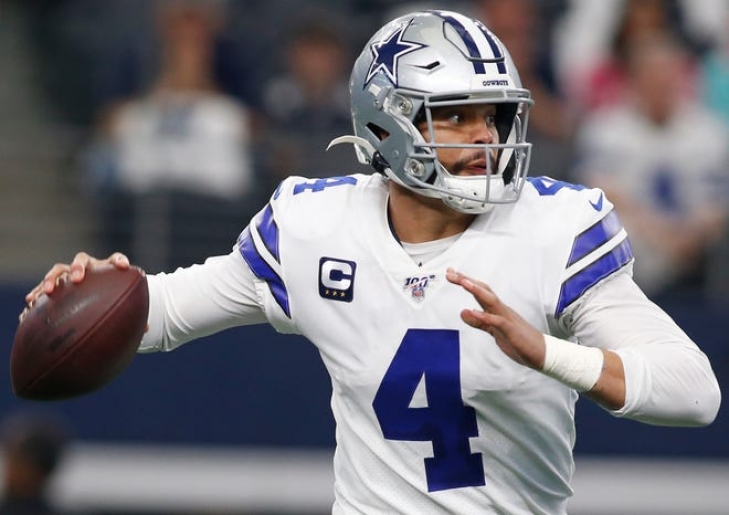
2025 Pre-Season Rank #40, 2024 Pre-Season Rank #32, 2023 Pre-Season Rank #44, 2022 Pre-Season Rank #55, 2021 Pre-Season Rank #63, 2020 Pre-Season Rank #80. Peak Period: 2016-17/2021-23
There is no greater pressure cooker in the National Football League than being the Quarterback of the Dallas Cowboys. While Dak Prescott has been maligned in some circles for not winning a Super Bowl or even getting there, the stat line shows that he has been very good for some time.
The 2016 AP Offensive Rookie of the Year has been selected to three Pro Bowls, has broken 4,400 Yards three times, and in 2023, he led the NFL in Touchdown Passes (36) and was the runner-up for the league MVP. Last season, he was a Pro Bowl Selection on an uneven team, and he begins 2026 as a top-ten Quarterback, regardless of what his biggest haters think.
The Cowboys are unlikely to win a Super Bowl this year, but a playoff run is possible, and if Dak can rack up some large stats, he still has time to make a solid case for the Hall. Remember, Matthew Stafford’s real push came late.
332. George Andrie
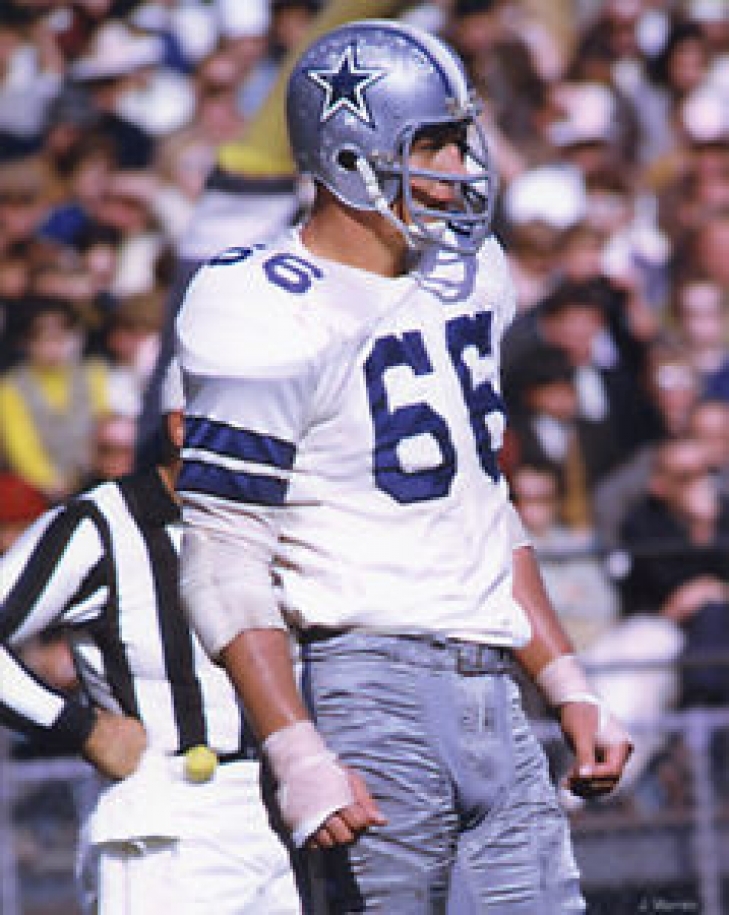
Playing his college ball at Marquette, George Andrie played his entire 11-year career with the Dallas Cowboys.
206. Don Perkins
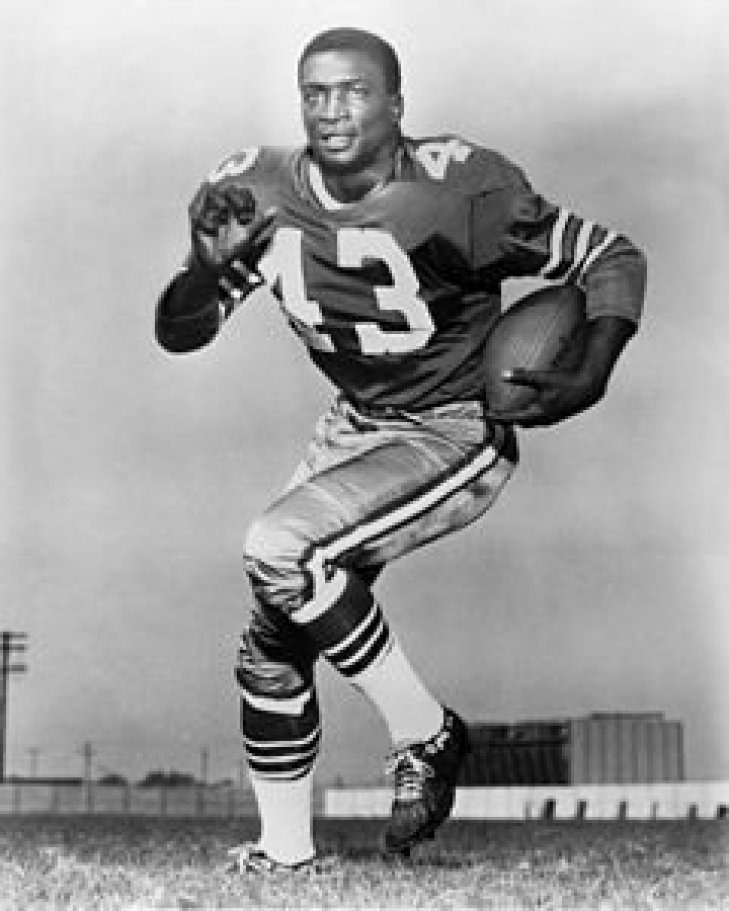
While the Dallas Cowboys’ story didn't begin for many fans until the early '70s, they still had star power in the 1960s. One such performer was Don Perkins, their Fullback from the University of New Mexico.
Perkins played eight years in the NFL, all of which were with the Dallas Cowboys, and he would secure a selection to the Pro Bowl in six of them. He was a cerebral player in that he lacked speed but had bursts of quickness from the Line of Scrimmage and knew what to do to avoid tackles. He would rush for over 6,000 Yards and be considered to be an above-average blocker.
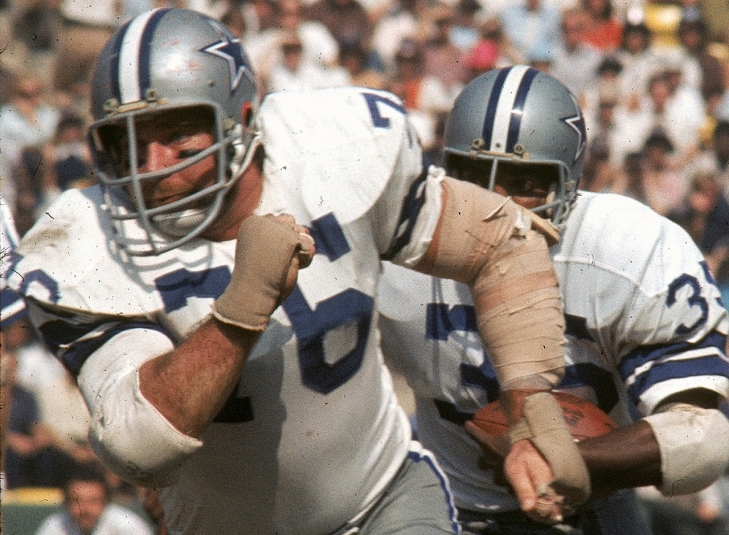
223. John Niland
219. Mark Stepnoski
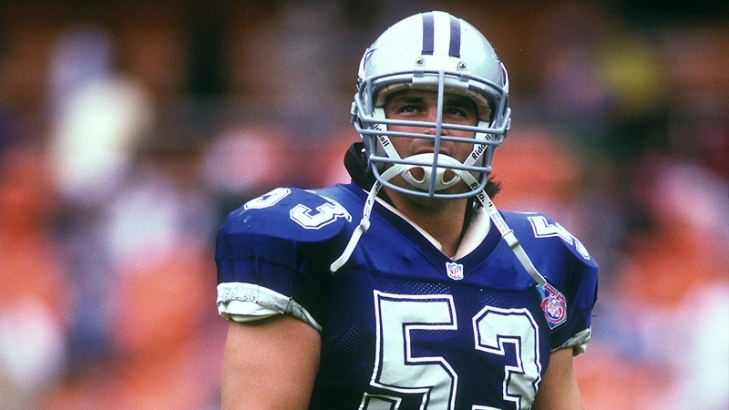
The Dallas Cowboys had ideas for Mark Stepnoski when they drafted him in the 3rd Round from the University of Pittsburgh. Dallas converted him from Offensive Guard to Center, a position he had never played before; however, they didn’t rush him, easing him into the role and letting him learn from the incumbent, Tom Rafferty.
The Cowboys’ hunches proved right, and in 1992 he was chosen for five straight Pro Bowls and became part of one of the best offensive lines of the 1990s. Protecting Troy Aikman and carving holes for Emmitt Smith, Stepnoski would help the Cowboys win Super Bowl XXVII and XXVIII before signing with the Houston Oilers in 1995. He returned to the Cowboys in 1999 and played there for three more seasons before retiring.
198. Nate Newton
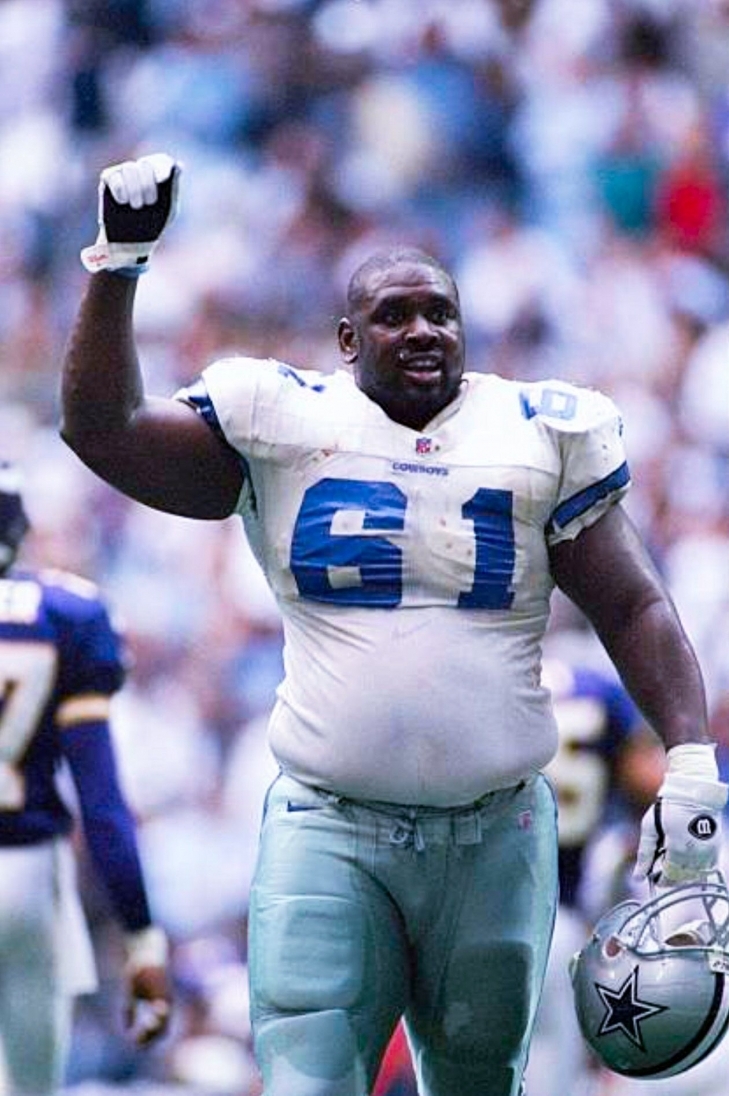
Nate Newton was so big that he was called the “Kitchen," in reference to the fact that he was a more massive player than William "The Refrigerator" Perry. Newton went undrafted out of Florida A&M but found a home in the USFL, where he played two years with the Tampa Bay Bandits and earned All-USFL Honors.
Now a seasoned professional, Newton signed with the Dallas Cowboys but continued to struggle with his weight. In his 30s, Newton was at his best, going to six Pro Bowls and earning two First Team All-Pro selections, and he was a large (literally) part of the superb O-Line that helped Emmitt Smith rush his way to the Hall of Fame. Big Nate would win three Super Bowl Rings with the Cowboys, and we are guessing that his ring size may have been the largest one ever created.
228. Ralph Neely
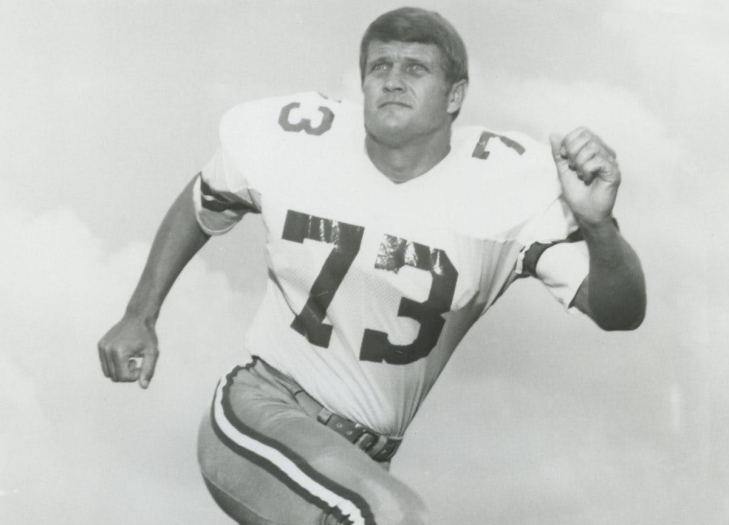
Ralph Neely was drafted by the Houston Oilers of the American Football League and the Baltimore Colts of the NFL, and he secretly agreed to play for the Oilers (it was kept secret so he could play for the University of Oklahoma in the Gator Bowl).
Neely was ready to be an Oiler, but the Colts traded his rights to the Dallas Cowboys, a team he would rather play for, and "Big D" would land the Offensive Tackle.
The AFL was clearly the place for Neely, as he would play there from 1965 to 1977, which was his entire professional NFL career. He was at his best in the late '60s, when he was a First Team All-Pro three years in a row (1966-68) and earned All-Decade Team honors. The tackle helped them win two Super Bowls (VI & XII). His career seemed to be tailor-made for Dallas.
224. La'Roi Glover
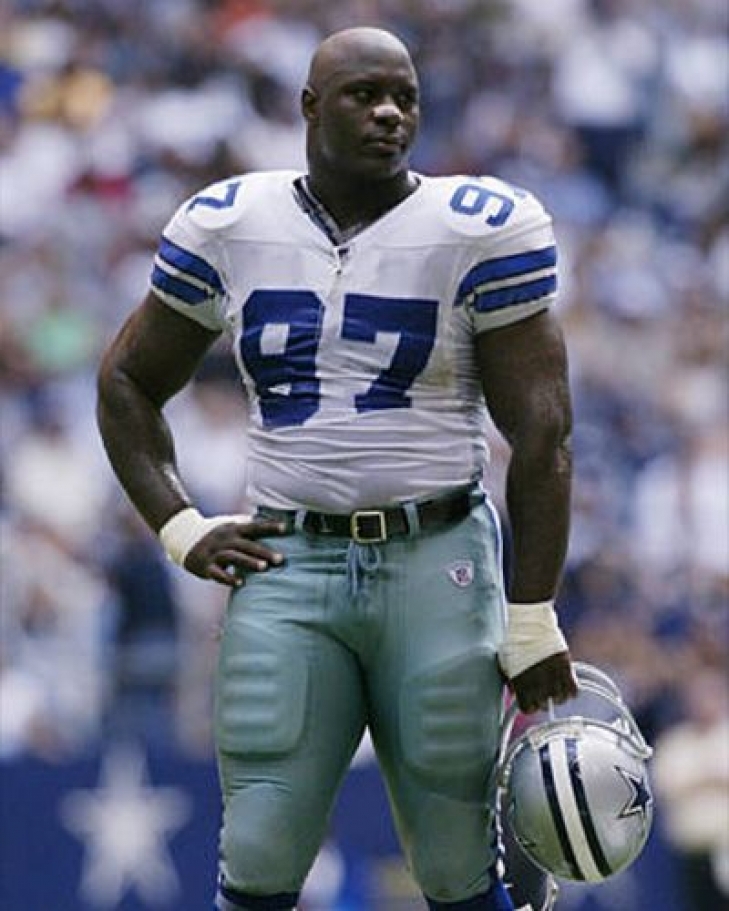
From San Diego State, La’Roi Glover took a longer path to NFL stardom. He was a 5th-round pick in the Oakland Raiders draft, but they cut him a year later, and the New Orleans Saints picked him up. In New Orleans, he became a star, and in 2000 he would be named a First Team All-Pro, NFL Alumni Defensive Lineman of the Year, and the NFC Defensive Player of the Year. The ferocious pass-rusher had 17.5 Sacks would also lead the league.
Glover began a six-year Pro Bowl run that extended into his time with the Dallas Cowboys, with whom he signed in 2002. Glover would be named to the Second Team All-2000s roster. He retired with 83.5 Sacks over his career.
119. Harvey Martin
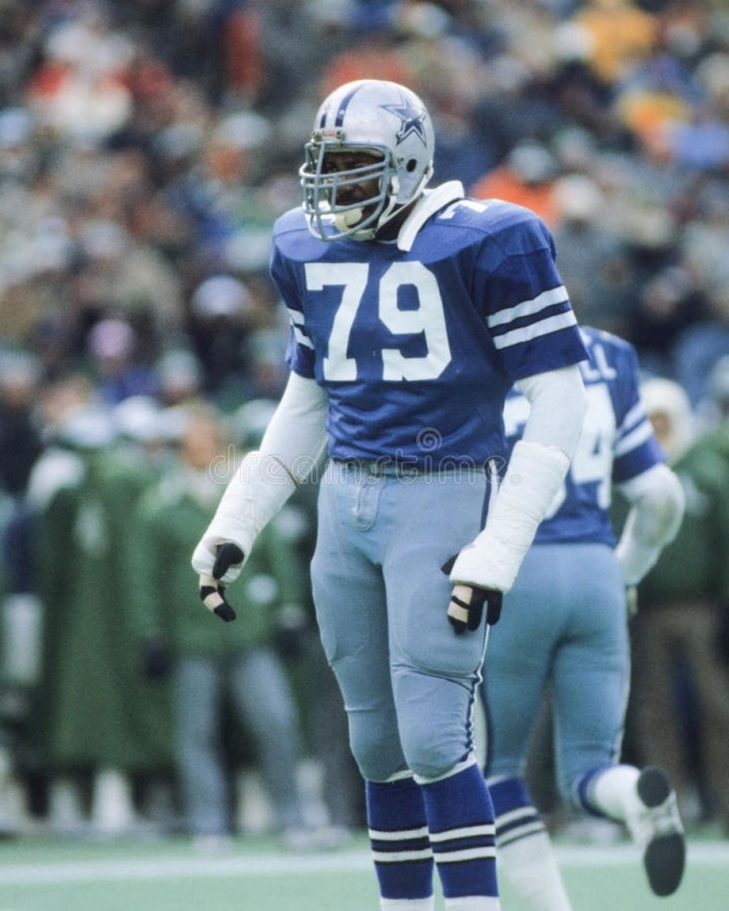
It was fitting that Harvey Martin played his entire pro career with the Dallas Cowboys. Martin was born in Dallas, played at East Texas State, and was drafted in the 3rd Round by the Cowboys in 1973; he joined and immediately contributed to what was already a dominating defensive unit.
Martin earned the starting Right Defensive End position in his third year (1975) and would then go on a four-year run of Pro Bowl Selections (1976-79). That second year was considered one of the best ever by a Cowboys defensive player. That year he won the NFL Defensive Player of the Year, had 23 (unofficial) sacks, and was the co-MVP of Dallas’ Super Bowl XII win with Randy White.
Although Quarterback Sacks were not an official statistic until 1982, Martin is believed to have recorded 114 over his career. It is next to impossible to imagine the “Doomsday Defense” without the contributions of Harvey Martin.
