


Site Admin
41. Carl Weilman
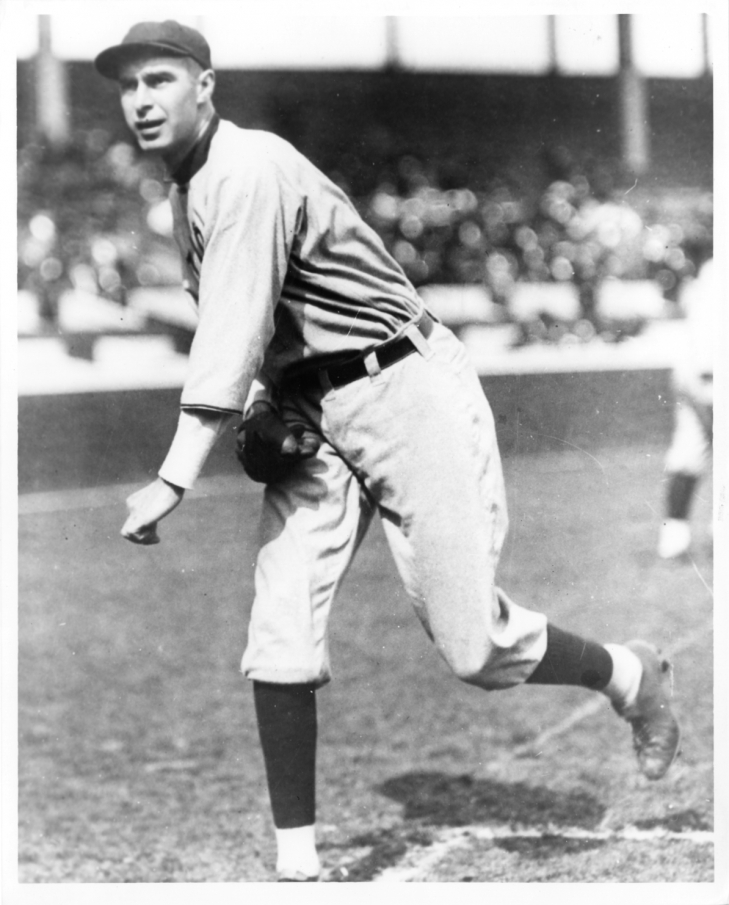
Standing a towering 6’5” in an era when the average pitcher barely cleared 5’9”, Carl Weilman was a literal and figurative giant for the St. Louis Browns. A "Lifer" who spent his entire eight-season career with the franchise, Weilman used his unique leverage and left-handed delivery to become one of the most effective, albeit overlooked, starters of the Deadball Era.
Weilman’s peak from 1914 to 1916 was a masterclass in efficiency. During this three-year stretch, he won at least 17 games annually while maintaining a microscopic sub-2.40 ERA. More impressively, he was a fixture on the American League leaderboards, consistently ranking in the top eight for Pitching bWAR and Wins. He was the rare arm that could neutralize the legendary hitters of the day, using his height to create a release point that Deadball hitters found nearly impossible to track.
His ascending career was tragically interrupted by a battle with Tuberculosis, which cost him the majority of the 1917 season and all of 1918. At a time when such a diagnosis was often a career-ender, Weilman staged a miraculous return in 1919, posting a 10-win season and a 2.76 ERA. Though his health finally faded in 1920, his return to the mound was a testament to his grit and his dedication to the St. Louis Browns.
Weilman retired with 84 wins and a 2.67 career ERA, a mark that remains one of the lowest in franchise history for a left-hander.
45 Mike Boddicker
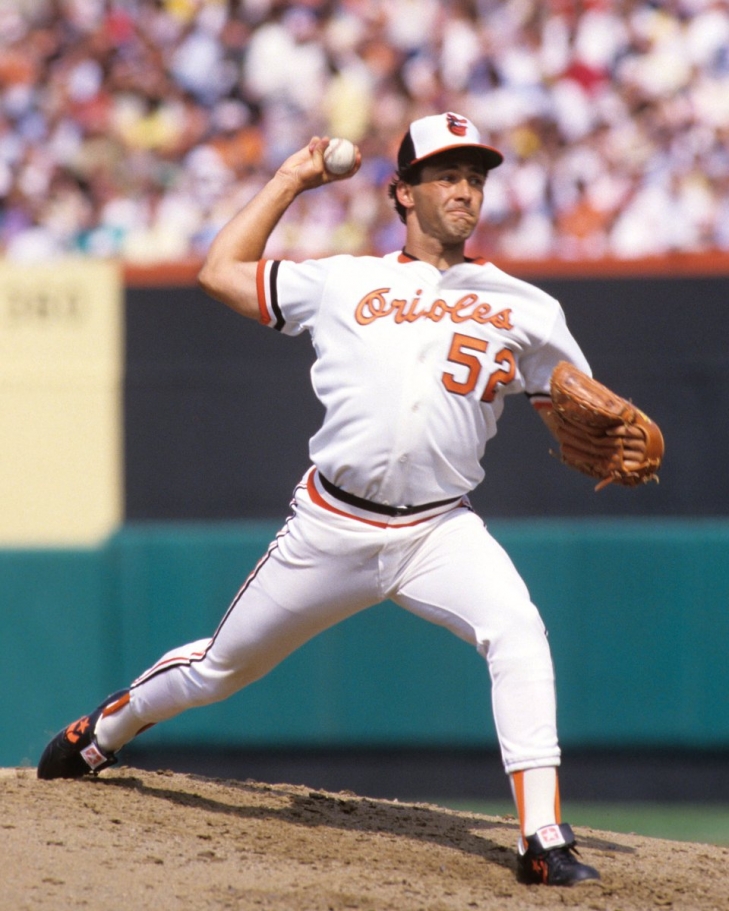
Mike Boddicker didn't overpower hitters with velocity; he dismantled them with a "fosh" ball and what legend Rod Carew dismissively called "Little League slop." However, by varying his arm angles and mastering a strange, tumbling change-up, Boddicker proved that deception could be just as lethal as a 95-mph fastball. After debuting in 1980, he emerged in 1983 as the unlikely hero who would help anchor a world championship rotation.
Boddicker’s 1983 season is etched in Baltimore lore. After becoming a permanent fixture in the rotation, he led the American League with five shutouts and went 16–8. He truly ascended during the postseason, throwing a legendary 14-strikeout one-hitter in the ALCS to earn ALCS MVP honors, followed by a dominant complete-game victory in the World Series. That October performance remains one of the greatest high-leverage stretches in franchise history.
He proved 1983 was no fluke by authoring a career-best campaign in 1984. Boddicker led the American League in both Wins (20) and ERA (2.79), earning his first All-Star nod and a fourth-place finish in the Cy Young voting. He remained the reliable workhorse of the staff for three more seasons before a 1988 trade to Boston—a deal that famously brought a young Brady Anderson to Baltimore.
Boddicker left the Orioles with 79 wins, 836 strikeouts, and a reputation as one of the craftiest right-handers to ever wear the uniform. He was inducted into the Orioles Hall of Fame in 2001.
39. George McQuinn
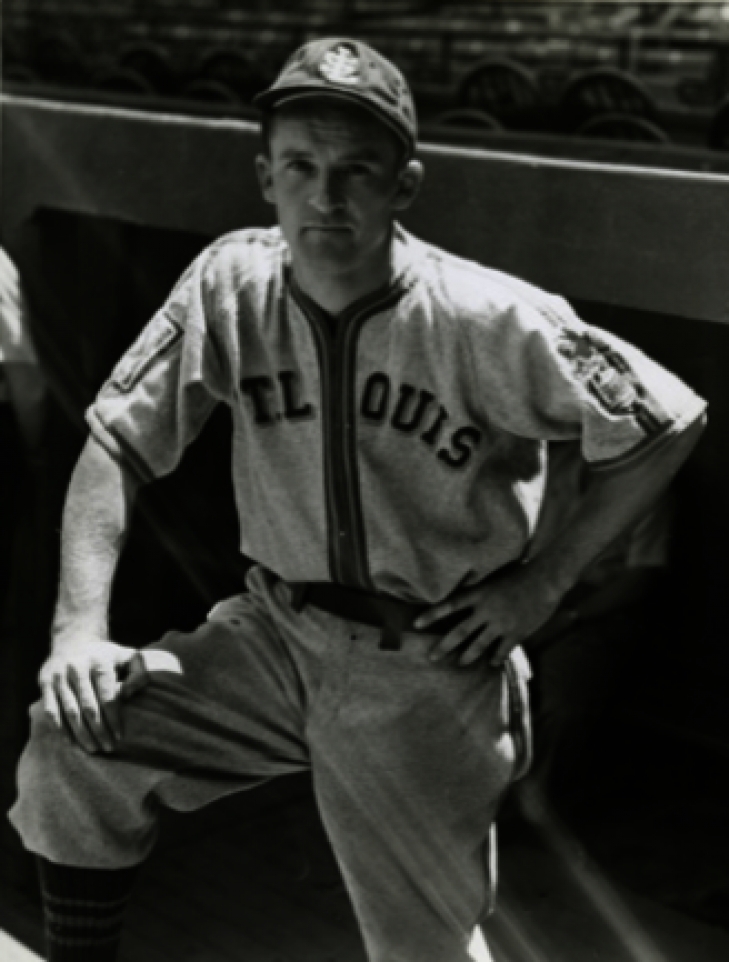
George McQuinn arrived in St. Louis as a diamond in the rough, plucked from the powerhouse Yankees organization in the 1937 Rule 5 Draft. It proved to be a franchise-altering acquisition. Over the next eight seasons, McQuinn established himself as the premier first baseman in the American League, providing a rare blend of defensive grace and consistent left-handed power.
McQuinn’s peak years in St. Louis were defined by elite consistency. He was a four-time All-Star with the Browns, batting over .300 in each of his first two seasons (1938–1939) and recording three consecutive years with at least 15 home runs. While many stars of the era were called away to military service during World War II, McQuinn remained the steady heartbeat of the Browns' lineup. His leadership and production were instrumental in the historic 1944 season, where he anchored the infield and powered the Browns to their first and only American League Pennant.
Though he was traded to Philadelphia after the 1945 season, McQuinn’s legacy in St. Louis was already secure. He departed with 1,220 hits, 108 home runs, and a reputation as a "big game" player who hit .438 during the 1944 World Series against the cross-town Cardinals.
34. Del Pratt
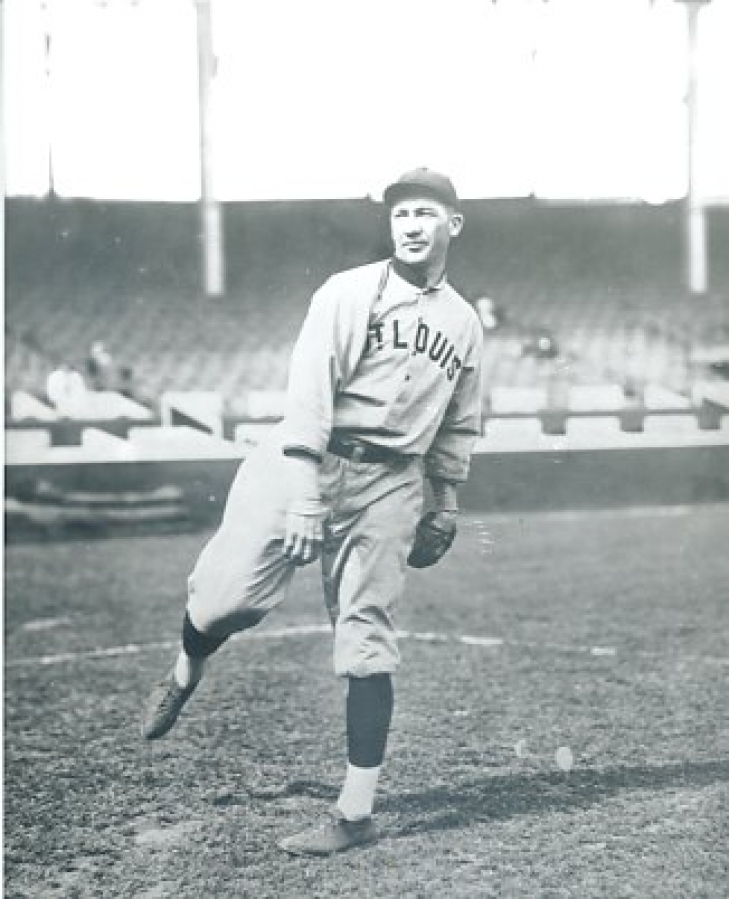
Had the Rookie of the Year award existed during the Deadball Era, Pratt likely would have walked away with the hardware. He burst onto the scene with a .302 average and 172 hits, following it up in 1913 with nearly identical production. It was a rare display of immediate, high-level consistency for a young player in the early 20th century.
While his batting average eventually settled into the high. In the 200s, in 1916, he achieved a historic milestone by leading the American League with 103 RBIs—a staggering feat for a middle infielder in an era of limited run scoring. Pratt was an "Iron Man" before the term was popularized, rarely missing a game and serving as the dependable heart of the St. Louis lineup for six seasons.
His time in St. Louis ended in 1918 when he was the centerpiece of a blockbuster trade to the New York Yankees, a deal that brought five players and significant cash to the Browns—a testament to his high market value at the time. Pratt left the franchise with 957 hits, 174 stolen bases, and a reputation as one of the most productive second basemen of his generation.