

39. Eugene Daniel
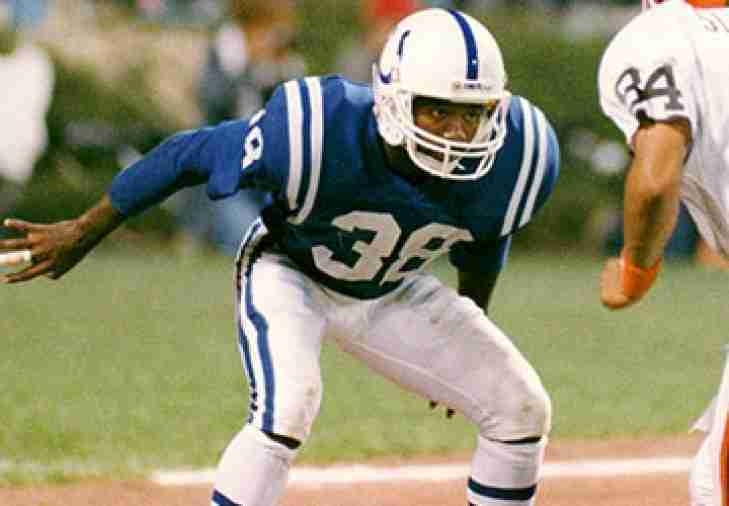
When the Colts packed up and moved to Indiana in 1984, few imagined that an eighth-round longshot out of LSU would end up defining perimeter defense in the Hoosier State for the next thirteen years. Eugene Daniel didn't just earn a roster spot as a rookie flyer—he seized the starting cornerback role with a fierce, physical edge that made him an immediate fan favorite and an immovable anchor in the Indianapolis secondary.
Daniel’s breakout sophomore campaign in 1985 cemented his status as one of the game's most underrated ball hawks. Picking off eight passes to finish tied for second in the National Football League, he authored his signature moment in March of that season against the New York Jets: stepping in front of a pass in his own end zone and racing 97 yards for a touchdown—a franchise record for the longest interception return for a touchdown in Colts history that still stands.
Despite playing through multiple coaching transitions and defensive schemes, Daniel served as a locker room general whose physicality set the tone for Indianapolis. He anchored the secondary during the 1987 AFC East title run and remained a key veteran corner during the team's dramatic run to the 1995 AFC Championship Game, consistently matching up against the opposition's top wideout.
Durable and loyal across 13 active seasons in Indianapolis (1984–1996), Daniel played in 185 regular-season games for Indianapolis—ranking among the highest game totals in franchise history—before concluding his 14-year career with a final season with the Baltimore Ravens in 1997. With the Colts, Daniel compiled 35 interceptions.
20. Marshall Faulk
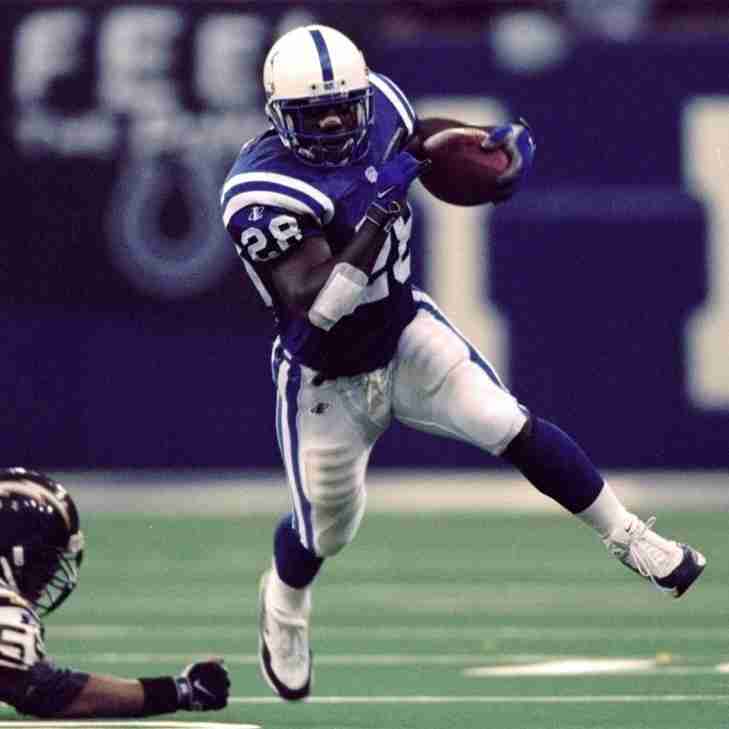
Before he became the dynamic catalyst for "The Greatest Show on Turf" in St. Louis, Marshall Faulk spent his formative years in Indianapolis completely rewiring what NFL teams expected from a modern, dual-threat running back. Selected second overall out of San Diego State in the 1994 NFL Draft, Faulk took the league by storm as a rookie, compiling 1,282 rushing yards, 52 receptions, and 12 total touchdowns to earn AP Offensive Rookie of the Year honors and an immediate Pro Bowl nod.
Despite navigating nagging injuries during his five-year run in blue and white, Faulk's brilliant multidimensional play became the backbone of the offense. Possessing elite field vision and uncanny route-running ability out of the backfield, he routinely erased linebackers in space, producing four seasons with over 1,000 rushing yards and catching at least 44 passes in all five of his campaigns in Indianapolis. His peak Colts season came in 1998, when he set a franchise record with 2,227 yards from scrimmage (1,319 rushing, 908 receiving) and earned First-Team AP All-Pro honors while serving as a crucial safety valve for rookie quarterback Peyton Manning.
Following that career year, a bitter contract stalemate prompted the Colts to make one of the most debated trades in franchise history, sending Faulk to the St. Louis Rams in the spring of 1999 for second- and fifth-round draft picks. While the Colts repurposed that draft capital to select Edgerrin James, watching Faulk win three consecutive NFL Offensive Player of the Year awards, an MVP title, and a Super Bowl ring with St. Louis left Circle City fans pondering what might have been had he remained Manning's backfield partner for the long haul.
Time eventually softened those wounds as both parties recognized the historic weight of his early brilliance. Faulk was elected to the Pro Football Hall of Fame in 2011, and the organization officially embraced his legacy two years later when he was inducted into the Colts Ring of Honor in 2013.
He compiled 1,389 rushing attempts, 5,120 rushing yards, 42 rushing touchdowns, 297 receptions, 2,894 receiving yards, and 11 receiving touchdowns for a total of 8,014 yards from scrimmage and 53 total touchdowns for the Colts.
40. Dallas Clark
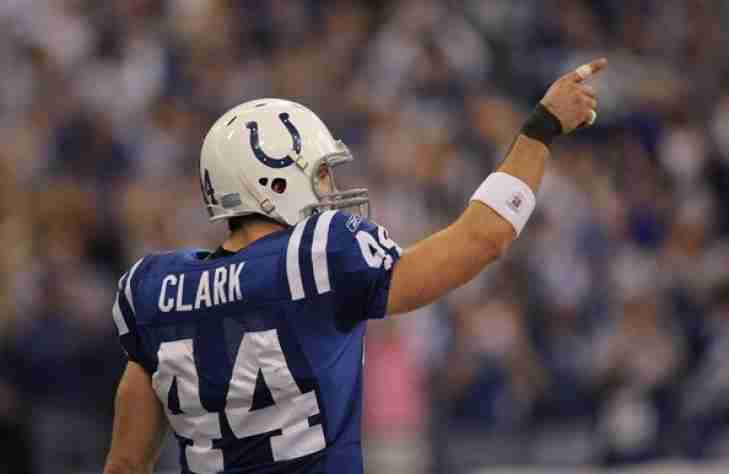
When Tom Moore and Peyton Manning sat down to design the most lethal hurry-up offense of the modern era, they needed a tight end who moved like a slot receiver and ran routes with surgical precision. Enter Dallas Clark. Drafted 24th overall out of Iowa in 2003, Clark arrived in Indianapolis perfectly tailored for the Colts' No-Huddle attack, flexing out into the slot or lining up in the inline seam to create immediate nightmares for opposing linebackers and safeties.
Clark’s tactical value exploded during the 2006 postseason run. Shifting seamlessly between tight end and slot wideout, he became Manning's primary chain-mover, hauling in 21 receptions for 317 yards across four playoff games. His clutch grabs in the AFC Championship Game against New England paved the way for Indianapolis' historic comeback, culminating in a dominant performance in the rain at Super Bowl XLI to claim the Lombardi Trophy over Chicago.
His individual peak arrived in 2009, when Clark authored one of the most statistically explosive seasons ever recorded by a tight end. Snagging 100 receptions for 1,106 yards and 10 touchdowns, he became just the second tight end in NFL history to break the century mark in catches in a single season. That masterclass earned him First-Team AP All-Pro honors and a Pro Bowl selection as the Colts captured their second AFC pennant in four years.
After a severe wrist injury in 2010 and the franchise's 2012 transition, Clark played one season each with Tampa Bay and Baltimore before signing a one-day contract in Indianapolis to retire as a Colt in 2014. In nine seasons with the Colts, he set franchise tight-end records for receptions (427), receiving yards (4,887), and touchdowns (46), becoming one of Manning's most trusted targets on third downs and in the red zone.
31. Jerry Logan
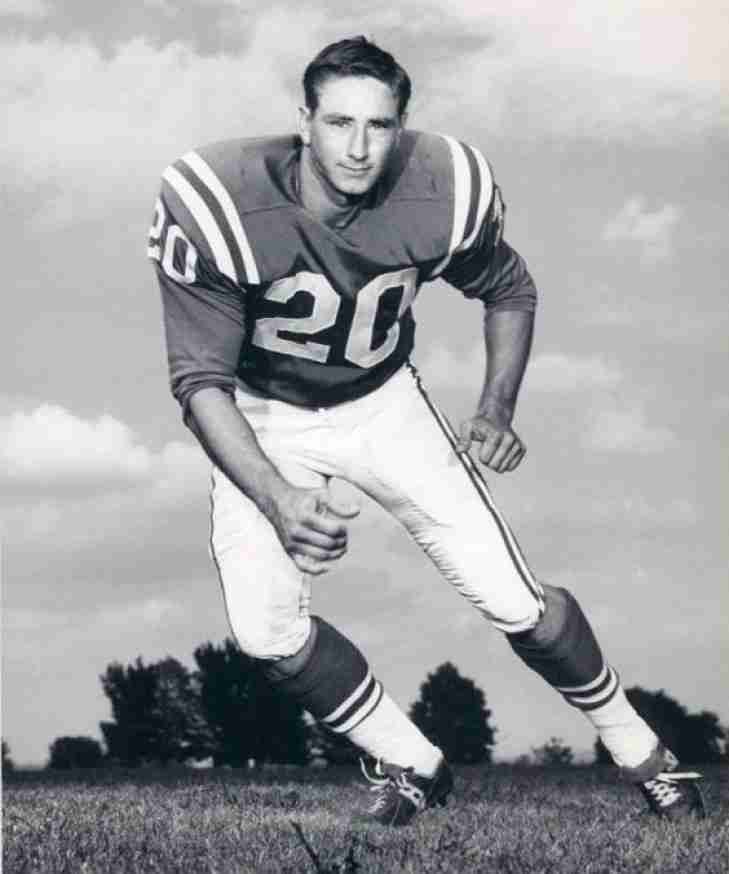
Selected in the third round (41st overall) of the 1963 NFL Draft out of West Texas State, safety Jerry Logan arrived in Baltimore with exceptional speed, ball-hawking instincts, and positional versatility. He carved out an immediate role on special teams as a dangerous kickoff and punt returner while earning snaps in a crowded secondary, quickly becoming a reliable fixture at strong safety for legendary head coach Don Shula.
Logan’s nose for the football made him one of the most prolific turnover machines in franchise history. Alongside free safety Rick Volk, Logan anchored Baltimore's "Organ Grinders" defense that led the Colts to the 1968 NFL Championship and an appearance in Super Bowl III. His play elevated even higher in 1970, when he picked off six passes—returning two for touchdowns—to earn First-Team AP All-Pro honors and his second of three Pro Bowl selections.
His ball-security instincts proved vital during Baltimore's run to glory in Super Bowl V. Logan was a centerpiece of a defensive unit that held the Dallas Cowboys to just 13 points in a dramatic 16–13 victory, securing the franchise's first Super Bowl title and wiping away the sting of two years prior.
Beyond his coverage range in the secondary, Logan remained an indispensable special-teams weapon throughout his career, amassing nearly 1,000 combined return yards. He was a Colt for his entire career and compiled 34 interceptions with 1,203 all-purpose yards.
30. Adam Vinatieri
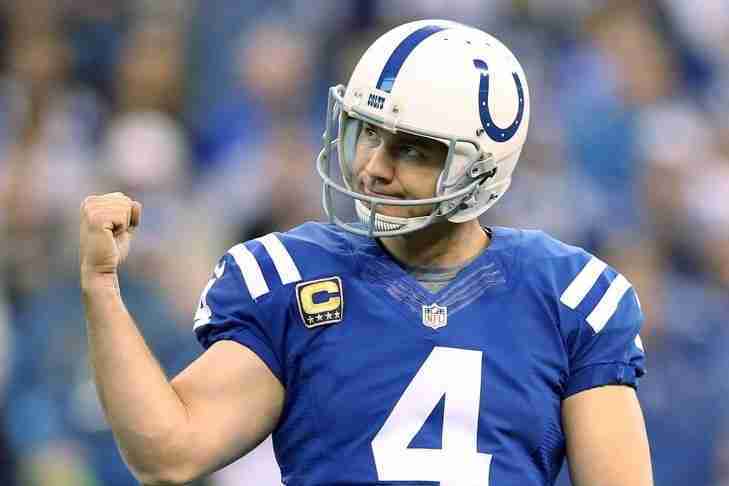
Drafted by no one in 1996 out of South Dakota State, Adam Vinatieri had already etched his name into NFL mythology long before stepping foot in Indianapolis. After spending his first decade in New England delivering ice-in-his-veins heroics—including immortal blizzard kicks and two game-winning Super Bowl boots—the free agent joined the Colts in 2006. While national fans wondered if his prime was behind him, Vinatieri quickly proved that his leg was as lethal in horseshoe blue as it ever was in red, white, and blue.
His introductory season in Indy immediately dispelled any doubts. Vinatieri produced a masterclass 2006 postseason, connecting on 14 of 15 field goal attempts—including five in a 15–6 divisional win over Baltimore—to propel the Colts to the title game. In Super Bowl XLI, he kicked three field goals in slick rain to secure a 29–17 victory over Chicago, capturing his fourth career ring and bringing a championship trophy back to Indianapolis.
Competing inside the controlled conditions of Lucas Oil Stadium, Vinatieri maintained astonishing technical precision throughout his thirties and forties. In 2014, at age 42, he put together one of the most accurate seasons in kicking history, converting 30 of 31 field goals (96.8%) while going a perfect 3-for-3 from 50-plus yards to earn First-Team AP All-Pro and Pro Bowl honors. From 2015 to 2016, he set an NFL record by converting 44 consecutive field-goal attempts, proving age was powerless against his smooth, repeatable stroke.
As the years rolled on, Vinatieri rewrote the league's history books right in front of Indy fans. In 2018, he passed Morten Andersen to become the NFL’s all-time career scoring leader, later becoming the only player in NFL history to score 1,000 or more points for two separate franchises. Whether drilling long-distance game-winners or executing automatic extra points, his steady presence steadied the franchise through both the Peyton Manning and Andrew Luck eras across 14 seasons.
Injuries finally caught up to the legendary specialist during the 2019 season, leading to knee surgery and his eventual release before he formally announced his retirement in 2021 at age 48.
For the shoe, Vinatieri had 336 field goals made on 394 attempts (85.3%), 507 extra points made on 524 attempts (96.8%), with 1,515 total points scored. In 2026, earned induction into the Pro Football Hall of Fame in Canton and as the 21st Indianapolis Colts Ring of Honor member.
32. Tom Matte
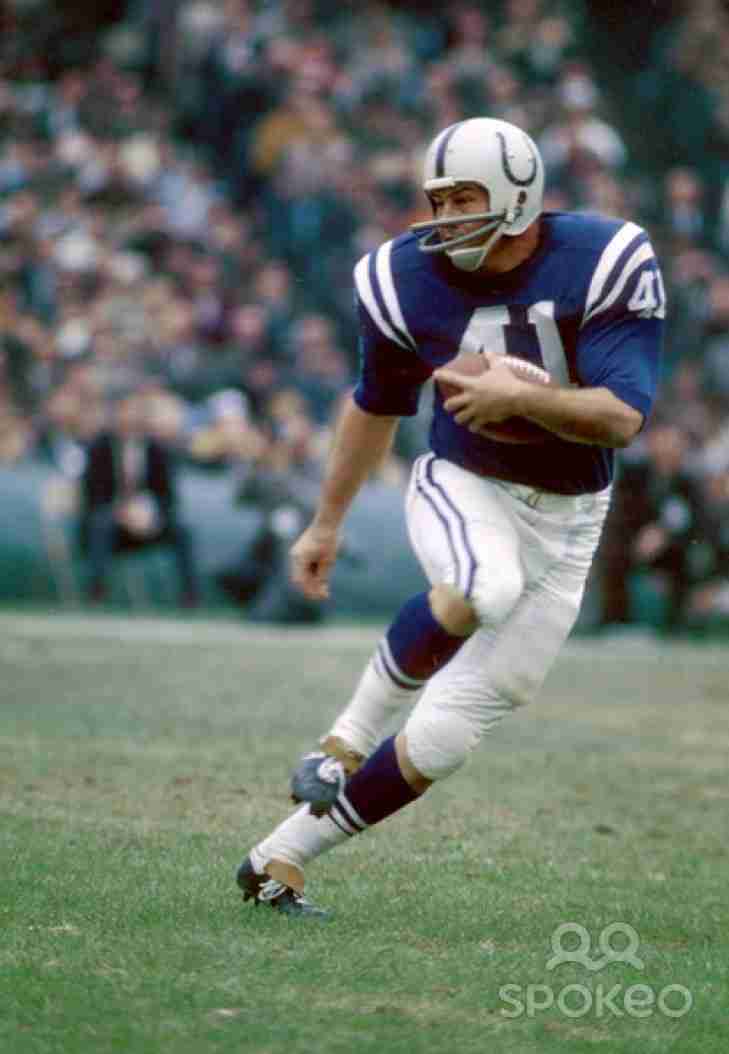
Before he ever topped the NFL in all-purpose yardage or hoisted a Super Bowl trophy, Tom Matte etched his name into pro football folklore as the ultimate utility man who stepped up when disaster struck. Arriving in Baltimore as a first-round pick out of Ohio State in 1961, Matte immediately made his mark with power running and soft hands, but it was his willingness to adapt—and famously wear a play-sheet taped to his wrist as an emergency quarterback—that proved he was the heartbeat of Don Shula’s backfield.
Matte earned legendary gridiron status during the 1965 season through one of the most famous emergency performances in pro football history. When injuries knocked out starting quarterbacks Johnny Unitas and Gary Cuozzo, Shula tapped Matte to start at quarterback for the regular-season finale and the Western Conference playoff game against Green Bay. Wearing a now-famous wristband with handwritten plays taped to his forearm—a strategic innovation that reshaped modern football communication—Matte managed the offense with courage and poise, leading Baltimore to a 20–0 victory over Los Angeles and pushing the Packers to overtime.
Returning to his primary halfback role, Matte produced his individual statistical masterpiece during the late 1960s. He earned back-to-back Pro Bowl selections in 1968 and 1969, serving as the offensive focal point alongside Earl Morrall and Unitas. In 1968, he rushed for 662 yards and ten touchdowns to power Baltimore to the 1968 NFL Championship. He followed up in 1969 with a First-Team AP All-Pro campaign, pacing the entire National Football League with 1,420 all-purpose yards and 11 total touchdowns while averaging 5.0 yards per carry.
Matte's dual-threat versatility proved essential during Baltimore's championship run in Super Bowl V. Contributing as both a runner and receiving outlet, he helped the Colts secure a 16–13 victory over the Dallas Cowboys to bring the Vince Lombardi Trophy to Baltimore.
Retiring after the 1972 season, Matte had 4,646 rushing yards, 45 rushing touchdowns, 249 receptions for 2,869 yards and 12 touchdown catches, and 8,882 total all-purpose yards.
26. Chris Hinton
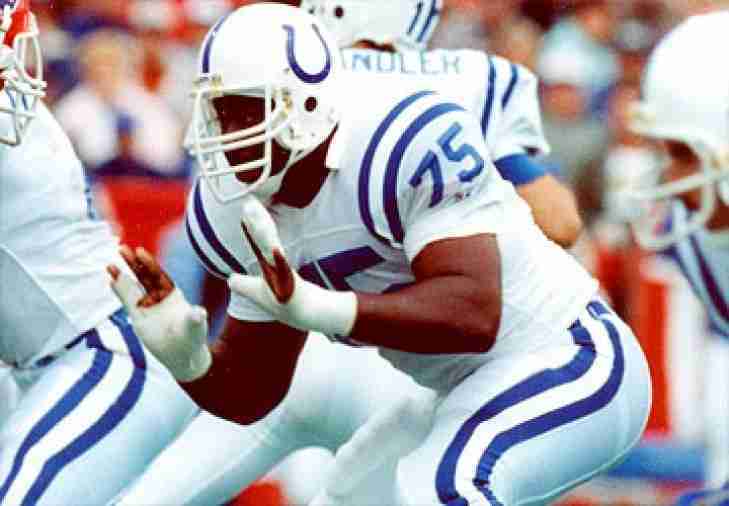
Drafted fourth overall in the 1983 NFL Draft by the Denver Broncos, offensive tackle Chris Hinton was immediately thrust into the spotlight when he was traded to the Baltimore Colts as the centerpiece of the historic deal for John Elway. While Elway's refusal to play for Baltimore reshaped the franchise's trajectory, Hinton quickly proved to be an elite, perennial All-Pro caliber anchor in his own right, famously joking years later that if Elway had stayed in Baltimore, Hinton wouldn't have been there to block for him anyway.
Plugging in immediately at guard as a rookie before switching to left tackle, Hinton weathered the franchise's turbulent relocation to Indianapolis in 1984 while serving as the focal point of the offensive line. Possessing rare technical precision and explosive functional power, he handled the league's premier pass rushers week after week. Across his seven seasons with the Colts, Hinton earned six Pro Bowl selections (1983, 1985–1989), two First-Team AP All-Pro selections (1987, 1989), and three Second-Team AP All-Pro honors (1985, 1986, 1988), spearheading a unit that paved the way for Eric Dickerson's dominant rushing campaigns in the late 1980s.
Hinton spent the final six years of his 13-season NFL career with Atlanta and Minnesota, earning a seventh Pro Bowl nod with the Falcons in 1993. His sustained excellence across the decade was permanently recognized when he was named to the NFL 1980s All-Decade Team. The Colts formally honored his enduring impact by inducting him into the Indianapolis Colts Ring of Honor in 2001.
29. Ray Donaldson
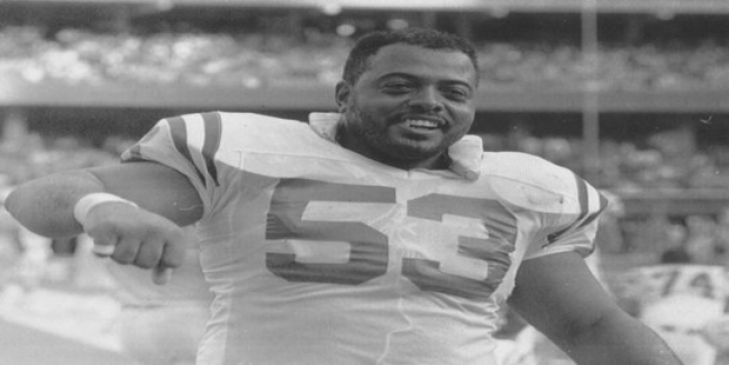
Drafted in the second round (32nd overall) of the 1980 NFL Draft out of the University of Georgia, Ray Donaldson arrived in Baltimore initially ticketed for interior depth. But by his second season in 1981, "Bulldog" earned the starting nod at center, breaking historical ground as the first African-American starting center in NFL history. That barrier-breaking moment launched a stellar, decade-plus run as the unyielding anchor of the Colts' offensive line.
Donaldson was the ultimate model of durability and quiet leadership through a turbulent chapter in franchise history. He served as the primary pivot man during the team's overnight relocation from Baltimore to Indianapolis in 1984, becoming the undisputed engine of the offense. Combining dense functional strength with elite footwork, he carved out gaping lanes for dynamic backfield talents—most notably clearing the way for Eric Dickerson’s league-leading 1,659 rushing yards during the 1988 season.
Donaldson’s peak national recognition in horseshoe blue came in the late 1980s. Between 1986 and 1989, he was selected to four consecutive Pro Bowls, earned Second-Team AP All-Pro honors in 1987, and helped lead Indy to an AFC East division crown and a playoff berth. His streak of 152 consecutive starts over a 10-year span highlighted a relentless work ethic that earned universal reverence from teammates and defensive linemen across the NFL.
He went on to spend two productive years anchoring the line for the Seattle Seahawks before experiencing a career renaissance with the Dallas Cowboys.
19. Lydell Mitchell
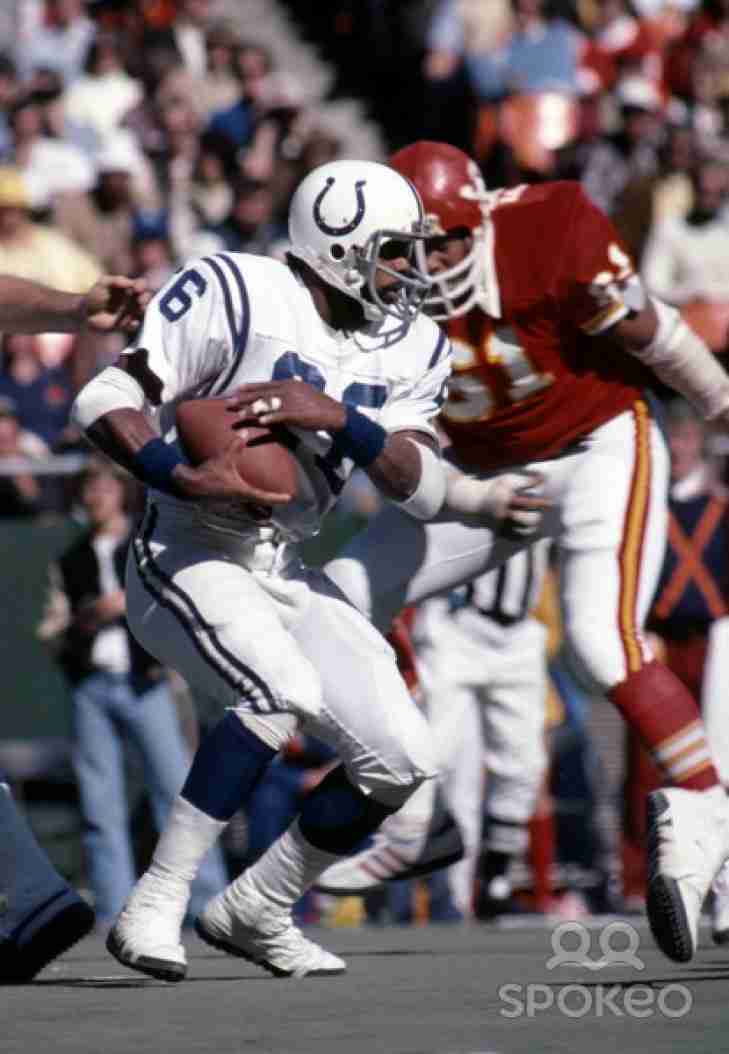
Drafted in the second round of the 1972 NFL Draft out of Penn State, Lydell Mitchell arrived in Maryland as an elite, multi-dimensional weapon ready to transform Baltimore's backfield. After a couple of seasons settling into the professional ranks, Mitchell exploded into full stardom alongside quarterback Bert Jones, serving as the offensive engine for a juggernaut squad that captured three consecutive AFC East division titles from 1975 to 1977.
Mitchell’s prime in blue and white was characterized by constant dual-threat versatility. He became the franchise’s first to achieve three straight 1,000-yard rushing seasons, surpassing 1,193 yards in 1975, 1,200 in 1976, and 1,159 in 1977. His most groundbreaking achievements, however, came through the air: Mitchell led the NFL in receptions twice—72 catches in 1974 and 71 in 1977—a rare feat for a running back at that time. In his outstanding 1976 season, he recorded an NFL-high 23 Approximate Value (AV), 1,755 scrimmage yards, and eight touchdowns, earning Second-Team AP All-Pro honors.
During his peak stretch, Mitchell was a three-time Pro Bowl selection (1975, 1976, 1977) and a two-time Second-Team AP All-Pro choice. Whether grinding out tough yards between the tackles or lining up as Jones' primary safety valve out of the backfield, he regularly generated high-volume output, racking up over 1,700 yards from scrimmage in three straight campaigns. After a contract dispute, Mitchell spent his final three NFL seasons with San Diego and the Los Angeles Rams, but he reached his highest level in Baltimore.
With the Colts, Mitchell had a total of 8,010 yards from scrimmage and 41 total touchdowns.
28. Rick Volk
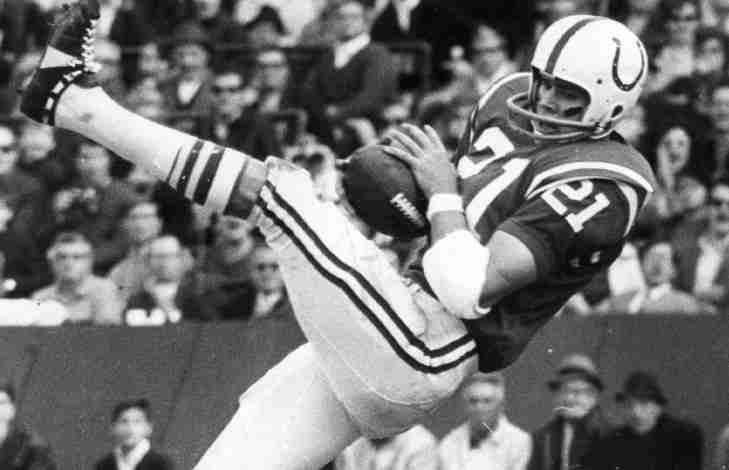
Selected in the second round (45th overall) of the 1967 NFL Draft out of Michigan, Rick Volk completed a rare football progression by transitioning straight from a Rose Bowl appearance with the Wolverines to starting in the NFL as a rookie. Arriving in Baltimore, the tough, cerebral safety immediately won the starting free safety job, bringing instincts, sharp tackling, and ball-hawking range to the back end of the Baltimore secondary.
Volk's impact was immediate, helping propel Baltimore to a 11–1–2 record as a rookie in 1967 while earning his first career Pro Bowl selection and First-Team AP All-Pro honors. The following season, he helped lead the Colts to the NFL Championship and an appearance in Super Bowl III. However, that championship clash turned tragic for Volk when he suffered a severe concussion in a collision in the second half, forcing him to be hospitalized while Baltimore suffered a shocking upset loss to the New York Jets.
Redemption arrived two years later in Super Bowl V against the Dallas Cowboys. Playing with a shoulder harness and relentless determination, Volk made one of the game's defining plays in the fourth quarter. Snagging a critical interception off Cowboys quarterback Craig Morton, he returned it 30 yards to the Dallas 2-yard line, setting up Tom Nowatzke’s game-tying touchdown run and paving the way for Baltimore's 16–13 victory to claim the Lombardi Trophy.
By the time his tenure with the franchise concluded after the 1975 season, Volk had intercepted 31 passes in a Colts uniform—ranking among the top marks in franchise history. He closed out his career with brief stints in New York (Giants) and Miami, but his legacy was permanently established in Baltimore as a big-game playmaker.
27. Fred Miller
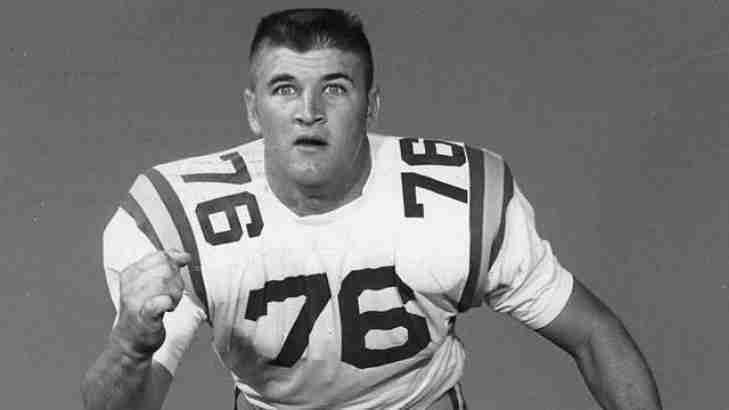
Selected in the seventh round (93rd overall) of the 1962 NFL Draft out of LSU, Fred Miller arrived in Charm City as a raw, physical prospect along the interior defensive line. Settling into the Baltimore Colts' starting lineup by 1964, the 6-foot-3, 250-pound defensive tackle quickly transformed into an unyielding anchor, anchoring one of the most formidable defensive fronts in professional football alongside Bubba Smith and Billy Ray Smith.
Operating as a relentless run-stuffer with exceptional lateral mobility, Miller made a career out of blowing up interior running plays before they could develop. His ability to collapse the pocket from the inside allowed Baltimore's pass rushers to wreak havoc off the edge. During his prime from 1967 to 1969, Miller earned three consecutive Pro Bowl selections, solidifying his reputation as one of the league’s premier defensive tackles.
Miller’s tenure in Baltimore was defined by relentless championship contention, as he suited up in three separate title games for the franchise. He anchored the defense during the historic 1968 campaign, helping propel the Colts to an NFL Championship victory over Cleveland before falling in Super Bowl III. Two years later, Miller got his redemption on the game's biggest stage, starting at left defensive tackle in Super Bowl V as Baltimore defeated the Dallas Cowboys 16–13 to claim the Lombardi Trophy.
Beyond his big-game pedigree, Miller’s hallmark was durability. Over his decade-long career spent entirely in Baltimore, he played in 133 regular-season games, missing only five games total throughout his ten years with the team. His quiet leadership and iron-man reliability along the front four steadied the Colts through two coaching changes and the transition into the post-merger NFL era.
Retiring following the 1972 season, Miller walked away with a championship ring and a permanent spot in Baltimore football lore. He compiled 52 unofficial sacks with 125 starts in 133 games.
17. Alan Ameche
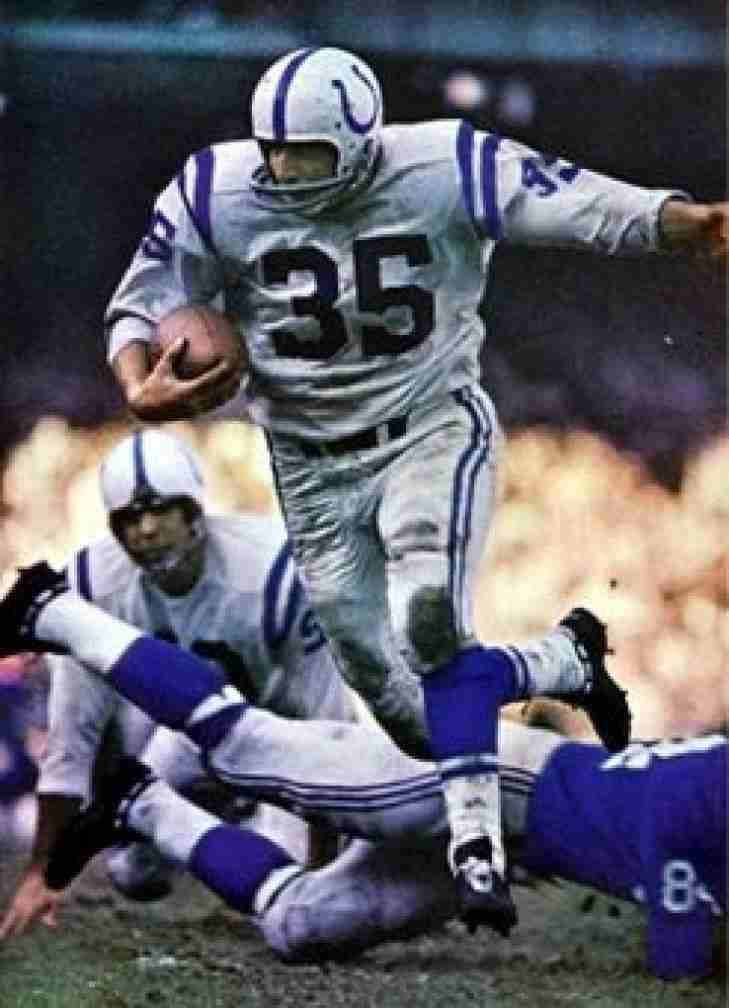
Fresh off winning the 1954 Heisman Trophy at Wisconsin, Alan "The Horse" Ameche arrived in Baltimore as the third overall pick in the 1955 NFL Draft and immediately established himself as a dominant focal point for the Colts. Combining a power-packed 218-pound frame with elite speed, he burst onto the professional scene by rushing for 194 yards in his very first career game against the Chicago Bears, featuring a staggering 79-yard touchdown run. Ameche capped his stellar debut campaign by winning the NFL rushing crown with 961 yards and a league-leading nine rushing touchdowns, sweeping Rookie of the Year honors and earning a First-Team AP All-Pro selection.
Ameche served as the ideal backfield anchor for head coach Weeb Ewbank and quarterback Johnny Unitas, delivering punishing runs between the tackles while absorbing heavy workloads. He earned Pro Bowl selections in each of his first four seasons (1955–1958) and added three Second-Team AP All-Pro selections (1956, 1958, 1959). His peak seasons provided the physical backbone for Baltimore's offensive explosion: in 1956, he eclipsed 1,000 yards from scrimmage and racked up nine touchdowns, following that up in 1958 with a dominant 791-yard, eight-touchdown effort on the ground. His career became forever etched in gridiron lore during the 1958 NFL Championship Game against the New York Giants—widely remembered as "The Greatest Game Ever Played". In sudden-death overtime, Ameche capped a grueling drive with a legendary one-yard touchdown dive into the end zone, securing Baltimore's first world championship.
He remained a vital weapon the following season as the Colts captured back-to-back titles in 1959, powering through defenses for 679 rushing yards and five scores while opening up passing lanes for Unitas and Raymond Berry. Tragically, Ameche’s stellar trajectory was cut short during his sixth season in 1960 when he suffered a severe Achilles tendon injury that forced him to retire at just 27 years old. Despite his brief career, his impact across the decade earned him a selection to the NFL 1950s All-Decade Team.
Overall, Ameche amassed 4,045 rushing yards, 40 rushing touchdowns, 101 receptions, 733 receiving yards, and four receiving touchdowns.
23. Bert Jones
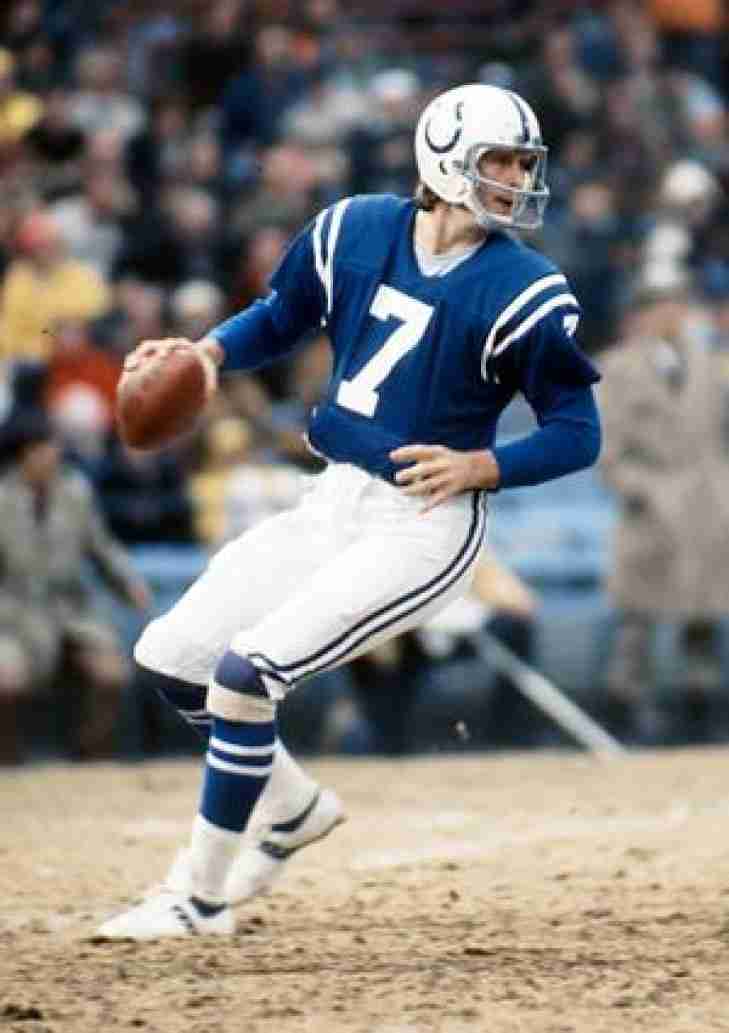
Taking over the reins of a franchise directly following a legend like Johnny Unitas is one of the most daunting assignments in football history. Selected second overall out of LSU in the 1973 NFL Draft, Bert Jones met that challenge head-on, earning the nickname "The Ruston Rifle" for a bullet pass and fearless pocket presence that quickly won over the fan base.
Without the deep championship cast that surrounded Unitas in the late 1950s, Jones willed the Colts back into national prominence through sheer individual excellence. Orchestrating head coach Ted Marchibroda's offense, he led Baltimore to three consecutive AFC East division crowns from 1975 to 1977. The crown jewel of his tenure came in 1976—a dominant season where he led the NFL with 3,104 passing yards, threw 24 touchdowns against nine interceptions, and compiled a league-leading 102.5 passer rating. That brilliant run swept the league's top honors, earning him the 1976 AP NFL Most Valuable Player award, AP Offensive Player of the Year, and First-Team All-Pro honors.
Known as one of the toughest and purest arm talents of his era, Jones routinely earned the admiration of opposing coaches and players. Regrettably, persistent shoulder injuries beginning in 1978 siphoned away his prime years and limited his availability. After nine seasons anchoring the offense in Maryland, Jones played a single final campaign with the Los Angeles Rams in 1982 before a neck injury brought his career to an early close.
With the Colts, Jones had a 56.1% completion percentage for 17,663 passing yards, a 122-97 TD-INT ratio, alongside 1,350 rushing yards and 14 rushing touchdowns.
22. Bob Vogel
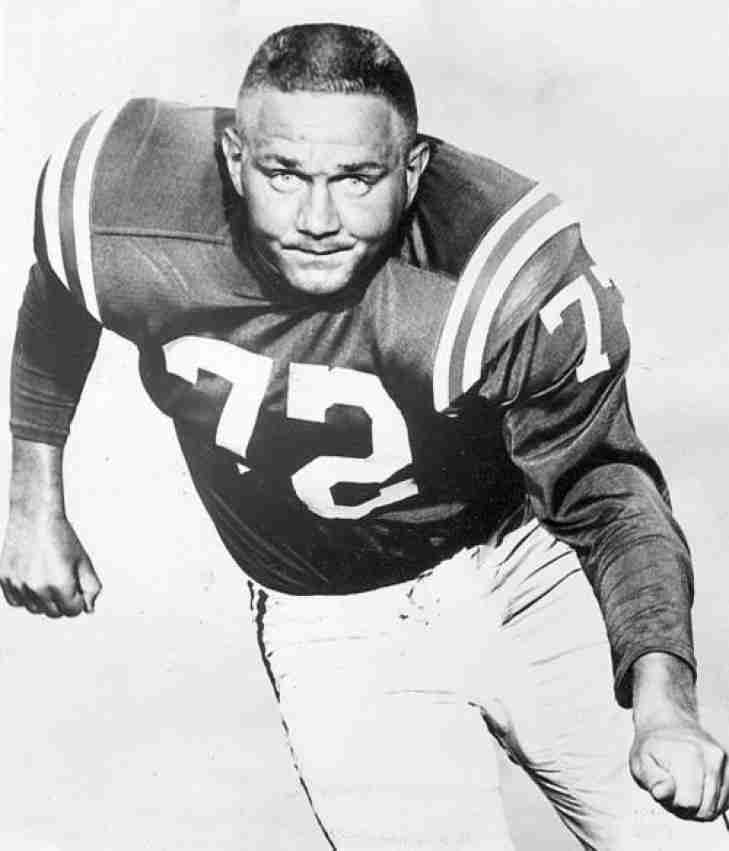
Taken fifth overall in the first round of the 1963 NFL Draft out of Ohio State, Bob Vogel landed in Baltimore and immediately stepped into one of the most demanding assignments in football: protecting the blind side of Hall of Fame quarterback Johnny Unitas. Vogel took over as the starting left tackle from day one and locked down the position for a decade, serving as the unsung protector who allowed Baltimore's explosive passing attack to flourish.
Vogel’s time in the blue and white was marked by exceptional durability and precise technique. He started all but one game for the franchise over 10 seasons, becoming one of the top offensive tackles of the 1960s and routinely challenging the league's most formidable defensive ends. He received five Pro Bowl selections (1964, 1965, 1967, 1968, 1971) and two Second-Team AP All-Pro honors (1965, 1968). Vogel was a key contributor to the 1968 team that claimed the NFL Championship, leading an offensive line that helped Baltimore finish 13–1 in the regular season.
His decade of elite play culminated on the game's ultimate stage in Super Bowl V against the Dallas Cowboys. Starting at left tackle, Vogel helped neutralize a suffocating Dallas pass rush, paving the way for Baltimore's dramatic 16–13 victory to capture the franchise's first Super Bowl title. Vogel retired after the 1972 season at just 31, walking away on his own terms as one of the most respected offensive linemen of his era.
21. Tarik Glenn
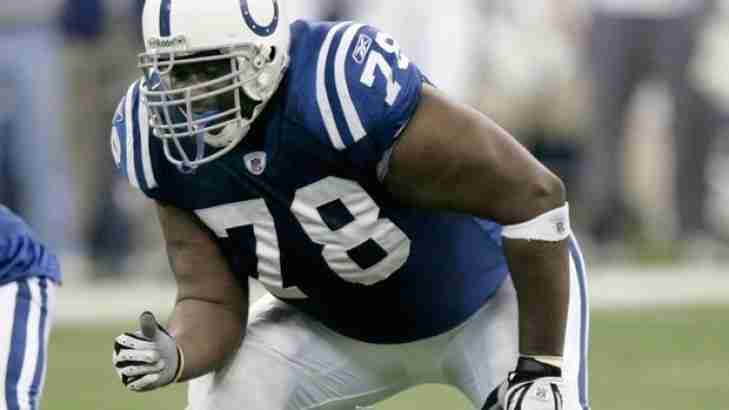
Selected in the first round (19th overall) out of California in the 1997 NFL Draft, Tarik Glenn stepped into the Indianapolis Colts' starting lineup as a rookie at right guard before permanently locking down the crown-jewel spot at left tackle. Possessing rare functional strength and light-footed agility, Glenn anchored the blind side of the offensive line for a decade, serving as the trusted primary protector for Peyton Manning during the franchise's meteoric rise to elite status.
Glenn’s presence was the rock around which offensive line coach Howard Mudd built one of the most efficient pass-blocking units in gridiron history. Tasked with shutting down the league's most terrifying edge rushers without assistance, Glenn’s mastery at left tackle allowed Manning's high-octane, no-huddle offense to flourish without fear of backside pressure. He started all 16 games in seven of his 10 professional seasons, earning three consecutive Pro Bowl selections from 2004 through 2006 as national recognition caught up to his elite on-field production.
His career reached a fairytale climax during the 2006 campaign. After dominating through four postseason victories, Glenn’s final game in uniform came on football's grandest stage, Super Bowl XLI. On a rain-soaked field in Miami, Glenn neutralized the Chicago Bears' pass rush, helping clear the way for 425 total yards of offense in a 29–17 victory. Walking off the field as a world champion, Glenn announced his retirement that offseason at the top of his game. He was permanently enshrined in franchise lore when he was inducted into the Indianapolis Colts Ring of Honor in 2022.
Glenn notably started all 154 games of his career.
18. Mike Curtis
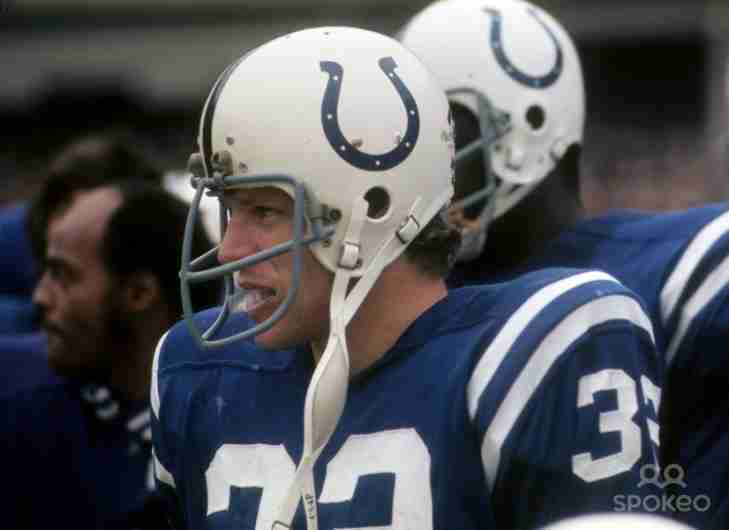
Selected in the first round of the 1965 NFL Draft out of Duke, Mike "Mad Dog" Curtis arrived in Baltimore with a reputation for raw, unchecked intensity. Initially deployed as a fullback on offense during his rookie season, the Colts quickly realized his vicious hitting and fiery demeanor belonged on defense. Upon shifting to linebacker in 1966, Curtis became the terrifying, central enforcer of a Baltimore defense that routinely punished opposing backfields.
Curtis weaponized a reckless, sideline-to-sideline playing style that made him one of the most feared middle linebackers of his generation. Known for his zero-tolerance attitude on the field—famously leveling a fan who ran onto the field to steal the game ball—Curtis proved to be as skilled as he was intimidating. His career reached its zenith in 1970, when the Kansas City Committee of 101 named him AFC Defensive Player of the Year. That same season, Curtis provided the defining play of Super Bowl V against Dallas: with the game tied late in the fourth quarter, he intercepted a Craig Morton pass and returned it to the Cowboys' 28-yard line, setting up Jim O'Brien's game-winning field goal to secure Baltimore's 16–13 victory.
A four-time Pro Bowler (1968, 1970, 1971, 1974) and a First-Team AP All-Pro selection in 1968, Curtis anchored the Colts' defense through both their 1968 NFL Championship and Super Bowl V title runs. Although sacks weren't officially recorded in the NFL then, PFR retrospective research credits him with 16.5 sacks during his Baltimore tenure, complementing his elite pass coverage. Curtis spent 11 seasons terrorizing offenses in blue and white before finishing his career with brief stops in Seattle and Washington.
For the Colts, Curtis accumulated 21 interceptions for 248 return yards, two defensive touchdowns, eight fumble recoveries, 16.5 unofficial sacks, and when you count his numbers elsewhere, he is an unofficial member of the defensive 20/20 club.
16. Robert Mathis
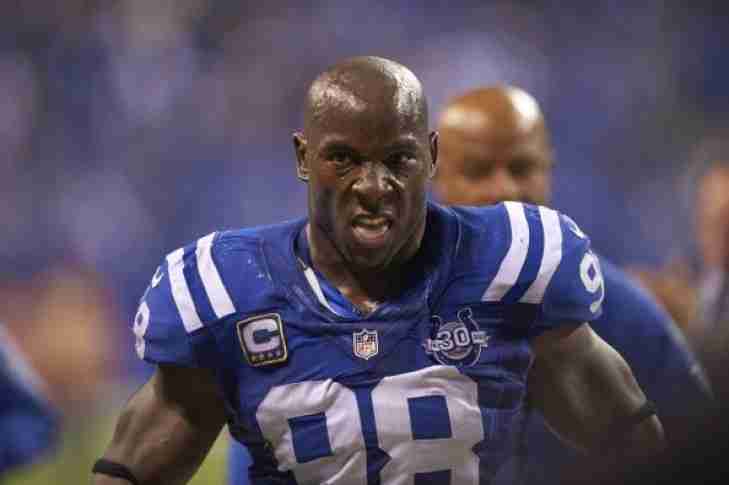
Drafted in the fifth round from FCS Alabama A&M in 2003, Robert Mathis emerged in Indianapolis as an underrated pass-rush specialist. His relentless energy and quickness off the edge challenged typical size expectations. Standing 6-foot-2 and weighing 245 pounds, Mathis progressed from a third-down specialist to a premier game disruptor, excelling in strip-sacks more than anyone else before or after him.
Teaming up with Dwight Freeney, Mathis helped form the premier edge-rushing tandem of the 2000s, generating non-stop backfield havoc that fueled the franchise's golden era. A cornerstone of the Super Bowl XLI championship squad, he was a five-time Pro Bowl selection (2008–2010, 2012, 2013) whose production spiked even higher when head coach Chuck Pagano shifted him to stand-up outside linebacker in 2012. That scheme change culminated in a historic 2013 campaign: Mathis earned First-Team AP All-Pro honors, won the inaugural Deacon Jones Award by leading the NFL with a career-high 19.5 sacks, and led the league with eight forced fumbles while finishing as the runner-up for AP Defensive Player of the Year.
After missing the entire 2014 season due to a torn Achilles tendon, Mathis demonstrated his signature resilience by returning for two final campaigns to close out his career. As the last remaining active player from the Super Bowl XLI championship roster, he played his final game in 2016, fittingly capping his legacy with a signature strip-sack against Jacksonville to pass Freeney on the all-time sack list. His unrivaled ability to swat the ball free left him as the NFL's all-time record holder for career forced fumbles (52) and strip-sacks (47).
123.0 sacks, 538 combined tackles (408 solo, 130 assists), 108 tackles for loss, 141 quarterback hits, 52 forced fumbles. In 2021, the team inducted Mathis into their Ring of Honor.
11. Bobby Boyd
9. Lenny Moore
14. Art Donovan
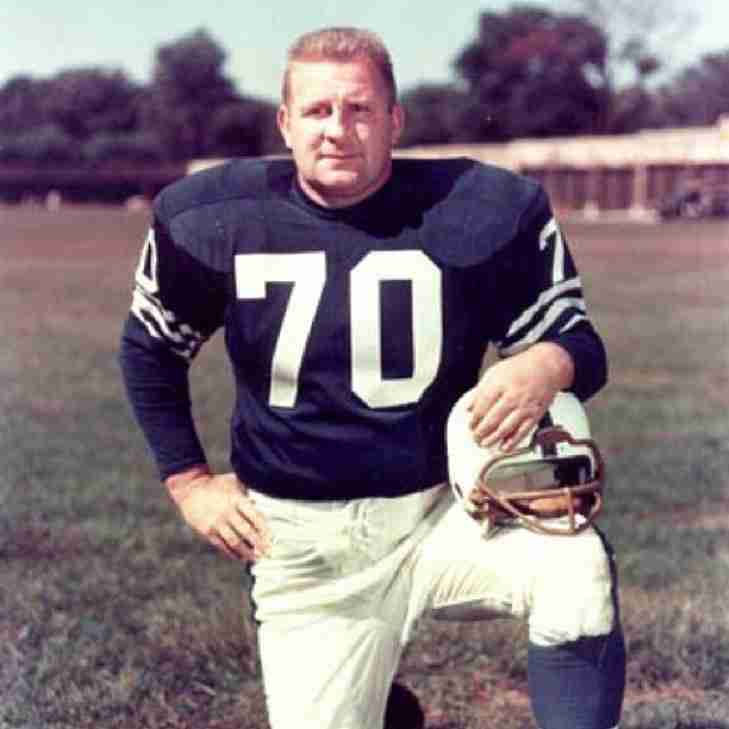
Before his razor-sharp wit made him a late-night television sensation, Arthur "Fatso" Donovan Jr. established himself as one of the most destructive interior defensive linemen in the early history of professional football. A World War II Marine Corps veteran who saw combat at Luzon and Iwo Jima, Donovan joined the original, short-lived Baltimore Colts as a 26-year-old rookie in 1950. When that franchise dissolved, his early career took a bizarre path: he played for the New York Yanks in 1951 and the Dallas Texans in 1952, earning the unique distinction of playing for three consecutive franchises that folded in back-to-back-to-back seasons.
Donovan's wild journey stabilized in 1953 when the NFL awarded a new franchise to Baltimore, purchasing the defunct Texans' assets and returning the stout defensive tackle to Maryland. Anchoring the interior alongside Gino Marchetti and "Big Daddy" Lipscomb, Donovan weaponized a 263-pound frame, tremendous leverage, and an uncanny ability to diagnose plays before they unfolded. Known for his relentless motor and "bulldog" tenacity, he earned five consecutive Pro Bowl selections from 1953 through 1957 and four straight First-Team AP All-Pro selections from 1954 through 1957.
Donovan's peak coincided with the franchise's rise to the top of the gridiron. He was the defensive anchor for the historic 1958 and 1959 Baltimore squads that captured back-to-back NFL Championships, including the iconic 1958 title game victory over the New York Giants—widely celebrated as "The Greatest Game Ever Played". Beyond his on-field destruction of opposing ground games, Donovan served as the heart and soul of the locker room, utilizing his legendary storytelling and infectious humor to keep teammates loose during high-stakes championship runs.
After retiring in 1961, Donovan was honored on the NFL 1950s All-Decade Team. In 1968, he became the first Baltimore Colts player in the Hall of Fame. The Colts retired his No. 70 jersey, cementing his key role in franchise history.
