

43. Alex Smith
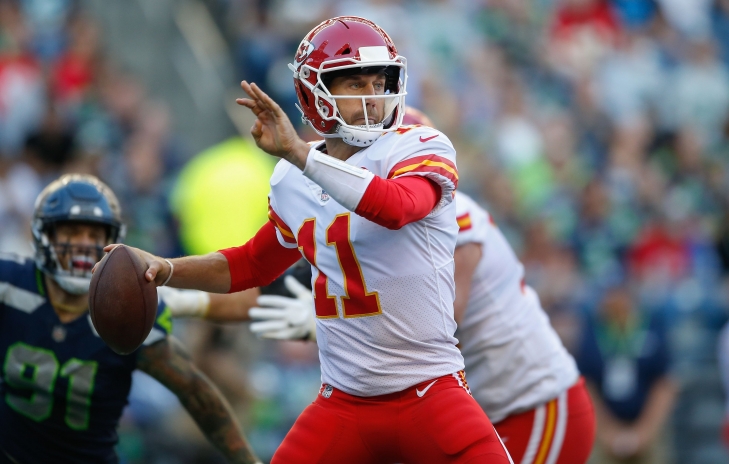
Select any first overall pick in NFL history, and you’ll usually find a narrative built around immediate stardom or spectacular failure. Alex Smith fit neither box. Selected ahead of Aaron Rodgers by San Francisco in 2005 out of Utah, Smith endured a grueling trial by fire, churning through six offensive coordinators in his first six seasons while battling injuries—including shoulder damage that wiped out his entire 2008 campaign. By the time Jim Harbaugh resurrected his trajectory in 2011, Smith had earned the unfair reputation of an unwanted afterthought, only for a 2012 concussion to open the door for Colin Kaepernick to steal his starting job mid-season.
Traded to Kansas City in 2013 alongside new head coach Andy Reid, Smith walked into a franchise reeling from a 2–14 collapse. Few in Chiefs Kingdom expected a transcendent franchise savior, but Smith provided something infinitely more crucial: flawless operational stability. He won his first nine starts in red and gold, engineering an immediate turnaround that brought Kansas City back to the postseason while earning his first career Pro Bowl selection.
Skeptics routinely tagged him with the "Game Manager" label, criticizing his preference for short high-percentage throws over dangerous downfield risks. Yet that calculated risk aversion fueled Reid’s offensive machine. Smith excelled at protecting the football, unleashing elite dual-threat mobility when pockets collapsed—racking up 1,672 rushing yards in Missouri—and letting Jamaal Charles and Travis Kelce tear defenses apart after the catch.
His redemption peaked in 2017. Shaking off the "captain checkdown" narrative, Smith attacked defenses at every depth, led the entire National Football League with a 104.7 passer rating, and threw for a career-high 4,042 yards, 26 touchdowns, and just five interceptions. He earned his third Pro Bowl nod and orchestrated the league's most efficient passing attack—all while serving as an extraordinary mentor to a rookie first-round pick waiting in the wings named Patrick Mahomes.
History repeated itself in early 2018 when Kansas City traded the veteran to Washington, handing the keys to Mahomes. Yet unlike his exit from the Bay Area, Smith departed Arrowhead as a respected hero who had stabilized a struggling franchise and laid the culture, discipline, and winning foundation for a championship dynasty. After surviving a life-threatening leg injury and infection in Washington to win the 2020 NFL Comeback Player of the Year award, he hung up his cleats as one of the most resilient signal-callers of his generation.
He threw for 17,608 passing yards and 102 touchdown passes against just 33 interceptions, and he rushed for 1,672 yards and 10 touchdowns, posting a 50–26 starting record for Kansas City.
40. Justin Houston
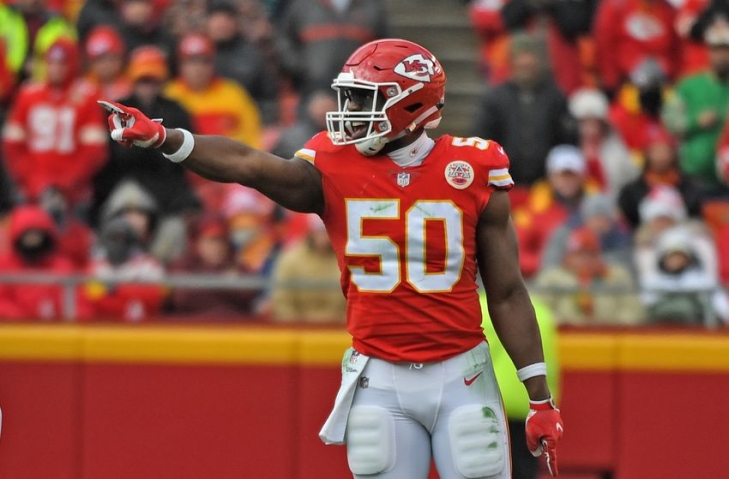
Selected in the third round (70th overall) of the 2011 NFL Draft out of Georgia, Justin Houston stepped into Arrowhead Stadium as a first-round talent who fell due to off-field concerns. Paired with Tamba Hali in Bob Sutton’s aggressive 3-4 defense, Houston formed one of the era’s most destructive edge-rushing duos, combining explosive initial quickness with a powerful long-arm bull rush to collapse pockets from the outside linebacker position.
Houston wasted no time making his presence felt as a rookie before exploding into an elite pass rusher during his second season, recording 10.0 sacks and earning his first Pro Bowl nod in 2012. He built on that breakthrough in 2013 by racking up 11.0 sacks in just 11 games—securing a second Pro Bowl selection—before a knee injury briefly interrupted his momentum.
His performance reached historic heights during a magical 2014 campaign. Houston put together one of the greatest single-season pass-rushing displays in NFL history, terrorizing opposing quarterbacks for 22.0 sacks—leading the entire league, breaking Derrick Thomas’s single-season franchise record (20.0), and falling just a half-sack short of Michael Strahan’s single-season NFL record. That magnificent year earned him consensus AP First-Team All-Pro honors and his third consecutive Pro Bowl nod.
Houston earned his fourth consecutive Pro Bowl selection in 2015 after recording 7.5 sacks in 11 games, though knee injuries began to limit his availability in the second half of his Kansas City tenure. Despite battling through surgeries and rehab, his playmaking instinct remained sharp whenever he stepped onto the field, highlighted by a game-changing three-sack performance in Denver in 2016.
Houston departed Arrowhead after the 2018 season to sign with the Indianapolis Colts. With the Chiefs, Houtson compiled 78.5 sacks, 382 tackles, 14 forced fumbles, eight fumble recoveries, four interceptions, and two defensive touchdowns
38. Jan Stenerud
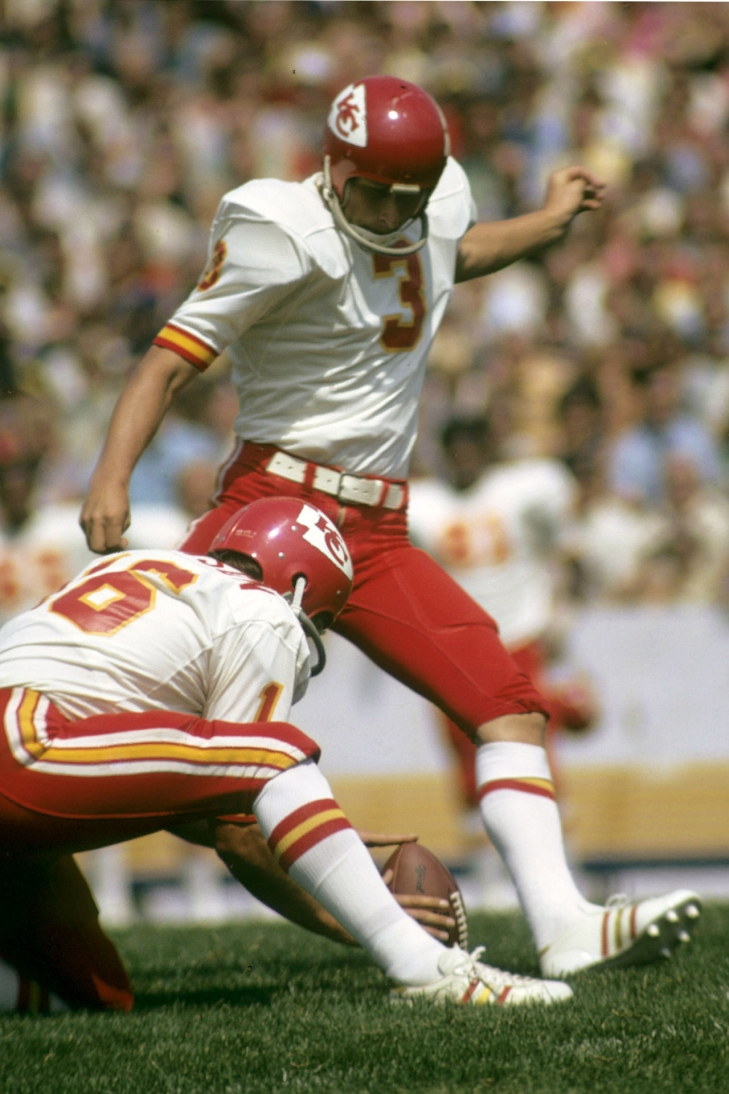
The path to pro football immortality rarely begins on a ski jump, but Jan Stenerud’s journey stands as one of the most unlikely origin stories in sports history. Arriving in the United States from Fetsund, Norway, on a ski-jumping scholarship to Montana State, Stenerud was discovered almost by accident when basketball coach Jim Sweeney spotted him fooling around on the gridiron, casually driving footballs through the uprights with a soccer-style instep kick. Hank Stram and the Kansas City Chiefs pounced in the 1966 draft, forever altering the trajectory of specialized kicking in the National Football League.
Before Stenerud, placekicking was largely a secondary duty handled by straight-ahead linebackers or position players. Stenerud revolutionized the role, using his soccer-style mechanics to generate unprecedented power, distance, and arc. He made an immediate impact as a rookie in 1967, converting 21 field goals and establishing himself as a long-range weapon who could fundamentally alter game management from beyond 50 yards.
His historic peak unfolded during a dominant four-year sweep from 1968 to 1971, where he earned four consecutive First-Team All-Pro / All-AFL nods and four straight All-Star selections. His iconic moment came on pro football's grandest stage in Super Bowl IV: Stenerud accounted for the first nine points of the game, drilling three field goals—including a then-Super Bowl record 48-yarder into a heavy wind—to spark Kansas City's 23–7 upset victory over Minnesota.
Stenerud remained the gold standard of kicking accuracy and range throughout his 13 seasons in Missouri, earning a fifth Chiefs Pro Bowl invitation in 1975. Beyond his statistical achievements, his arrival ushered in a modern era in which every professional franchise sought pure, dedicated kicking specialists to anchor its special teams.
After departing Kansas City following the 1979 season, Stenerud extended his career with successful runs in Green Bay and Minnesota, retiring in 1985 with 1,699 career points; 1,217 of those were as a Chief. In 1991, he made history once again by becoming the very first pure placekicker inducted into the Pro Football Hall of Fame, followed by his enshrinement into the Kansas City Chiefs Hall of Fame in 1992.
42. Dave Szott
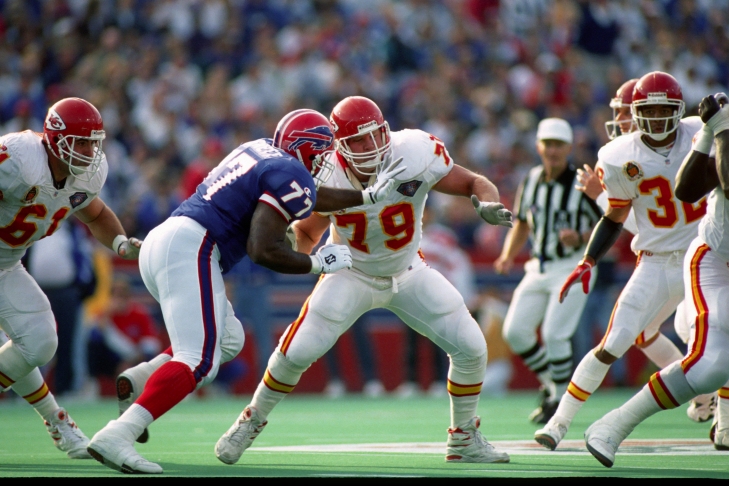
Drafted in the seventh round (180th overall) of the 1990 NFL Draft out of Penn State, Dave Szott entered the professional ranks as a long shot. Leveraging the technical discipline instilled by legendary Nittany Lions coach Joe Paterno, the rookie guard forced his way onto the field almost immediately, earning six starts in his inaugural season before locking down the left guard position as a full-time starter in 1991.
Szott quickly grew into one of the most reliable and technically sound interior linemen in the National Football League. Flanked by center Tim Grunhard and tackle John Alt, he formed a bruising left side of the offensive front that defined Marty Schottenheimer's physical brand of football. His pulling mobility and leverage in the run game cleared massive lanes for Christian Okoye, Barry Word, and Marcus Allen, while his anchor in pass protection gave Joe Montana a clean pocket during Kansas City’s playoff runs in the early 1990s.
Szott’s peak year came in 1997. Playing at an elite, flawless level, he anchored an offensive line that helped propel the Chiefs to a 13–3 record and the top seed in the AFC. His dominance at left guard earned him consensus AP First-Team All-Pro honors, cementing his status among the elite interior linemen of his era.
Beyond his performance between the lines, Szott’s tenure in Missouri was defined by extraordinary community leadership. Inspired by his son Shane, who was born with severe cerebral palsy, Szott became a tireless advocate for families facing developmental challenges, earning the team’s Walter Payton Man of the Year nomination multiple times for his charitable efforts across the metropolitan area.
Szott departed Kansas City following the 2000 season to complete the final three years of his 14-year NFL career with Washington and the New York Jets, retiring with 173 total games played. In 2024, Szott was chosen for the Chiefs Hall of Fame.
21. Abner Haynes
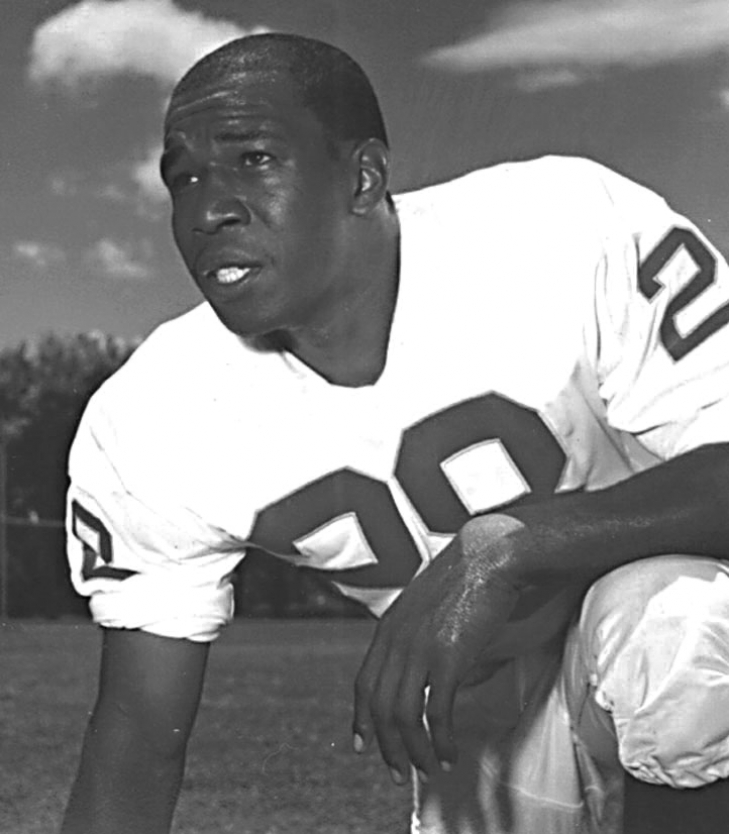
In terms of sheer games played in professional football, Abner Haynes does not rank among the top 50 on the franchise's all-time leaderboard. Yet few players in gridiron history ever made a more explosive, immediate impact than the North Texas product did at the birth of the American Football League. Joining Lamar Hunt’s Dallas Texans in 1960, Haynes immediately became the young league's signature draw, unleashing a dynamic style of play that defined Hank Stram’s high-flying offense from the very first snap.
Haynes immediately orchestrated one of the most remarkable debut seasons in professional football history. A multidimensional threat from the backfield, he captured the inaugural AFL rushing title with 875 yards, led the league with nine rushing touchdowns, and added 576 receiving yards, earning both AFL Rookie of the Year and AFL Player of the Year honors. He was not merely an elite open-field runner; his exceptional lateral agility and immediate acceleration enabled Stram to deploy him simultaneously as a flanker, a screen target, and a dangerous return specialist.
That record-setting inaugural campaign established a three-year stretch of unprecedented offensive dominance. Haynes topped the AFL in rushing touchdowns in each of the league’s first three seasons (1960, 1961, and 1962), routinely turning broken plays into runaway highlights. His personal peak came in 1962, when he racked up 1,049 rushing yards, 573 receiving yards, and 19 total scrimmage touchdowns, earning consensus First-Team All-AFL honors for the third straight year while propelling the Texans to an AFL Championship victory over the Houston Oilers.
When the franchise relocated to Missouri in 1963 to become the Kansas City Chiefs, Haynes remained the featured weapon in the offense. His versatility proved to be the ultimate cheat code for Len Dawson, giving Kansas City an explosive tailback who could stretch defenses horizontally on sweep plays or sprint past linebackers down the seam on passing downs. Over his five seasons with the franchise, he accumulated 9,734 all-purpose yards and 67 touchdowns, serving as the organization's first superstar before being traded to Denver in 1965.
In 1991, the Chiefs inducted Haynes into their Hall of Fame.
36. Jim Lynch
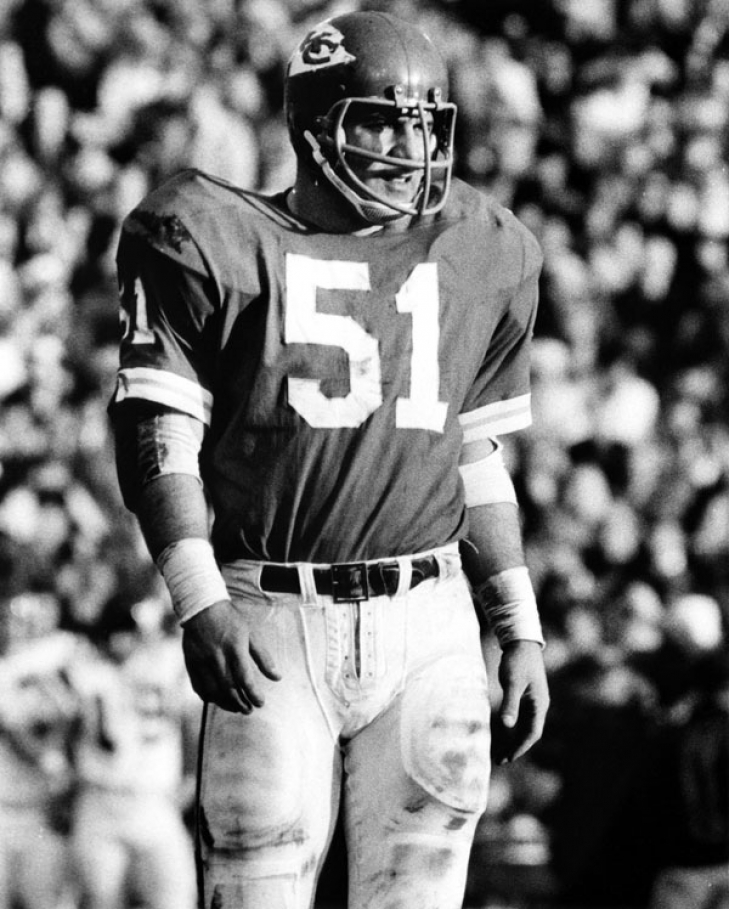
Selected in the second round (47th overall) of the 1967 AFL Draft after winning the Maxwell Award and captaining Notre Dame to a national championship, Jim Lynch arrived in Kansas City as a complete, cerebral linebacker. Slotting alongside Pro Football Hall of Famers Willie Lanier and Bobby Bell, Lynch completed arguably the greatest linebacking trio in professional football history, bringing disciplined positioning and elite tackle execution to Hank Stram's defense.
After serving in a rotation during his rookie campaign, Lynch took over the starting strong-side (Sam) linebacker role in 1968 and never relinquished it. He earned his first AFL All-Star selection and an AP Second-Team All-AFL nod during his breakout sophomore year, showing rare durability by starting every single game he played over his final ten professional seasons.
Lynch’s tactical intelligence peaked during the 1969 postseason run that culminated in a Super Bowl IV victory over the Minnesota Vikings. Tasked with covering tight ends and setting a firm edge against the run, his diagnostic speed let Bell and Lanier roam freely, forming an impenetrable wall that held Minnesota to just seven points in the championship triumph.
Lynch retired after the 1977 season, playing his entire career with Kansas City. He had 17 interceptions and 18 sacks over his 11-season career, and in 1990, he entered the Chiefs Hall of Fame.
34. Nick Lowery
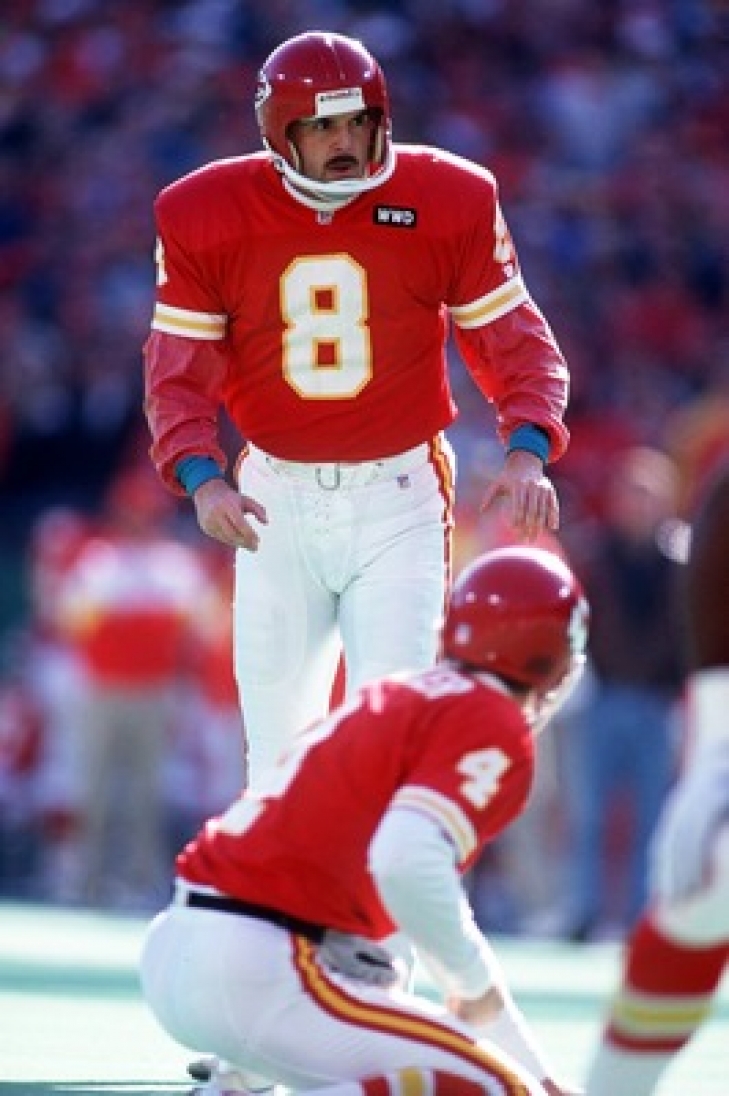
The kicking game in professional football is defined by ruthless pressure and fickle fanbases, but for 14 seasons in Kansas City, Nick Lowery provided rare, unflappable stability. Originally going undrafted out of Dartmouth in 1978 and attempting a single field goal for the New England Patriots before bouncing around multiple training camps, few expected much when the young specialist arrived in Missouri in 1980. Lowery won the starting job outright and immediately rewarded the franchise with elite leg accuracy.
Lowery announced his presence by leading the entire NFL in field goal accuracy during his debut 1980 campaign, converting 80.0% of his attempts. He followed that up in 1981 by earning his first Pro Bowl selection, drilling a 57-yard game-winner along the way and establishing himself as one of the few placekickers of the era with legitimate long-range power and touch on short attempts.
His production reached iconic status as the decade progressed. Lowery captured consensus AP First-Team All-Pro honors in 1985 after pacing the league at 85.2% accuracy, and he duplicated that First-Team All-Pro selection in 1990 by connecting on an astonishing 34 of 37 field goal attempts (91.9%). In total, he led the NFL in field goal percentage three separate times (1980, 1985, and 1990), proving to be the ultimate weapon for Marty Schottenheimer's low-scoring, possession-focused teams.
He hit 329 field goals and 498 extra points, totaling 1,486 points and becoming the all-time leading scorer in Chiefs franchise history. Lowery entered the Chiefs Hall of Fame in 2009.
32. Trent Green
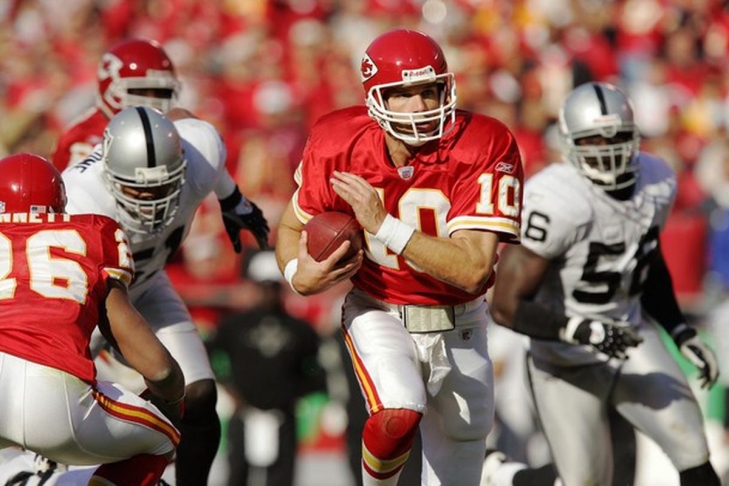
Acquired via trade from Washington in 2001, Trent Green stepped into Arrowhead Stadium as the hand-picked field general for Dick Vermeil’s high-octane offensive rebuild. His tenure in Missouri started on shaky footing, as a league-high 24 interceptions during a 6–10 inaugural campaign raised questions about his decision-making under center. However, once Vermeil's system found its stride, Green became the leader of one of the most prolific offensive units of the modern era.
Between 2003 and 2005, Green put together a relentless three-year stretch that rivaled any passer in the NFL. Directing a powerhouse offense alongside Priest Holmes, Tony Gonzalez, and a dominant offensive line, he surpassed the 4,000-yard passing threshold in three consecutive seasons—throwing for 4,037 yards in 2003, 4,591 in 2004, and 4,014 in 2005. During this golden window, only Peyton Manning threw for more aggregate yards across the entire league.
Green earned two Pro Bowl nods (2003 and 2005) while establishing himself as an exceptional distributor in deep-shot passing concepts and play-action fakes. In 2004, he tied a franchise record with 27 touchdown passes while leading the NFL in yards per pass attempt (8.6), demonstrating elite efficiency and poise in orchestrating an offense that routinely produced 500-yard games.
Though he may not have carried the household reverence reserved for first-tier Hall of Famers, Green’s steady leadership and pinpoint execution kept Kansas City in contention every single Sunday. His Chiefs’ run came to an abrupt end in 2006 when a severe concussion in Week 1 derailed his final season with the team before he was traded to Miami in 2007.
In Kansas City, Green had 21,459 passing yards, 118 touchdown passes, andeight rushing touchdowns.
30. Fred Arbanas
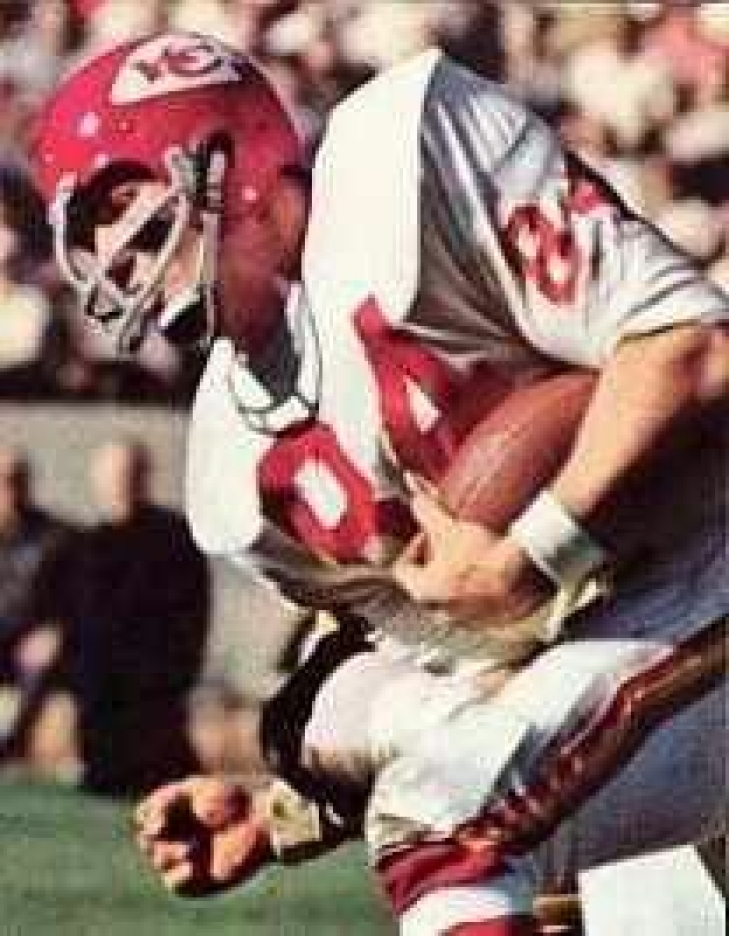
Before tight ends were routinely split out wide like oversized slot receivers, Fred Arbanas set the gold standard for what the position required in the upstart American Football League. Selected by the Dallas Texans in the second round of the 1961 AFL Draft out of Michigan State, Arbanas arrived as a bone-crushing blocker who doubled as a lethal downfield threat and immediately became the prototype flex weapon for Hank Stram's creative offensive schemes.
Arbanas made his debut during the 1962 campaign and wasted no time establishing himself as the league’s premier tight end. He secured an AFL All-Star selection as a rookie while helping lead the Texans to an overtime victory over the Houston Oilers in the 1962 AFL Championship Game. His broad frame allowed him to seal off defensive ends in Stram's signature trap-and-sweep running attack, while his soft hands made him Len Dawson’s favorite target whenever pass rushers collapsed the pocket.
Arbanas sustained that elite form across the middle of the decade, earning five AFL All-Star selections (1962–1965, 1967) and three consensus First-Team All-AFL nods (1964, 1966, 1967). Even after suffering a serious eye injury in 1964 that permanently altered his vision, his toughness and field awareness never wavered. He remained a central fixture through the franchise's transition to Missouri, capturing a second league title in 1966 and starting in the inaugural AFL-NFL World Championship Game.
His decorated career peaked during the 1969 postseason. Arbanas anchored the line as Kansas City claimed its third AFL title before defeating the Minnesota Vikings in Super Bowl IV, cementing the franchise's place in gridiron history. He retired following the 1970 campaign, having played every single snap of his nine-year professional career exclusively for the Texans/Chiefs organization. He had 198 receptions for 3,101 receiving yards (15.7 Y/R), 34 receiving touchdowns, and in 1973, Arbanas was inducted into the Chiefs Hall of Fame.
27. Priest Holmes
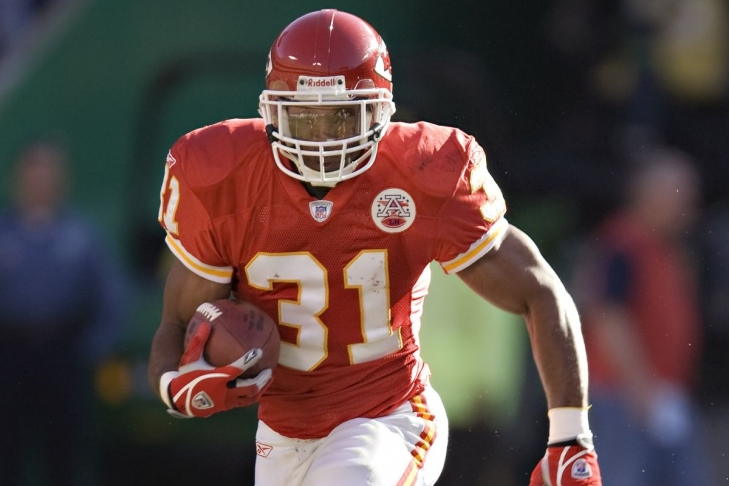
Undrafted out of Texas in 1997, Priest Holmes broke through with a 1,008-yard rushing campaign for the Baltimore Ravens in 1998 before fading into a secondary role behind Jamal Lewis over the next two seasons. When Dick Vermeil brought the low-key running back to Kansas City in free agency before the 2001 season, few anticipated the statistical explosion about to unfold on Arrowhead turf.
Holmes took complete control of Kansas City's backfield during his debut 2001 campaign. Behind a physical offensive line anchored by Willie Roaf and Will Shields, his vision, patience, and sudden acceleration unleashed a career-defining run as he led the NFL with 1,555 rushing yards and 2,169 scrimmage yards, earning his first Pro Bowl selection and AP First-Team All-Pro nod.
That opening act was merely the prelude to one of the most absurd multi-year peaks by any running back in pro football history. In 2002, Holmes was named AP NFL Offensive Player of the Year after leading the league with a staggering 2,287 scrimmage yards and 21 rushing touchdowns across just 14 games. He followed that up in 2003 by shattering the single-season NFL record with 27 rushing touchdowns, accumulating 1,420 rushing yards and 74 receptions for his third consecutive First-Team All-Pro selection.
Holmes continued his torrid production into 2004, scoring 14 touchdowns in just eight games before a knee injury shelved him. Midway through the 2005 campaign, a spinal trauma collision cut short another dominant stretch. The neck injury sidelined him for the entire 2006 season; though he mounted a courageous comeback in late 2007, he appeared in just four games before retiring from the NFL.
Comparatively speaking, Holmes played far fewer games in Missouri than many long-tenured franchise icons, but his sheer statistical brilliance at the absolute peak of his craft earned him immortal status. He was formally enshrined in the Kansas City Chiefs Hall of Fame in 2014. He overall accumulated 6,070 rushing yards, 76 rushing touchdowns, 251 receptions for 2,377 receiving yards, 8,447 total scrimmage yards, and 83 total touchdowns.
26. Jack Rudnay
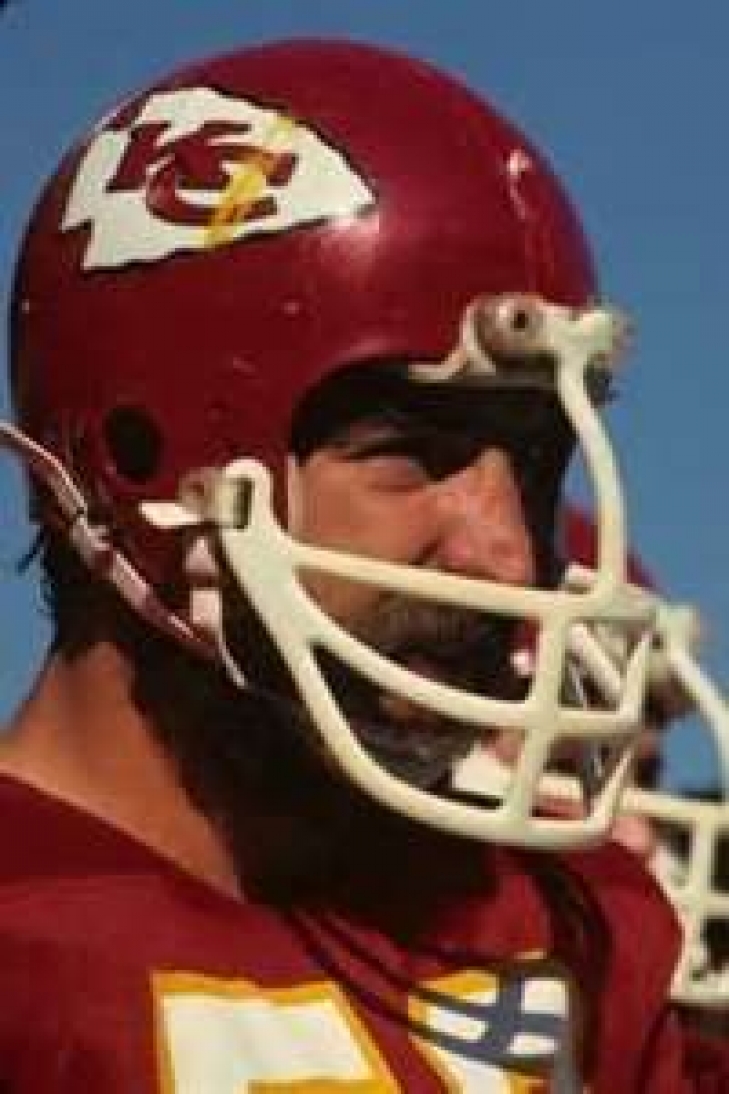
Drafted in the fourth round (101st overall) of the 1969 AFL Draft out of Northwestern, Jack Rudnay earned a Super Bowl IV ring during his rookie campaign without ever putting on a helmet, as a preseason back injury sidelined him all year. Once healthy, the 6-foot-3, 250-pound center stepped into the starting lineup in 1970 and instantly became the bedrock of Kansas City's interior offensive line for the next decade-plus.
Rudnay unlocked elite status in the mid-1970s through flawless execution, technique, and high-level pre-snap recognition. As the operational conductor up front, he directed protection schemes against aggressive 1970s defenses while paving interior lanes for running backs like Ed Podolak and MacArthur Lane.
His national individual peak arrived during a dominant four-year stretch from 1973 through 1976, earning four consecutive Pro Bowl selections alongside an AP Second-Team All-Pro nod in 1973. Widely regarded as one of the premier centers in professional football during this era, Rudnay was a rare bright spot and steadying leader as the organization navigated a post-Hank Stram roster transition.
He started 171 of his 178 games in Kansas City and entered the Chiefs Hall of Fame in 1994.
23. Albert Lewis

Selected in the third round (61st overall) of the 1983 NFL Draft out of Grambling State, Albert Lewis arrived in Kansas City as a rare physical archetype for a cornerback in his era. Standing 6-foot-2 with 35-inch arms, a 38-inch vertical leap, and 4.38 track speed, he had the length and recovery gear to disrupt press-man coverage and press wideouts at the line of scrimmage.
Lewis gradually molded his rare athletic gifts into elite pass-defense instincts throughout the mid-1980s. Working alongside safety Deron Cherry and later cornerback partner Kevin Ross, he steadily elevated his technique every season, anchoring the perimeter for defensive coordinator Bill Cowher and picking off 16 passes across his first four active campaigns.
His ascent reached national prominence in 1987, kicking off a four-year run of consecutive Pro Bowl selections (1987–1990). At his individual peak in 1989 and 1990, Lewis earned back-to-back consensus AP First-Team All-Pro honors, serving as the shutdown corner on a star-studded Kansas City defense defined by Marty Schottenheimer's physical identity and linebacking terror Derrick Thomas.
Beyond his coverage dominance, Lewis stood as one of the most lethal special teams weapons in league history. Using his soaring vertical leap and extraordinary length off the edge, he blocked 11 kicks during his tenure in Kansas City—often turning high-leverage field goal and punt attempts into momentum-shifting takeaways.
In 2007, the Chiefs chose Lewis for their Hall of Fame. In Kansas City, Lewis compiled 38 interceptions, 4.5 sacks, 555 tackles, and 11 blocked kicks.
22. Brian Waters
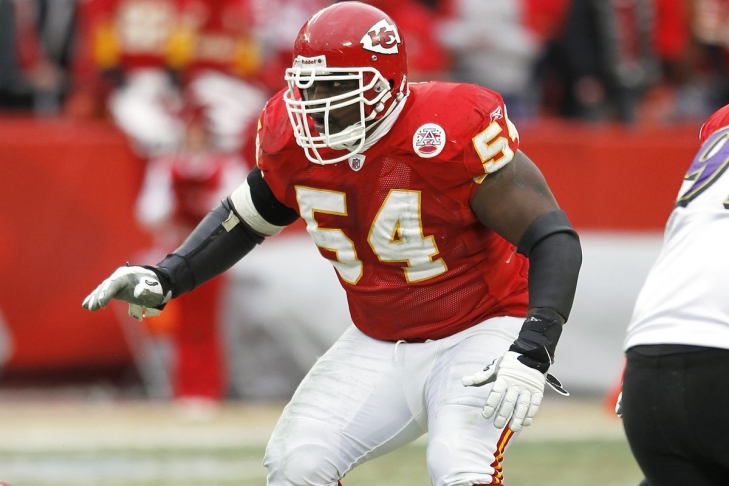
Undrafted out of North Texas in 1999, the Waxahachie native entered the league with the Dallas Cowboys, trying to convert from college tight end to fullback. After being cut, Brian Waters landed in Kansas City in 2000, where Dick Vermeil and offensive line coach Willie Roaf/Will Shields quickly saw his true potential on the interior offensive line and shifted the 320-pound powerhouse to left guard.
Waters spent two seasons honing his footwork before seizing the full-time starting left guard job in 2002. Slotting in alongside Willie Roaf and Casey Wiegmann, he quickly evolved into one of the most dominant interior run-blockers in professional football, paving massive lanes for Priest Holmes and Larry Johnson during Kansas City's record-setting offensive explosion in the early 2000s.
His national breakthrough arrived during a historic 2004 campaign. After a 56–10 demolition of Atlanta in which Kansas City poured in an NFL-record eight rushing touchdowns, Waters earned AFC Offensive Player of the Week—becoming the first offensive lineman in NFL history to receive the weekly award. He capped off that stellar year with consensus AP First-Team All-Pro honors and his first Pro Bowl selection.
Waters replicated his First-Team All-Pro form in 2005 while cementing his status as an indispensable locker-room anchor. Over his 11-year run in Missouri, he earned five Pro Bowl nods in a Chiefs uniform (2004, 2005, 2006, 2008, and 2010), and two Second-Team All-Pro nods (2007, 2008), forming one of the most fearsome guard duos in league history alongside Hall of Famer Will Shields.
Beyond his dominance in the trenches, Waters distinguished himself as a generational community leader off the field. Through his 54-82 Foundation—which delivered resources, clothing, and athletic opportunities to underrepresented youth across Texas and Kansas City—he was awarded the prestigious 2009 Walter Payton NFL Man of the Year honor.
After leaving Kansas City in 2010, Waters earned his sixth Pro Bowl selection with New England in 2011 and finished his career with Dallas in 2013. He entered the Chiefs Hall of Fame in 2019.
20. Otis Taylor
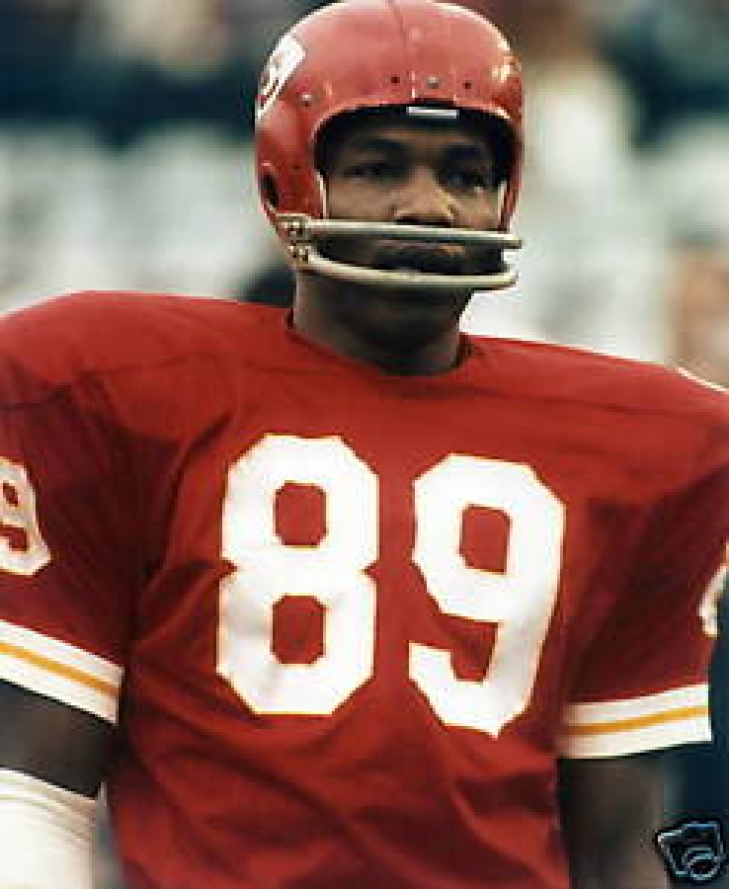
During the Kansas City Chiefs' golden era, Hank Stram’s defense rightfully stole the national headlines. Packed with future Hall of Fame titans like Willie Lanier, Buck Buchanan, Bobby Bell, and Emmitt Thomas, that defense choked out opponents and defined the franchise's identity. Yet, focusing solely on the defensive side of the ball ignores a crucial reality: Kansas City possessed a lethal offensive weapon capable of breaking any game open in a single stride, and his name was Otis Taylor.
Selected in the fourth round of the 1965 AFL Draft out of Prairie View A&M—while the NFL's Philadelphia Eagles also targeted him—Taylor chose the upstart AFL and stepped right into the lineup. Blessed with a towering 6-foot-3 frame, smooth long-striding speed, and raw physicality, he brought an imposing presence to both wide receiver and flanker. He quickly established an electric connection with Len Dawson, posting 26.4 yards per catch as a rookie before exploding for 1,297 receiving yards and eight touchdowns in his second season to help secure the 1966 AFL Championship.
As the decade turned, Taylor cemented his legacy in gridiron lore during the 1969 postseason run that culminated in Super Bowl IV. Facing the heavily favored Minnesota Vikings in the rain at Tulane Stadium, Taylor delivered the iconic highlight that put the game out of reach. Catching a short hitch pass from Dawson, he stiff-armed cornerback Karl Kassulke, broke a tackle along the sideline, and sprinted 46 yards into the end zone for the game-clinching score in a 23–7 triumph that crowned Kansas City world champions.
While the Super Bowl ring sealed his big-game reputation, Taylor's individual peak came in the early 1970s. His signature year came in 1971, when he dominated secondary after secondary to lead the NFL with 1,110 receiving yards on 57 catches (19.5 average) and seven touchdowns. That staggering display earned him consensus AP First-Team All-Pro selection and a Pro Bowl invitation, validating him as arguably the most dominant wideout in professional football.
He followed up that standout campaign with another First-Team All-Pro performance in 1972, hauling in 821 yards and six touchdowns despite defenses slanting their coverages entirely toward his side of the field. His rare combination of size and perimeter muscle allowed him to muscle through press coverage, snag high-pointed throws over smaller cornerbacks, and turn short screens into long gains.
Wear and tear eventually slowed the veteran wideout over his final three seasons in Kansas City, but his loyalty never wavered. Taylor spent all eleven of his active professional seasons in a Chiefs uniform (1965–1975), remaining the ultimate team leader through the transition years of the mid-1970s before hanging up his cleats following the 1975 campaign as one of the ultimate single-franchise legends of his generation.
Taylor accumulated 410 receptions, 7,306 receiving yards (17.8 Y/R), 57 receiving touchdowns, and three rushing scores, and was inducted into the Kansas City Chiefs Hall of Fame in 1982.
15. Ed Budde
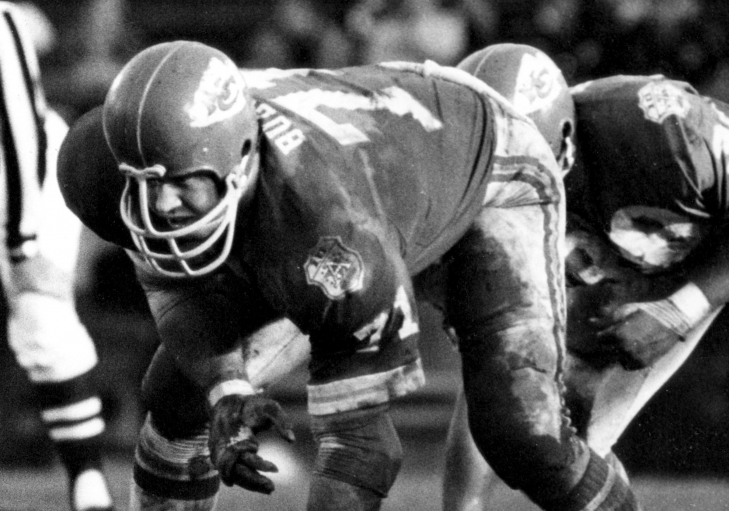
A first-round draft choice (4th overall) out of Michigan State in the 1963 AFL Draft, Ed Budde arrived in Kansas City as a ready-made, imposing physical presence at 6-foot-5 and 260 pounds. Head coach Hank Stram immediately plugged the physical rookie into the starting left guard spot, where his rare blend of explosive lower-body power and tight leverage made him an indispensable anchor for the franchise’s interior offensive line for over a decade.
Budde established an extraordinary standard of durability, starting all 126 regular-season games for the franchise between 1963 and 1971. Operating alongside tackle Jim Tyrer on the left side of the formation, Budde formed one half of the era’s most formidable, physical blocking tandems. His explosive pulling ability in space and relentless drive-blocking inside paved the way for tailbacks Mike Garrett and Otis Taylor, powering Kansas City to two AFL Championships (1966, 1969) and appearances in Super Bowls I and IV.
His finest individual hour arrived on the game's grandest stage in Super Bowl IV against the Minnesota Vikings. Tasked with neutralizing Minnesota's terrifying, Hall of Fame defensive tackle Alan Page, Budde put on an absolute clinic in technical leverage and physical dominance. He completely erased Page from the stat sheet, giving quarterback Len Dawson pristine pockets to operate within and opening wide lanes for a 151-yard rushing performance in Kansas City's decisive 23–7 upset victory.
Individual accolades followed his stellar output throughout his 14-year career. Budde was named an AFL All-Star five times (1966–1969) and earned two post-merger NFL Pro Bowl nods (1970, 1971). He garnered First-Team All-AFL recognition twice (1966, 1969) and became the first offensive lineman ever named the AFL Player of the Week for his suffocating performance against the Oakland Raiders in 1968. Recognized as one of the premier interior blockers of his generation, he was named to the official AFL All-Time Team and inducted into the Kansas City Chiefs Hall of Fame in 1984.
33. Sherrill Headrick
Undrafted by both the NFL and the fledgling AFL out of TCU in 1960, Sherrill Headrick signed with Lamar Hunt's Dallas Texans and quickly became one of the fiercest defensive enforcers in professional football. Earning the nickname "Psycho" for his reckless disregard for his own body and staggering tolerance for pain, Headrick anchored the center of Hank Stram's middle defense from the very first snap in franchise history.
Headrick hit the ground running with an unprecedented three-year run of dominance to open his career. He captured First-Team All-AFL honors in each of his first three professional seasons (1960, 1961, and 1962), combining brutal tackling force with keen pre-snap diagnostic skills. His signature moment of toughness came in the 1962 AFL Championship Game, where he played through a fractured vertebra suffered early in the contest to lead Dallas to a historic 20–17 double-overtime victory over the Houston Oilers in the franchise's final game in Texas.
When the organization relocated north to become the Kansas City Chiefs in 1963, Headrick remained the defensive unit's undisputed emotional leader. Though severe injuries—including broken bones, torn ligaments, and a dislocated shoulder—accumulated over the years, his standard of play rarely dipped. He earned two additional Second-Team All-AFL selections in 1964 and 1966 and collected five total AFL All-Star nods during his tenure.
In 1966, Headrick anchored the linebacking corps alongside EJ Holub and Bobby Bell, helping Kansas City win its second AFL title and reach Super Bowl I against the Green Bay Packers. His knack for creating takeaways in key moments netted 14 interceptions and 12 fumble recoveries during his eight years in red and gold before he played a final active season with the Cincinnati Bengals in 1968.
With the Chiefs, Headrick netted 14 interceptions and nine sacks over 108 games. He entered the Chiefs Hall of Fame in 1993.
31. E.J. Holub
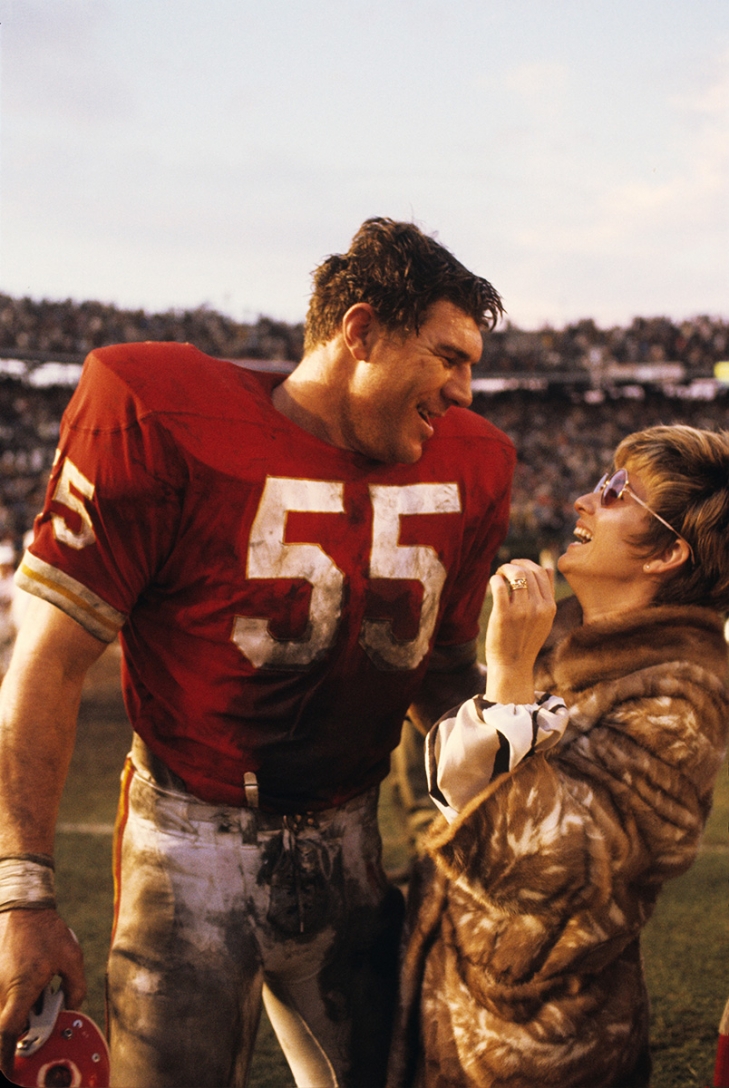
The first football player Texas Tech retired a jersey for, E.J. Holub entered pro football with the legendary nickname "The Beast"—and spent the next decade proving he earned every syllable of it. Selected sixth overall by the Dallas Texans in the 1961 AFL Draft, Holub made immediate professional history by doing what modern football specialization renders practically impossible: starting at two completely different, physically demanding positions on opposite sides of the ball.
Holub stepped onto the gridiron as an instant defensive anchor at linebacker. Over his first six seasons with the franchise, he commanded Hank Stram’s defense with relentless intensity, picking off 10 passes—returning one for a touchdown—and collecting five AFL All-Star selections (1961, 1962, 1964, 1965, 1966) alongside back-to-back First-Team All-AFL honors in 1962 and 1963. He was the emotional heartbeat of the 1962 Dallas squad that captured the AFL Championship in a dramatic overtime thriller over Houston.
Sustained collisions eventually levied a massive toll on his lower body, resulting in nine knee surgeries during his playing days. Rather than step away when knee instability ended his tenure at linebacker, Holub pulled off a miraculous mid-career transition: he moved full-time to offense and took over as the team's starting center in 1968, extending his career while giving Kansas City an elite interior anchor.
That unbelievable positional versatility yielded unique championship lore. Holub remains the only player in gridiron history to start two Super Bowls at two different positions, having started at middle linebacker in Super Bowl I and later at center in Kansas City’s Super Bowl IV victory over the Minnesota Vikings.
After the 1970 season, Holub retired after 10 years with the Texans/Chiefs, playing every pro snap for the organization. He entered the Chiefs Hall of Fame in 1976.
24. Art Still
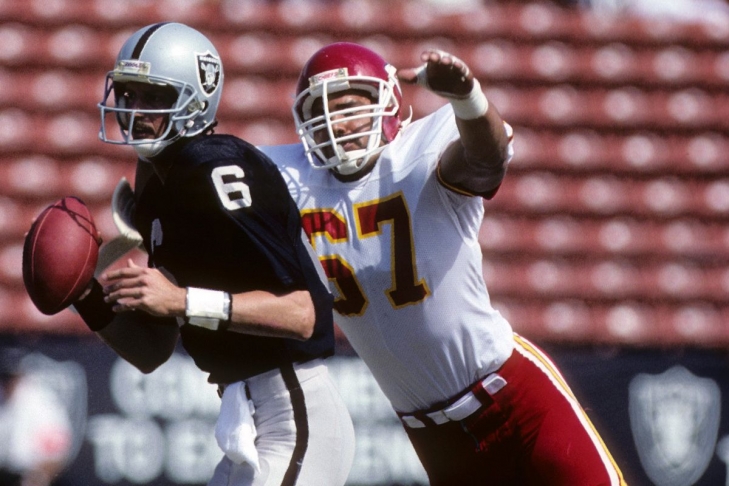
Selected second overall in the 1978 NFL Draft following a Consensus All-American run at Kentucky, Art Still stepped directly into Arrowhead Stadium carrying towering expectations. Standing an intimidating 6-foot-7 and weighing 250 pounds, the imposing defensive end had rare reach and closing speed, quickly becoming the primary pass-rushing pillar for Kansas City's defensive front throughout the late 1970s and 1980s.
Still wasted no time asserting his physical dominance at the professional level. Anchoring the left side of the line, he generated 9.5 sacks during his 1978 rookie campaign and followed it up with 8.5 in 1979, using his massive wingspan to shed edge blockers and collapse pockets before quarterback scrambles could even materialize.
His national breakthrough materialized during a stellar 1980 campaign. Still earned his first Pro Bowl selection, an AP Second-Team All-Pro nod, and team MVP honors after terrorizing opposing backfields for a career-high 10.0 sacks (unofficial). Opposing offensive tackles routinely struggled to combat his long-arm bull rush and violent shed techniques along the perimeter.
Still matched that elite level of play in 1984, orchestrating his finest personal season in Missouri. He set a career high with 14.5 sacks, earning his second AP Second-Team All-Pro selection and another Chiefs Team MVP award. Across his ten-year tenure with the organization, Still surpassed the double-digit sack threshold twice and collected four total Pro Bowl honors (1980, 1982, 1984, 1985) as one of the league's premier edge rushers.
After ten seasons in K.C., Still was traded to Buffalo prior to the 1988 season, where he spent his final two professional campaigns providing veteran edge depth for a rising Bills contender before retiring. He was inducted into the Kansas City Chiefs Hall of Fame in 1998. Statistically, Still gave the Chiefs 16 forced fumbles and 74 sacks.
41. Larry Johnson
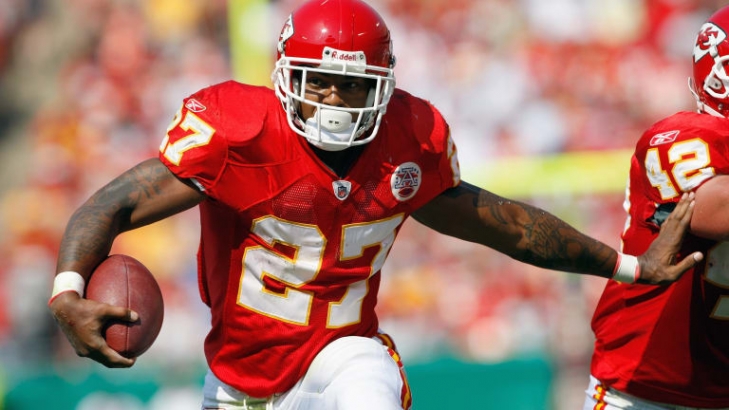
With the 27th overall pick in 2003, the Chiefs took Larry Johnson from Penn State under turbulent circumstances. Head coach Dick Vermeil made no secret that he hadn’t prioritized drafting the Doak Walker Award winner, which led to a cold start to Johnson’s pro career. Trailing Priest Holmes on the depth chart, Johnson logged sparse touches as a rookie, but his patience broke through late in 2004 when Holmes went down with an injury, offering a tantalizing glimpse of Johnson's raw, punishing power over nine games.
When Holmes suffered a season-ending neck injury midway through the 2005 campaign, Johnson stepped into the feature back role and unleashed one of the most physical rushing stretches in league history. Despite starting only nine games that year, he steamrolled defenses for 1,750 rushing yards and 20 touchdowns—adding 343 receiving yards to finish third in rushing and second in touchdowns in the NFL —earning his first Pro Bowl selection and an AP Second-Team All-Pro nod.
Johnson pushed his production even further in 2006 under Herm Edwards, putting together a legendary workhorse campaign. Carrying the entire offensive workload, he broke the NFL single-season record with 416 rushing attempts, racking up 1,789 rushing yards and 17 touchdowns while snagging 41 passes for 410 receiving yards. His dominant 2,199 scrimmage yards earned him consensus AP First-Team All-Pro honors and a second consecutive Pro Bowl berth as Kansas City clinched a postseason spot.
However, that historic volume exacted a steep physical toll. A foot injury halted his 2007 campaign after nine games, limiting him to 559 rushing yards, and he again stayed under 1,000 yards in 2008. Tensions over his workload and off-field controversies mounting in the local media eventually led to a mid-season release in 2009, ending his tenure in Missouri before brief, quiet stops in Cincinnati, Washington, and Miami.
Though his trajectory in Kansas City was volatile and polarizing, Johnson’s absolute peak stands as one of the most overwhelming two-year runs ever executed by a running back in franchise history.
With Kansas City, Johnson had 6,015 rushing yards, 55 rushing touchdowns, 151 receptions for 1,369 receiving yards, 7,384 total scrimmage yards, and 61 total touchdowns.
39. Tim Grunhard
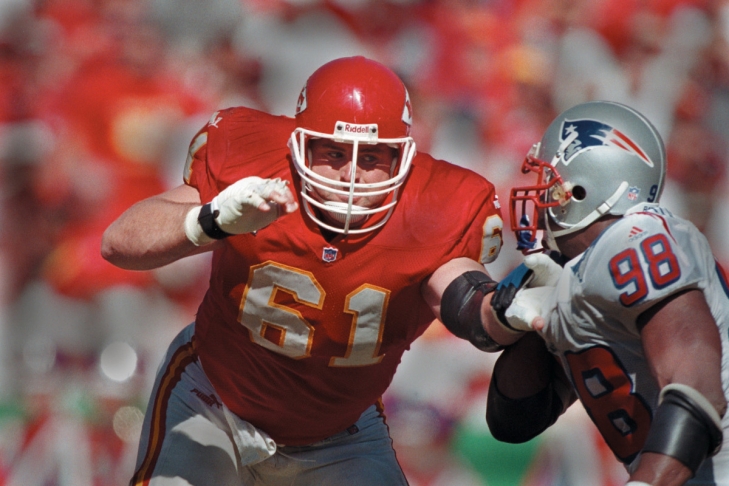
Chosen in the second round (40th overall) of the 1990 NFL Draft after winning a national championship at Notre Dame, Tim Grunhard arrived in Kansas City as the ideal fit for Marty Schottenheimer's brand of physical, blue-collar football. After spending part of his rookie year rotating along the interior line, Grunhard fully locked down the starting center job in 1991—a position he held as an unyielding fixture for the next decade.
Grunhard quickly became the gritty, aggressive heartbeat of the Chiefs offensive line. Flanked by guards Dave Szott and Will Shields, he anchored one of the most cohesive and physical interior units of the 1990s, clearing lanes for running backs like Christian Okoye, Barry Word, and Marcus Allen while protecting Joe Montana and Steve Bono during Kansas City's perennially competitive playoff runs.
Beyond his mean streak on the field, Grunhard stood out for his remarkable durability and consistency. He started 120 consecutive games during his prime, anchoring the offensive front through multiple playoff appearances, including the franchise's run to the 1993 AFC Championship Game. His long-overdue national recognition came in 1999, when he earned his first career Pro Bowl selection.
Equally impactful off the gridiron, Grunhard became an iconic figure in the local community through his extensive charitable efforts. Through his involvement with Special Olympics Missouri and numerous youth development programs across the metropolitan area, he cemented a lasting legacy in Kansas City that extended far beyond his play in the trenches.
Grunhard retired after the 2000 season, having played all 169 games as a Chief. The team enshrined Grunhard in its Hall of Fame in 2021.
