


Site Admin
27. Mike Flanagan
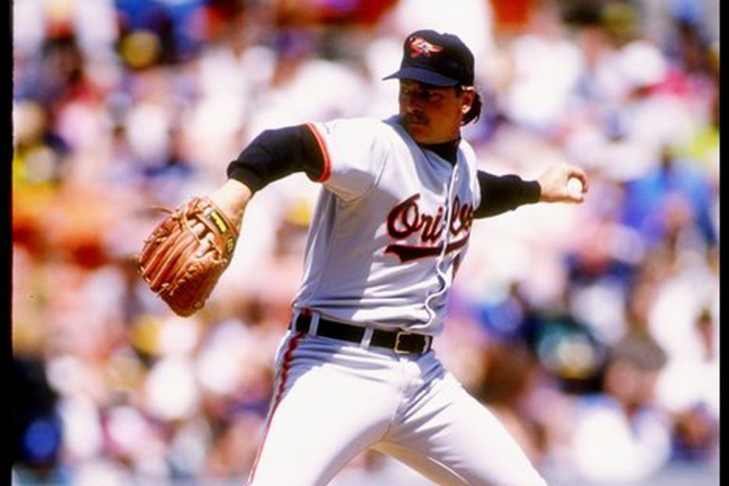
Mike Flanagan was the quintessential left-handed workhorse of the Baltimore rotation, a pitcher defined by his intelligence, durability, and a knack for finding the win column. Debuting in 1975, Flanagan became a staple of the Orioles' staff for over a decade, accumulating 141 wins—a total that ranks him among the most successful pitchers in the history of the franchise.
While his career was built on steady volume, his 1979 campaign was a masterpiece of "Peak Performance." That year, Flanagan anchored a pitching staff that led Baltimore to the American League Pennant, winning a league-leading 23 games and capturing the American League Cy Young Award. It was a season where he dominated the traditional leaderboards, finishing in the top ten for ERA (3.08) and WHIP (1.21). Though advanced metrics like bWAR often favored his peers, Flanagan possessed the "big-game" gene, proving to be a vital component of the 1983 World Series Championship team.
Flanagan’s tenure in Baltimore lasted until a trade to Toronto in 1987, but he remained an Oriole at heart, eventually returning to the club to finish his playing career and later serving in the front office. His 141 victories and 1,297 strikeouts remain a testament to his longevity and competitive fire.
In 1994, the Orioles honored his immense contribution to the "Oriole Way" by making him the sole inductee into that year's Hall of Fame class. A champion, a Cy Young winner, and a tireless innings-eater, Flanagan remains one of the most beloved figures to ever step onto the Memorial Stadium mound.
32. Mike Cueller
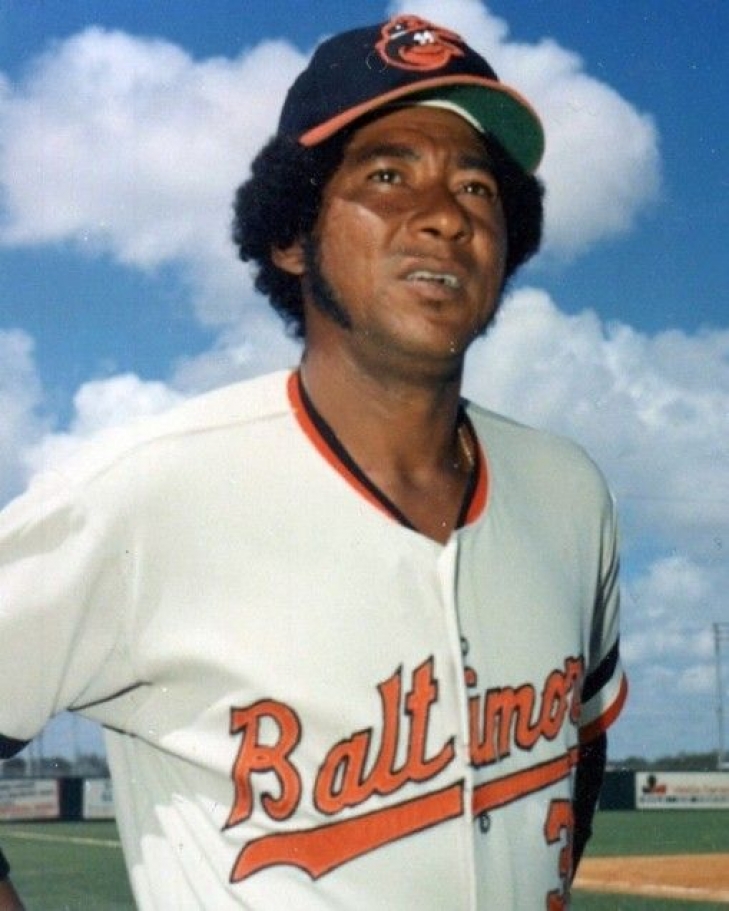
Mike Cuellar arrived in Baltimore at age 32, a veteran traveler who many thought had already seen his best days. Instead, the native of Las Villas, Cuba, embarked on the most dominant stretch of his career, becoming the finesse anchor of the greatest pitching staff in Orioles history. Armed with a devastating screwball and a deliberate, tactical approach, Cuellar transformed from a journeyman into a perennial 20-game winner.
His debut season in 1969 was a revelation. Cuellar posted a 23–11 record with a microscopic 1.005 WHIP, becoming the first Oriole to win the American League Cy Young Award (shared with Denny McLain). He followed that by leading the American League with 24 wins and 21 complete games in 1970, a season that culminated in a World Series Championship. While advanced metrics point to an inflated ERA and a high volume of home runs allowed that year, Cuellar possessed an uncanny "will to win," consistently doing exactly what was necessary to secure a victory for a high-powered Baltimore squad.
The southpaw’s consistency was legendary. From 1969 to 1974, Cuellar won at least 18 games in every season, eclipsing the 20-win mark four times. Though his tenure ended abruptly with his release in 1976, his impact was undeniable. He remains one of the winningest pitchers in franchise history, finishing his Baltimore chapter with a 143–88 record and 1,011 strikeouts.
While some may argue his bWAR (17.1) suggests he was a beneficiary of elite run support, Cuellar’s value is found in his durability and his championship pedigree. Inducted into the Orioles Hall of Fame in 1982, he remains the gold standard for left-handed craftiness—a pitcher who didn't need a 95-mph fastball to dismantle the best lineups in the game.
31. Ned Garver
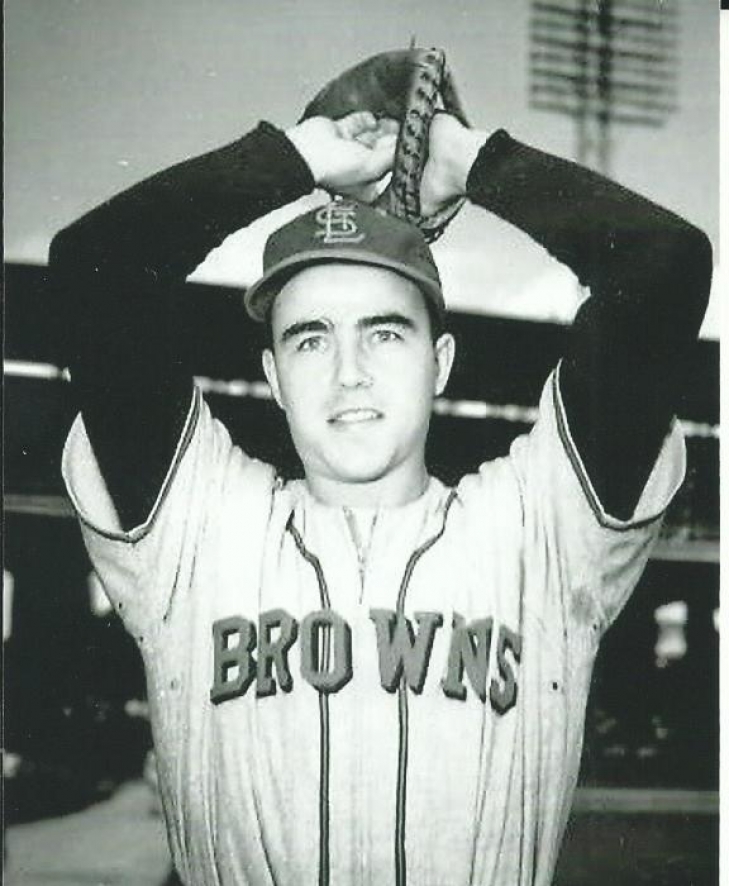
Ned Garver was the definition of a "hard-luck" ace, a premier talent tasked with anchoring the St. Louis Browns during their most difficult years. Joining the club in 1948, Garver quickly established himself as a durable workhorse, though the lack of offensive support often left him with a lopsided win-loss record that belied his true dominance on the mound.
The early 1950s saw Garver reach a level of individual brilliance that defied his surroundings. In 1950, despite leading the league with 18 losses, he paced the American League with 22 complete games and a respectable 3.39 ERA. However, it was his 1951 season that remains one of the most remarkable feats in baseball history. Garver became the first pitcher in the modern era to win 20 games for a team that lost 100. That year, he led the American League in Pitching bWAR (6.7) and complete games (24), earning a starting nod in the All-Star Game and finishing as the runner-up for the AL MVP; a nearly unheard-of feat for a pitcher on a last-place team.
Garver was more than just a pitcher; he was an athlete who often helped his own cause, famously batting .305 during his 20-win campaign. Because the Browns were in a constant state of financial flux and rebuilding, Garver was eventually sent to Detroit in a massive eight-player trade in 1952.
He left St. Louis with a 59–68 record, but to the fans and historians of the Browns, that number is a footnote.
25. Baby Doll Jacobson
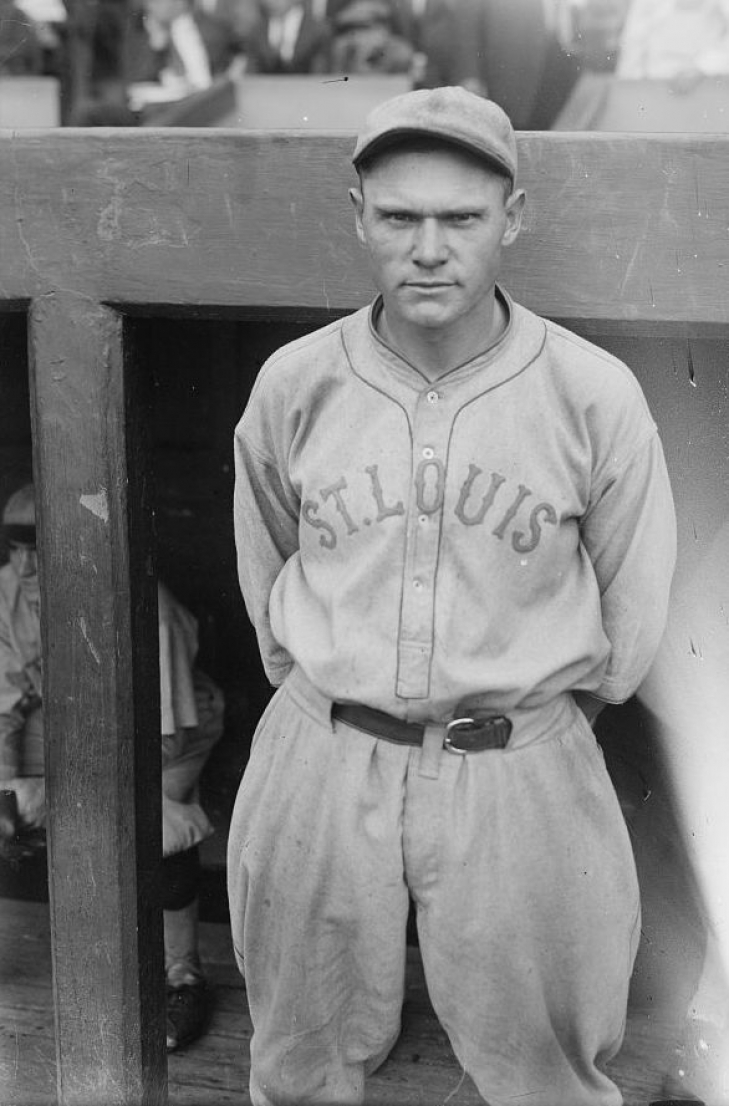
Standing 6' 3" and weighing over 210 pounds, William "Baby Doll" Jacobson was a towering figure in an era of smaller men, casting a long shadow over the St. Louis Browns’ outfield for the better part of a decade. His nickname—legendarily bestowed by a fan in the minors who shouted, "You must be that beautiful doll!" after a leadoff home run—belied a player of immense strength and surprising agility.
Jacobson’s journey was defined by perseverance. After a brief 1915 debut and a return to the minors, he secured a starting role in 1917, only to sacrifice his 1918 season to enlist in the U.S. Navy during World War I. When he returned in 1919, he embarked on one of the most productive offensive stretches in franchise history. From 1919 to 1925, Jacobson reeled off seven consecutive .300 seasons, including a career-high .355 in 1920 and a .352 in 1921. During this peak, he was a fixture on the leaderboards, recording over 210 hits in back-to-back years and driving in 122 runs in 1920—a mark topped only by Babe Ruth that season.
While his bat was his calling card, Jacobson was also a defensive pioneer in center field. Despite his size, he possessed incredible instincts, setting a major league record in 1924 with 488 putouts—a testament to his range that stood for over twenty years. He was the anchor of the legendary "1922 Browns" outfield that nearly toppled the Yankees for the pennant.
Jacobson was eventually traded to the Athletics in 1926, leaving St. Louis with 1,508 hits and a sterling .317 batting average.