


Site Admin
31. Steve Busby
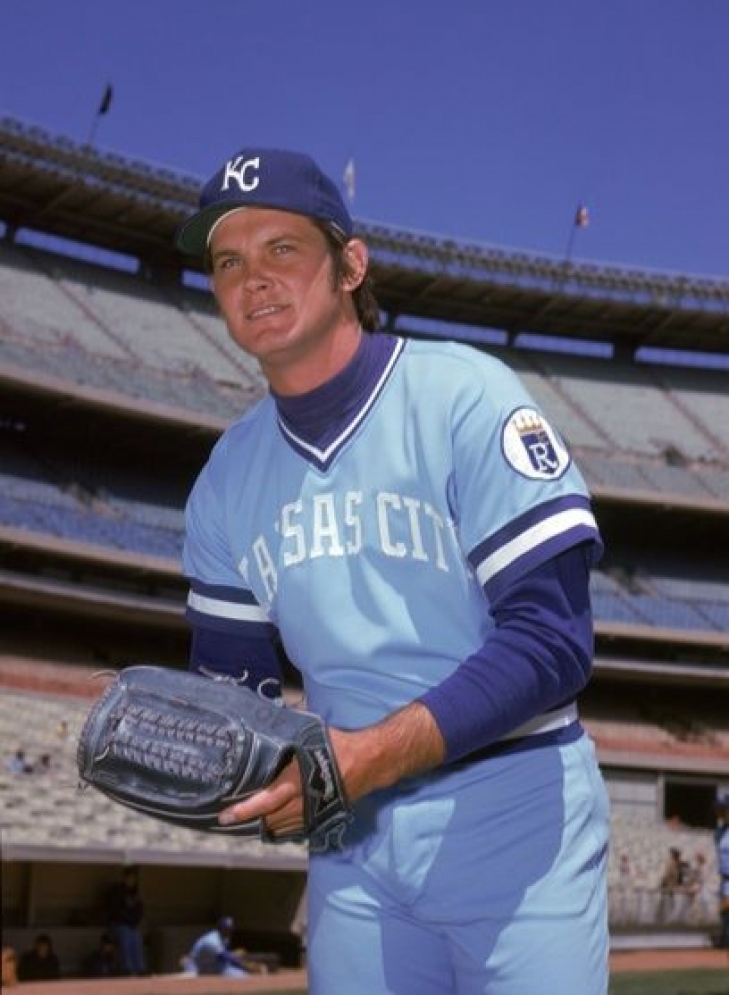
Steve Busby joined the Kansas City organization as a second-round selection in 1971 out of USC, a right-hander whose arrival signaled the dawn of the Royals' competitive era. Debuting in late 1972, he immediately established himself as a historic outlier by tossing a no-hitter in just his tenth career start.
Busby reached a historic peak of efficiency and individual recognition between 1973 and 1975. After a 16-win rookie campaign, he surged to a career-high 22 wins in 1974, becoming the first Royal to reach the 20-victory plateau. He showed the organization he was a foundational superstar by throwing his second career no-hitter that summer, making him the first pitcher in MLB history to record a no-no in each of his first two full seasons. He earned back-to-back All-Star selections and finished in the top five of the 1974 Cy Young voting, providing the steady-state production that stabilized the rotation before the era of Frank White and George Brett truly took hold.
Everything culminated in a tragic transition during the 1976 season when Busby was diagnosed with a torn rotator cuff. In a move that became a medical landmark, he became the first active Major League pitcher to undergo rotator cuff surgery, an injury that was almost universally considered career-ending at the time. To protect his arm during his attempted comeback, he was famously placed on a strict pitch count, a tactic rarely seen in the 1970s that is now the industry standard. While he courageously returned to win six games in 1979, the high-velocity stuff was never the same, and he left the active roster for good following the 1980 season.
Busby compiled a 70-54 record, 659 strikeouts, and two career no-hitters as a Royal.
30. Johnny Damon
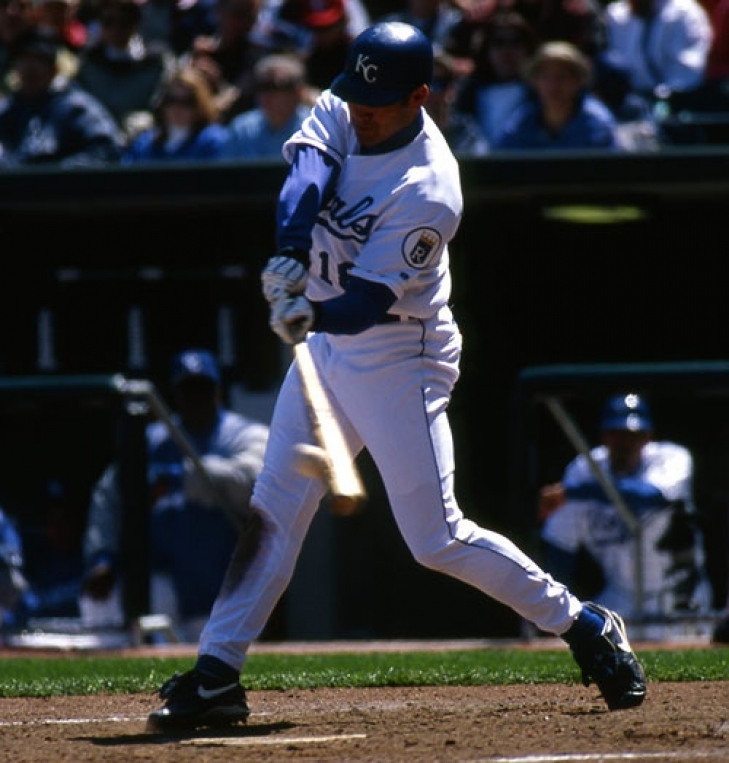
Johnny Damon was selected by the Kansas City organization in the first round of the 1992 draft, a high-ceiling speedster from Orlando who would become the face of the franchise’s late-nineties outfield, and he debuted in 1995 and immediately established himself as a premier leadoff threat.
In 1999, he broke through as a .300 hitter for the first time, recording 101 runs and 36 stolen bases. He followed that with a monumental 2000 season in which he became the most prolific run-scorer in the American League. That summer, he recorded a career-high 136 runs and 46 stolen bases, leading the AL in both categories while amassing 214 hits and a .327 batting average. He showed the organization he was a foundational superstar by providing the offensive engine for a lineup that featured fellow young stars Carlos Beltrán and Jermaine Dye.
With the small-market Royals unable to reach a long-term agreement with the rising star, the club sent Damon to the Oakland Athletics in a deal that brought back AJ Hinch, Angel Berroa, and Roberto Hernandez. He left behind a statistical footprint in Missouri that reflected his status as the premier leadoff man of his era, departing with 896 hits, 156 stolen bases, and a .292 batting average while wearing the Royal blue.
25. Darrell Porter
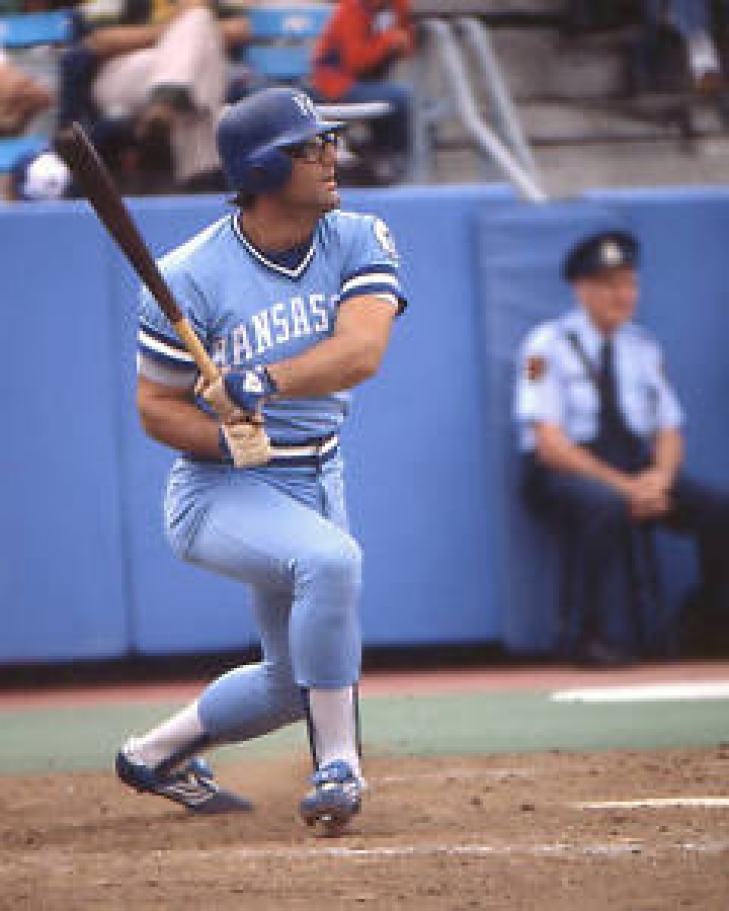
Darrell Porter joined the Kansas City organization in December 1976 via a significant trade with the Milwaukee Brewers, a transaction that sent Jamie Quirk and Jim Wohlford to the Cream City in exchange for the left-handed-hitting backstop. After several seasons of unfulfilled potential in Milwaukee, he arrived in Kansas City and immediately evolved into one of the better offensive catchers in the American League.
After taking over the starting role in 1977, he demonstrated a specialized ability to drive the ball while maintaining an elite eye for the strike zone. He surged into the spotlight in 1978, recording 18 home runs and finishing tenth in the MVP voting, providing the steady-state production needed to secure back-to-back AL West titles. This period of rapid growth served as the essential lead-in to his historic 1979 campaign, showing the organization that he was a foundational superstar who could anchor the heart of the order alongside George Brett.
In the summer of 1979, he became a statistical titan, posting career highs of 20 home runs, 112 RBIs, and a league-leading 121 walks. He demonstrated a specialized ability to manufacture runs, becoming only the second catcher in American League history, joining the legendary Mickey Cochrane, to record 100 runs, 100 RBIs, and 100 walks in a single season. He showed the organization that he was a foundational winner by finishing ninth in the MVP voting and earning his second of three consecutive All-Star selections as a Royal.
He left the club following the 1980 season, signing a landmark contract with the St. Louis Cardinals. However, his story was also defined by immense personal courage; in early 1980, Porter became one of the first professional athletes to publicly address his struggles with substance abuse, checking himself into a rehabilitation facility during spring training. He passed away in 2002.
As a Royal, Porter compiled 492 hits, 290 runs scored, and three All-Star selections.
21. Larry Gura
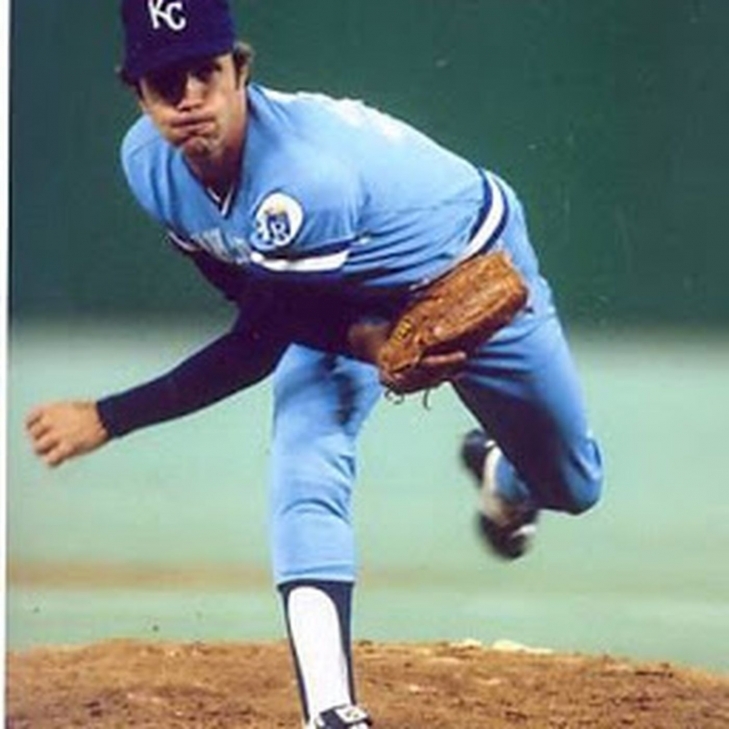
Larry Gura joined the Kansas City organization in mid-1976 via a trade with the New York Yankees, a transaction that sent reserve catcher Fran Healy to the Bronx. While he had struggled to find a permanent role in Chicago or New York, the move to Missouri unlocked a dormant potential in the southpaw.
The climb toward Gura’s peak in the late 1970s was a study in tactical reinvention and high-frequency reliability. After bouncing between the bullpen and the rotation during his first two years in Kansas City, he demonstrated a specialized ability to neutralize the powerhouse hitters of the American League East. He surged into the spotlight in 1978, recording a 16-4 record and finishing seventh in the Cy Young voting. This period of rapid growth served as the essential lead-in to his postseason heroics, showing the organization that he was a foundational big-game performer by finally vanquishing his former team, the Yankees, in the 1978 ALCS.
Gura’s journey reached a historic peak of efficiency and individual recognition during the 1980 campaign. That summer, he evolved into the tactical anchor of the Royals’ rotation, recording an 18-10 record and earning his first All-Star selection. He showed the organization that he was a foundational winner by finishing sixth in the Cy Young voting and leading the club back to the postseason. He possessed a quality that saw him pitch 283.1 innings that year, providing the steady-state production required to lead Kansas City to its first-ever World Series appearance. He famously reprised his role as the "Yankee-Killer" during the 1980 ALCS, delivering a masterful performance that helped exorcise the franchise’s postseason demons against New York.
Between 1978 and 1982, Gura was a statistical standout, recording five consecutive seasons with at least 12 wins and three top-ten finishes in the Cy Young voting. Gura struggled during the 1985 season, leading to his release, but was inducted into the Royals Hall of Fame in 1992.
With Kansas City, Gura compiled a 111-78 record and 631 strikeouts.