


Site Admin
46. Jackie Jensen
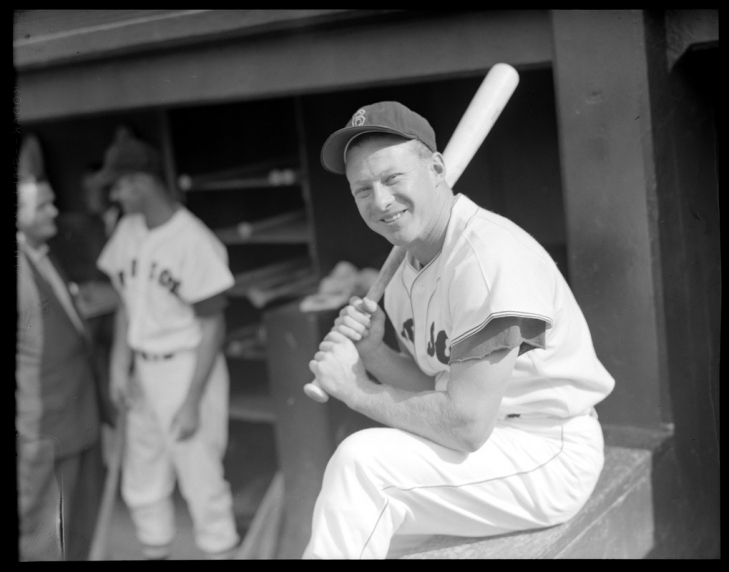
Before he ever stepped into the batter’s box at Fenway Park, Jackie Jensen was already a myth. He arrived in Boston in 1954 via trade from the Senators, carrying a resume that sounded like a tall tale: the first man to play in a Rose Bowl, a World Series, and an MLB All-Star Game. But while his athleticism was legendary, it was in a Red Sox uniform that he finally channeled that raw talent into sustained, elite dominance.
From the moment he arrived, Jensen became the engine of the Boston offense. For six consecutive seasons, he was the model of run-producing consistency, never dipping below 20 home runs and driving in at least 100 runs in five of those years. He didn't just participate in the American League leaderboards; he owned them, leading the league in RBIs three separate times. The pinnacle of this "Golden Boy" era came in 1958, an MVP campaign where he reached career highs in home runs (35) and OPS (.931), proving he was the premier run-producer in the junior circuit.
However, the story of Jensen’s run with the team is also one of internal conflict. At the height of his powers in 1959, coming off another RBI title, he stunned the baseball world by walking away. Driven by a deep desire to be with his family in California and an intensifying, paralyzing fear of flying, he chose peace over the diamond.
He attempted a brief, one-year comeback in 1961, but the "Golden Boy" couldn't outrun the anxiety of the travel schedule. He retired for good that year, leaving behind a stat line—170 home runs and a .282 average—that suggested he had so much more left to give. It took decades for the franchise to fully recognize the weight of his contributions, finally inducting him into the Red Sox Hall of Fame in 2000. He remains one of the great "what-ifs" in Boston history: a man who conquered every sport he touched, only to be grounded by the very skies that carried him to greatness.
43. Josh Beckett
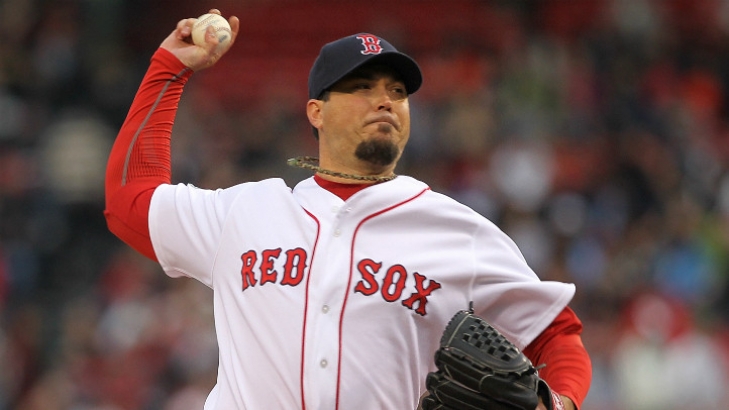
Josh Beckett arrived in Boston in 2006 with a reputation already carved in pinstriped stone. As a 23-year-old with the Marlins, he had famously walked into Yankee Stadium and shut out the Bronx Bombers to clinch a title, a moment of pure intimidation. When he joined the Red Sox as the centerpiece of a blockbuster trade, Boston didn't just get a pitcher; they got a firebrand who lived for the highest possible stakes. After a turbulent first year adjusting to the American League, Beckett found his rhythm in 2007, and the league had no answer for him.
That 2007 season was Beckett’s apex. He stormed through the summer to a 20–7 record, becoming the first Red Sox pitcher to reach the 20-win plateau in nearly a decade. He finished as the runner-up for the Cy Young Award, but his true value was revealed in the postseason. Faced with a 3-games-to-1 deficit against Cleveland in the ALCS, Beckett took the mound in Game 5 and delivered a cold-blooded performance, striking out 11 over eight innings to save the season. He was named the ALCS MVP, having essentially willed the Red Sox back to the World Series.
Beckett’s efficiency during that October run was legendary: he went 4–0 with a 1.20 ERA, striking out 35 batters while walking only two. He was simply unhittable when it mattered most. He would go on to earn two more All-Star nods in Boston (2009 and 2011), continuing to anchor the rotation with a blend of power and precision. Even in 2011, he posted a stellar 2.89 ERA, proving that when his mechanics were locked in, he remained one of the most difficult puzzles for hitters to solve.
Though his tenure in Boston ended with a trade to the Dodgers in 2012, Beckett’s legacy is secured by the hardware he brought to Fenway. He left the club with an 89–58 record and 1,108 strikeouts, but his impact is best measured in the silence he forced upon opposing crowds in October. He was the quintessential big-game hunter, a pitcher who didn't just participate in championship runs; he dictated them.
38. Mo Vaughn
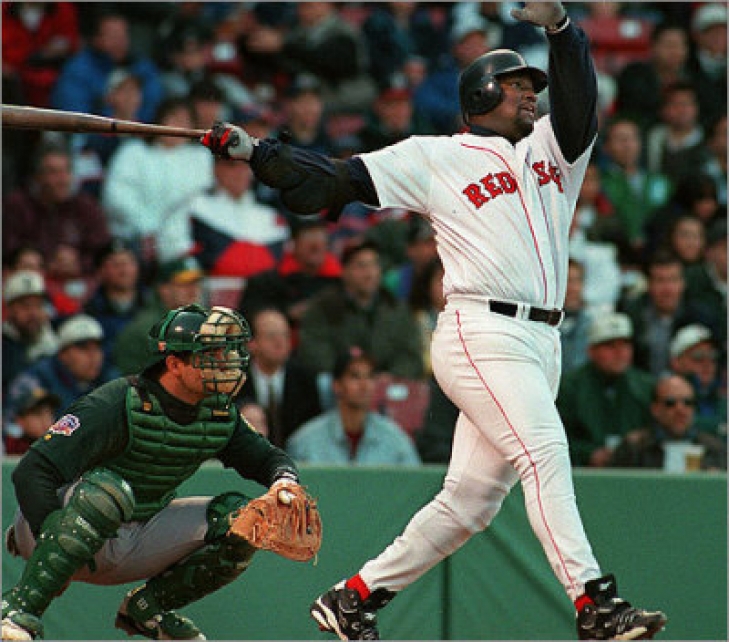
Mo Vaughn arrived in Boston in 1991 and quickly became the "Hit Dog," a nickname that defined his aggressive, lunging presence at the plate. While his power was his calling card, Vaughnwas fueled by a surprising level of contact and plate discipline. From 1994 to 1998, he reeled off five consecutive .300 seasons, peaking with a career-best .337 in his final year in Boston. However, this peak was a masterclass in "playing through it"; despite the elite average, the agility and health that fueled his early 90s rise were already beginning to wane before he ever left New England.
The 1995 season remains the crown jewel of Vaughn’s profile. He led the Red Sox to an AL East title by leading the league in RBIs (126) and blasting 39 home runs. In a razor-thin vote, Vaughn edged out Albert Belle to win the AL MVP Award. He also posted three straight .400+ OBP seasons (1996–1998), combining brute strength with a surgical understanding of the strike zone even as lower-body injuries began to mount.
Vaughn was deeply rooted in his connection to the city. Whether it was his extensive charity work or his role as the face of the post-Clemens Red Sox, he embodied the "Boston Grinder" persona. His peak was a model of concentrated excellence: four consecutive 35-home run seasons and a .542 Slugging Percentage in a Red Sox uniform. While 1998 was statistically brilliant, it was the final act of his prime; the decline was already underway in the trainer's room before he signed with the Anaheim Angels in 1999.
Vaughn finished his Red Sox tenure with 230 home runs, 1,165 hits, and a career .304 average. Though his post-Boston years saw a rapid drop-off, his decade at Fenway represents one of the most dominant offensive stretches in franchise history. Recognizing his era-defining dominance and his role as a community icon, the Red Sox inducted him into the Red Sox Hall of Fame in 2008.
37. John Valentin
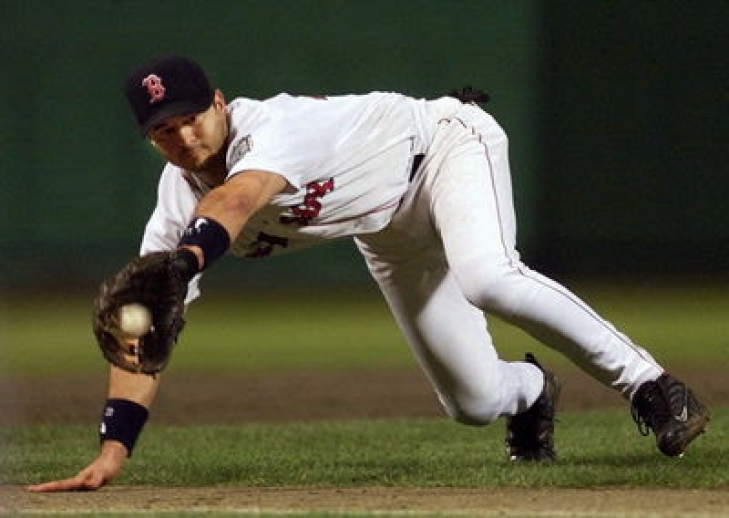
John Valentin spent a decade in Boston (1992–2001) as the stabilizing force of the Red Sox infield. While he famously lacked a Gold Glove on his mantle, the advanced metrics tell a different story. Valentin was a defensive savant, leading the American League in Total Zone Runs twice (1993 and 1995) and topping his position in that category three times across two different spots on the diamond. His 12.3 Defensive bWAR in Boston proves that he was the most efficient run-saver in the league during his prime.
Valentin’s peak arrived in the mid-90s, where he evolved into one of the premier offensive shortstops in the game. In 1995, he had a career year, batting .298 with 27 home runs and 102 RBIs, earning the Silver Slugger Award and a ninth-place finish in the MVP voting. He followed this with a historic 1996 season in which he hit for the cycle and a 1997 campaign in which he led the American League with 47 doubles. This rare blend of gap power and middle-infield efficiency makes him a 10.0 outlier for his era.
Valentin was also blessed with incredible baseball IQ. On July 8, 1994, Valentin achieved one of the rarest feats in sports by turning an unassisted triple play against the Mariners, becoming only the 10th player in history to do so. In the postseason, he remained a high-leverage threat; during the 1999 ALDS, he famously drove in seven runs in a single game against Cleveland, a performance that nearly single-handedly propelled the Red Sox toward the ALCS.
Though injuries eventually slowed his pace and led to his departure in 2002, Valentin’s impact on the franchise's transition into a modern powerhouse was undeniable. He left Boston with 1,093 hits, 124 home runs, and a stellar .279 average. For his unparalleled defensive intelligence and offensive consistency, the Red Sox inducted him into the Red Sox Hall of Fame in 2010.