


Site Admin
25. Baby Doll Jacobson
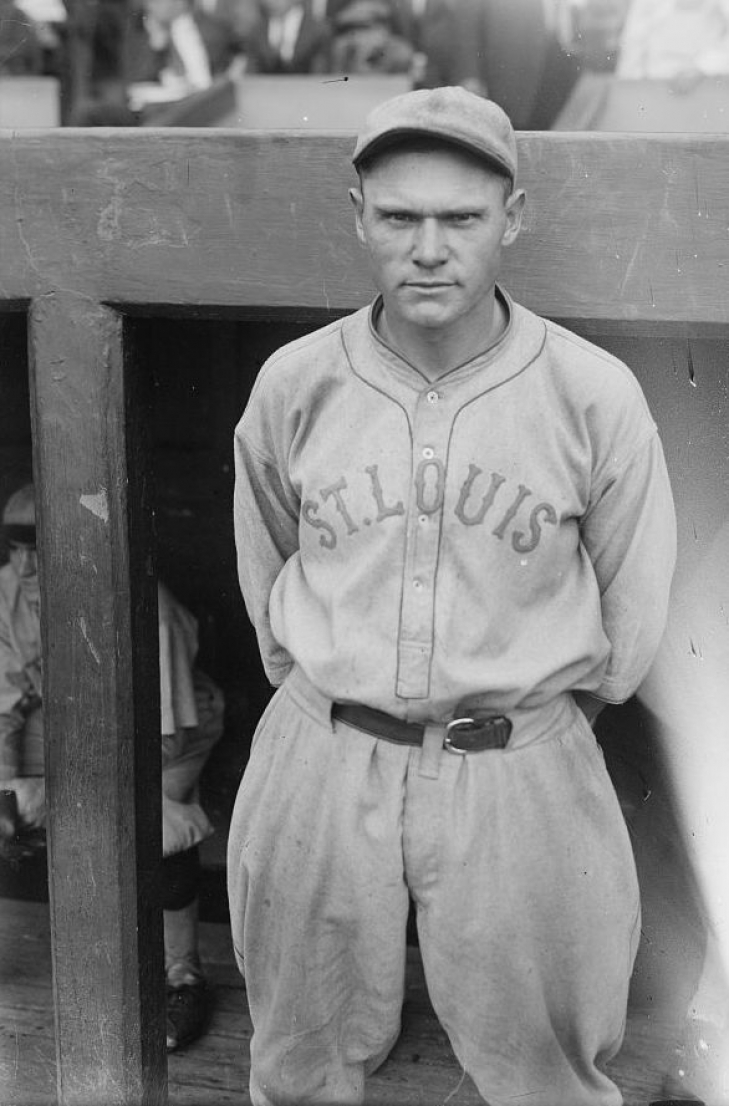
Standing 6' 3" and weighing over 210 pounds, William "Baby Doll" Jacobson was a towering figure in an era of smaller men, casting a long shadow over the St. Louis Browns’ outfield for the better part of a decade. His nickname—legendarily bestowed by a fan in the minors who shouted, "You must be that beautiful doll!" after a leadoff home run—belied a player of immense strength and surprising agility.
Jacobson’s journey was defined by perseverance. After a brief 1915 debut and a return to the minors, he secured a starting role in 1917, only to sacrifice his 1918 season to enlist in the U.S. Navy during World War I. When he returned in 1919, he embarked on one of the most productive offensive stretches in franchise history. From 1919 to 1925, Jacobson reeled off seven consecutive .300 seasons, including a career-high .355 in 1920 and a .352 in 1921. During this peak, he was a fixture on the leaderboards, recording over 210 hits in back-to-back years and driving in 122 runs in 1920—a mark topped only by Babe Ruth that season.
While his bat was his calling card, Jacobson was also a defensive pioneer in center field. Despite his size, he possessed incredible instincts, setting a major league record in 1924 with 488 putouts—a testament to his range that stood for over twenty years. He was the anchor of the legendary "1922 Browns" outfield that nearly toppled the Yankees for the pennant.
Jacobson was eventually traded to the Athletics in 1926, leaving St. Louis with 1,508 hits and a sterling .317 batting average.
23. Melvin Mora
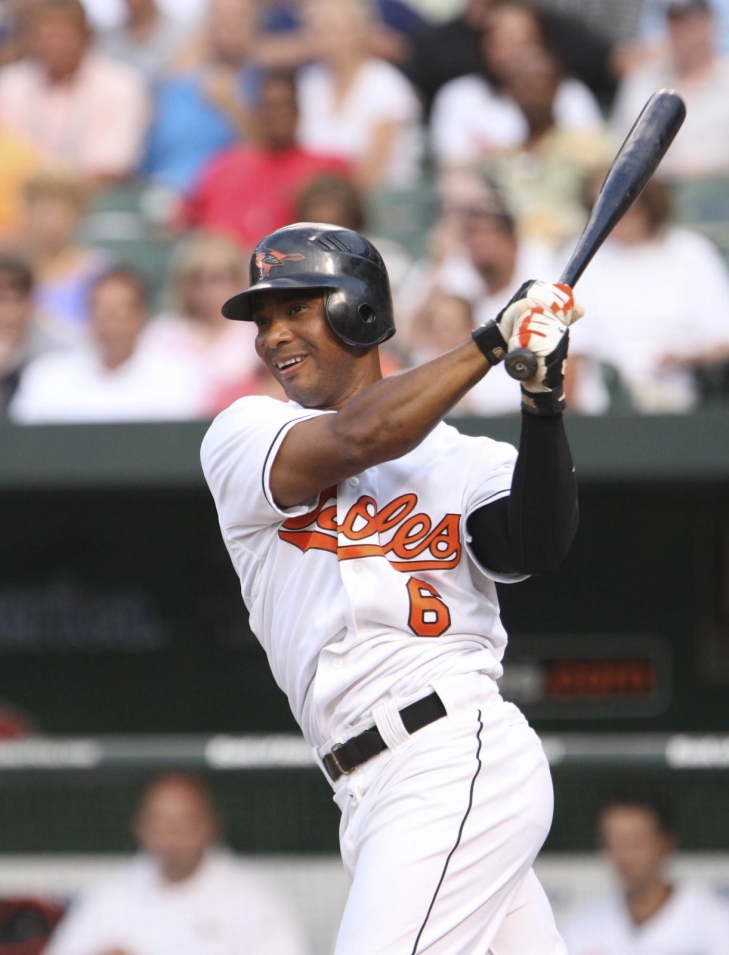
Melvin Mora arrived in Baltimore during the 2000 season via trade with the New York Mets, initially serving as a super-utility player before settling into center field. However, it was his 2004 transition to third base that unlocked his true potential, transforming him into one of the American League’s premier offensive forces.
The 2004 campaign remains a statistical masterpiece in Orioles history. That season, Mora didn't just play third base; he dominated the league, capturing the American League On-Base Percentage Title with a staggering .419 mark. He finished second only to Ichiro Suzuki in the AL batting race with a career-high .340 average, while setting personal benchmarks in power with 27 home runs and 104 RBIs. His performance earned him a Silver Slugger Award and established him as the "Most Valuable Oriole" during a season where he was arguably the best third baseman in the sport.
While Mora would never again scale the .300/.400 peaks of 2004, he remained a durable and dangerous fixture in the Baltimore lineup for a decade. He secured his second All-Star selection in 2005 and continued to flash significant power, recording another 27-homer campaign that year and driving in 104 runs again in 2008. A true fan favorite for his energy and versatility, Mora spent ten years in Charm City before departing as a free agent in 2010.
He left the Orioles with 1,323 hits, 158 home runs, and a robust .280 batting average. Inducted into the Baltimore Orioles Hall of Fame in 2015, Mora stands as the most productive third baseman of the post-Ripken era, a man who combined elite plate discipline with a "do-it-all" attitude.
24. Brian Roberts
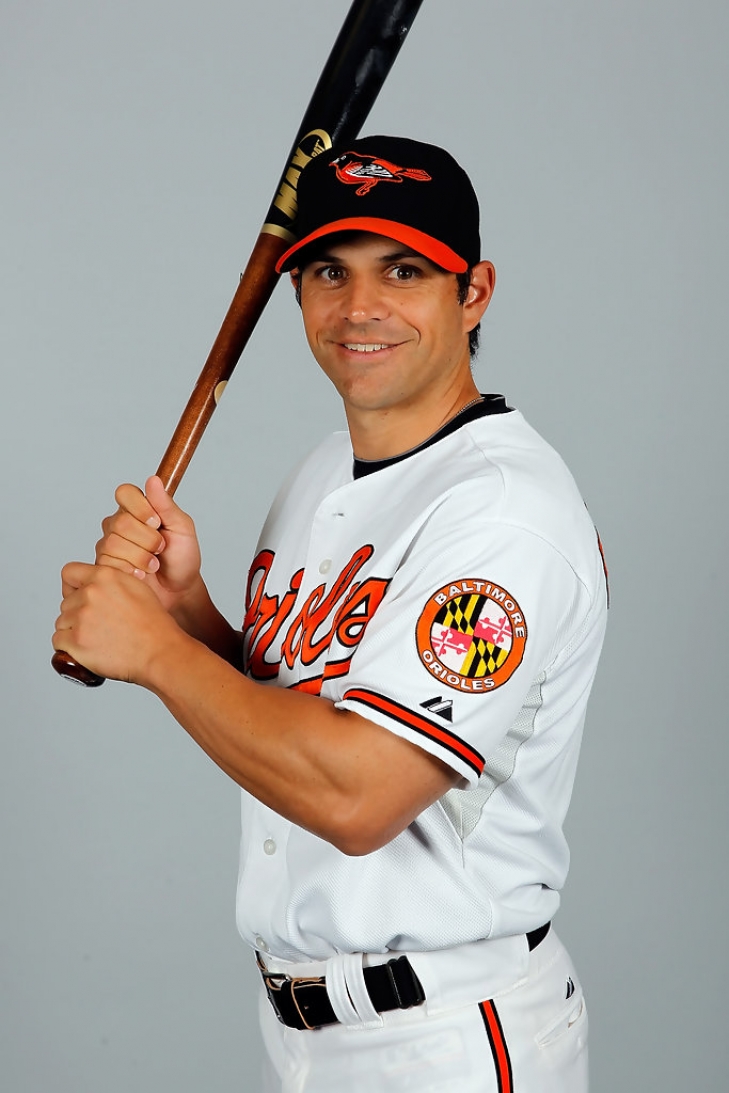
For the first 13 seasons of his career, Brian Roberts served as the high-octane engine of the Baltimore Orioles' offense. Making his debut in 2001, Roberts solidified his place as the starting second baseman by 2003, quickly evolving into one of the most dynamic lead-off hitters in the American League.
Roberts’ game was built on a rare combination of elite speed and gap-to-gap power. He was a perennial "doubles machine," leading the American League in two-baggers in both 2004 and 2009—the latter of which saw him set a franchise record with 56 doubles. His base-running was equally lethal; from 2003 to 2009, he consistently swiped at least 23 bases, reaching a career summit in 2007. That year, he stole 50 bases to capture the American League Stolen Base Title, cementing his status as a two-time All-Star (2005, 2007).
Tragically, the "iron-man" durability that characterized his early years was derailed by back trouble and a series of significant concussions beginning in 2010. While these injuries limited his production in his final Baltimore seasons before a brief 2014 stint with the Yankees, his legacy in Charm City remained untouched.
Roberts left the Orioles as a cornerstone of the 21st-century franchise, totaling 1,452 hits, 278 stolen bases, and a .278 batting average. In 2018, he was rightfully inducted into the Baltimore Orioles Hall of Fame, honored as one of the most prolific and beloved table-setters in the history of the orange and black.
22. Manny Machado
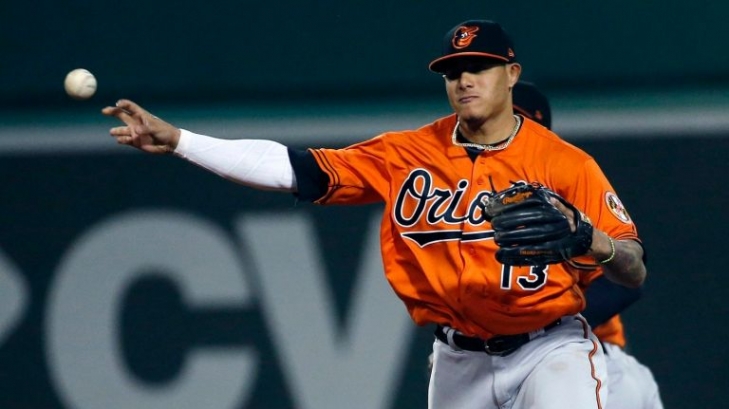
Drafted third overall in 2010, Manny Machado arrived in Baltimore as a 20-year-old phenom in 2012, sparking a mid-season surge that helped the Orioles return to the postseason for the first time in 15 years. While he played just 51 games in his debut, he took over third base full-time in 2013 and immediately authored one of the greatest defensive seasons in franchise history.
That year, Machado became a national sensation, capturing the Gold Glove, the Platinum Glove (as the best overall fielder in the AL), and leading the league in Defensive bWAR. Offensively, he proved just as dangerous, leading the American League with 51 doubles and earning his first of four All-Star selections as an Oriole. Despite missing a significant portion of 2014 to injury, Machado returned in 2015 as a transformed power threat. He reeled off three consecutive seasons of at least 33 home runs (2015–2017), pairing his elite "Minister of Defense" glove with the most productive bat in the lineup.
As the Orioles faced a rebuilding phase in 2018, it became clear that the generational talent would be out of reach in free agency. He was traded to the Los Angeles Dodgers mid-season, concluding a brilliant Baltimore chapter that included 162 home runs and two top-five AL MVP finishes.
Machado left Maryland with 977 hits, a .283 batting average, and a legacy as the most dynamic third baseman to wear the orange and black since Brooks Robinson. Inducted into the conversation of all-time Orioles greats, he remains the definitive "what-if" of the modern era—a superstar who reached the mountaintop of individual excellence in a Baltimore uniform.