


Site Admin
197. Alfonso Dantes
143. Seiji Sakaguchi
29. Pedro Astacio
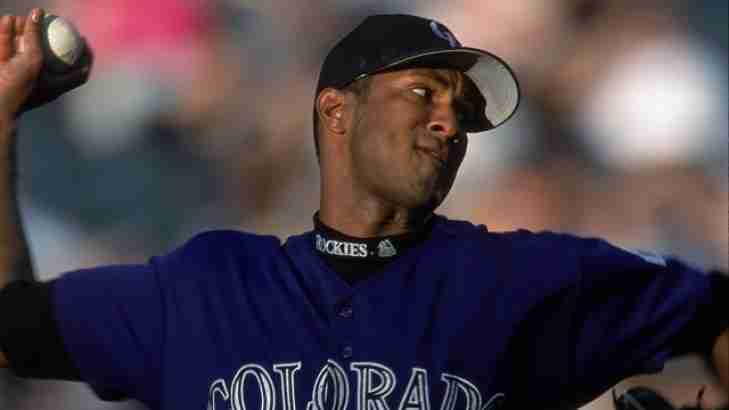
Pitching in Colorado during the late 1990s was widely considered a fool's errand, but Pedro Astacio approached the challenge with a relentless, rubber-armed mentality. While his box scores often featured the kind of astronomical numbers that would break a lesser pitcher’s confidence, Astacio leaned into the chaos. He became the rotation's undisputed workhorse, a man who would gladly trade a few long balls for the chance to stay on the mound long enough to record a win.
Arriving in late 1997 via a trade with the Dodgers, he quickly realized that survival at Coors Field required a thick skin and a high pitch count. He led the National League in home runs allowed twice during his stint, but he countered those mistakes by simply outworking the opposition. His ability to chew through innings was solid; he surpassed the 200-inning mark in three of his four full seasons with the club.
The 1999 season stands as one of the most statistically fascinating chapters in the history of the sport. At first glance, his 5.04 ERA suggests a struggling starter, but when adjusted for the era’s extreme offensive environment, it tells a different story. Astacio finished that year with 17 wins and 210 strikeouts, amassing a 5.9 bWAR, a figure that suggests he was actually one of the most valuable pitchers in the league despite the "bloated" surface stats.
The story in Colorado ended in 2001 when he was traded to the Houston Astros, but he left as one of the most decorated starters in team history. He departed with 53 wins, 749 strikeouts, and a reputation as a pitcher far better than his ERA ever let on.
21. Steve Reed
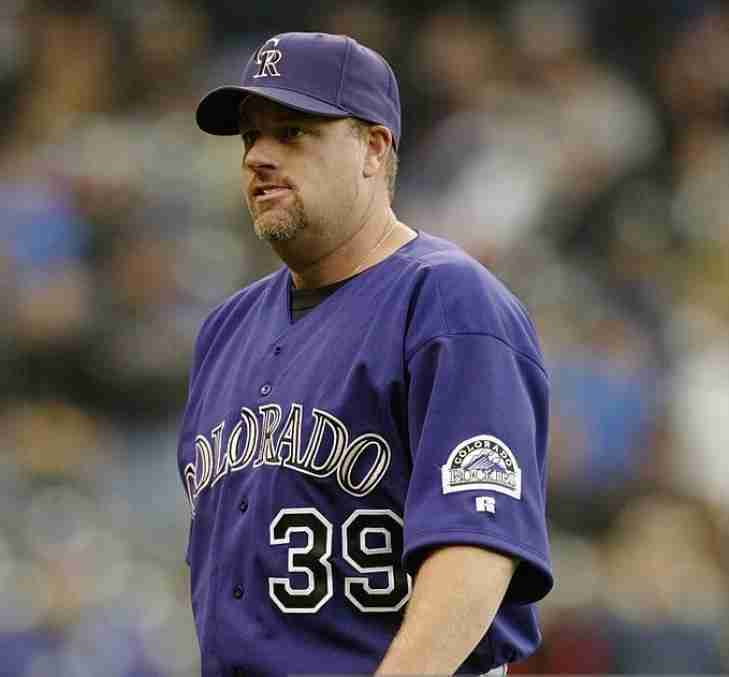
A side-arming right-hander with a specialized sinker, Reed arrived as an original member of the franchise via the 1992 Expansion Draft and proceeded to become the gold standard for bullpen durability in the thin air. For most of the 1990s, he was the man the Rockies turned to when the lead was slim, and the altitude was threatening to turn a routine fly ball into a disaster.
Reed’s tenure in Denver was defined by remarkable professional resilience, as he took the ball more often than any of his peers. He established a level-headed consistency that was rare for a pitcher navigating the pre-humidor era of Colorado baseball, specializing in inducing the ground balls necessary to survive at altitude. He reached a statistical peak in durability during the 1994 campaign, leading the National League with 61 games pitched and serving as the primary tactical engine of the Rockies' relief corps. He possessed a deceptive, low-slot delivery that neutralized both right and left-handed hitters, providing the high-leverage stability required to bridge the gap to the ninth inning.
The most profound aspect of his craftsmanship was his sheer volume of work. Reed appeared in a franchise-record 461 games across two separate stints in a Rockies uniform, a total that reflects a decade of being the organization's most trusted middle-relief option. He was a model of high-frequency efficiency, appearing in over 60 games across four seasons for Colorado and maintaining a respectable ERA despite the era’s extreme offensive environment. He proved that a player could become a franchise pillar by mastering the specialized, often-overlooked art of the "bridge" reliever, showing a workmanlike approach that allowed him to log over 500 innings for the club.
With the Rockies, Reed compiled 461 appearances and 544.1 innings.