


Site Admin
24. Dexter Fowler
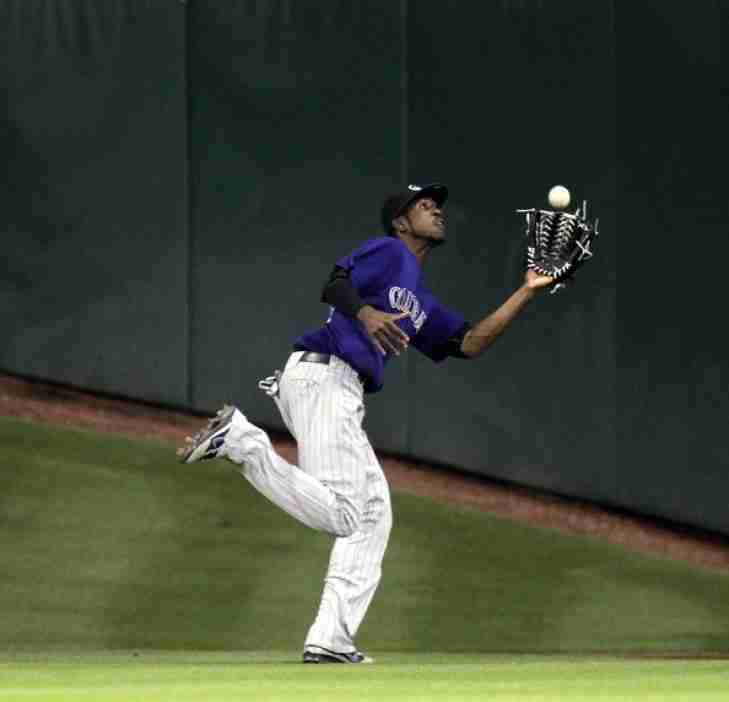
Dexter Fowler’s stay in Colorado was defined by an immediate and relentless offensive efficiency. After a foundational debut in late 2008, he established himself as a model of specialized versatility, utilizing his elite speed to pressure opposing defenses from the leadoff spot. In between 2009 and 2012, a four-year run in which he recorded at least 10 triples annually. This stretch was highlighted by a 2010 campaign where he led the National League with 14 triples, a feat that perfectly illustrated his ability to exploit the massive dimensions of his home ballpark.
The most profound aspect of his game was a disciplined eye that balanced his aggressive baserunning. Fowler was more than just a sprinter; he was a patient table-setter who maintained a career .365 on-base percentage during his six seasons in purple. He possessed a specialized athleticism that allowed him to patrol center field with grace, neutralizing the altitude's effect on fly balls and serving as the primary defensive anchor for a pitching staff that relied on his range.
After the 2013 season, when he was traded to Houston, marking the end of a six-year journey that saw him transform from a high-upside prospect into a premier leadoff threat. With the Rockies, Fowler compiled 606 hits, 53 triples, and a .270 batting average while leading the league in triples in 2010.
26. Jeff Francis
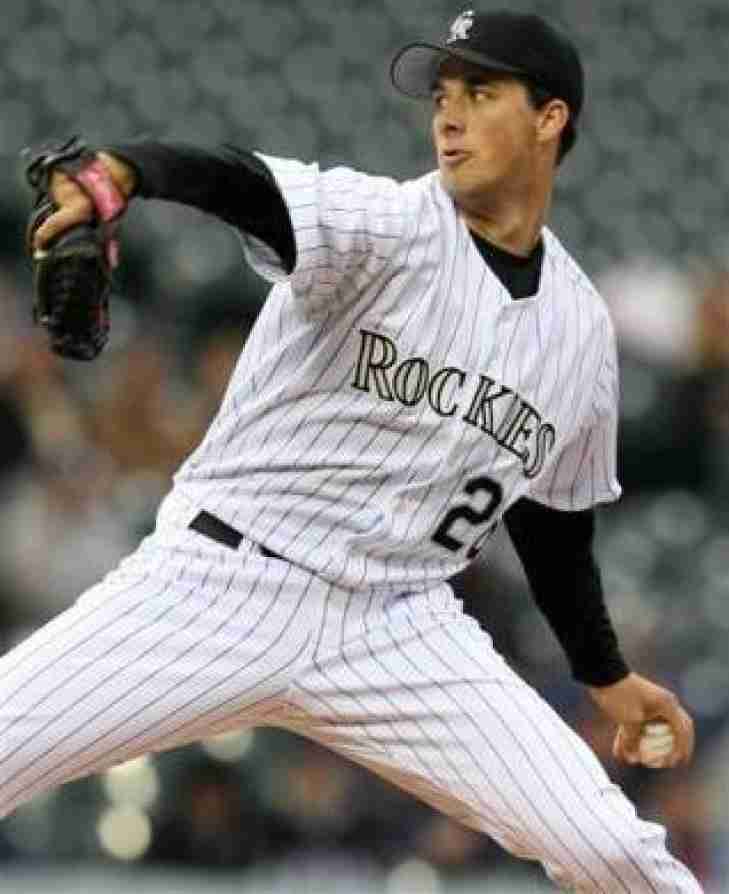
A first-round pick out of the University of British Columbia, the left-hander arrived in Denver with a polished delivery and a professional poise that seemed immune to the psychological toll of pitching at altitude. For a brilliant three-year window in the mid-2000s, "The Socially Conscious Southpaw" provided the Rockies with a steady-state reliability that finally allowed the organization to dream of October.
He established himself as a model of specialized durability between 2005 and 2007, a three-year run where he averaged over 190 innings per season and posted consistent winning records. He possessed a rare, high-leverage mental toughness, navigating the thin air with a focused intensity that saw him secure 14 wins in 2005 and 13 in 2006. He was the primary engine of a rotation desperate for a frontline anchor, proving that a pitcher could find success in Denver by prioritizing location and movement over raw velocity.
During the historic "Rocktober" run of 2007, Francis had a career year, going 17-9 with a 4.22 ERA, a decent mark for a Coors Field starter in that era, and finishing ninth in the Cy Young voting. He achieved historic outlier status that October, becoming the first Canadian pitcher ever to win a postseason game and start a World Series matchup. He served as the tactical leader of the staff during the club's 21-of-22 game winning streak, providing the veteran-like poise required to carry the franchise to its first National League pennant.
The middle chapters of his story were marked by a difficult physical toll. Following his 2007 heroics, a significant shoulder injury forced him to miss the entire 2009 campaign. While he showed a remarkable resilience by returning for a second stint in a Rockies uniform later in his career, he was no longer the high-frequency workhorse of his prime.
With the Rockies, Francis compiled 82 wins and 869 strikeouts.
116. Tim Hudson

Skip Schumaker