


Site Admin
7. Frank White
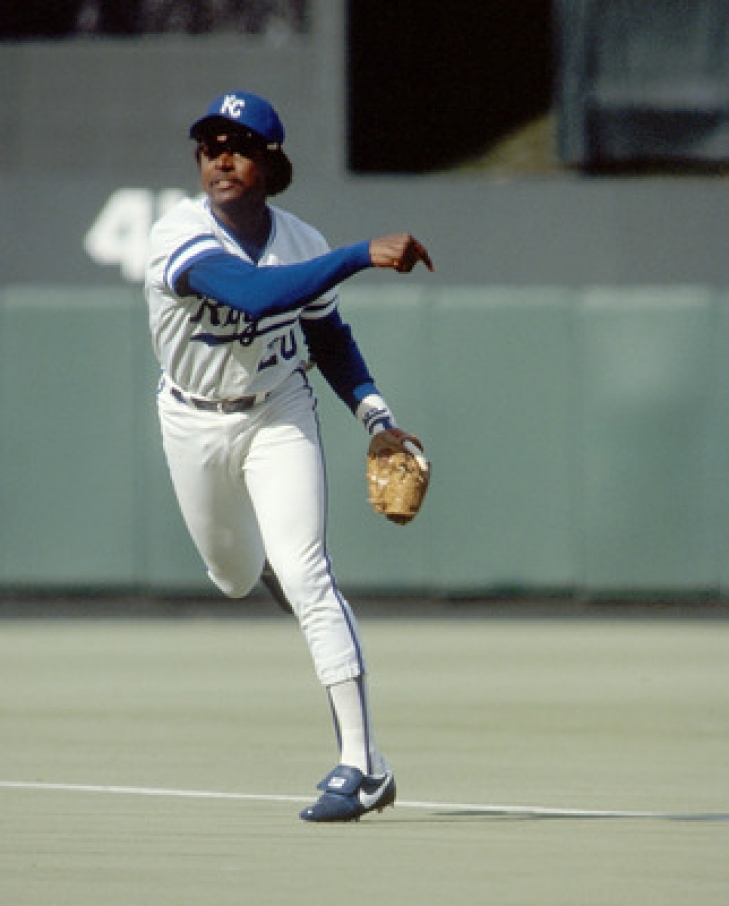
While George Brett was the thunder of the Kansas City dynasty, Frank White was the lightning-quick glove that held the infield together. A local product who literally helped build the stadium where he eventually became a star, White spent eighteen seasons as the gold standard for defensive excellence at second base.
White’s tenure in the Midwest was defined by a surgical, high-frequency brilliance in the field. His defensive command was on full display by capturing eight Gold Gloves, a total that solidified his reputation as the premier vacuum of the American League. Nicknamed "Hoover" for his specialized ability to inhale anything hit in his direction, he was a model of technical craftsmanship, consistently ranking among the league leaders in double plays turned and total zone runs. He possessed a rare, explosive athleticism that allowed him to turn routine grounders into spectacular outs, providing the steady-state reliability that anchored the Royals' championship rotations.
Offensively, White reached an unexpected surge of power during the mid-1980s. While he struggled with a career on-base percentage that dipped below the .300 mark—a specialized limitation that restricted his overall statistical value—he found his stroke during the club's most critical runs. He produced back-to-back 20-home run seasons in 1985 and 1986, proving he could provide the high-leverage pop needed to support a championship lineup. His professional resilience was never more evident than in the 1980 ALCS, where he hit .545 and earned MVP honors to help Kansas City finally slay the Yankees and reach the World Series for the first time.
His presence in the organization was defined by an unwavering loyalty and a workmanlike approach that endeared him to the Kansas City faithful. Whether he was famously using his elite range to preserve a lead or providing the veteran-like poise needed to guide the club through the 1985 "I-70 Series" triumph, he competed with an energy that was woven into the fabric of the city.
As a Royal, White compiled 2,006 hits and 160 home runs while securing eight Gold Gloves and a World Series ring, and in 1995, he was bestowed a spot in the Royals Hall of Fame.
8. Dan Quisenberry
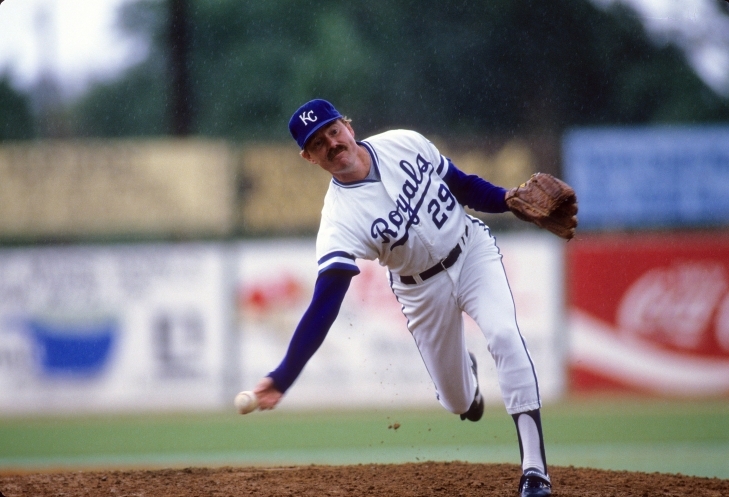
Dan Quisenberry was a machine in an era of flame-throwing closers. While his peers were busy trying to blow the ball past hitters, "Quiz" was busy making them look foolish with a submarine delivery and a sinking fastball he famously nicknamed "Peggy Lee”, because the first time a hitter saw it, they’d ask, "Is that all there is?" For the first half of the 1980s, his pinpoint control and unconventional style turned the late innings at Royals Stadium into a graveyard for American League rallies.
Quisenberry’s ascent in Kansas City began with a definitive tactical shift in 1980. After a solid debut the year prior, his signature submarine style immediately propelled him to a league-leading 33 saves and a fifth-place finish in the Cy Young voting. He was the high-frequency engine that powered the Royals to their first-ever American League pennant, providing a specialized level of efficiency that defied the "fireballer" archetype. He proved that a reliever could become a franchise pillar not by overpowering hitters, but by inducing a relentless stream of ground balls and refusing to grant free passes.
The middle of his career was defined by a four-year run of high-leverage dominance that remains an outlier in relief history. Between 1982 and 1985, Quisenberry led the American League in saves each season and won four consecutive Rolaids Relief Man awards. In 1983 alone, he set a then-MLB record with 45 saves while maintaining a microscopic 1.94 ERA across 139 innings, a workload that would be unthinkable for a modern closer. He was a model of steady-state reliability, finishing as the runner-up for the Cy Young in both 1983 and 1984, proving that his specialized craftsmanship was respected as much as any starter’s volume.
The final chapters of his story in Kansas City culminated in the 1985 "I-70 Series." Quisenberry was a model of veteran poise throughout the postseason, eventually earning the win in the legendary Game 6 that sparked the Royals' comeback to win their first World Series title. However, the heavy workloads of his peak years led to a rapid decline; his effectiveness eroded to the point where the club released him midway through the 1988 season. He departed with 238 saves in a Royals uniform, a total that served as the franchise gold standard for decades.
The story in Kansas City reached its final punctuation in 1998 when the Royals inducted him into their Hall of Fame. It was a bittersweet celebration, as Quisenberry passed away later that year, but his legacy as a witty, eccentric, and utterly dominant tactician remains etched into the team's identity.
With the Royals, Quisenberry compiled 238 saves, five Rolaids Relief Man awards, and a World Series ring (1985).
The Buck Stops Here -- Interview with Fonda Bryant
5. Amos Otis
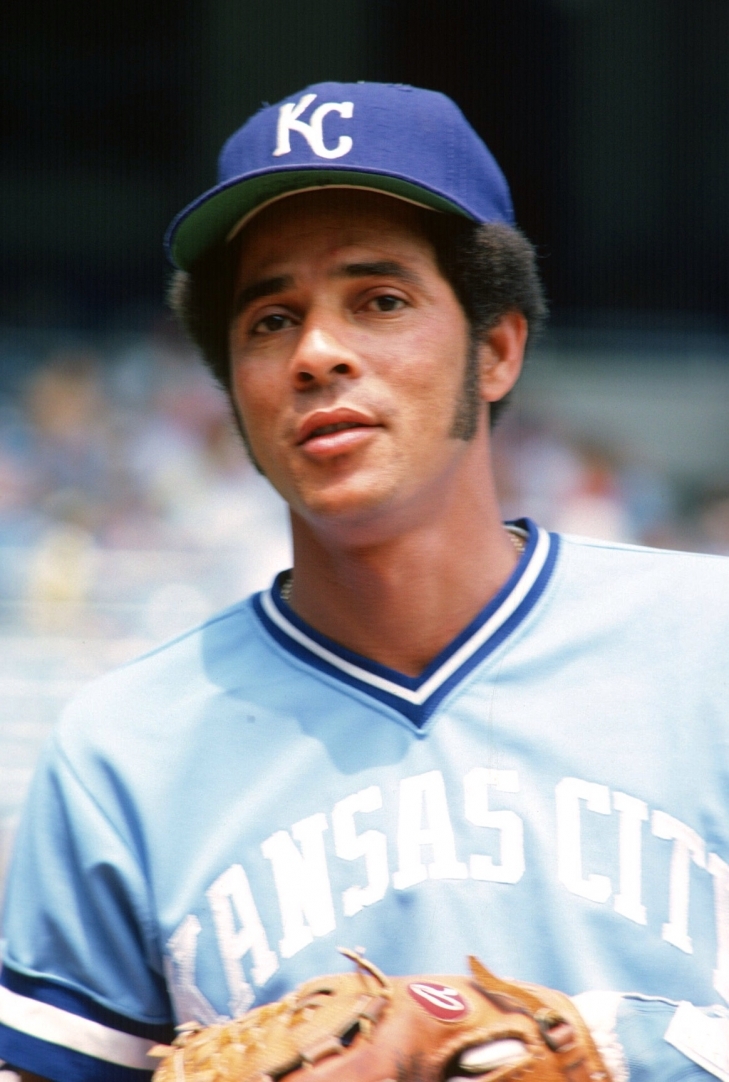
The New York Mets’ decision to part with Amos Otis in 1969 remains one of the most lopsided clerical errors in baseball history. While the Mets saw a player who didn't quite fit their mold, the expansion Kansas City Royals recognized a foundational catalyst. Arriving in the Midwest just as the franchise was finding its pulse, "A.O." didn't just occupy center field; he patrolled it with a predatory grace that defined the "Royal Way" for more than a decade. He was the prototype for the organization’s identity, a high-speed athlete who turned the cavernous gaps of Royals Stadium into his personal playground.
Otis’s tenure in Kansas City served as a definitive study in the "small ball" revolution. In 1971, a season in which he led the American League with 52 stolen bases. This wasn't merely track-star velocity; it was a weapon that pressured opposing rotations from the moment he reached first. He twice led the circuit in doubles and has amassed five seasons with at least 30 steals. His ability to manufacture runs in a park that swallowed home runs made him the primary engine of the Kansas City offense long before the arrival of the club's later icons.
Another tool he had was his defensive range that felt nearly limitless. Otis possessed a specialized athleticism that earned him three Gold Gloves in center field, utilizing his sprinter's kick to erase extra-base hits before they could find the turf. He reached a historic outlier status during the 1980 World Series, a stage where he transformed from a steady contributor into a postseason supernova. Despite the Royals falling to the Phillies, Otis authored a masterpiece in the Fall Classic, batting a staggering .478 with three home runs and seven RBIs. It was a performance of such high-leverage brilliance that it remains etched in the franchise's early playoff lore.
The 1983 season, which should have been a celebration of his veteran-like poise, instead became a high-stakes crossroads. Following the legal proceedings, Commissioner Bowie Kuhn issued a suspension that sidelined Otis for the beginning of the 1984 campaign. It was a moment of intense public scrutiny that threatened to obscure over a decade of elite production.
As for ’84, that was with Pittsburgh, as he was a Free Agent, and he finished his career at Three Rivers.
With the Royals, Otis compiled 1,977 hits and 340 stolen bases while securing three Gold Gloves. He entered the Royals Hall of Fame in 1986 as part of the first class.