


Site Admin
33. Brad Hawpe
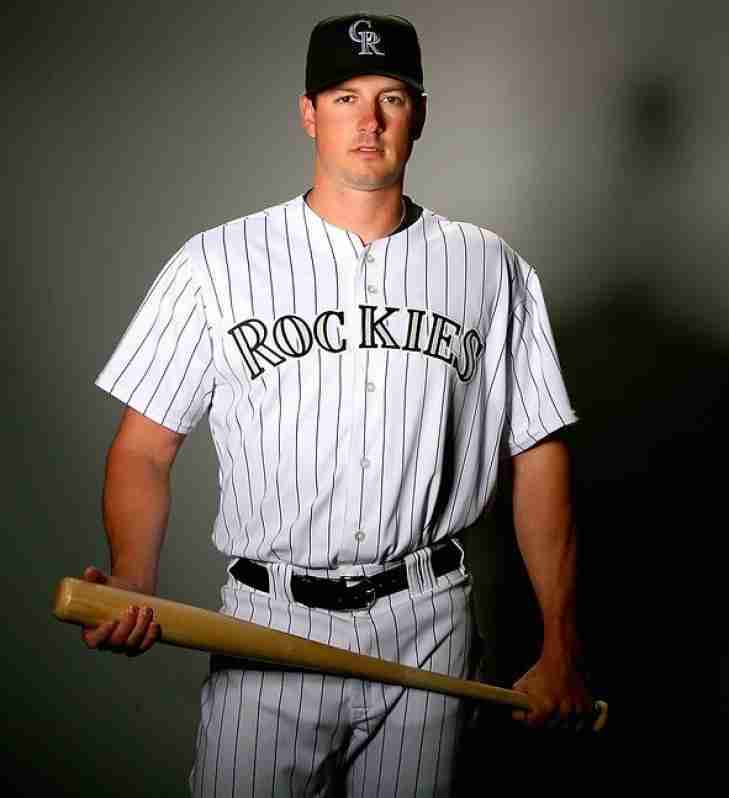
The journey of Brad Hawpe in Colorado is a study in raw, left-handed power that seemed perfectly calibrated for the gaps of Coors Field. Arriving in 2004, Hawpe transitioned from a college first baseman at LSU into a cornerstone of the Rockies' outfield during their most competitive era. While he lacked the foot speed of a traditional right fielder, he possessed a heavy, consistent bat that anchored the middle of the order, providing the run-producing muscle that fueled the franchise’s historic 2007 "Rocktober" run.
In 2007, he was a vital part of the National League champions. That summer, he blasted a career-high 29 home runs and drove in 116 runs, slugging .539 while maintaining a specialized ability to draw walks. He was a model of professional resilience, appearing in 152 games and delivering multiple late-inning hits that kept the Rockies’ unlikely postseason hopes alive. This run solidified his reputation as a premier run-producer, earning him MVP votes and cementing his status as a local favorite.
Between 2006 and 2009, Hawpe was a model of durability, averaging over 24 home runs and 90 RBIs per season. He reached a professional high point in 2009, earning his first All-Star selection after a blistering first half where he led the club in nearly every major offensive category.
However, his overall value was a paradox: elite hitting and significant defensive struggles. While he possessed a cannon-like arm that produced 16 outfield assists in 2006, his specialized lack of range and lateral quickness proved costly. He finished his Rockies career with a -9.8 defensive bWAR, a statistical anchor that often negated the runs he created with his bat. He was a player of extremes: an asset in the batter's box who could dismantle a pitching staff, but a defensive liability who required his teammates to cover extra ground in the vast expanses of the Colorado outfield.
Midway through the 2010 season, Hawpe was placed on waivers and subsequently released. Hawpe compiled 806 hits and 121 home runs while playing a vital role in the 2007 World Series run.
31. Tyler Chatwood

The story of Tyler Chatwood in Colorado is a study of a pitcher who spent years trying to solve the atmospheric puzzle of Coors Field. Arriving in late 2011 via trade, Chatwood brought a high-velocity sinker and a relentless ground-ball approach that seemed tailor-made for the thin air of the Rockies. For five seasons, he operated as a vital engine of the Colorado rotation, showing a unique ability to find success on the road while battling the unpredictable physics of his home mound.
Chatwood’s tenure in Denver was defined by a statistical anomaly that remains a point of fascination. In 2016, he found himself as the ultimate road specialist. While many pitchers struggled to transition between altitudes, Chatwood produced a brilliant run away from Coors Field, posting a 1.69 ERA on the road, the lowest in the major leagues that year and a franchise record. This comeback was especially significant as it followed a grueling two-year absence; Chatwood missed nearly all of 2014 and the entirety of 2015 while recovering from his second Tommy John surgery.
The hallmark of his performance was a specialized ability to keep the ball on the ground, a necessity for survival in Colorado. He reached a historic outlier status on April 15, 2017, when he threw a two-hit, complete-game shutout against the Giants in San Francisco, retiring the first 17 batters he faced. He possessed a natural movement on his heater that allowed him to navigate high-leverage situations and consistently induce double plays when he had runners on base. He proved that a player could become a rotation fixture by staying resilient in the most difficult pitching environment in the sport, eventually amassing 34 wins in a Rockies uniform.
Following the 2017 season, he signed a significant free-agent deal with the Chicago Cubs. In Colorado, Chatwood compiled a 34-35 record with 364 strikeouts and a 4.12 ERA.
45. Michael Cuddyer
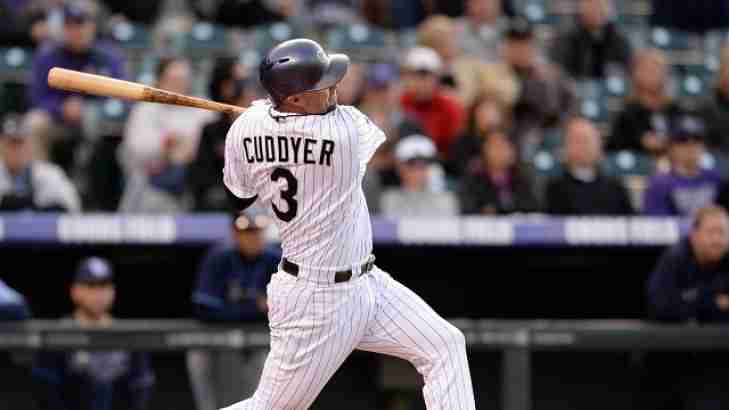
In the timeline of Colorado baseball, Michael Cuddyer’s tenure was more of a high-yield guest appearance than a franchise-defining era. His arrival in Denver in December 2011 was a rare moment of aggressive free-agent spending for the Rockies, who lured the veteran away from Minnesota with a three-year, $31.5 million deal. While the move was partly a culture play—Rockies star Troy Tulowitzki reportedly lobbied heavily to get the respected veteran into the clubhouse, it was also a gamble on a 32-year-old outfielder whose best days were theoretically behind him.
Cuddyer’s time in Denver is essentially defined by a 2013 campaign that stands as the statistical outlier of his career. That year, he produced a run of efficiency that defied his age, capturing the National League batting title with a career-high .331 average. It was a summer where everything seemed to find a gap; he authored a franchise-record 27-game hitting streak and earned both an All-Star selection and a Silver Slugger. He served as the veteran-like heartbeat of a lineup that relied on his ability to drive the ball to all fields, finishing the year with 20 home runs and 84 RBIs.
However, the reality of his Rockies run was heavily impacted by the physical toll of a long career. His 2014 season was a fragmented collection of highlights interrupted by three separate trips to the disabled list, including a fractured shoulder, which limited him to just 49 games. Even in that limited action, he showed flashes of his professional poise, hitting for the cycle against the Reds in August. This made him just the third player in MLB history to achieve the feat in both leagues, but it couldn't mask the fact that his body was beginning to fail him. While his .307 career average in Colorado is statistically impressive, it came in a relatively small sample size of just 318 hits.
His tenure with the organization ended following the 2014 season, when he signed with the New York Mets.
40. John Thomson
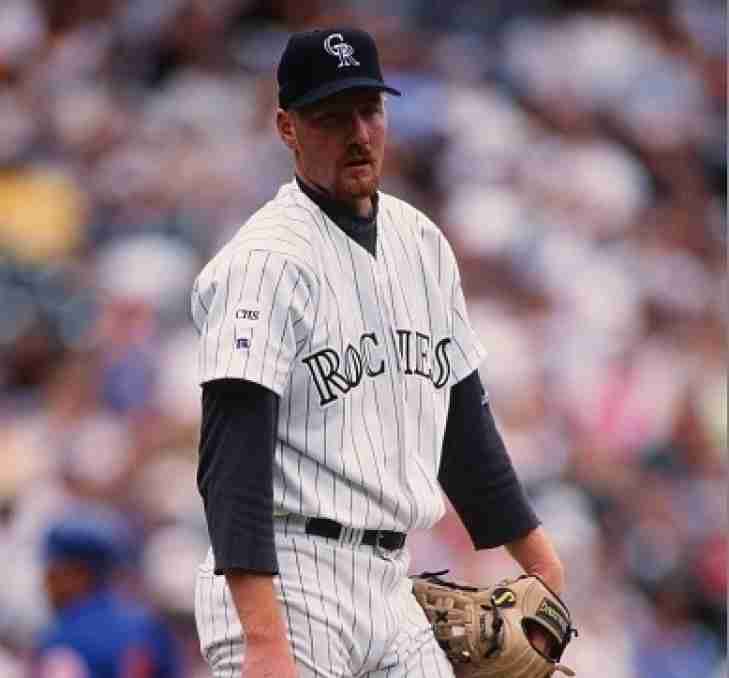
A seventh-round draft pick with a lean frame and a relentless sinking fastball, John Thomson didn't rely on the high-velocity fireworks that often resulted in "taters" in Denver. Instead, he leaned on a focused intensity and a specialized ability to induce contact,
He arrived as a young arm in 1997 and immediately became a workhorse, throwing 166.1 innings in his first full season. While he never reached a dominant statistical summit, he provided the organization with something arguably more valuable in the late '90s: a pitcher who didn't beat himself. He currently sits near the top of the Rockies' all-time leaders for fewest walks allowed per nine innings, a level of control that was essential for survival in a high-scoring environment.
He amassed 27 wins and nearly 400 strikeouts in purple and black before being traded to the Mets in 2002.