

39. Lyle Alzado

Selected out of little Yankton College in the fourth round of the 1971 draft, Lyle Alzado made an immediate splash in Colorado. Originally brought in as depth, he was thrust into a starting role as a rookie following an injury and responded with eight sacks. His fiery intensity and unhinged playing style quickly turned him into an iconic fan favorite in Mile High long before he ever donned Silver and Black.
Alzado was an absolute terror off the edge throughout the 1970s. In 1972, he posted 10.5 sacks while leading the entire NFL with five opponent fumble recoveries. By 1974, he logged a team-high 13.0 sacks, establishing himself as one of the premier interior and edge disruptors in pro football.
His finest season in Denver arrived during the magical 1977 campaign. Operating as the premier pass-rushing menace of the legendary "Orange Crush" defense, Alzado spearheaded the front seven with 8.0 sacks and 80 tackles. He was named the UPI AFC Defensive Player of the Year, earned a Consensus First-Team All-Pro selection, and garnered his first career Pro Bowl nod while leading Denver to its first-ever AFC Championship and Super Bowl XII appearance.
He backed that up with a second Pro Bowl trip and Second-Team All-Pro honors in 1978. However, contract disputes and a rift with management led to a bitter trade to Cleveland before the 1979 season, cutting his Mile High tenure short before he eventually won a ring with the Raiders and his profile exploded nationally.
With the Denver Broncos, Alzado had 64.5 unofficial sacks, 593 tackles, 14 fumble recoveries, and a safety.
49. Otis Armstrong
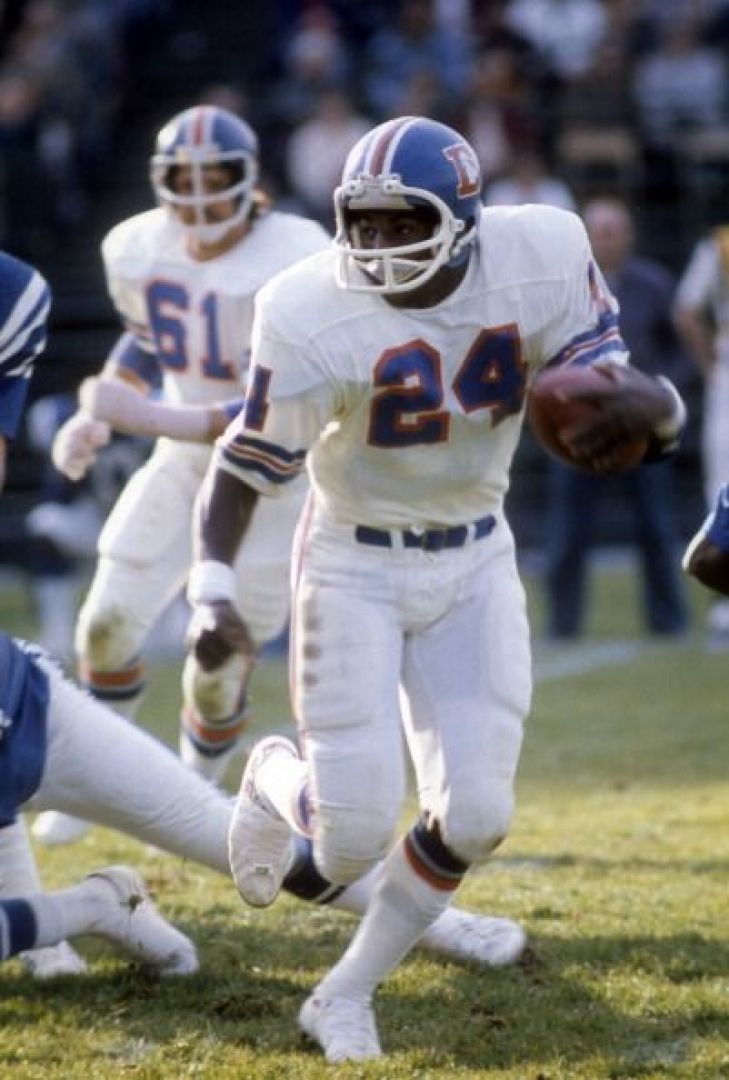
Otis Armstrong, a Big Ten MVP, consensus All-American, and College Football Hall of Famer from Purdue, joined the Mile High City as the ninth overall pick in the first round of the 1973 draft. Initially serving mostly as a backup behind legendary Floyd Little and focusing on kick returns as a rookie, Armstrong dramatically elevated his performance in his second season once he became a full-time starter.
Armstrong's standout 1974 season was one of the most dynamic in the era. He topped the NFL in rushing with 1,407 yards, averaging an impressive 5.3 yards per carry. Additionally, he caught 38 passes for 405 yards, leading the league in yards from scrimmage with 1,812 and earning an Approximate Value of 21. His performance earned him Consensus First-Team All-Pro honors and his first Pro Bowl selection.
A serious injury sidelined nearly all of his 1975 season, allowing him only four games. Nevertheless, Armstrong made a strong comeback in 1976 with his second 1,000-yard season, rushing for 1,008 yards and earning his second Pro Bowl selection. His ability to contribute in multiple ways out of the backfield was vital for Red Miller's team as Denver entered its first successful period.
Although recurring leg and spinal injuries kept him from reaching those statistical heights again, Armstrong remained a vital part of the backfield rotation. He contributed to Denver's historic 1977 AFC Championship run and Super Bowl XII appearance, grinding out tough yards until retiring after the 1980 season.
Over his Denver run, Armstrong had 4,453 rushing yards, 25 rushing touchdowns, 131 receptions, 1,302 receiving yards, and 30 total touchdowns.
48. Craig Morton
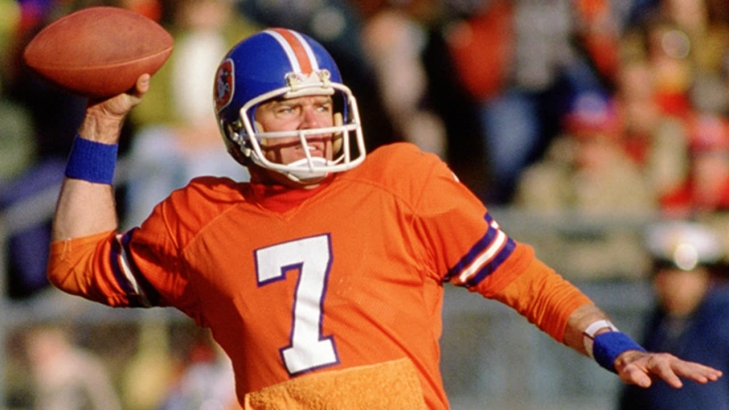
After spending 12 seasons in the NFL between the Dallas Cowboys and New York Giants, 34-year-old Craig Morton landed in Denver in 1977 for what was supposed to be a late-career transition. Instead, the veteran signal-caller produced the most memorable stretch of his pro career, instantly providing the steadying offensive leadership Denver needed to match its powerhouse defense.
Morton's first campaign in Mile High was extraordinary. Coordinating Red Miller’s offense with his main target, Haven Moses—the famous "M&M Connection"—Morton threw 14 touchdown passes and led Denver to a 12-2 regular-season record. He dominated the awards circuit, earning PFWA Comeback Player of the Year, UPI AFC Offensive and Defensive honors, and was the NFL MVP runner-up. Despite a severe hip injury that hospitalized him before the playoffs, he energized Denver's home victories over Pittsburgh and Oakland, guiding the franchise to its first Super Bowl appearance in Super Bowl XII.
That historic run made Morton the first quarterback in NFL history to start a Super Bowl for two different franchises. Over the next five seasons, he remained a steady hand under center, leading Denver to two AFC West division titles and three playoff appearances.
Even as he approached 40, his accuracy remained sharp. Morton finished in the top three league-wide in completion percentage in both 1980 and 1981, and in 1981 he recorded his first career 3,000-yard passing season, with a career-high 3,195 yards and an NFL-leading 8.5 yards per pass attempt. When he hung up his cleats after the 1982 season, he retired as the franchise's all-time leader in passing yards and touchdowns.
He had 11,895 passing yards, 74 passing touchdowns, and a 41-23 regular-season starting record with Denver.
35. Steve Foley
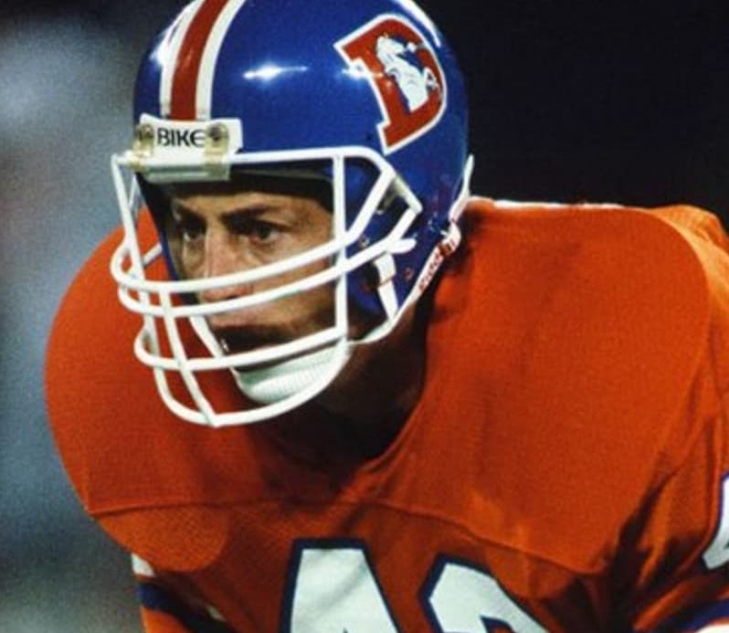
A converted college quarterback out of Tulane, Steve Foley entered pro football with a lot to prove at defensive back. Selected by Denver in the eighth round of the 1975 draft, he spent his first professional season with the Jacksonville Express of the short-lived World Football League to learn the defensive secondary. When the WFL folded, Foley arrived in Mile High in 1976 and immediately proved his instincts and ball-tracking skills were tailored for the NFL.
Foley's fluid athleticism allowed him to excel at both cornerback and safety over his decade-plus career. He became a central pillar of the legendary "Orange Crush" secondary, earning a starting job during his 1976 rookie campaign and intercepting Hall of Famer Dan Fouts twice in his second career start. His preparation and range helped anchor a defense that captured six playoff berths and four AFC West titles during his tenure.
His longevity stood out across two distinct eras of franchise success. Foley is one of only three Broncos to start in both of the team's first two Super Bowl appearances—starting at cornerback in Super Bowl XII and returning as a safety in Super Bowl XXI for the final game of his career. Foley logged five separate seasons with at least five interceptions. He generated two defensive touchdowns in 1984 alone—including a memorable fumble return score during "The Blizzard Game" against Green Bay on Monday Night Football.
Over his career, Foley compiled 44 interceptions, 622 return yards, 877 combined tackles, four fumble recoveries, and two defensive touchdowns and is still the all-time pick leader for the squad. Foley was inducted into the Broncos Ring of Fame in 2024.
34. Simon Fletcher
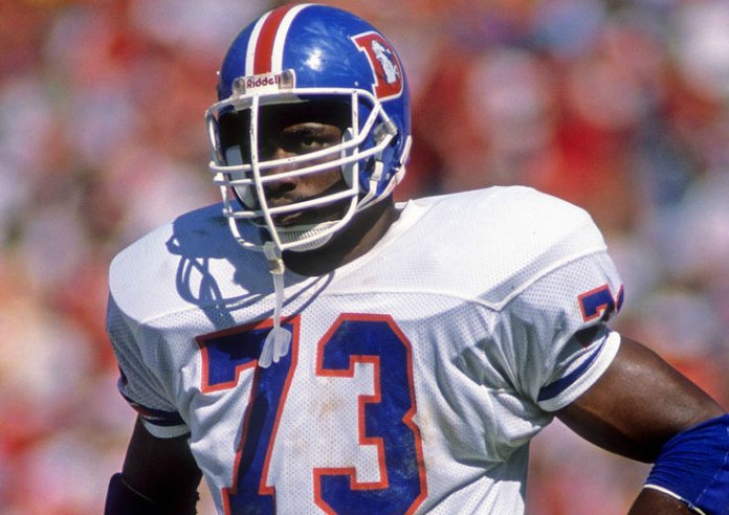
Fletcher entered the Broncos Ring of Fame in 2016.
28. Ryan Clady
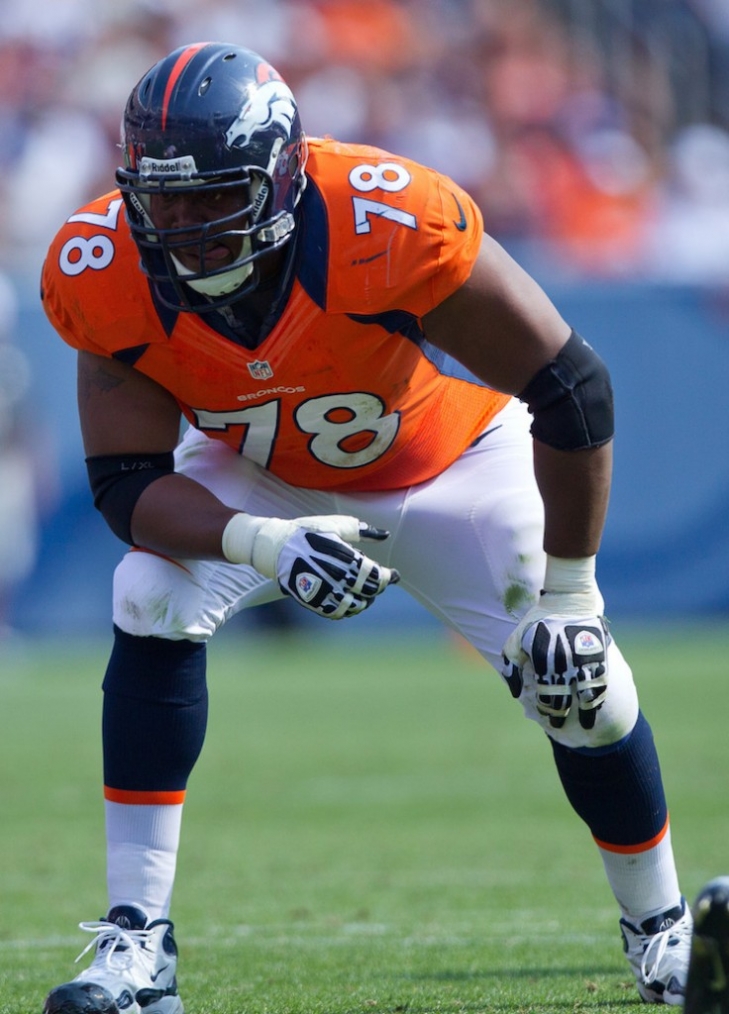
Selected 12th overall out of Boise State in 2008, Ryan Clady entered the NFL with immense pressure as a rookie first-round tackle tasked with securing the blind side in Denver. He answered the call with startling ease, stepping onto the field as a Week 1 starter and delivering an elite debut campaign where he did not allow a single full sack until the season finale. His dominance earned him Second-Team All-Pro honors and a third-place finish in Offensive Rookie of the Year voting.
Clady built on that strong start in 2009, earning his first Pro Bowl nod and a First-Team All-Pro selection while shielding a revolving door of quarterbacks. Combining rare lateral agility with a dense, unyielding 6-foot-6 frame, Clady possessed the ideal toolkit to neutralize the premier edge rushers of his era. When Peyton Manning arrived in Colorado in 2012, Clady served as his primary insurance, turning in a flawless season to earn his second First-Team All-Pro honor and help power the league's most potent offense.
While his ceiling was as high as any tackle in franchise history, injuries plagued the second half of his career. A Lisfranc foot injury wiped out nearly his entire 2013 campaign. He staged an impressive comeback in 2014, starting all 16 games and capturing his fourth career Pro Bowl selection. However, tragedy struck again in May 2015 when he suffered a torn ACL during offseason workouts, sidelining him for the entirety of Denver’s Super Bowl 50 championship run.
Denver traded Clady to the New York Jets in April 2016, where he played nine games in his final NFL season before shoulder issues led to his retirement in 2017. Despite injuries robbing him of his late prime, his peak performance stands among the finest offensive line stretches in franchise history. He started all of his 98 games as a Bronco.
20. Goose Gonsoulin
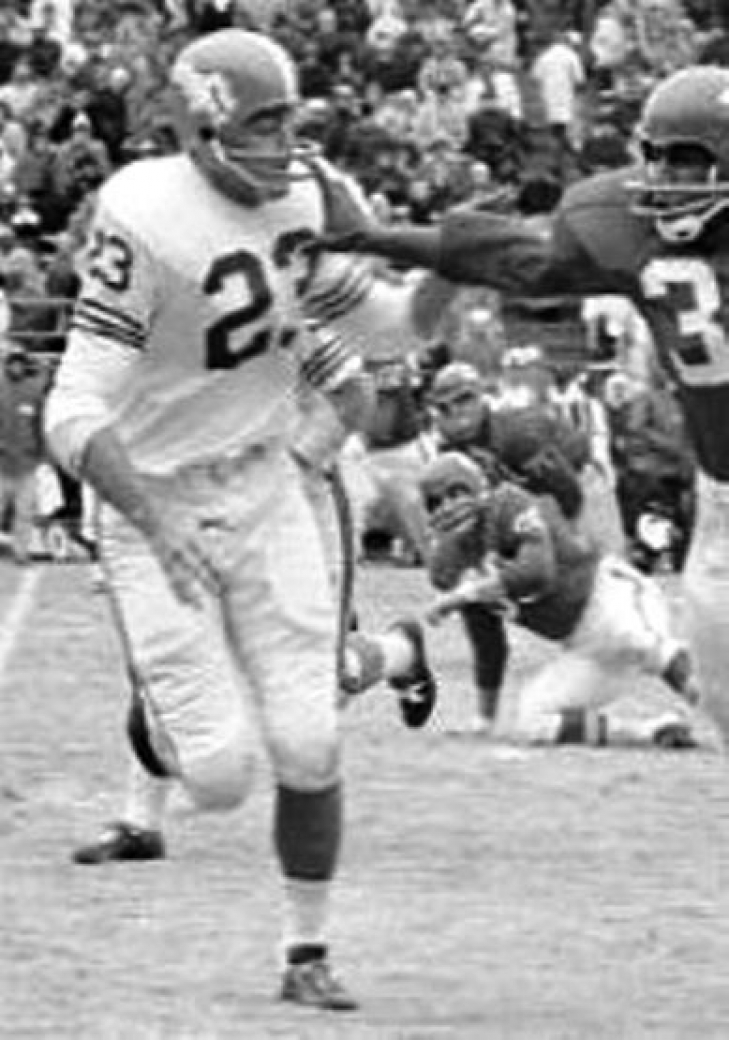
When the American Football League kicked off its maiden voyage in 1960, the Denver Broncos were operating on a shoestring budget, but safety Austin "Goose" Gonsoulin gave Mile High fans an immediate superstar to rally around. Drafted out of Baylor, Gonsoulin was an instant ball-hawking nightmare for opposing quarterbacks, spearheading the secondary with rare instincts, range, and a fierce, reckless tackling style.
Gonsoulin made a remarkable debut in 1960, leading the league with 11 interceptions—a record that still stands as Denver's single-season franchise mark. His debut featured a memorable four-interception game against Buffalo on September 18, 1960, tying the professional football record for most takeaways in a game. He confirmed his talent by remaining among the top eight in AFL interceptions over his first six seasons, consistently leading Denver's defense.
Between 1960 and 1966, Gonsoulin achieved five AFL All-Star selections and two First-Team All-AFL honors (1960, 1962), showcasing remarkable durability with 61 consecutive starts at one time. As a highly respected team captain, he was not just a safety known for pass coverage; he was also famous for delivering powerful hits on receivers crossing the middle, often playing through severe collisions. When he finished his career with a final season at the San Francisco 49ers in 1967, Gonsoulin retired as the AFL's all-time leader in interceptions with 43 picks.
His 43 interceptions with Denver remained the franchise record for two decades until Steve Foley broke it in 1987. Named to the AFL All-Time Team (Second-Team), Gonsoulin secured his spot among the legends who laid the foundation of Mile High football.
Gonsoulin played 94 games for Denver, with 43 interceptions, 542 yards, two touchdowns, and two recoveries. A five-time AFL All-Star, multi-time All-Pro, and the original AFL thief, he was one of the four charter members of the Denver Broncos Ring of Fame in 1984.
38. Tyrone Braxton
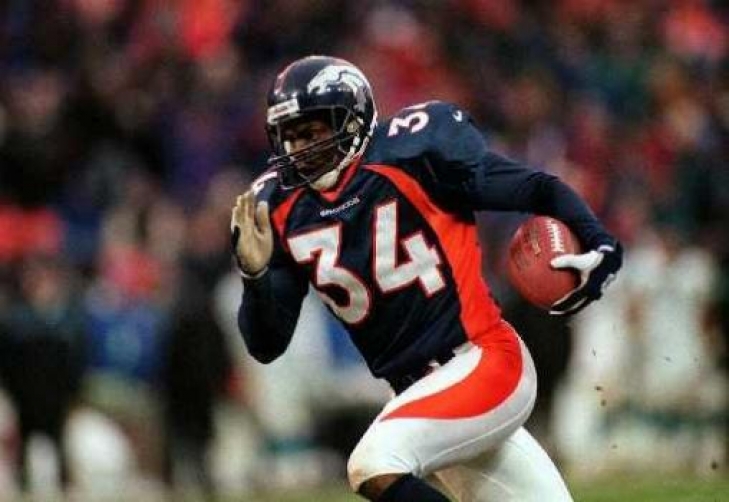
Taken in the 12th round (334th overall) out of North Dakota State in 1987, Tyrone Braxton entered the pros with long odds, but his instinctual versatility turned him into a mainstay in Denver's secondary. After serving as a backup as a rookie, Braxton claimed a starting cornerback job in 1989, recording six interceptions to help lead the Broncos to Super Bowl XXIV.
His initial stretch in Colorado was turbulent. Following a disappointing 1993 team performance, Braxton was released and spent the 1994 season with the Miami Dolphins. However, Denver brought him back in 1995 and shifted him to safety—a positional change that revitalized his career and unlocked his best football.
Braxton became a vital secondary leader during the peak of the Mike Shanahan era. His banner year arrived in 1996, when he co-led the entire NFL with a career-high nine interceptions, earning his first Pro Bowl selection. He followed that up as a primary defensive engine during Denver's back-to-back championship runs, picking off Brett Favre in Super Bowl XXXII to set up a crucial Broncos touchdown.
Braxton retired after the 1999 season having played in four Super Bowls with the franchise. Fittingly, his 34 interceptions in Denver matched his No. 34 jersey.
37. Ken Lanier
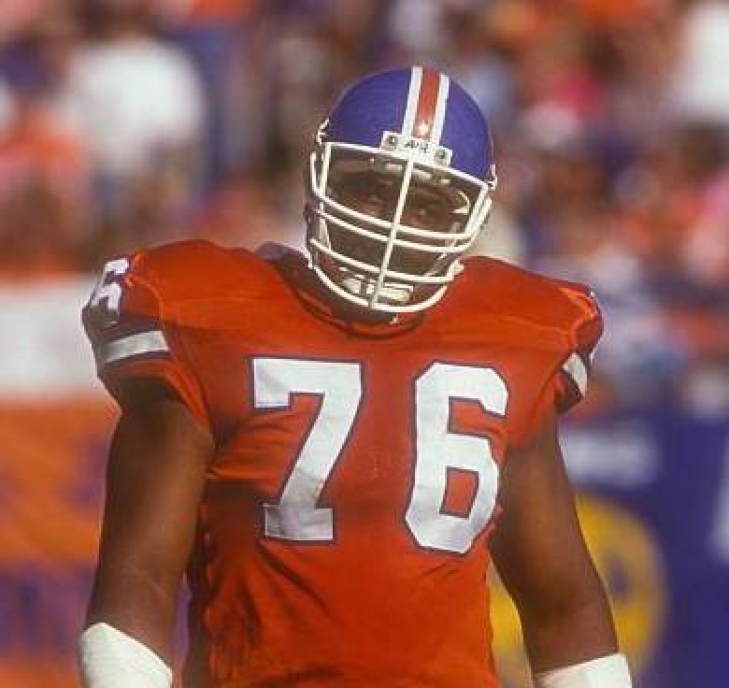
When the Denver Broncos selected Ken Lanier in the fifth round of the 1981 draft out of Florida State, nobody expected a late-round flyer to become a decade-long fixture on the offensive line. After using his rookie year to adapt to the speed of the pro game, Lanier took over as the starting right tackle in 1982 and locked down the position for nearly the next decade.
Lanier’s promotion to the starting lineup coincided perfectly with the arrival of John Elway in 1983, making the right tackle Elway's primary front-side protector during his legendary early scrambles and fourth-quarter comebacks. Lanier proved to be a durable iron man, stringing together 178 consecutive starts (including postseason play) while rarely surrendering a snap. From 1982 through 1992, he missed just four regular-season games, anchoring an offensive line undergoing constant retooling around him.
His consistent performance was crucial to Dan Reeves' offense, guiding Denver through three AFC Championship appearances and starting at right tackle in Super Bowls XXI, XXII, and XXIV. Showing leadership in the locker room, his teammates chose him as a team captain for Super Bowl XXIV.
Following a brief two-game stint with the Los Angeles Raiders in 1993, Lanier returned to Mile High for a final four-game run in 1994 to finish his career where it all started. Overall, he started 165 games for the team.
36. Haven Moses
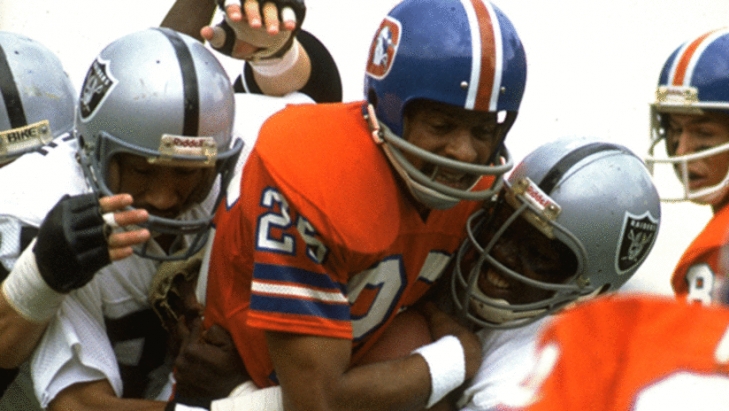
Acquired midseason in 1972 from the Buffalo Bills in exchange for wideout Dwight Harrison, Haven Moses quickly turned a straight-up trade into one of the most lopsided swaps in early franchise history. A former first-round pick out of San Diego State, Moses possessed long stride length and an uncanny ability to track deep balls over his shoulder, giving the Broncos a perimeter weapon capable of stretching defenses at any moment.
Moses wasted little time making his presence felt in Colorado. During his first full season in 1973, he snagged a career-high eight touchdown passes to lead Denver to its first winning season in franchise history, earning his second career Pro Bowl nod. Operating as Craig Morton’s primary deep target in the late 1970s, Moses teamed up with the quarterback to form the "M&M Connection," providing the explosive counterpunch to Denver’s stifling "Orange Crush" defense.
His defining moment in Mile High came on the biggest stage imaginable during the 1977 AFC Championship Game against the rival Oakland Raiders. Moses turned in a historic postseason performance, hauling in five receptions for 168 yards and two touchdowns—including a 74-yard bomb—to propel the Broncos to a 20-17 victory and secure the franchise's first-ever Super Bowl trip.
Moses retired after the 1981 season and, as a Bronco, compiled 302 receptions, 5,450 receiving yards, and 44 receiving touchdowns. He was inducted into the Denver Broncos Ring of Fame in 1988.
32. Rubin Carter
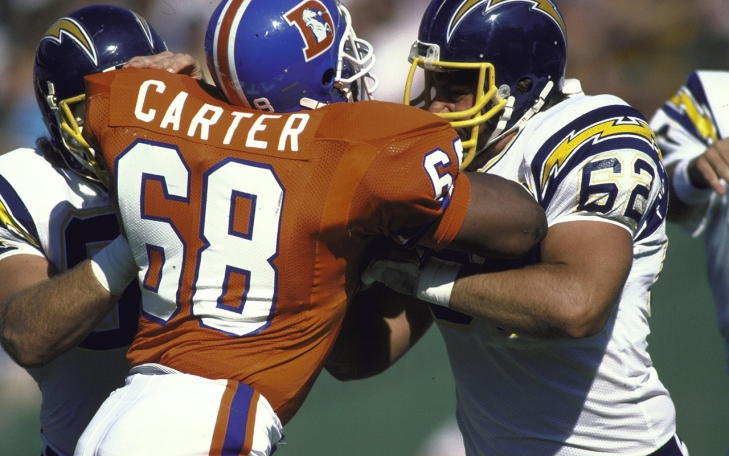
Drafted in the fifth round out of Miami in 1975, Rubin Carter entered the pro ranks as a consensus All-American college defensive tackle. After landing in Colorado, he shifted to nose tackle, serving as the central anchor around which Joe Collier built Denver's legendary 3-4 "Orange Crush" defense.
Lining up directly over center, Carter’s job was unglamorous and relentless: absorb double-teams, destroy interior blocking schemes, and occupy space so linebackers like Randy Gradishar and Tom Jackson could run free to make tackles. In 1977, Sports Illustrated featured him on its cover while touting him as the ideal prototype for a 3-4 nose tackle. That breakout campaign saw him earn Second-Team All-Pro honors while anchoring a defense that carried Denver to its first AFC Championship and Super Bowl XII appearance.
Though nose tackles in 3-4 fronts rarely compiled massive box-score metrics, Carter brought surprising pass-rush push from the interior, posting a career-high 6.0 sacks in 1977 and logging another 6.5 in 1978. His durability in the middle was remarkable; he missed few games and anchored Denver’s front seven across two distinct Super Bowl eras (Super Bowl XII and Super Bowl XXI).
After hanging up his cleats, Carter transitioned to coaching, serving as Denver’s defensive line coach in the late 1980s before enjoying a long coaching career at both the collegiate and NFL levels. As a player, he had 30 sacks.
21. Rich Jackson
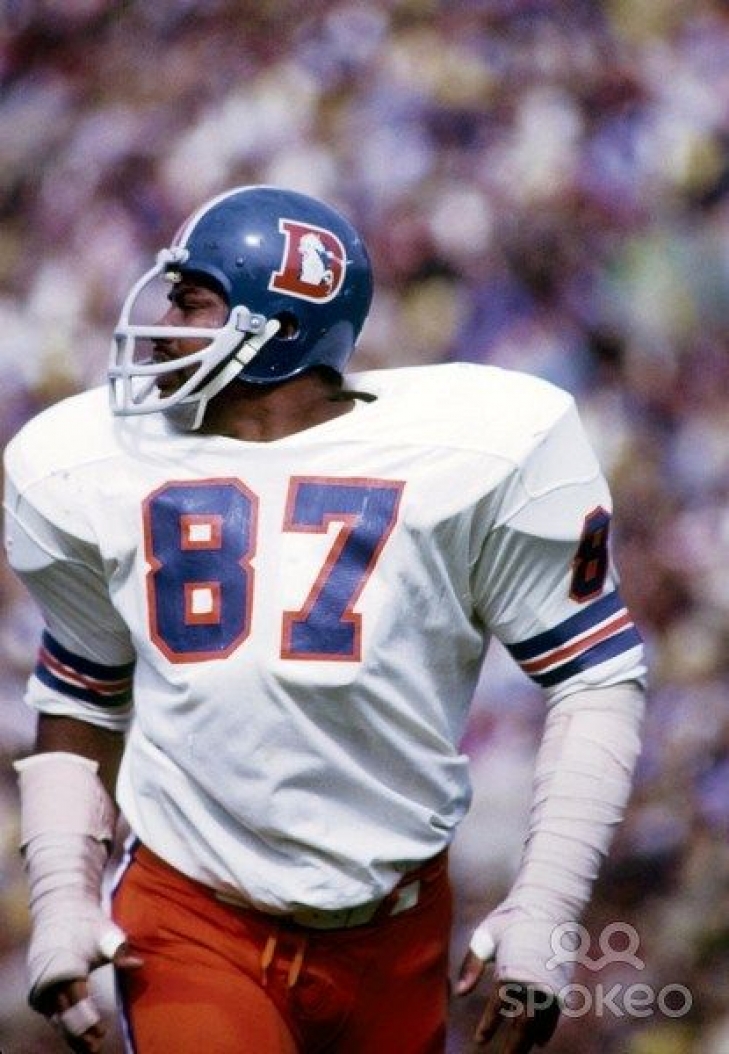
Before the NFL banned the open-handed head slap, offensive tackles in the AFL feared Rich Jackson. Originally signed by Oakland as an undrafted linebacker in 1966, Jackson was traded to Denver after his first season. The coaches wisely moved his 6-foot-3, 255-pound frame to defensive end. With a rare combination of quick closing speed and raw strength, he quickly earned the nickname "Tombstone"—because, as teammates said, when he hit someone, they were like heading to their grave.
Between 1968 and 1970, Jackson established a reign of terror, making it one of the most destructive periods for any edge rusher in pro football history. Known for his brutal head-slap move called the "Halo Spinner,” he dominated top-tier tackles like Kansas City's Jim Tyrer and Oakland's Bob Brown, tossing them aside effortlessly. He achieved three straight First-Team All-Pro selections (1968–1970) and earned three All-Star/Pro Bowl honors. Jackson was also the first in franchise history to receive First-Team All-NFL honors after the AFL-NFL merger in 1970. Although sacks weren't officially recorded, film analysis suggests he accumulated approximately 31 to 33 sacks during those three years.
Tragically, Jackson's peak of stardom was cut short at its highest point. During the 1971 season, a serious knee injury sustained against Green Bay severely limited his lateral mobility. He made a brief comeback attempt in 1972 before retiring, leaving behind a short yet undeniable legacy as a formidable game-wrecker. Legendary writer Paul "Dr. Z" Zimmerman regarded him as one of the best overall pass rushers he had ever seen.
In his seven-year NFL career, Jackson played 67 games for Denver, with an unofficial 43.0 sacks and two fumble recoveries. A three-time First-Team All-Pro, three-time Pro Bowler/AFL All-Star, and Second-Team AFL All-Time Team selection, "Tombstone" was enshrined as one of the four first members of the Denver Broncos Ring of Fame in 1984.
33. Bill Romanowski
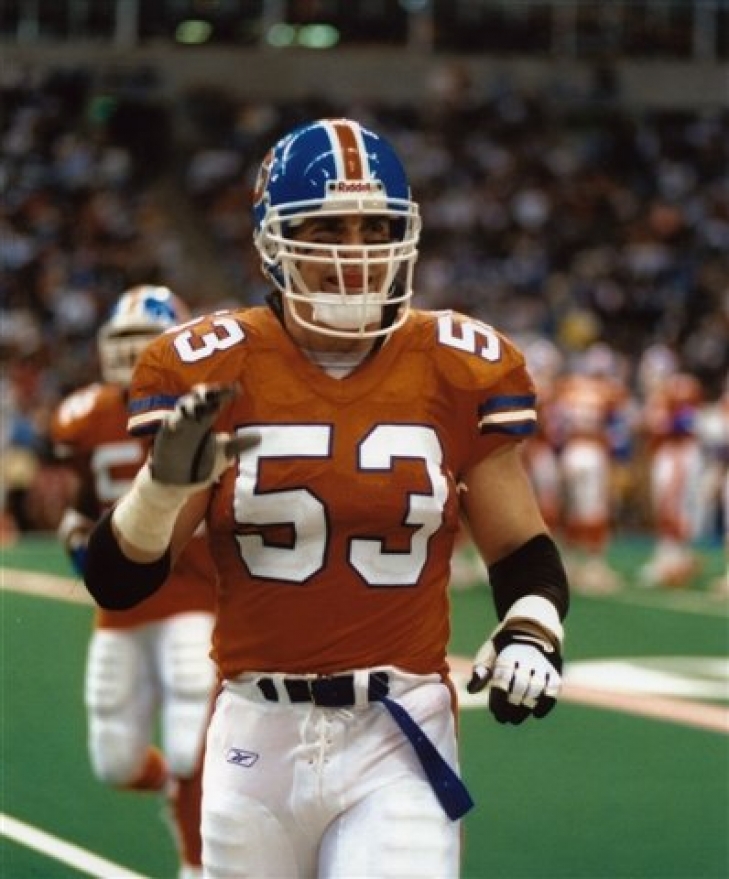
When Bill Romanowski signed with the Denver Broncos in 1996, he brought two things to the Mile High City: a resume that already included two Super Bowl rings with San Francisco, and a reputation as one of the most ruthless, unapologetically dirty players to ever put on an NFL uniform. He was volatile, frequently fined, and constantly pushed the boundaries of the rulebook—but that exact win-at-all-costs intensity was exactly what Mike Shanahan felt his defense needed to get over the championship hump.
Romanowski immediately injected a nasty, unyielding swagger into the Denver linebacking corps. Operating as a highly intelligent, sideline-to-sideline enforcer, he set the unit’s physical tone. He backed up his relentless trash talk with highly productive play, earning his first career Pro Bowl nod in his first season in Colorado after racking up 77 tackles and three interceptions.
His peak with the franchise perfectly aligned with the greatest era in Broncos history. "RomoCop" served as the emotional and physical heartbeat of the defense that finally secured John Elway his elusive championships. He was an indispensable force during Denver's back-to-back Super Bowl titles (XXXII and XXXIII), earning his second Pro Bowl selection in 1998 after registering a career-high 7.5 sacks and 72 tackles. He departed the team in 2002 for Oakland.
Over his six seasons in Denver, he never missed a game, proving as durable as he was controversial. Romanowski had 433 combined tackles, 23.0 sacks, 11 interceptions, and seven fumble recoveries.
43. John Mobley
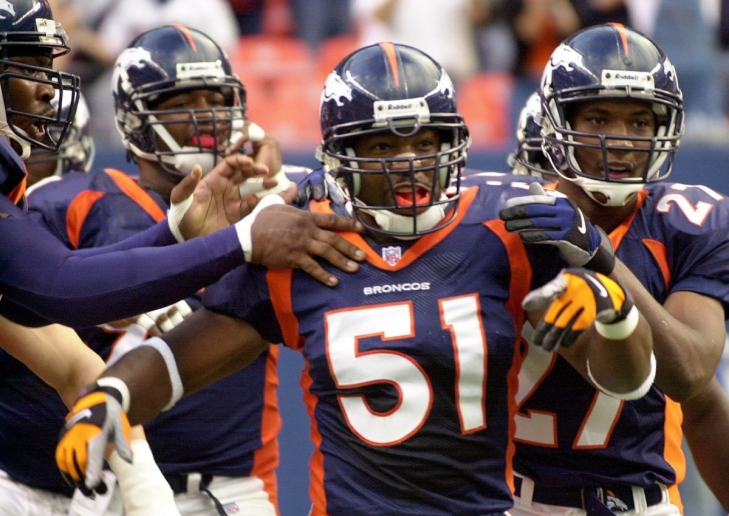
Selected in the first round (15th overall) out of Kutztown in 1996, John Mobley made the jump from Division II football to the NFL look effortless. Possessing dynamic sideline-to-sideline speed and sharp instincts, Mobley immediately claimed a starting weakside linebacker job in Mile High, turning in a PFWA All-Rookie campaign that signaled the arrival of a modern linebacking talent.
Mobley's second season in 1997 was arguably his best. Operating as the athletic centerpiece of Greg Robinson’s defense, he racked up a career-high 132 combined tackles, four sacks, and an interception. In one of the most glaring Pro Bowl omissions of the era, Mobley was snubbed for Hawaii despite earning a First-Team All-Pro nod. His defining moment arrived on the biggest stage: with under three minutes left in Super Bowl XXXII, Mobley batted down Brett Favre's fourth-down pass to secure Denver's first Lombardi Trophy.
He remained an essential defensive engine during Denver's repeat championship run in 1998, posting 101 tackles while anchoring the middle of the defense in Super Bowl XXXIII. Over his career, Mobley logged three separate 100-tackle campaigns (1997, 1998, and 2001).
Tragedy struck his prime when a torn ACL in 1999 halted his momentum, though he battled back to regain his starting role. However, a severe spinal injury suffered in a collision during a 2003 matchup against the Oakland Raiders forced his premature retirement at age 30, cutting short a career that was on track for franchise legendary status.
Over his career, Mobley played in 105 regular-season games with 102 starts, plus nine postseason starts. He compiled 621 combined tackles, 10.5 sacks, five interceptions, eight forced fumbles, and seven fumble recoveries.
24. Rick Upchurch

Taken in the fourth round of the 1975 NFL Draft out of Minnesota, Rick Upchurch arrived in Denver as a blazingly fast athlete whose multi-purpose speed gave opposing special teams coordinators sleepless nights. While he operated as a vertical threat at wide receiver—averaging a whopping 16.4 yards per catch over his career—his true magic happened with the football in his hands on punt and kickoff returns. Whenever #80 trotted out to field a punt at Mile High, the stadium erupted in anticipation of an instant touchdown.
Upchurch took the league by storm in 1976 when he set an NFL record by returning four punts for touchdowns in a single season—a mark that remains unbroken to this day. That electrifying campaign launched a legendary run where he was named a First-Team All-Pro three times (1976, 1978, 1982) and earned four Pro Bowl nods. In 1977, his league-leading 653 punt return yards helped fuel the "Orange Crush" era all the way to Super Bowl XII, where Upchurch provided Denver's spark with a then-Super Bowl record 67-yard kickoff return that set up the team's only touchdown.
Though return duties were his primary claim to fame, Upchurch grew into a highly capable starting receiver as well. His offensive peak arrived in 1979 when he led the Broncos across the board with 64 receptions, 937 receiving yards, and seven touchdown catches. Rare versatility defined his entire nine-year run in Denver, as he led the NFL in punt return average twice (1978, 1982) and was selected to both the NFL's 1970s and 1980s All-Decade Teams—the only player in Broncos franchise history to earn inclusion on two separate All-Decade rosters.
By the time he hung up his cleats following the 1983 season, Upchurch retired as the NFL's all-time career leader in punt return yards and tied for the most career punt return touchdowns (eight). Upchurch played in 119 regular-season games with 69 starts. He compiled 267 receptions, 4,369 receiving yards, 24 receiving touchdowns, 3,008 punt return yards (8 TDs), 2,355 kickoff return yards, and 10,081 all-purpose yards. The Broncos inducted Upchurch into their Ring of Fame in 2014.
29. Chris Harris
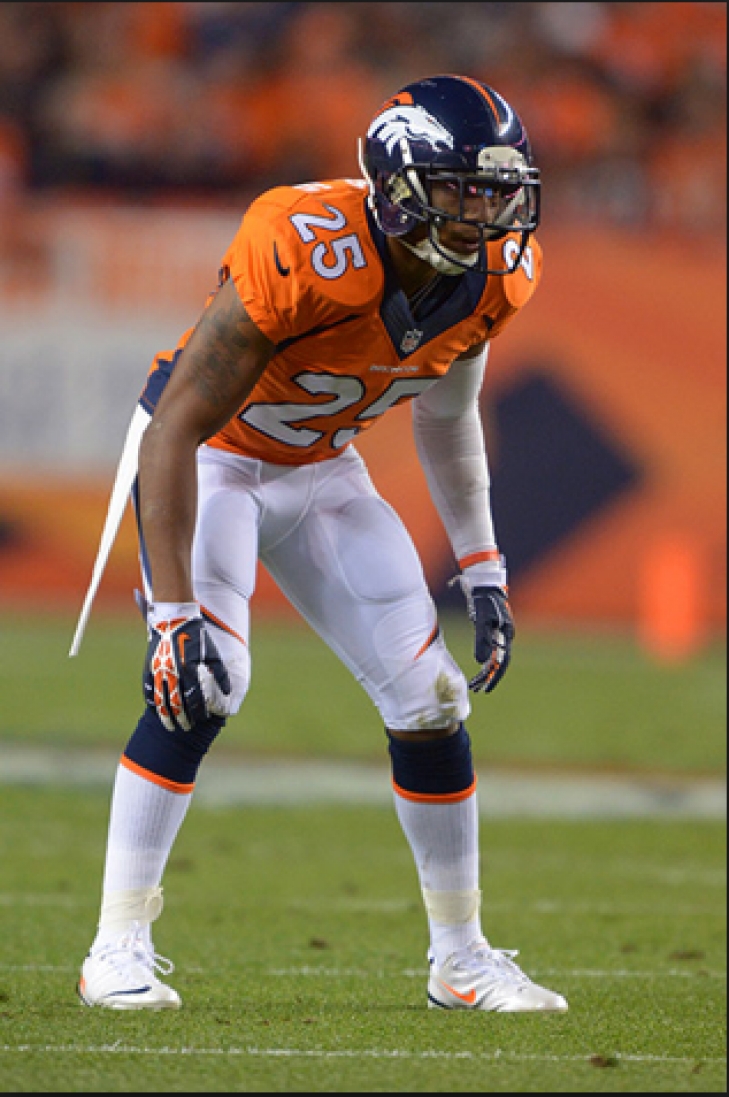
Undrafted out of Kansas following the 2011 NFL lockout, Chris Harris Jr. signed with the Denver Broncos carrying a tiny $2,000 bonus and minimal expectations. He erased those long odds almost immediately, earning a roster spot through sheer competitive drive and appearing in all 16 games as a rookie. By his second season, "Strap" had established himself as one of the most tenacious, technically sound nickel cornerbacks in the entire league.
Harris emerged as an indispensable cornerstone of Denver's fearsome "No-Fly Zone" secondary alongside Aqib Talib, Darian Stewart, and T.J. Ward. Exceptional at smothering slot receivers and possessing the fluid hips to lock down the perimeter, Harris went more than two full calendar years without allowing a touchdown pass. His lockdown coverage proved vital during Denver's Super Bowl 50 championship run, with his fourth-down tackle of Julian Edelman in the AFC Title game and key playmaking in the big game helping seal the franchise's third Lombardi Trophy.
Between 2014 and 2018, Harris earned four Pro Bowl selections and a First-Team All-Pro nod in 2016. His rare blend of instincts, open-field tackling, and positional versatility earned him a spot on the NFL’s 2010s All-Decade Team.
After nine seasons in the Mile High City, Harris departed as a free agent in 2020, spending two seasons with the Los Angeles Chargers and a final year with the New Orleans Saints. He officially hung up his cleats in 2024, signing a ceremonial contract to retire as a Denver Bronco. With the Broncos, Harris compiled 20 interceptions, 518 combined tackles, 86 pass deflections, and six forced fumbles.
50. Paul Smith
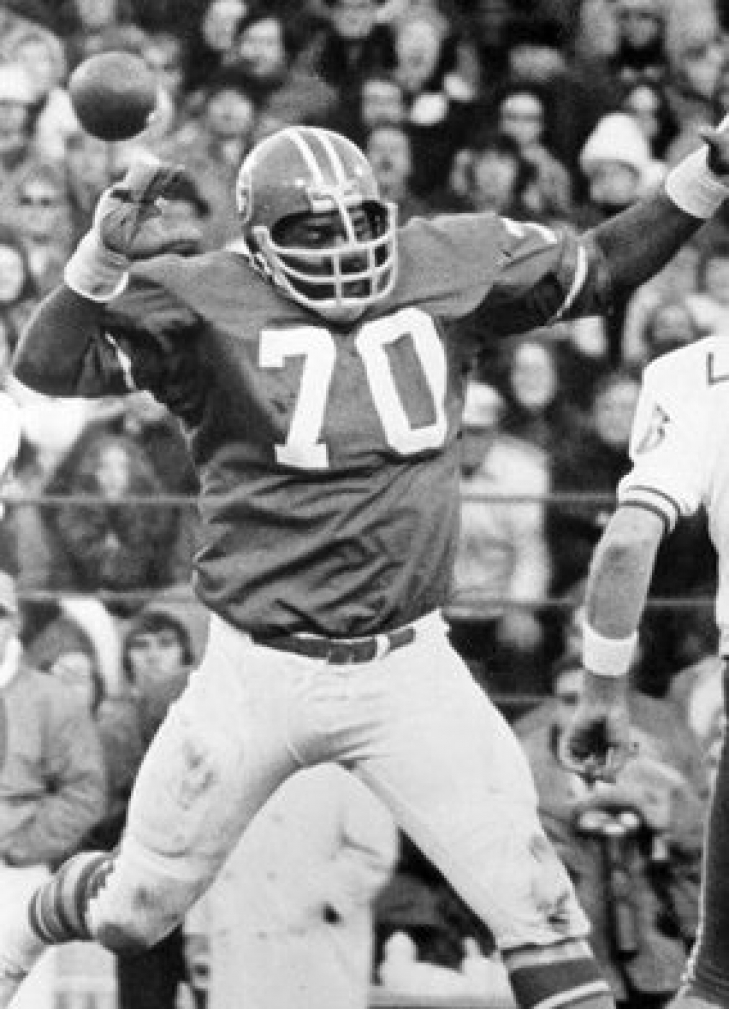
Denver enshrined Smith to their Ring of Fame in 1986.
18. Demaryius Thomas
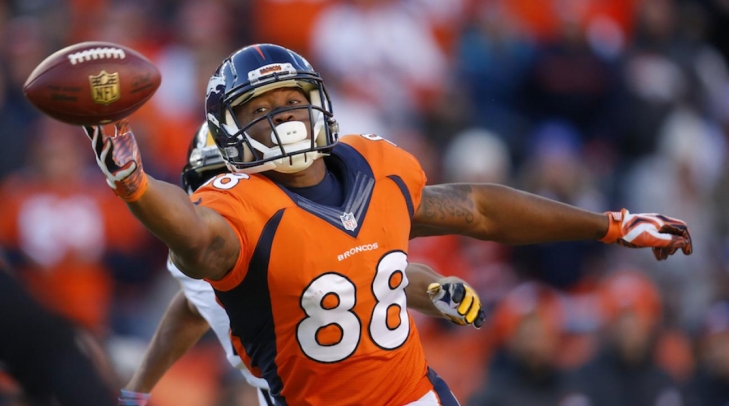
Drafted 22nd in the 2010 NFL Draft from Georgia Tech, Demaryius Thomas brought rare physical tools—6-foot-3, 225 pounds, fast in open field. Injuries limited him to seven starts in his first two seasons, but he showed potential during the 2011 postseason. His 80-yard walk-off catch from Tim Tebow in overtime against Pittsburgh is a legendary moment in Mile High history.
When Peyton Manning became the starting quarterback in 2012, Thomas developed into an exceptional wide receiver. With reliable hands and strong run-after-catch abilities, he achieved five straight 1,000-yard seasons and was selected to the Pro Bowl five times from 2012 to 2016. In Denver's record-breaking 2013 offense, Thomas recorded 1,430 receiving yards and a personal best of 14 touchdowns, earning Second-Team All-Pro honors. Despite the heartbreak of Super Bowl XLVIII, Thomas set a then-record with 13 receptions in the game.
His finest individual campaign arrived in 2014, when he set a Broncos single-season franchise record with 1,619 receiving yards on 111 catches. The following year, Thomas proved his value as an elite wideout, adjusting to shifting quarterback play to rack up 105 receptions for 1,304 yards. He served as the primary passing weapon for a squad that won Super Bowl 50, securing his championship ring. He added a final 1,000-yard effort in 2016 before being traded to the Houston Texans midway through the 2018 season.
Tragically, Thomas died suddenly in December 2021 at age 33, creating a deep void in the organization and among fans. Recognized for his infectious smile, relentless community efforts, and physical prowess, he was inducted into the Denver Broncos Ring of Fame in 2025 as a first-ballot honoree.
With the Broncos, Thomas played 125 games, with 111 starts, totaling 665 receptions, 9,055 yards, and 60 touchdowns. He ranks second in franchise history for receiving yards and touchdowns. A five-time Pro Bowler, two-time Second-Team All-Pro, Super Bowl 50 champion, and Hall of Famer, "D.T." is one of the Broncos’ most legendary playmakers.
17. Lionel Taylor
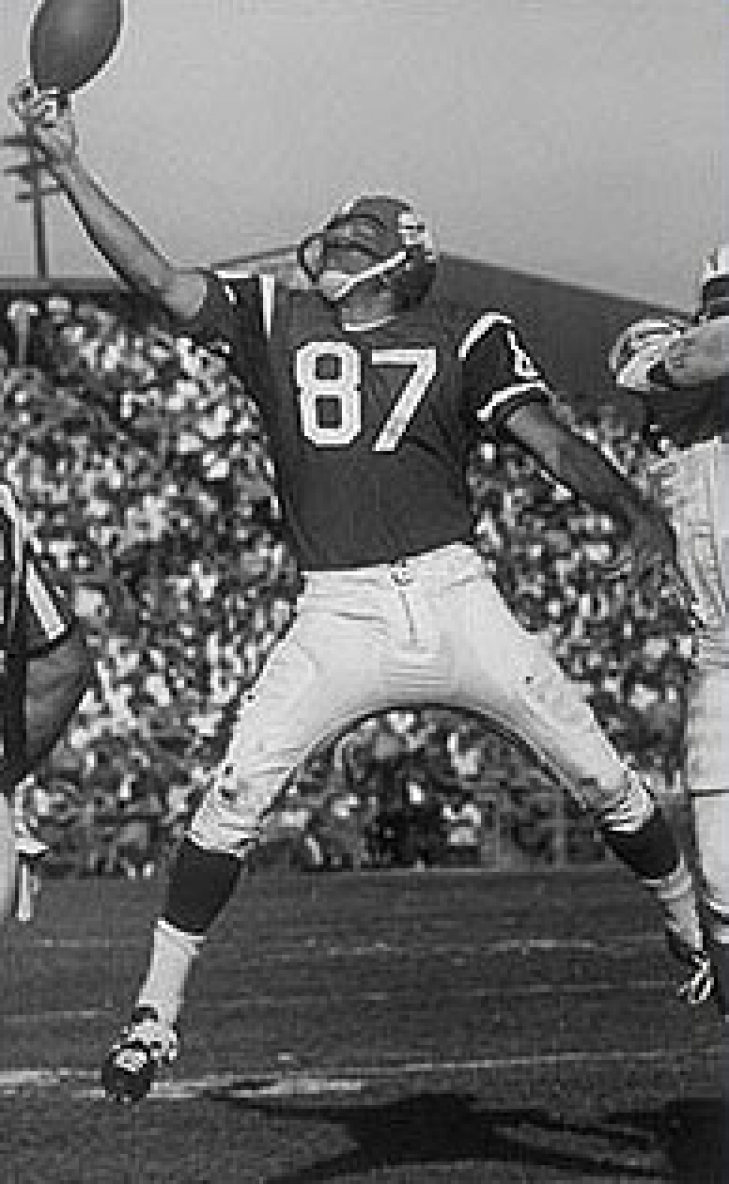
When the American Football League launched in 1960, the Denver Broncos were mostly overlooked, wearing outdated uniforms and rotating through mediocre quarterbacks. Still, during those tumultuous early years, split end Lionel Taylor established a pass-catching mastery that reshaped the structure of professional passing offenses. After a short period as a linebacker with the Chicago Bears, Taylor quickly became the league’s leading high-volume receiver, using his 6-foot-2 stature and "vice-grip" hands to dominate pass coverage in the AFL.
Taylor was almost impossible to contain, achieving an extraordinary streak by leading the AFL in receptions in five of its first six seasons (1960–1963, 1965). His standout year came in 1961, when he caught 100 passes for 1,176 yards in a 14-game season, making him the first player in professional football history to reach 100 receptions in a single season. This franchise record stood in Denver for nearly 40 years until Shannon Sharpe broke it in 2000. Over a six-year peak from 1960 to 1965, Taylor averaged 84.7 catches annually and never caught fewer than 76 passes in a season, a workload unmatched by any pass-catcher in both the AFL and NFL during that period.
Because his stats were accumulated primarily during his time with underdog Denver teams in a less prominent league, Taylor seldom gained the national recognition given to NFL stars of his time. Nevertheless, his impact in Mile High was clear: he won Denver’s Team MVP award three consecutive years (1963–1965) and set long-lasting franchise records for career catches and receiving yards. After his final Denver season in 1966 and two brief years in Houston, Taylor retired as the third all-time leading receiver in pro football history, with 567 career receptions. Later, he earned two Super Bowl rings while serving as the wide receivers coach for Chuck Noll’s iconic 1970s Pittsburgh Steelers.
Taylor played in 96 games, with 543 receptions, 6,872 yards, and 44 touchdowns. A four-time All-AFL, three-time AFL All-Star, and five-time receptions leader, he was one of the four original Denver Broncos Ring of Fame members in 1984.
19. Gary Zimmerman
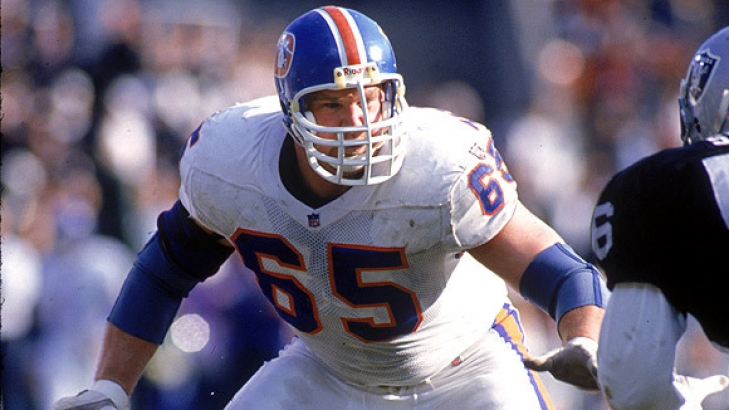
Before Gary Zimmerman ever set foot in Mile High, he was already established as one of the finest pass blockers in pro football. After launching his career with two dominant seasons for the LA Express of the USFL and earning a spot on the All-Time USFL Team, Zimmerman logged seven years and four Pro Bowls with the Minnesota Vikings. When Denver acquired the legendary left tackle via trade prior to the 1993 season, he brought an instant aura of professional standard and quiet authority to Mile High.
Zimmerman immediately assumed command of the Broncos' offensive line, instilling a ruthless, workhorse mentality. He famously instituted the unit's long-standing media blackout—insisting his linemen let their physical play do the talking—and anchored the left side with textbook technique, rare strength, and complete mastery of pass protection.
His five-year stint in Denver yielded elite individual accolades. Zimmerman reeled off three consecutive Pro Bowl selections from 1994 to 1996. His 1996 campaign stands as a tour de force: he captured First-Team All-Pro honors while helping Denver lead the entire NFL in total offensive yards and rushing production. With Zimmerman brick-walling John Elway's blind side, Alex Gibbs' dynamic zone-blocking scheme hit its terrifying peak.
His crowning achievement came in 1997. Returning to provide veteran leadership for one final run, Zimmerman anchored a front wall that paved the way for Terrell Davis and kept Elway clean throughout the postseason. In his final professional contest, Zimmerman helped power Denver to a 31–24 victory over Green Bay in Super Bowl XXXII, earning his long-sought championship ring before retiring at the very top of the sport.
Zimmerman played five seasons with the Denver Broncos (1993–1997), starting all 76 regular-season games, with nine playoff games and winning Super Bowl XXXII. A three-time Pro Bowler, two-time All-Pro, and named to both NFL All-Decade Teams, he was inducted into the Broncos Ring of Fame in 2003 and the Pro Football Hall of Fame in 2008.
