


Site Admin
21. Vern Stephens
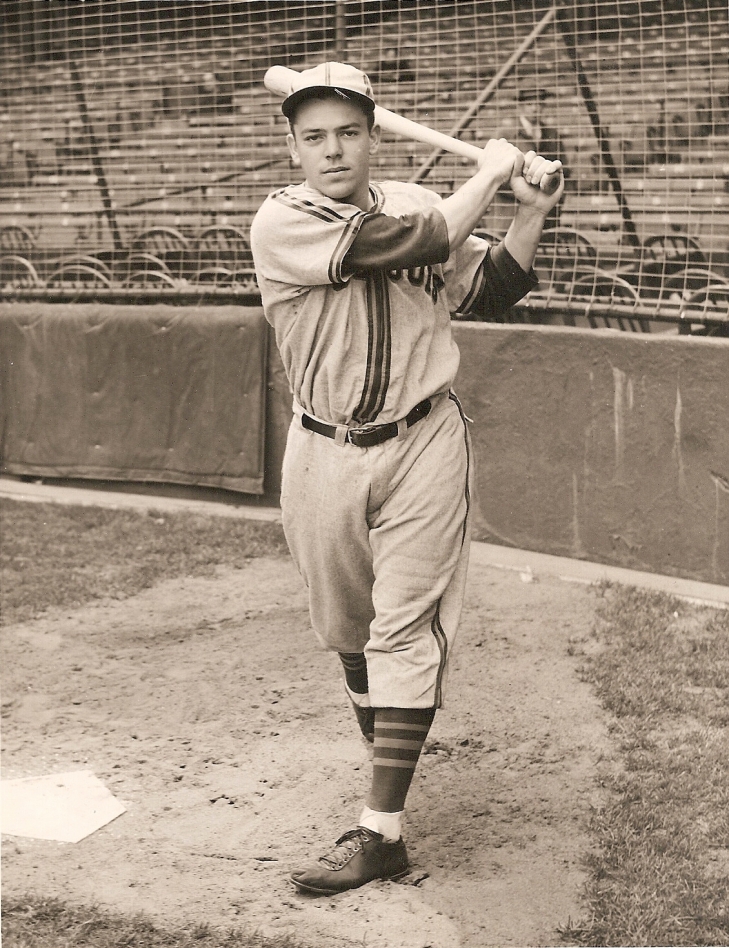
Vern Stephens arrived in St. Louis in 1941, quickly establishing himself as one of the most dynamic young talents in the American League. While many of his contemporaries departed for military service during World War II, Stephens remained a fixture in the Browns' lineup, producing a standard of offense rarely seen from the shortstop position in that era.
His impact was immediate. In his first full season in 1942, Stephens batted .294 and slugged 14 home runs, finishing an incredible fourth in the American League MVP voting. From 1943 to 1945, he reeled off three consecutive All-Star selections and three straight 20-home run campaigns. His peak in St. Louis arrived during the historic 1944 season; Stephens led the American League with 109 RBIs, serving as the offensive heartbeat of the team that captured the only American League Pennant in Browns history. He followed that performance in 1945 by leading the league with 24 home runs, cementing his reputation as a premier slugger.
Though Stephens would eventually be traded to the Boston Red Sox after the 1947 season—where he continued his All-Star trajectory—his legacy in St. Louis remains unmatched for a middle infielder. He departed the Browns with exactly 1,100 hits, 121 home runs, and a robust .292 batting average. In the Project Diamond lab, Stephens stands as the gold standard for offensive production at shortstop during the franchise's St. Louis years.
17. Ken Singleton
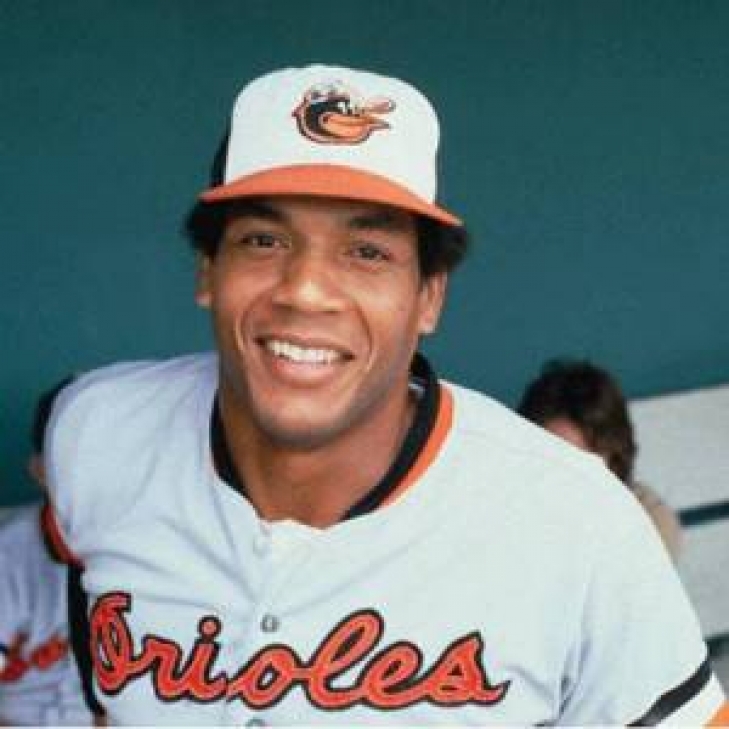
While Ken Singleton first established himself as a frontline starter in Montreal, it was his 1974 trade to Baltimore that transformed him into one of the most feared and disciplined hitters in the American League. The Expos’ decision to part with the switch-hitting outfielder remains one of the most regrettable moves in their history, as Singleton would spend the next decade becoming a cornerstone of the Orioles' offensive philosophy.
A three-time All-Star (1977, 1979, and 1981), Singleton combined steady power with a surgical approach at the plate. He reeled off four consecutive 20-home run seasons between 1977 and 1980, peaking with a career-high 35 homers in 1979—a season in which he finished as the American League MVP runner-up. His value, however, was anchored by a legendary batting eye. Singleton recorded three .300 seasons and posted an elite on-base percentage of .400 or higher four times. He was a perennial fixture on the league leaderboards, finishing in the AL top ten for OBP eight times and in the top ten for OPS six times.
Singleton was the veteran presence that helped steer Baltimore to the 1983 World Series title, providing a professional approach that defined the "Oriole Way" during his penultimate season. He retired in 1984, leaving the game with 1,455 hits, 182 home runs, and a sterling .284/.388/.445 slash line in a Baltimore uniform. Inducted into the Orioles Hall of Fame in 1986, Singleton remains the gold standard for switch-hitting excellence and plate discipline in franchise history.
18. Dave McNally
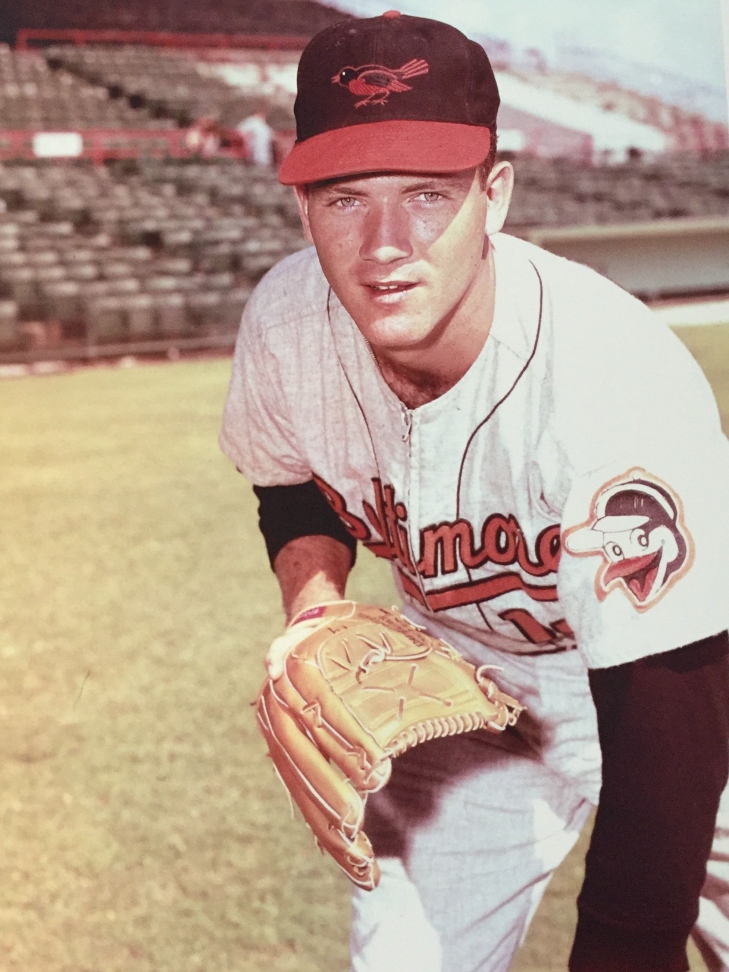
Dave McNally arrived in Baltimore as a 19-year-old in 1962, flashing immediate brilliance with a two-hit shutout in his debut. By the mid-60s, the crafty left-hander had evolved into a cornerstone of the rotation, famously firing a four-hit shutout in the clinching Game 4 of the 1966 World Series to secure the franchise’s first title. It was the start of one of the most dominant pitching runs in the history of the American League.
From 1968 to 1971, McNally authored a standard of excellence that remains the benchmark for Orioles' southpaws. He reeled off four consecutive 20-win seasons, headlined by a league-leading 24 victories in 1970. During this peak, he was a perennial Cy Young finalist, finishing as the AL runner-up in 1970 and placing fourth in both 1969 and 1971. McNally wasn't just a regular-season workhorse; he was a postseason legend. In the 1970 World Series, he not only earned a victory on the mound but also hit the only grand slam by a pitcher in World Series history, a feat that earned his bat a place in Cooperstown.
McNally’s impact on the game extended far beyond his 181–113 record and 1,476 strikeouts in Baltimore. Traded to Montreal after the 1974 season, he courageously challenged the "reserve clause" alongside Andy Messersmith. Their legal victory effectively ended the era of "baseball bondage" and ushered in the modern era of free agency, forever changing the landscape of professional sports.
In 1978, the Orioles honored his towering legacy by making him the lone inductee in the franchise's second Hall of Fame class. A two-time champion and a fearless pioneer, McNally remains the definitive "Big Game" pitcher in the history of the Birds.
15. Brady Anderson
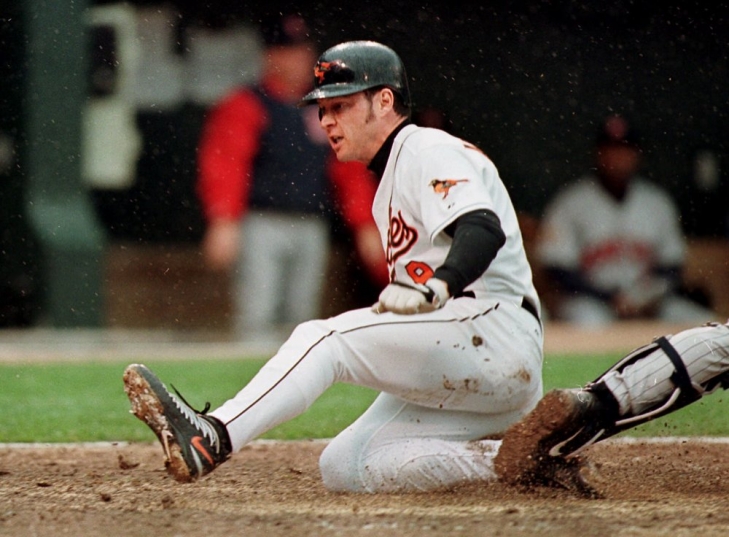
Best known for his sideburns and that inexplicable (actually, many think they can explain it) 50 Home Run Season in 1996, Brady Anderson played 14 seasons for the Orioles.