

192. Virgil Trucks
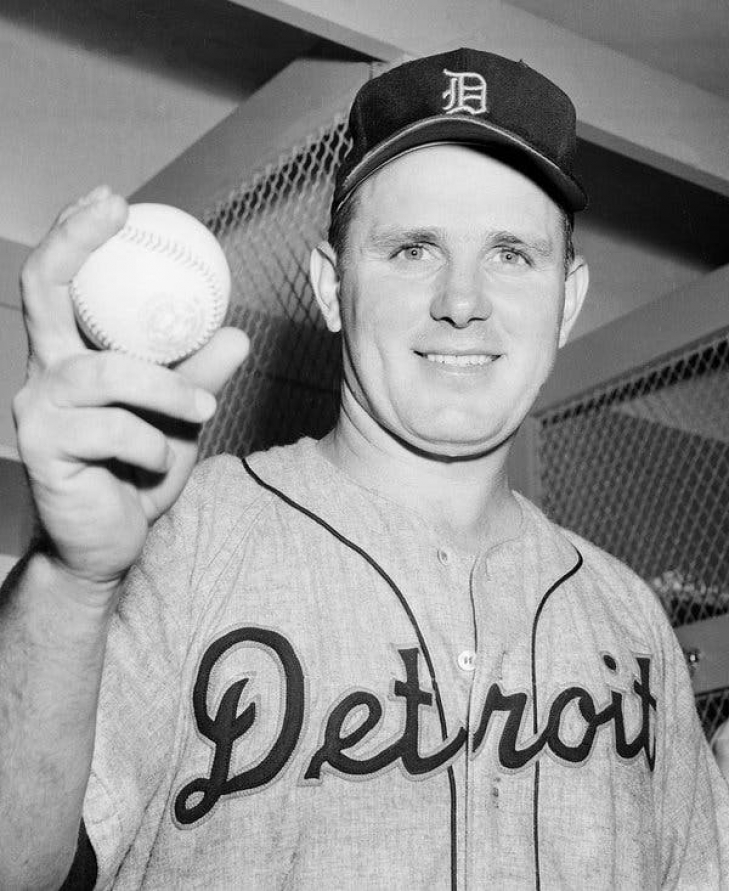
While we never thought Virgil Trucks' nickname of "Fire" was that creative, we did believe that the Alabaman was a pretty good Pitcher in his day.
Trucks Strikeout numbers may not be that impressive today, but for his day, he was one of the most capable flamethrowers in Baseball. The righthander played the first two-thirds of his career with the Detroit Tigers. In Detroit, he had five seasons in which he posted at least 14 wins and was an All-Star in 1949, when he went 19-11 and led the American League in Strikeouts with 153. Trucks helped Detroit win the 1945 win the World Series, winning his lone start in their championship over the Chicago Cubs.
Trucks was traded from Detroit before the 1952 season to the St. Louis Browns, where he had a strange season, as St. Louis traded him in June that year to the Chicago White Sox. In his combined year in St. Louis and Chicago, he went 20-10 with a 2.93 ERA and a fifth-place MVP finish, his highest ever. Trucks was an All-Star again in 1954, with a 19-12 record and a 2.79 ERA. He played until 1958 with another stop in Detroit, Kansas City, and the New York Yankees.
He would leave the game with a record of 177-135 and 1,534 Strikeouts. Trucks was in the top ten in SO/9 and SO/BB ten times, and after he left the game, he lived a long life, finally passing in 2013 at the ripe old age of 95. That sounds like a great life to us!
34. Virgil Trucks
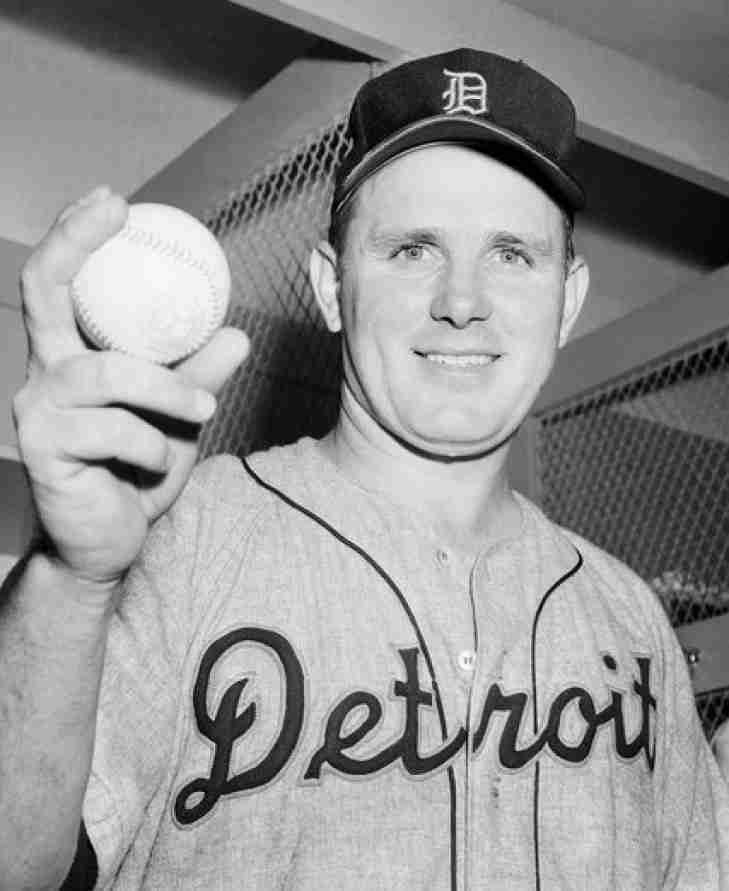
Virgil Trucks earned his "Fire" nickname in Detroit by overwhelming hitters with a high-velocity fastball that anchored the Tigers' rotation for over a decade. After debuting in 1941, he quickly became a centerpiece of the pitching staff, providing a gritty, power-pitching presence that helped define the post-war era in the Motor City. For 12 seasons, he served as a reliable cog in the Detroit rotation.
Trucks’ journey in a Detroit uniform reached an immediate championship high in 1945. After returning from military service late in the year, he was thrust into the heat of a pennant race and responded by helping the Tigers secure the World Series title. He demonstrated a focused intensity on the game's biggest stage, earning a crucial victory in Game 2 against the Cubs. This performance signaled his transition into a premier American League arm, showing the organization that he possessed the big-game temperament required to lead a staff toward a world championship.
In 1949, Trucks reached a career peak for individual dominance, leading the league with 153 strikeouts and earning an All-Star selection. However, it was the 1952 season that cemented his place in baseball lore; despite a low win total for a struggling team, he became only the third pitcher in history to hurl two no-hitters in a single campaign. He silenced the Washington Senators in May and repeated the feat against the New York Yankees in August.
Despite these historic individual achievements, the 1952 Tigers suffered through a miserable season, finishing in the cellar of the American League. Seeking to shake up the roster, the front office orchestrated a major multi-player trade in December of 1952, sending their no-hit specialist to the St. Louis Browns. After a few years spent pitching for the Browns and White Sox, the veteran hurler made a sentimental return to the Tigers for the 1956 season. While his high-velocity days were winding down, this final stint allowed him to conclude his Detroit journey where it began, though he did play afterward briefly with the Kansas City Athletics and New York Yankees.
As a Tiger, Trucks had a record of 114-96 and 1,046 strikeouts over 1,800.2 innings of work.
