

30. Gaylord Perry
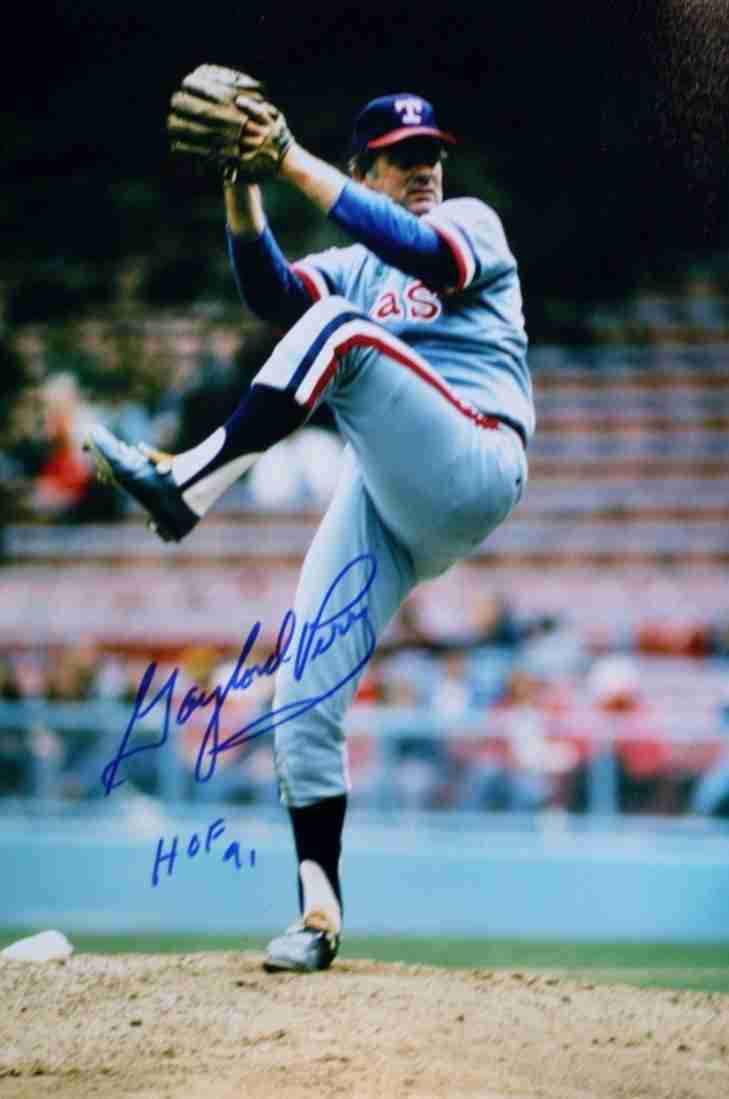
When the legendary Gaylord Perry joined Arlington in June 1975 through a mid-season trade from Cleveland, he brought with him an unrivaled reputation as baseball's top gamesman. A Cy Young winner and a tactician on the mound, the right-hander quickly assumed a leadership role in his late thirties, becoming the key competitive force for a young Texas Rangers team eager to establish itself in the American League West.
Perry commanded the strike zone with textbook precision, pairing his heavy, sinking fastball with a legendary, hyper-analyzed greaseball that kept hitters entirely off-balance. His first tour in Texas was an absolute masterclass in high-leverage durability. Over the second half of 1975 and the entirety of 1976 and 1977, he regularly swallowed up massive workloads for manager Frank Lucchesi, logging seasons of 184, 250, and 238 innings.
Although raw win-loss records for a developing team can hide a pitcher's true effectiveness, Perry's advanced metrics showed his genuine dominance. He expertly minimized damage on his own terms, finishing in the top five in the American League for Fielding Independent Pitching (FIP) in every full season with Arlington. His initial stint with the team was highlighted by a remarkable 1977 season, during which he achieved 15 wins, struck out 177 batters, and posted an elite, team-leading 6.3 bWAR.
After that season, Perry was traded to San Diego—where he would instantly capture a historic second Cy Young Award—but his history with the Rangers wasn't finished. In a great late-career twist, the future Hall of Famer returned to Texas for a brief second tour in 1980, adding 24 more starts and 155.1 steady innings to his Rangers ledger before being dealt to the New York Yankees for a pennant chase.
Across four seasons in Texas over two separate tours (1975–1977, 1980), Perry made 112 appearances (all starts). He compiled a 48–43 record with a stellar 3.26 ERA and a 1.20 WHIP. He threw 827.2 innings, recording 49 complete games and 10 shutouts. In 1991, Perry received the ultimate accolade when his name was called for the Baseball Hall of Fame.
36. Al Oliver
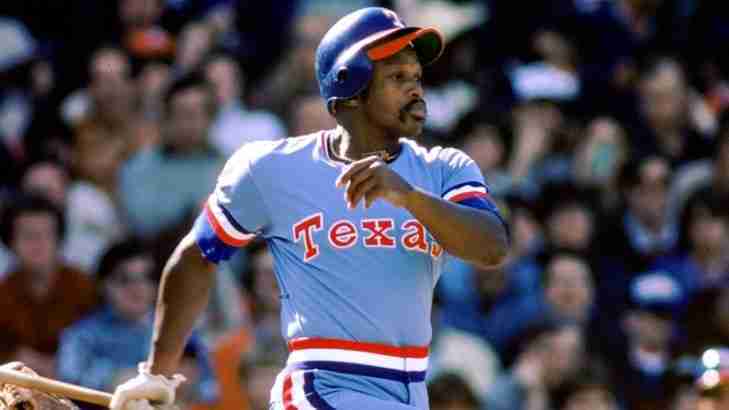
When Al Oliver arrived in Arlington before the 1978 season as part of the first four-team blockbuster trade in major league history, he was already a seasoned, World Series champion with the Pittsburgh Pirates. Known as "Scoop" for his smooth fielding at first base, the left-handed hitter brought a pure, relentless line-drive swing to the American League. Despite switching leagues, Oliver's performance remained consistent: he simply continued to hit baseballs with power and precision.
Oliver transformed contact hitting into a model of consistency during his Texas years, challenging the rising trend of high-strikeout sluggers. He reliably posted a quality batting average every night, hitting over .300 in each of his four seasons with the team and always finishing at least ninth in the American League batting standings. His outstanding bat-to-ball technique combined with significant gap power, as he sprayed line drives into Arlington Stadium's corners to gather an impressive 668 hits during his relatively brief stay.
His standout offensive season came in 1980, during an impressive and durable iron-man campaign. Playing all 163 games for the Rangers and sporting the number 0, Oliver used his smooth swing to achieve a .319 batting average. He set personal bests across multiple categories, accumulating 209 hits, hitting 43 doubles, and driving in 117 runs, earning his first All-Star nod in Texas and the AL Silver Slugger Award as an outfielder. He continued his strong performance in the strike-shortened 1981 season, batting .309 with 29 doubles in 102 games, earning a second straight All-Star selection and another Silver Slugger, this time as a designated hitter.
That impressive stint in Texas ended abruptly before the 1982 season, when the Rangers traded him to the Montreal Expos. Oliver quickly won a National League batting title in Canada and surpassed 2,700 career hits. However, his greatest offensive achievements occurred during his multiple All-Star years in Texas.
He accumulated 668 hits, 135 doubles, 49 home runs, and 337 RBIs while generating a stellar .319/.361/.478 slash line (134 OPS+) with Texas.
22. Yu Darvish

After a remarkable and decorated stint in Nippon Professional Baseball, Yu Darvish reached Arlington before the 2012 season amid extraordinary international excitement. The Texas Rangers secured his negotiating rights with a record-breaking $51.7 million posting fee before signing him to a six-year deal. With a dazzling and diverse mix of pitches that challenged traditional expectations, Darvish quickly demonstrated that his exceptional ability to generate swings and misses successfully transferred to Major League Baseball.
His debut in the American League was an immediate hit, earning All-Star honors in each of his first three seasons. Darvish reached the pinnacle of his frontline prowess during a historic 2013 season, dominating opponents throughout the summer. He finished second in the AL Cy Young Award voting, leading the majors with 277 strikeouts and posting an incredible 6.2 hits allowed per nine innings. Every time he took the mound, he made the stadium feel like a high-stakes event, nearly throwing a perfect game against Houston that April but falling short by just one out in the ninth.
Tragically, that substantial workload ultimately took a physical toll. Following a period of mild elbow inflammation in late 2014, Darvish was compelled to undergo Tommy John surgery, thereby rendering his entire 2015 season null and void.
Demonstrating remarkable resilience, he rejoined the Texas rotation in May 2016, reestablishing his frontline effectiveness by striking out 132 batters over 100.2 highly efficient innings during the concluding period. By 2017, Darvish had fully regained his elite market value, earning his fourth All-Star selection while representing the Rangers. Nevertheless, with his contract nearing its expiration and a rebuilding Texas team no longer contending for the postseason, the front office took advantage of his high trade value. At the July deadline, the Rangers transferred their ace to the Los Angeles Dodgers in return for three prospects, thereby bringing a sudden end to his promising initial chapter in North America.
With the Rangers, Darvish made 122 appearances (all starts). He compiled a 52–39 record with a 3.42 ERA and a premium 1.19 WHIP. He logged 782.2 innings of work, registering 960 strikeouts against 311 walks.
38. Bump Wills
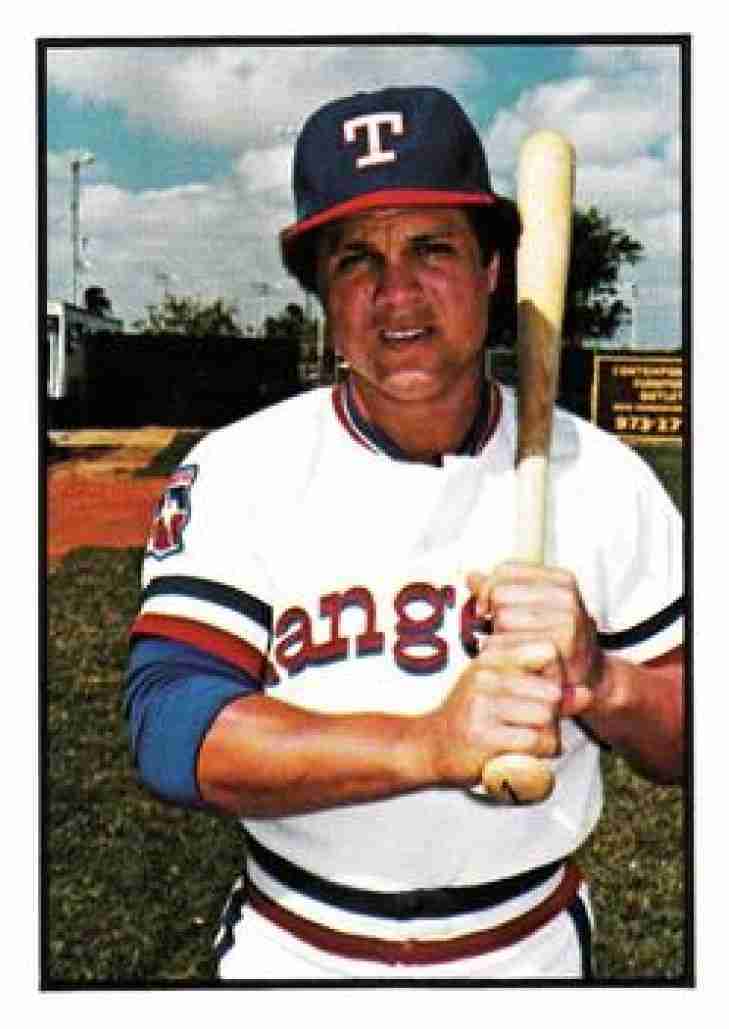
When Elliot "Bump" Wills made his major league debut in Arlington in 1977, he carried a renowned baserunning legacy. As the son of legendary base-stealer Maury Wills, high expectations surrounded the young switch-hitter to bring the same explosive, energetic style to the American League. He quickly lived up to those expectations, leveraging his inherited exceptional speed and instincts to become a key energizer for the team.
Wills avoided typical developmental struggles, securing a backup role and finishing third in the 1977 AL Rookie of the Year voting. Lacking power, he relied on his speed to challenge defenses. His baserunning achievement reached a personal milestone during a remarkable 1978 season. Dramatically shifting the rhythm of the Rangers' offense, Wills stunned American League catchers by stealing a career-high 52 bases. Nearly fifty years later, that record still stands as the franchise's single-season best for the Rangers, highlighting his exceptional speed and timing. He further demonstrated his skill with an additional 35 stolen bases in 1979 and 34 in 1980, solidifying a consistent, aggressive presence at the top of the batting lineup.
Wills excelled not only in speed on the bases but also in providing exceptional, above-average defense at second base. This was a crucial support for the Texas pitching staff. With his outstanding lateral range, quick transfers, and dependable glove, he consistently anchored the right side of the Rangers' infield. His defensive prowess was evident in the leaderboards, where he led all American League second basemen in assists in 1977 with 492 and in 1978 with 478. His stellar 2.0 defensive bWAR as a rookie underscored his reputation as a versatile, two-way middle infielder.
Following a strike-shortened 1981 season, the Rangers traded Wills to the Chicago Cubs in exchange for pitcher Paul Mirabella and cash. He accumulated 709 hits, 97 doubles, 30 home runs, and 207 RBIs while generating a steady .269/.335/.364 slash line and 173 stolen bases for Texas.
35. Will Clark
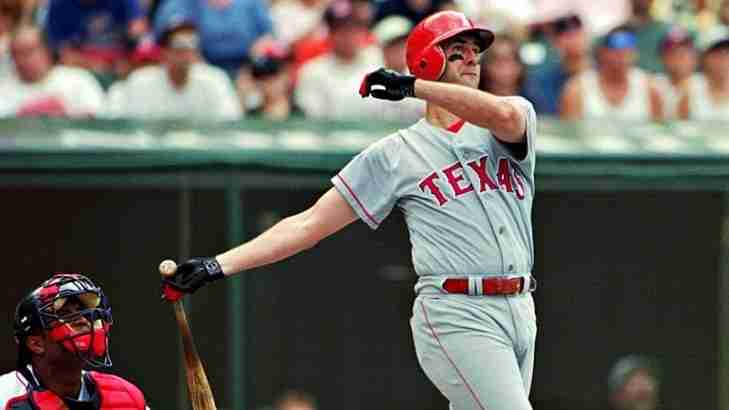
When Will "The Thrill" Clark arrived in Arlington ahead of the 1994 season, he faced the unenviable task of replacing a franchise icon in Rafael Palmeiro at first base. Having already established himself as a fierce, intense superstar with the San Francisco Giants, the left-handed hitting master brought a pristine, textbook swing and an unassailable competitive fire to the Lone Star State. While the national media frequently suggested he was entering a mid-career decline, Clark quickly proved that his pure hitting mechanics and high-leverage instincts were entirely intact.
He made an immediate, tone-setting impression during his inaugural 1994 summer in Texas. Clark silenced the critics by batting a blistering .329, hitting 13 home runs, and driving in 80 runs in just 110 games before the player strike abruptly ended the season. He earned an American League All-Star selection and a top-10 finish in the AL MVP race.
Far from declining, Clark became the steady hand at the heart of a highly explosive Rangers batting order. Across his five full seasons with the franchise, he was a model of line-drive consistency, routinely frustrating opposing pitching staffs by refusing to give away an at-bat. He batted over .300 in four of his five years in Texas, showcasing elite strike-zone discipline to post a stellar, premium .395 on-base percentage during his tenure.
His level-headed leadership and veteran stability reaped massive rewards for the organization down the stretch, anchoring the infield for the historic 1996 and 1998 squads that captured the franchise’s first two American League West division titles.
Following the 1998 campaign, Clark hit the open market as a free agent, moving on to Baltimore and eventually St. Louis before closing out his borderline Hall of Fame career. With the Rangers, Clark had 663 hits, 126 doubles, 78 home runs, and 373 RBIs while generating a .308/.395/.481 slash line (121 OPS+).
29. Pete O'Brien
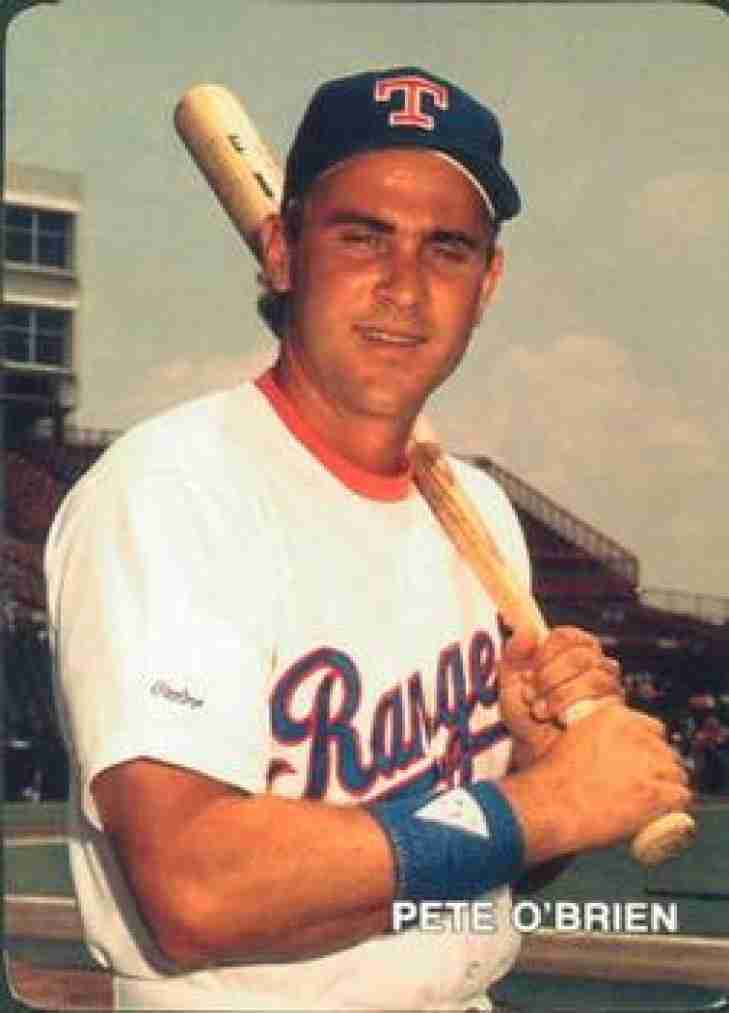
The mid-1980s Texas Rangers are often remembered for their flashy young talents, but Pete O’Brien's steady and reliable performance was the true backbone of the team. Drafted in the 15th round of the 1979 draft from Nebraska, this left-handed first baseman arrived in Arlington by late 1982 and quickly proved to be durable. While he wasn't a flashy slugger grabbing the spotlight every night, managers and teammates appreciated him as a consistently dependable, everyday player.
O'Brien was a consistent presence in the middle of the Rangers' lineup, combining solid line-drive power with strong contact skills. He surpassed 150 hits three times for the franchise, notably in 1985 when he achieved a career-high 171 hits and 92 RBIs. He was also effective at Arlington Stadium, with three seasons of 20 or more home runs. His best offensive year came in 1986, when he hit 23 home runs, drew 84 walks, and posted a .290 batting average, helping Texas reach an unexpected 87 wins and second place in the AL West, earning him 11th place in the AL MVP voting.
Beyond his reliable bat, O'Brien was an absolute wizard with the glove at first base, providing a crucial safety net for a young Rangers infield. With elite flexibility, supreme reflexes, and a pristine internal clock, he regularly ranked among the top in the American League in putouts and fielding percentage, culminating in an AL Gold Glove Award in 1988.
Following the 1988 schedule, the club traded him to the Cleveland Indians as part of a massive, nine-player blockbuster that brought Julio Franco to Arlington. With the Rangers, O’Brien had 914 hits, 151 doubles, 114 home runs, and 461 RBIs while generating a steady .273/.348/.425 slash line (110 OPS+).
28. Mike Hargrove
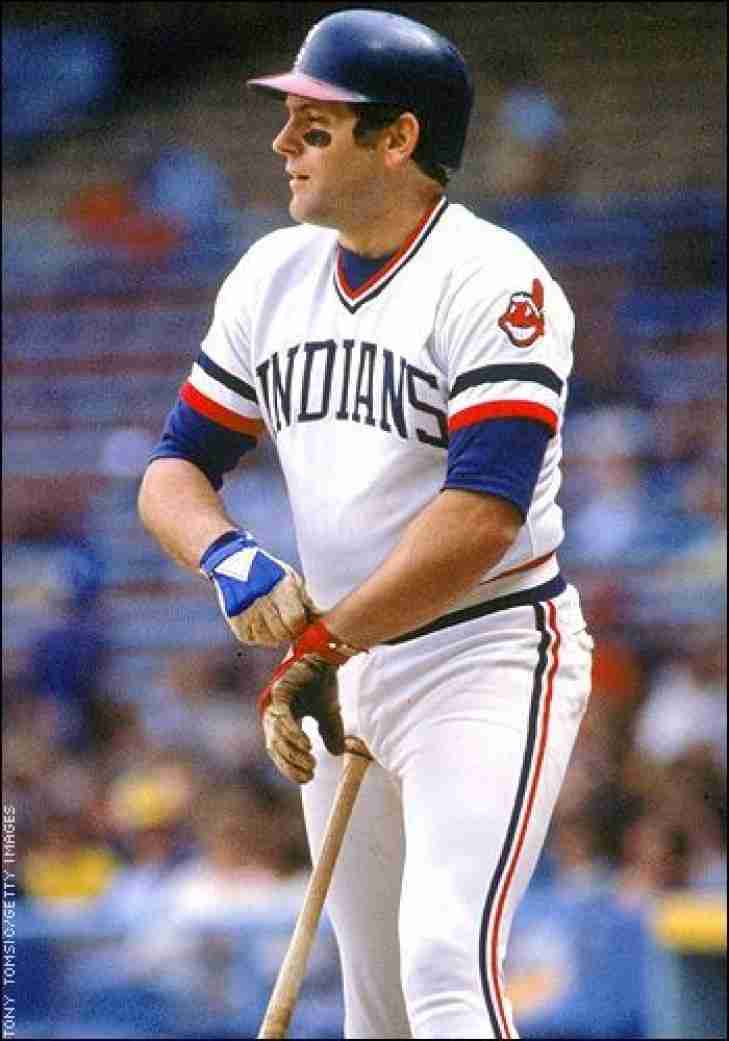
Long before analytics made on-base percentage a key indicator of offensive skill, Mike Hargrove mastered patience at Arlington. Known as "The Human Rain Delay," the left-handed first baseman gained his nickname due to his highly ritualistic routine between pitches—adjusting his helmet, tightening his batting gloves, and wiping his shoes—which disrupted the timing of opposing pitchers.
Hargrove entered Texas as a relatively unnoticed 25th-round draft pick from Northwestern Oklahoma State but quickly proved his talent. He started his career with an outstanding 1974 season, hitting .323 with a .395 on-base percentage, earning the American League Rookie of the Year Award and becoming a key part of the Rangers’ improving lineup. He continued his success in 1975, earning an AL All-Star selection by batting .303 and leading the team with 91 runs scored, demonstrating consistent offensive prowess.
While Hargrove didn't possess the towering home run power typically seen in corner infielders, his skill at controlling the strike zone was exceptional. He exemplified high-leverage patience, using his sharp vision to tire out pitchers and leading the American League in walks twice while with Texas—racking up a career-high 114 free passes in 1977 and 101 in 1978. During his five full seasons with the Rangers, he maintained a remarkable .399 on-base percentage, making him a persistent and frustrating presence on the bases for anyone trying to get through the lineup.
That productive residency ended unexpectedly before the 1979 campaign, when the Rangers traded him to San Diego in a multi-player blockbuster. Hargrove then spent a successful decade with the Cleveland Indians as a player and manager, but his peak was in Arlington.
Over his six seasons in the Lone Star State, Hargrove had 795 hits, 126 doubles, 51 home runs, and 338 RBIs while generating a .291/.399/.403 slash line (131 OPS+) and drawing 500 walks.
19. Nolan Ryan
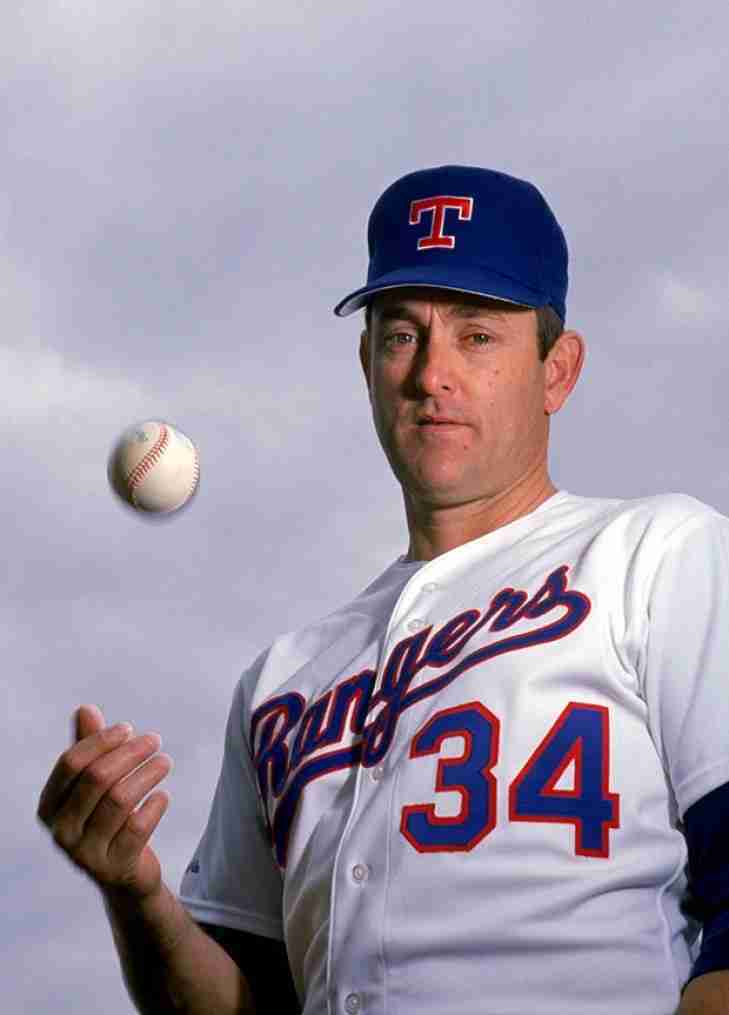
When Nolan Ryan entered into a free agency agreement with the Texas Rangers in December 1988, he was already 41 years old and possessed a distinguished career filled with numerous accolades. Traditional baseball wisdom indicated that the native Texan was returning home primarily to transition into retirement. However, "The Ryan Express" transformed his final five seasons into an extraordinary cultural and statistical phenomenon, thereby solidifying his position as a legendary figure in the history of sports in Lone Star State.
Operating with a high-velocity fastball that still defied time and physics, Ryan did not merely maintain a position in the starting rotation; he remained a formidable front-line force. His 1989 debut at Arlington was a remarkable demonstration of power, as he led the American League with 301 strikeouts over 239 innings—marking the sixth occasion in his career that he reached the 300-strikeout threshold. Even into his mid-40s, his exceptional pitching abilities remained entirely unhittable when he was fully concentrated, a fact he demonstrated to the baseball community by delivering his sixth career no-hitter against Oakland in 1990, followed by a spectacular no-hitter with 16 strikeouts against Toronto on May 1, 1991.
While his raw on-field value in Arlington was concentrated into the back end of his career, his physical presence provided the franchise with a significant competitive advantage and an immediate national profile. He was an intense, traditional competitor who demanded the strike zone, as famously exemplified by his legendary mound confrontation with Robin Ventura in 1993. Each time Ryan took the mound, he elevated the game to a high-stakes level, concluding his five-year tenure with an impressive 51–39 record and amassing 939 strikeouts against a heightened level of baseball age.
His final departure from the baseball field took place in September 1993, when a torn ligament in his right elbow abruptly ended his illustrious 27-year career in Major League Baseball. Although his number of starts was limited to 135, thereby resulting in his total statistical contributions being somewhat behind the franchise’s record holders over the decade, his late-career performance in terms of raw dominance and structural influence deeply left an indelible impression on the organization.
With the Rangers, Ryan made 135 appearances (all starts). He compiled a 51–39 record with a 3.43 ERA and a 1.12 WHIP. He logged 840 innings, recording 15 complete games, six shutouts, and 939 strikeouts. To permanently cement his monumental legacy, the Rangers retired his number 34 in 1996, and he was inducted into Cooperstown as a first-ballot member of the National Baseball Hall of Fame in 1999. He completed his journey with the organization by being inducted into the inaugural class of the Texas Rangers Hall of Fame in 2003, serving as the ultimate punctuation on his identity as a Texas icon.
27. Kevin Brown

Long before Kevin Brown became baseball’s first $100 million player, threw a no-hitter, or led different teams to the World Series, he was a key draft prospect for the Texas Rangers. Picked fourth overall in 1986 from Georgia Tech, this intense right-hander featured a powerful sinking fastball that defined his pitching style. Although his peak, close to Cooperstown, came after leaving Texas, his seven full seasons in Arlington set the stage for a highly successful major league career.
By 1989, Brown had become a regular in the Texas rotation, just behind legendary Nolan Ryan. He used a distinctive high-velocity sinker that generated numerous ground balls, showcasing efficiency often overlooked at Arlington Stadium, known for favoring hitters in the pre-humidor era. While early '90s fans and media admired strikeout kings, Brown emphasized solid contact, playing with a relentless, bulldog-like approach.
That unyielding approach culminated in a spectacular individual breakthrough in 1992. Completely dominating American League lineups, Brown authored a masterpiece of a season, leading the major leagues with 21 victories against just 11 defeats. Pacing the circuit with 265.2 grueling innings over 35 starts, he earned his first career All-Star selection and finished sixth in the AL Cy Young Award voting, becoming the first Ranger pitcher to reach 20 wins since Fergie Jenkins in 1974. He sustained that workhorse pace the following summer, logging another 233 frames to post 15 wins.
However, his time in Texas concluded amidst the structural chaos that gripped the sport in the mid-1990s. Brown took the ball for 26 starts during the strike-shortened 1994 campaign, but his relationship with the front office grew increasingly stagnant. Once the devastating player strike wiped out the World Series and spilled into the following spring, the business of the game shifted dramatically. When the strike finally settled in April 1995, Brown hit the open market as a free agent. The small-market Rangers, unwilling to commit to escalating long-term financial obligations, elected to let their former ace walk, clearing the path for him to sign a one-year deal with the Baltimore Orioles.
Across parts of eight seasons in Texas (1986, 1988–1994), Brown made 188 appearances (185 starts). He compiled a highly respectable 78–64 record with a 3.81 ERA and a 1.33 WHIP. He swallowed up 1,234 innings of work, recording 36 complete games, three shutouts, and 742 strikeouts.
26. Ken McMullen
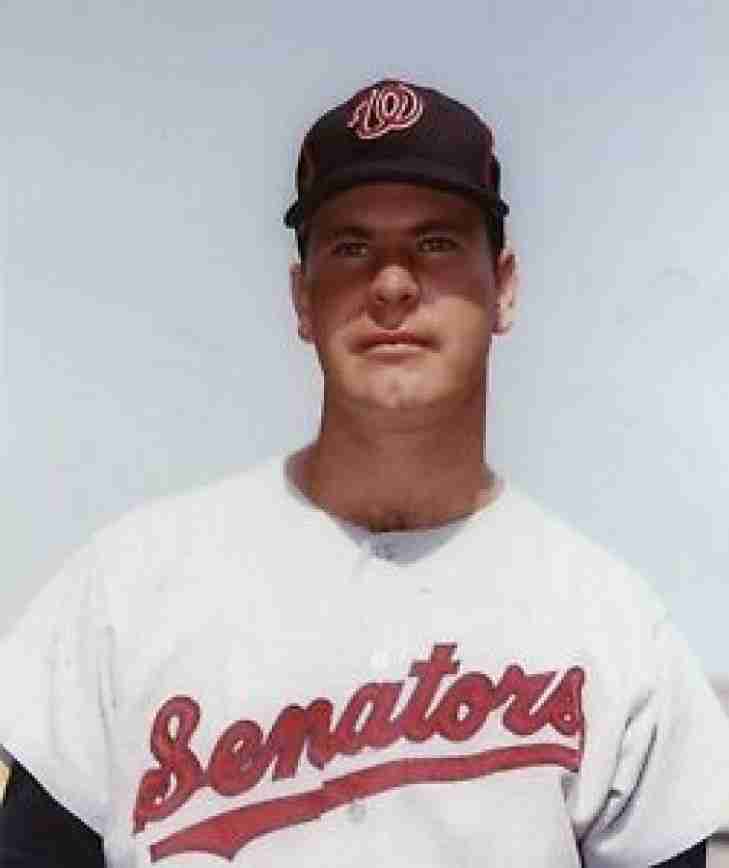
Although Ken McMullen never played a single inning within the territorial boundaries of Texas, his six-year tenure with the expansion Washington Senators means his statistical contributions are integral to the organization's foundational history. Transferred from the Los Angeles Dodgers prior to the 1965 season as part of a multi-player trade centered around Frank Howard, the right-handed batting third baseman dedicated the latter half of the 1960s to establishing himself as a dependable stabilizer at third base in Washington, D.C.
Under the management of Gil Hodges, McMullen was integrated into the standard lineup, providing an immediate enhancement to the team's depth by hitting 18 home runs during his debut summer of 1965. Although he initially faced some minor defensive challenges, he quickly became one of the league's most agile and reliable infielders. Demonstrating exceptional lateral agility and a formidable arm, he notably set an American League record with 11 assists from third base in a single game against the Red Sox in 1966. Over three consecutive seasons from 1967 to 1969, McMullen led all league third basemen in total defensive chances, further exemplifying his defensive prowess by leading the league three times in Range Factor per game at his position.
His defensive efficiency was matched by a steady, productive baseline with the bat. He exceeded the 20-home run threshold in 1968 and directed the most outstanding individual performance of his career in 1969 under the guidance of the newly appointed manager Ted Williams. In response to the legendary hitter's coaching, McMullen achieved a personal-best .272 batting average with 19 home runs and a career-high 87 RBIs, helping lead the modern Senators to their sole winning season in the nation's capital.
His long tenure with the club ended abruptly when the front office made an unpopular decision. After 15 games in the 1970 season, owner Bob Short traded McMullen to the California Angels for Aurelio Rodríguez and Rick Reichardt. The trade shocked the clubhouse, reportedly diminishing Williams's enthusiasm after the team lost a player seen as its captain and emotional anchor.
With the Senators, he amassed 709 hits, 86 homers, and 327 RBIs, posting a .249/.317/393 slash line (104 OPS+).
24. Rusty Greer
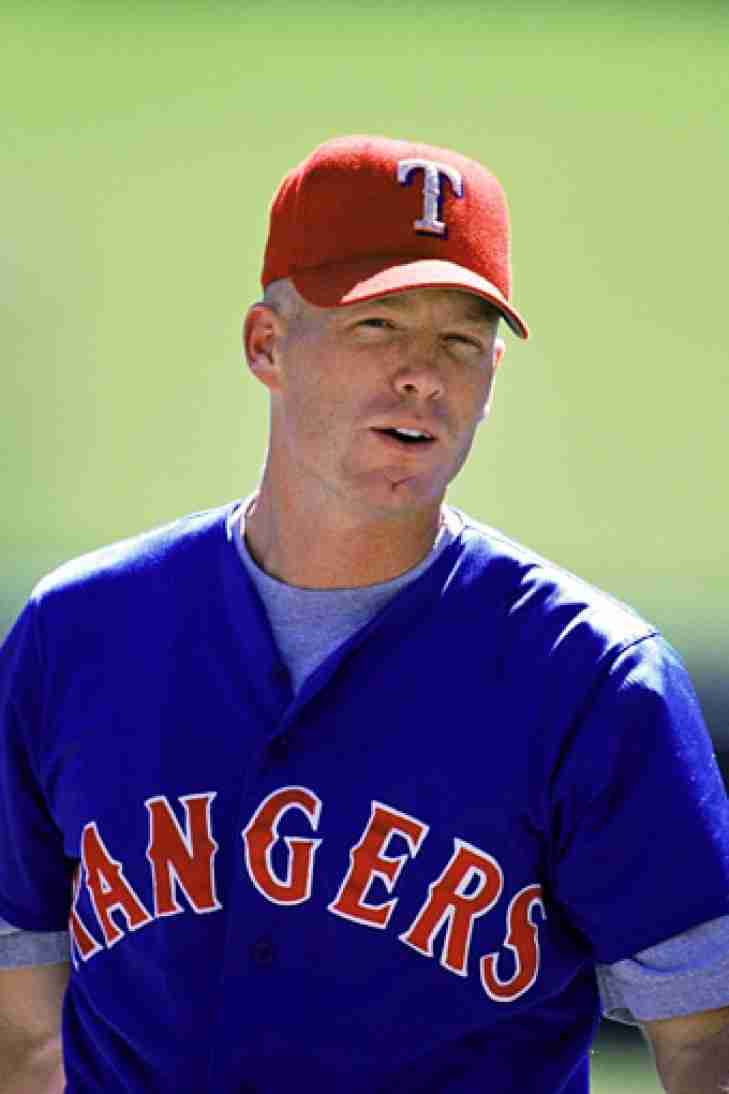
During a time when the Texas Rangers were known for their memorable home runs and exciting games, Rusty Greer made a special name for himself as a tough, high-obp player who really sparked the team. Drafted in the tenth round of the 1990 amateur draft from the University of Montevallo, this left-handed outfielder spent all nine of his Major League seasons right here in Arlington. Fans grew to love him quickly because of his passionate, relentless style of play, always giving his best, focusing on hard work and hustle over smooth finesse.
Greer immediately adopted an elite approach upon his arrival in 1994, finishing third in the American League Rookie of the Year voting. While the Texas Rangers featured marquee power hitters such as Juan González and Iván Rodríguez, Greer served as the indispensable link that maintained the team's offensive flow. He consistently achieved five separate seasons with a batting average exceeding .300, notably highlighted by a remarkable 1996 campaign in which he posted a .332 batting average, 41 doubles, 18 home runs, and his first of three seasons with 100 or more RBIs.
Far from merely a slap-hitting outfielder, Greer possessed an exceptional eye that enabled him to manipulate counts and command the strike zone. He surpassed the 80-walk threshold on three occasions, contributing to a flawless lifetime .387 on-base percentage that ranks among the franchise's highest. His bat exhibited subtle line-drive power as well, hitting a personal-best 26 home runs in 1997 and driving in 108 runs in 1998, serving as a cornerstone for the club's consecutive AL West championships.
That relentless, diving physical approach eventually exacted a significant toll on his physique. A series of back, shoulder, and hip injuries considerably restricted his availability after the 2000 season. Following three summers of intensive physical therapy and multiple surgeries, Greer made his final appearance in Major League Baseball in July 2002. Although he signed a multi-year extension intended to maintain his presence on the field through 2004, his body ultimately failed to cooperate, necessitating his official retirement from professional baseball after spending his entire career within a single organization's framework.
Greer played in 1,027 games, with 1,166 hits, 119 home runs, and 614 RBIs, maintaining a .305/.387/478 slash line (119 OPS+). The Rangers inducted Rusty Greer into the Texas Rangers Hall of Fame in 2007.
20. Julio Franco
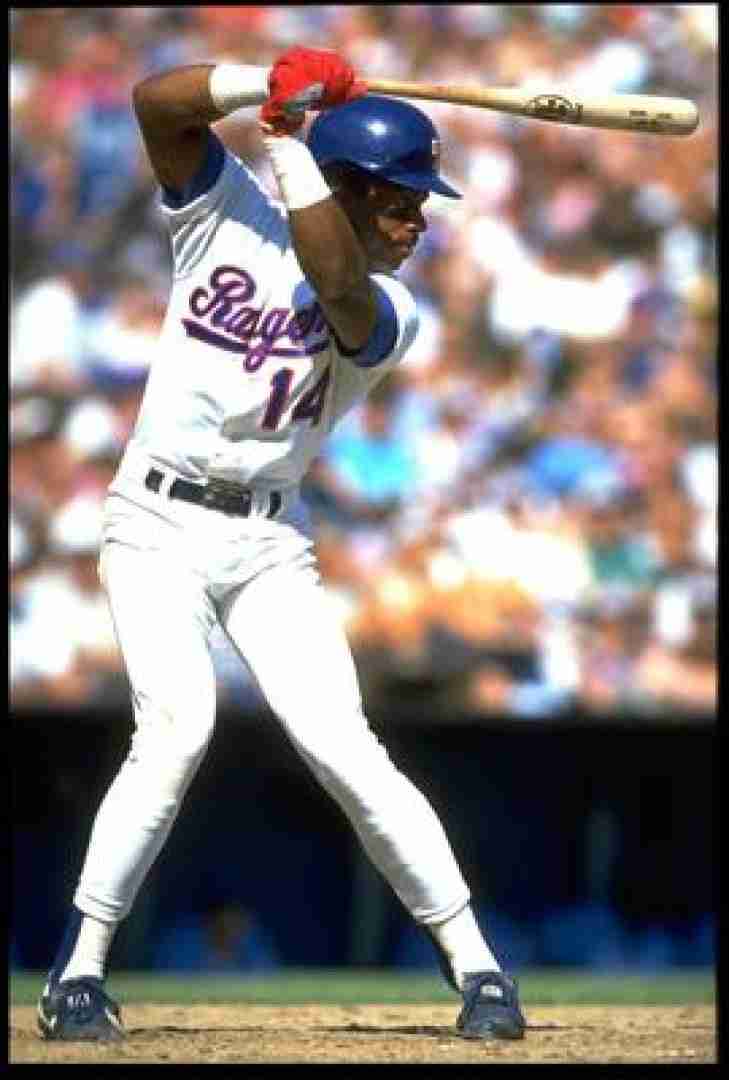
When Julio Franco stepped into Arlington before the 1989 season, he brought with him one of the most distinct batting stances in baseball—holding his bat high above his head and leaning forward toward the pitcher. This unique approach helped him build a long, exciting career that took him around the world over nearly thirty years. But it was during his five-year prime with the Texas Rangers that the Dominican infielder truly reached his top performance as a major league hitter.
Initially positioned at second base to strengthen the core of the Texas infield, Franco promptly attained a remarkable level of offensive consistency. He achieved three consecutive All-Star selections from 1989 to 1991, utilizing a swift right-handed swing that consistently produced line drives into the gaps. He established himself as the premier offensive second baseman of his time, earning three consecutive Silver Slugger Awards in Texas. His 1989 debut served as an impressive display of pure productivity, with 15 stolen bases, 92 RBIs, and a career-high 201 hits—the singular 200-hit effort in his extensive career.
His offensive wizardry reached its zenith during a remarkable 1991 campaign. Throughout the summer, he demonstrated exceptional performance against American League pitching, ultimately claiming the AL Batting Title with an impressive .341 batting average, surpassing Wade Boggs to become the first Ranger to earn this accolade since Buddy Bell. This achievement was complemented by his disciplined approach at the plate, as evidenced by his 82 walks, which elevated his on-base percentage to an outstanding .408, thereby contributing significantly to a notably dynamic Texas lineup.
As injuries constrained his defensive mobility, the organization transitioned Franco to a full-time designated hitter role by 1993, where he maintained a highly productive baseline. However, amidst the front office's strategic focus on a youth movement and financial realignments, his tenure in Arlington concluded after the 1993 season. This transition facilitated his move to Chicago, where he showcased his elite batting skills and ultimately led to his career in Japan.
With the Rangers, Franco had 725 hits, 44 HR, 345 RBIs, 79 stolen bases, and a .307/.382/437 slash line (131 OPS+).
17. Fergie Jenkins
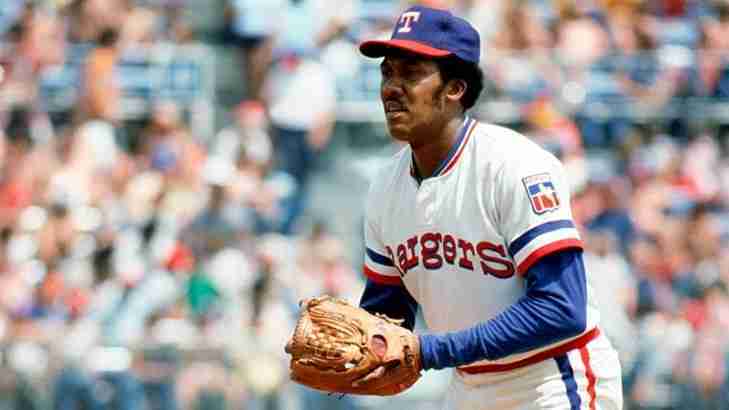
While Fergie Jenkins cemented his first-ballot Cooperstown credentials with the Cubs, his tenure in Texas was anything but tranquil. He was acquired by the Texas Rangers before the 1974 season in a major trade that sent future batting champion Bill Madlock to Chicago. The tall Canadian right-hander came to Arlington as an established workhorse, poised to lead a franchise in transition.
His debut summer in Texas is arguably the most outstanding individual pitching season in team history. Leading a significant turnaround for a club that had fallen to last place the previous year, Jenkins confused American League batters with his precise control and relentless downward-breaking slider. His 1974 season was exceptional, setting franchise records that remain unbroken: a 25–12 record, 225 strikeouts, and an incredible 328 innings pitched over 41 starts. He finished 29 games himself, allowing the bullpen to rest and narrowly missed winning the AL Cy Young Award, placing second to Catfish Hunter, while also earning AL Comeback Player of the Year.
Following a durable 1975 season, the front office briefly traded the veteran to the Boston Red Sox for two years. However, Arlington's pull led Jenkins back to the Rangers in 1978, marking a highly successful second phase. In his mid-to-late 30s, his consistent performance was a key stabilizer. He posted an impressive 18–8 record with a 3.04 ERA in 1978 and pitched another 259 innings the next summer, helping keep the Rangers competitive in a tough AL West.
After a tough 1981 season, all good things ended as Jenkins left Texas. At 38, his performance declined, and he mostly served as a swingman, rotating between starting and relieving. Seeing the Rangers focus on younger pitchers, he became a free agent after the season. This led to a fitting return, as he rejoined the Chicago Cubs to end his career where it all started, bringing his Texas chapter to a close.
Across six Texas seasons over two stints (1974–1975, 1978–1981), Jenkins made 197 appearances (190 starts), with a 93–72 record, 3.56 ERA, 1.19 WHIP, 1,391 innings, and 80 complete games. He entered the Rangers Hall of Fame in 2004.
23. Mark Teixeira
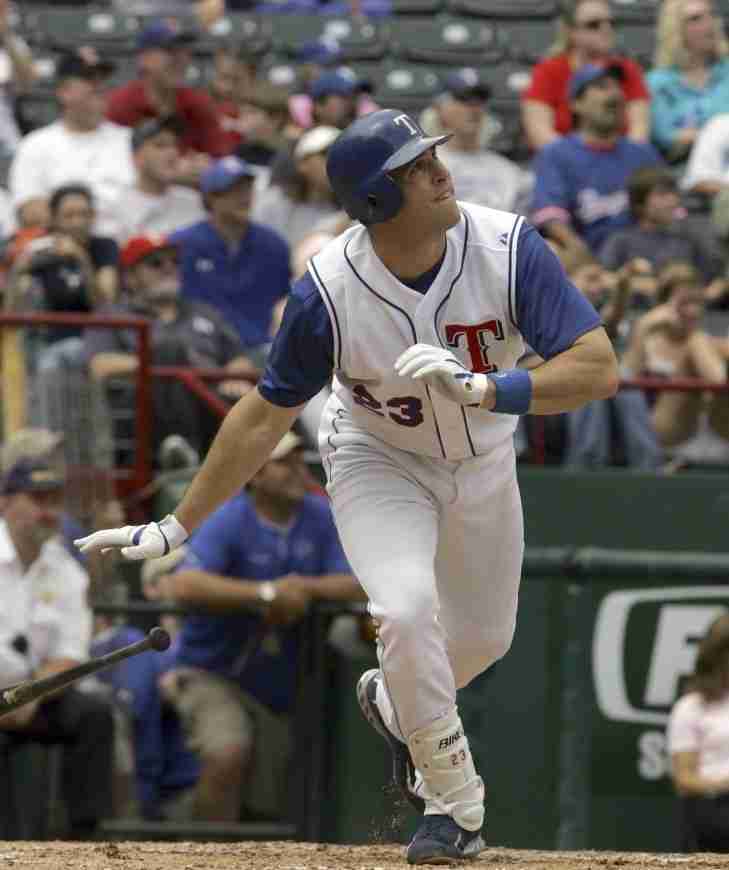
Before he ever wore the pinstripes of New York or hoisted a World Series trophy in the Bronx, Mark Teixeira blossomed into a premier, switch-hitting force right in the heart of Texas. Selected fifth overall in the 2001 draft out of Georgia Tech, the highly touted first baseman arrived in Arlington carrying the lofty expectations of a rebuilding franchise. He didn't waste any time transforming into an immediate frontline superstar, providing the Rangers with an elite combination of structural lineup protection and gold-standard defense.
Stepping into the everyday role as a rookie in 2003, Teixeira instantly put his raw, dynamic power on display by launching 26 home runs. That introductory summer merely set the stage for an absolute three-year demolition of American League pitching. He cleared the fences 38 times in 2004 to secure his first Silver Slugger Award, then orchestrated the undisputed masterpiece of his Texas residency in 2005. Battering opposing arms from both sides of the plate, Teixeira compiled a spectacular .301/.379/.575 slash line, hammering a career-high 43 home runs and driving in a staggering 144 runs to earn an All-Star selection and a seventh-place finish in the AL MVP race.
While his ferocious bat anchored the middle of a highly explosive Texas batting order, Teixeira paired that offensive production with elite run prevention. He possessed soft hands and exceptional spatial awareness around the bag, anchoring the infield defense to secure back-to-back Gold Glove Awards in 2005 and 2006.
However, his long-term future in Arlington eventually collided with cold financial realities. With free agency looming after the 2008 season and Teixeira turning down a massive eight-year, $140 million contract extension, the front office recognized it had to pivot to protect the organization's future. On July 31, 2007, the Rangers executed an absolute blockbuster deadline trade, sending their star first baseman to the Atlanta Braves. While parting with a premier player in his prime was painful, the historic five-prospect package Texas received in return—which included Elvis Andrus, Neftalí Feliz, and Matt Harrison—ultimately served as the central building blocks for the franchise's consecutive pennant-winning teams in 2010 and 2011.
As a Ranger, Teixeira accumulated 794 hits, 153 home runs, and 499 RBIs while generating a stellar .283/.368/.533 slash line (128 OPS+).
18. Ruben Sierra
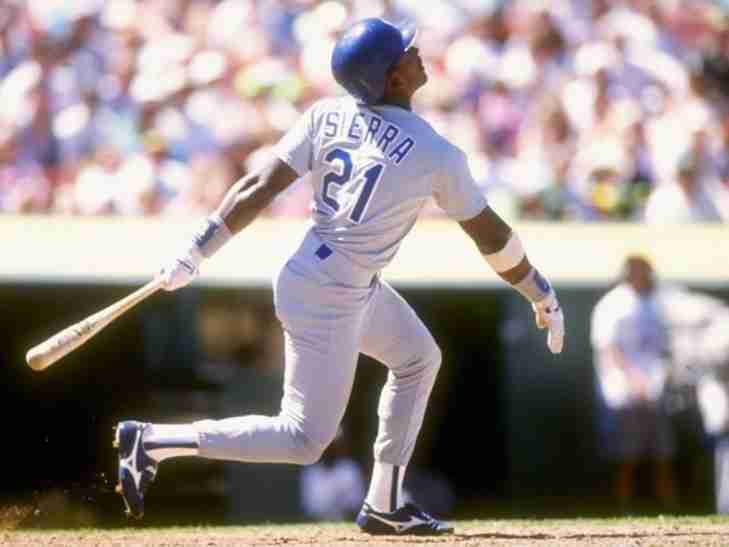
When 18-year-old Rubén Sierra first came to Arlington from Puerto Rico, he brought a powerful, switch-hitting style that aimed to transform the Texas batting lineup. With a quick, explosive swing and exceptional athletic ability, this young outfielder quickly matured from a raw talent into a top American League star, leading the team's offense in the late 1980s.
His early years with the Rangers were marked by remarkable achievements, especially during the breakout campaign of 1989. Sierra dominated the junior circuit that summer, hitting 29 home runs and leading the major leagues with 119 RBIs, 14 triples, and 343 total bases. His aggressive batting style earned him a league-high .543 slugging percentage, his first Silver Slugger Award, and a starting spot in the All-Star Game. Although he narrowly lost the AL MVP to Robin Yount in a close vote, finishing second, Sierra had already established himself as one of baseball’s most formidable offensive players.
He sustained that elite baseline over the next few summers, earning two more All-Star nods and routinely clearing the 20-home run mark. However, with his contract nearing its end and the front office looking to shore up the pitching staff, his first stint concluded in shocking fashion at the 1992 August trade deadline. In a blockbuster challenge trade that shook the sport, Texas packaged their star slugger to the Oakland Athletics in exchange for an elite, high-profile package centered around former dynamic MVP and home run king José Canseco.
After a decade-long journey that saw him suit up for seven different franchises, the gravitational pull of Arlington brought the veteran home in 2000. Sierra returned for a highly productive second act, flashing his vintage power to blast 34 home runs over a two-season reunion stretch and capturing the 2001 AL Comeback Player of the Year award. He hit free agency again that winter and signed with Seattle, but his connection to the Rangers wasn't quite finished.
In February 2003, the franchise welcomed Sierra back for a brief, unexpected third stint. Serving primarily as a designated hitter and veteran bench bat, he provided a steady hand over 43 games, adding three more home runs to his franchise tally. By June, with the rebuilding Rangers looking to inject youth into the roster and the New York Yankees hunting for a proven switch-hitting weapon for their pennant push, Texas traded the veteran to the Bronx in exchange for a young Marcus Thames.
Across 11 seasons in Texas (1986–1992, 2000–2001, 2003), Sierra played 1,178 games, with 1,208 hits, 183 home runs, 754 RBIs, and 77 stolen bases, posting a .270/.322/467 slash line (114 OPS+). He was inducted into the Rangers Hall of Fame in 2009.
5. Michael Young
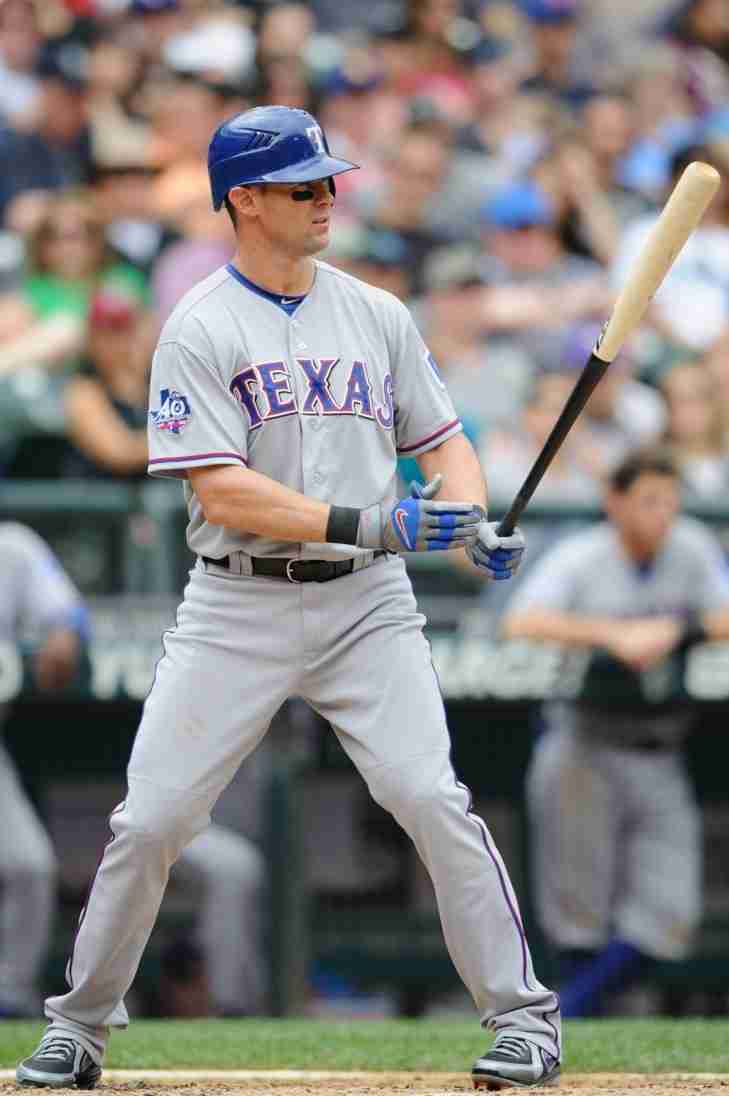
Michael Young was initially acquired from the Toronto Blue Jays through an understated mid-season trade in 2000. By the subsequent summer, he had secured regular playing time in Arlington. He not only solidified the central position in the infield but also demonstrated exceptional versatility, adapting to four different high-profile defensive roles at the direction of management while serving as the team's unequivocal captain. During a notable 13-season tenure in Texas, the highly durable infielder set a benchmark for consistent offensive output, ranking among the most distinguished careers in Lone Star sports history.
His debut as a consistent second baseman immediately highlighted him as a top-of-the-order threat. Young made a daily habit of driving line drives through the spacious gaps of the home ballpark, accumulating 204 hits and a strong .306 average during a standout 2003 season. He maintained this energetic, frontline performance over the next five years, earning his reputation as one of the top high-volume hitters in professional baseball. Remarkably, Young had six straight seasons with 200 hits from 2003 to 2008, and he matched that impressive feat again in a stellar 2011 season.
His 2005 season truly shined, marking the peak of his hardware-certified career. He confidently dominated at the plate, leading the entire major leagues with a career-high 221 hits and winning the American League batting title with a blazing .331 average. This remarkable consistency earned him widespread recognition across the nation, earning seven American League All-Star selections in a Texas uniform—culminating in a memorable 2006 midsummer game where his clutch, two-run triple earned him the MVP trophy.
It must be fairly acknowledged that analytical limitations restrict the comprehensive evaluation of his historical value through an algorithmic review. Young was an old-school, free-swinging contact hitter whose on-base percentage consistently hovered in the low to mid .300s, attributable to a highly aggressive approach and a modest walk rate. Defensively, his profile was notably variable; although he received an American League Gold Glove at shortstop in 2008 and willingly transitioned to third base in 2009 and to first base/DH in 2011 to accommodate emerging prospects, standard advanced efficiency metrics assess his range and glove as highly inconsistent, culminating in a career -4.0 defensive bWAR that significantly diminishes his advanced metrics.
The inevitable business exit materialized ahead of the 2013 schedule when, as the front office leaned heavily into a younger, analytically driven roster, Young waived his no-trade clause to facilitate a trade to the Philadelphia Phillies, drawing a definitive curtain on his historic residency in Arlington.
Young remains the all-time, undisputed Texas Rangers franchise leader in an astonishing array of categories, including games played (1,823), hits (2,230), runs scored (1,085), doubles (415), and triples (55), balanced against a stellar .300 batting average. He was inducted into the Rangers Hall of Fame in 2016.
15. Toby Harrah
10. Josh Hamilton
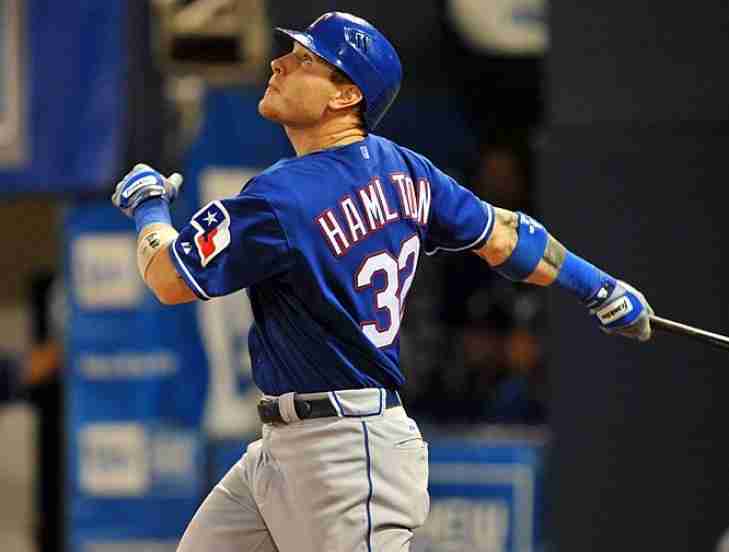
The revival of Josh Hamilton’s baseball career stands as one of the most remarkable and cinematic human-interest narratives in the annals of contemporary sports. Selected first overall in the 1999 draft by the Tampa Bay Devil Rays as a renowned five-tool talent, his career was notably disrupted by severe substance abuse issues, resulting in over three years of absence from the sport. Following a brief period of redemption through a Rule 5 draft appearance with Cincinnati in 2007, he was subsequently acquired by the Texas Rangers during a December transaction. Upon entering the intense summer heat of Arlington, his innate baseball brilliance was fully realized, establishing him as a pivotal middle-of-the-order superstar and fundamentally transforming the organization into a formidable powerhouse.
Hamilton’s time with the Rangers was marked by an extraordinary level of offensive power. During his breakout in 2008, he quickly gained the admiration of fans by leading the American League with 130 RBIs and impressing the nation with a remarkable, 28-home-run performance at the Yankee Stadium Home Run Derby. Each time he made contact, the ball produced a unique, powerful sound that few could mimic, earning him three Silver Slugger Awards in his first five seasons with Texas.
His unequivocal professional masterpiece emerged during the remarkable 2010 campaign. Operating with an exceptionally aggressive approach, Hamilton completely dominated Major League Baseball's pitching staffs, securing the American League batting title with a record-setting .359 average and leading all of baseball with an astounding .633 slugging percentage. He combined this remarkable efficiency at the micro level with 32 home runs and 100 RBIs, thereby earning the 2010 American League Most Valuable Player Award despite missing the majority of September due to a fractured rib. Hamilton transferred that excellence from the regular season directly into October, hitting four home runs with seven RBIs against the New York Yankees to be named the 2010 ALCS Most Valuable Player and guiding the Rangers to their inaugural pennant in franchise history.
Hamilton demonstrated remarkable consistency in maintaining elite performance over the subsequent two summers, contributing significantly to the Rangers securing their second consecutive American League pennant in 2011. In 2012, he achieved a career-high of 43 home runs and 128 RBIs. Notably, during that year, he exhibited one of the most explosive single-game performances in baseball history: on a May night in Baltimore, he hit four two-run home runs within a single game, establishing an American League record with 18 total bases. After a highly turbulent two-year period as a free agent with division-rival Los Angeles Angels, Hamilton returned to Texas for a final, emotionally significant 50-game tenure in 2015. Nevertheless, persistent knee injuries ultimately compelled him to retire from the sport.
Hamilton compiled 744 hits, 150 home runs, and a spectacular .302/.359/.542 slash line over 647 games. Texas inducted Hamilton into their franchise Hall of Fame in 2019.
12. Kenny Rogers
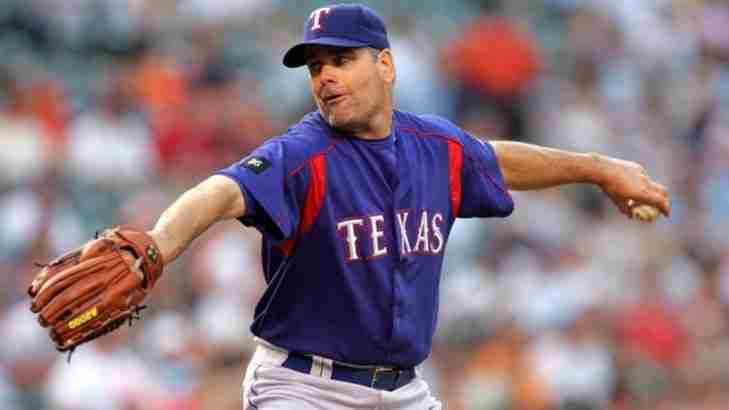
Few players have ever navigated the shifting tides of the Texas Rangers' modern history with more recurring presence than Kenny Rogers. Plucked out of a Georgia high school as a completely anonymous 39th-round afterthought in the 1982 amateur draft, the crafty left-hander spent years grinding through the farm system before permanently establishing himself in Arlington. Dubbed "The Gambler" as a nod to his country-music namesake, Rogers employed a masterful approach in deception, late-fading movement, and a legendary, elite pickoff move that rendered base runners entirely immobilized. Throughout three distinct tenures with the organization, he evolved from a high-leverage relief pitcher into the most successful homegrown starting pitcher in franchise history.
Rogers’ initial tenure with Texas presents a compelling case study in professional development. Joining the organization in 1989 as a durable, multi-inning reliever, he consistently led the team in appearances, culminating in a strategic transition to a full-time starting role by 1993. This adjustment resulted in one of the most iconic individual milestones in baseball history during the strike-shortened 1994 season. On the evening of July 28, in the sweltering heat at the newly inaugurated Ballpark in Arlington, Rogers achieved a remarkable feat by confounding the California Angels, supported by an exceptional lunging catch by outfielder Rusty Greer, to secure the fourteenth official perfect game in Major League Baseball history. He further distinguished himself by posting a 17–7 record during his first All-Star summer in 1995, thereby anchoring the pitching staff before transferring to the New York Yankees as a free agent to obtain a World Series championship.
While his arm contributed significantly to his stardom, Rogers’ glove served as an essential structural safety net. He secured four of his five career Gold Glove Awards while wearing a Texas uniform, with major-league executives consistently recognizing that his exceptional lateral quickness provided the Rangers with a practical additional infielder on the field.
Demonstrating his enduring connection to the Lone Star State, Rogers returned to Arlington for his second tenure in 2000, pitching an extensive 227 innings to establish an indispensable veteran presence for a transitioning pitching staff. After a brief one-year stint with the Minnesota Twins, he re-entered the clubhouse for his third and final period in Texas in 2004, surpassing expectations despite advancing age. At the age of 40, Rogers exemplified exceptional durability, achieving an 18–9 record with a 4.77 ERA in 2004, and subsequently recording an outstanding 15–8 season with a minuscule 3.46 ERA in 2005. These accomplishments earned him consecutive American League All-Star honors before he concluded his distinguished career with the Detroit Tigers.
Rogers’ Texas tenure has compiled a brilliant 133–96 record, 1,201 strikeouts, and a strong .581 winning percentage across 13 highly impactful seasons. In 2011, he was inducted into the Rangers Hall of Fame
13. Elvis Andrus
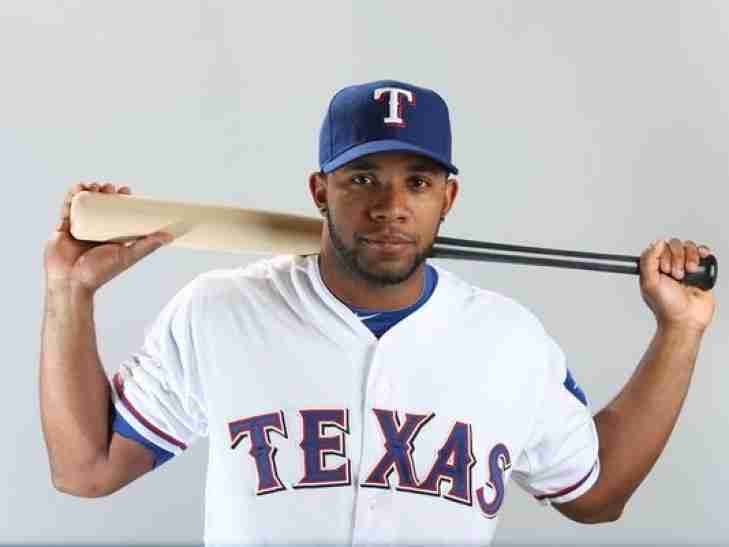
In July 2007, when the Texas Rangers traded star Mark Teixeira to the Atlanta Braves, they anticipated that their substantial return would significantly influence the franchise's future. The most prominent part of that package was an 18-year-old shortstop from Maracay, Venezuela, who brought both considerable minor-league anticipation and big expectations. Elvis Andrus officially assumed the role of starting shortstop on Opening Day in 2009 at just 20, and he did more than just fill a position—he brought a lively, joyful energy that became the vital spark for the most successful period in Texas baseball history.
Andrus' first decade in Arlington showcased his durability and high-volume production. While he played alongside powerful sluggers, he focused on a steady, table-setting game that gradually wore down opponents’ defenses. He excelled in the small-ball era, topping the American League in sacrifice hits three times and being a strategic, high-efficiency base-runner. Except for an injury-filled 2018 season and the shortened 2020 schedule, Andrus consistently recorded at least 125 hits and 20 stolen bases each full season. He was a two-time All-Star in 2010 and 2012, contributing strong defense and a reliable bat that helped the Rangers reach consecutive American League pennants. As a key postseason figure, he appeared in five postseasons and set franchise records for playoff games (42), hits (46), and stolen bases (9).
His speed and situational hitting made him a consistent threat, but his standout moment came in 2017. During that season, he showed a surprising improvement in his offensive game, achieving career highs with 191 hits, 44 doubles, and 20 home runs, while also scoring 100 runs. These achievements earned him the team’s Player of the Year award. Off the field, his legendary infield chemistry and playful dugout antics with third baseman Adrián Beltré became iconic elements that defined the franchise and endeared him to fans for a generation.
After the 2020 season, the front office traded the veteran shortstop to Oakland, ending a remarkable 12-year tenure. During his time, he started more games at a single position than any other player in organization history. He finished his Texas career with 1,743 hits, 303 doubles, and a .274 batting average over 1,652 games. Notably, he became the franchise's all-time leader in stolen bases with 305 steals, including a record seven steals of home in a single season.
In 2025, Andrus was inducted into the Rangers Hall of Fame.
