

11. Sam Crawford
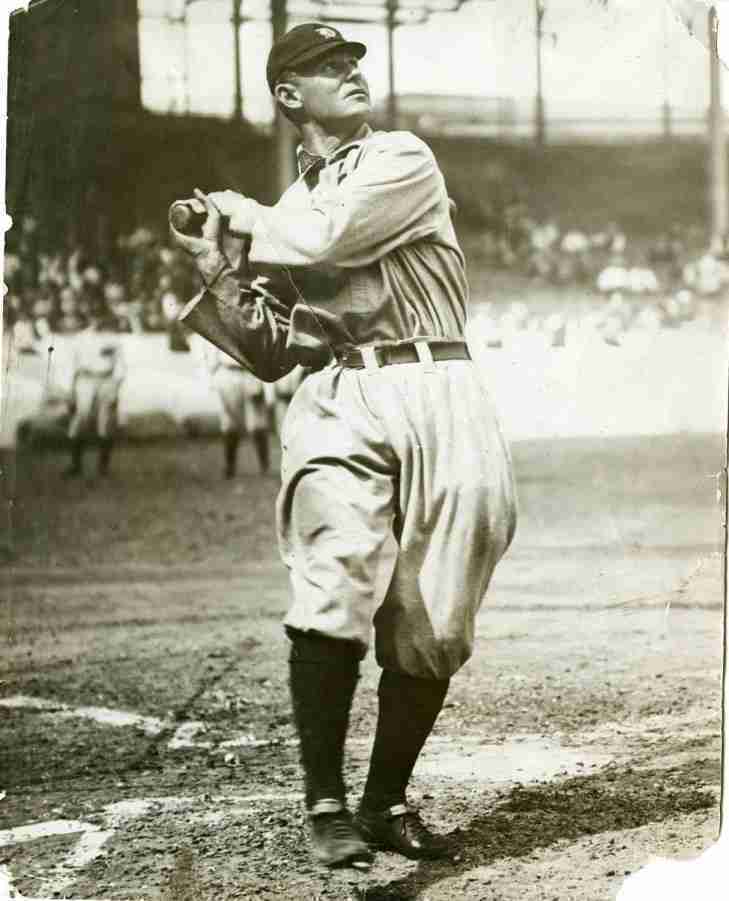
The Deadball Era was a landscape of dust, grit, and massive outfields, and no one navigated that terrain with more explosive speed than "Wahoo" Sam Crawford. While his legendary teammate Ty Cobb utilized a serrated edge of psychological warfare and placement, Crawford relied on a heavy barrel and a sprinter’s kick. He arrived in Detroit in 1903 as an established star and proceeded to turn the triple into an art form.
Crawford led the American League in triples five separate times as a Tiger, utilizing the cavernous gaps of the era to outrun the defense. His style was a unique blend of raw power and elite speed; he remains the only player in history to lead both the National and American Leagues in home runs, yet he is best remembered for his 309 career triples, a statistical mountain that modern players can barely glimpse. He was a model of specialized efficiency, driving in runs at a rate that saw him pace the league in RBIs on three occasions.
The middle era of his career was defined by a complex, high-stakes partnership with Ty Cobb. Together, they formed the most feared offensive engine in baseball, propelling Detroit to three consecutive American League pennants from 1907 to 1909. While the duo famously faltered in the postseason and their personal relationship devolved into a legendary adversarial feud, their on-field chemistry was undeniable. Crawford provided the steady-state muscle that allowed the Detroit offense to dismantle opposing rotations, maintaining a .309 batting average during his fifteen years in the Motor City.
With the Tigers, Crawford compiled 2,466 hits and 1,264 RBIs while setting the all-time record for career triples.
The baseball world provided the final punctuation on his legacy in 1957 with his induction into the Hall of Fame. In 2000, the Tigers ensured his name would never be forgotten by honoring him in right field alongside the greatest legends to ever wear the Old English D.
