

6. Richie Ashburn
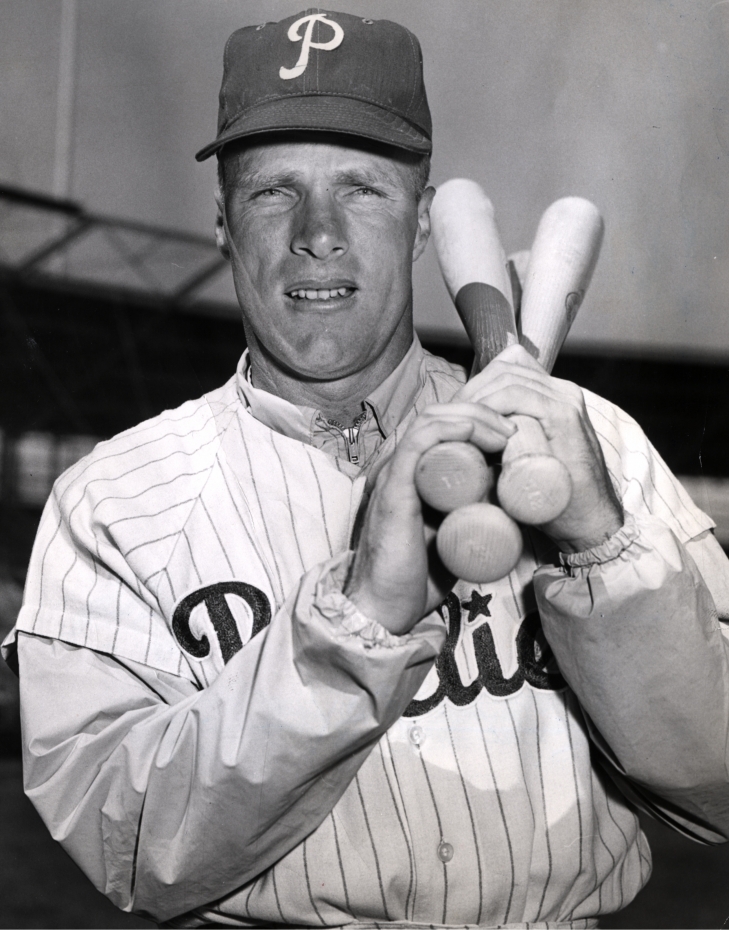
When the 21-year-old blonde kid from the small town of Tilden, Nebraska, stepped onto the grass at Shibe Park on Opening Day in 1948, he was experiencing his very first major league baseball game. Richie "Whitey" Ashburn instantly made a strong impression, setting the tone for a whole generation of Philadelphia baseball fans. Playing as the leadoff hitter, this speedy center fielder had an incredible debut summer, leading the National League with 32 stolen bases and batting an impressive .333. His performance earned him his first All-Star selection and established him as the spark for the cherished "Whiz Kids.”
Ashburn served as the quintessential example of a premium, traditional table-setter. Although he played during an era characterized by the substantial home run achievements of renowned contemporary center fielders such as Willie Mays, Mickey Mantle, and Duke Snider, he discreetly surpassed them in both total hits and on-base efficiency. He employed an exceptionally disciplined eye and a compact, line-drive swing to deplete opposing pitching staffs, recording eight seasons with a batting average exceeding .300. He secured three National League hit titles and attained two individual batting championships, with a batting average of .338 in 1955 and a league-leading .350 in 1958.
Getting on base was Ashburn’s main professional focus. He led the National League in on-base percentage three times, reaching a peak of .449 in 1955, and led the league in walks four times. Over his 12 successful seasons with Philadelphia, he posted a .311 batting average and a .394 on-base percentage, often ranking high in franchise records. His remarkable speed on the field enabled him to chase down fly balls with great ease, frequently leading in outfield putouts and assists as the key defensive player.
He concluded his impressive career with the Phillies, amassing 2,217 hits—an all-time franchise record that stood for exactly 41 years until Mike Schmidt broke it. After brief periods with the Cubs and Mets, Ashburn returned to Philadelphia in 1963, shifting directly to a career in broadcasting. Over the next 35 years, his dry humor, exceptional storytelling, and perfect rapport with Harry Kalas made "His Whiteness" a legendary and enduring presence in the homes of many across the Delaware Valley.
The organization retired his number 1 jersey in August 1979 and enshrined him on the Philadelphia Baseball Wall of Fame that summer as part of the second class. The national landscape recognized his worth in 1995 when the Veterans Committee inducted Ashburn into the National Baseball Hall of Fame.
