

The Pro Football Hall of Fame Revisited Project: 2004 Final VOTE
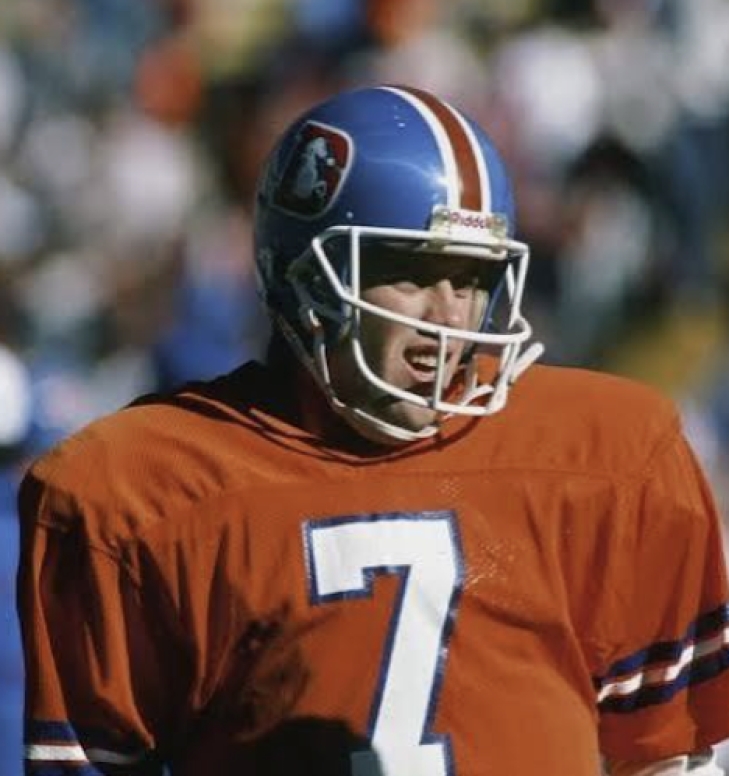
2004 Pro Football Hall of Fame Revisited Project Class.
Here we are! Again!!
If you have been following our Pro Football Hall of Fame Revisited Project, you know we have asked the question: What if the PFHOF had begun in January 1946?
After soliciting and obtaining a passionate group of football fans and historians, we sent out a ballot for a Preliminary Vote, in which each voter selected 25 names as their semi-finalists and five names for the Senior Pool.
We then asked the group to vote for their 15 Finalists in the Modern Era and 3 in the Senior Category. The final stage was to vote for their five Modern Era inductee and one Senior inductee.
These are the results of the 62nd official class.
Below are the final results of this project based on 32 votes.
This is for the “Modern Era”
*Bold indicates they have been elected to the Pro Football Hall of Fame Revisited Class of 2004:
Player | Year of Eligibility | Vote Total |
John Elway QB | 1 | 32 |
Barry Sanders RB | 1 | 32 |
Richard Dent DE | 2 | 15 |
George Kunz T | 19 | 13 |
Joe Klecko DE-NT | 11 | 9 |
Harry Carson LB | 11 | 8 |
Jim Marshall DE | 20 | 7 |
Deron Cherry DB | 8 | 7 |
Karl Mecklenburg LB | 5 | 7 |
Ken Riley DB | 16 | 5 |
Todd Christensen TE | 11 | 5 |
Mark Gastineau DE | 11 | 4 |
Albert Lewis DB | 1 | 4 |
Fred Dean DE | 11 | 3 |
Pat Swilling LB-DE | 1 | 3 |
Steve McMichael DT | 5 | 2 |
Sam Mills LB | 2 | 2 |
This is for the “Senior Era.”,
*Bold indicates they have been elected to the Pro Football Hall of Fame Revisited Class of 2004.
Alan Ameche FB | 19 | 13 |
Walt Sweeney G | 4 | 9 |
Winston Hill T | 2 | 8 |
None of the Above | N/A | 3 |
This is for the “Coaches/Contributors.”
*Bold indicates they have been elected to the Pro Football Hall of Fame Revisited Class of 2004.
Bobby Beathard (Executive) | 2 | 14 |
Jimmy Johnson (Coach) | 3 | 11 |
Tom Flores (Coach) | 8 | 5 |
None of the Above | N/A | 2 |
About the 2004 Inductees:
John Elway, QB, DEN 1983-98: Inducted in the Pro Football Hall of Fame Revisited Project in 2004 on his 1st Ballot. Inducted into the actual Pro Football Hall of Fame in 2004.
John Elway, selected first overall by the Baltimore Colts in the 1983 NFL Draft, famously forced a trade to the Denver Broncos—threatening to play minor-league baseball in the New York Yankees organization rather than suit up in Baltimore—to launch a 16-year career that reshaped the franchise. After a turbulent 1983 rookie campaign in which he threw twice as many interceptions (14) as touchdowns (7) in 10 starts, the Stanford product quickly harnessed his cannon of a right arm and rare pocket mobility. By 1984, he had led Denver to a 12–2 record as a starter, and in 1985 he threw for 3,891 passing yards, establishing himself as the centerpiece of head coach Dan Reeves’s offense.
Throughout the late 1980s, Elway earned a reputation as the NFL’s premier comeback artist, engineering a then-record 47 game-winning drives in the fourth quarter and carrying undermanned Broncos teams to the sport's biggest stage. His magic peaked in the 1986 AFC Championship Game against Cleveland, when he led "The Drive"—a 15-play, 98-yard march in the final five minutes—to force overtime and send Denver to Super Bowl XXI. In 1987, he won NFL Most Valuable Player honors after throwing for 3,198 yards and rushing for 304 yards and four scores. He also led Denver to three Super Bowls in four seasons (XXI, XXII, and XXIV). But each appearance ended in a lopsided loss to an NFC powerhouse—the Giants (39–20), Redskins (42–10), and 49ers (55–10)—leaving Elway with the unfair label of a brilliant quarterback who couldn’t win the big one.
Friction over offensive philosophy ultimately led to Reeves’s departure after the 1992 season, opening the door for the most efficient chapter of Elway’s career. In 1993, liberated by a pass-friendly scheme, he led the NFL with 4,030 passing yards, threw 25 touchdowns against just 10 interceptions, and posted a 92.8 passer rating. The arrival of head coach Mike Shanahan and star running back Terrell Davis in 1995 finally gave Elway the balanced supporting cast he had lacked for more than a decade. No longer forced to carry the entire offense, Elway threw 26 touchdowns in both 1995 and 1996 before setting a career high with 27 touchdown passes in 1997.
That long-awaited partnership brought ultimate redemption at age 37 in Super Bowl XXXII. Elway’s iconic third-quarter "helicopter" dive for a first down captured his refusal to be denied as Denver upset the defending champion Green Bay Packers, 31–24. He returned for one final curtain call in 1998, leading Denver to a 14–2 record and a second straight Super Bowl appearance, this time in Super Bowl XXXIII against his former coach, Dan Reeves, and the Atlanta Falcons. Elway ended his playing career in storybook fashion, throwing for 336 yards and a touchdown and adding a rushing score in Denver’s 34–19 win to earn Super Bowl MVP honors.
Retiring as a back-to-back champion, Elway walked away with 148 regular-season victories, 51,475 passing yards, 300 passing touchdowns, and 3,407 rushing yards—joining Fran Tarkenton as the only quarterbacks in league history at the time to surpass 50,000 passing yards and 3,000 rushing yards. A nine-time Pro Bowler and 1992 Walter Payton NFL Man of the Year, Elway was also a member of the NFL's 1990s All-Decade and 100th Anniversary All-Time Teams.
Barry Sanders, RB, DET 1989-98: Inducted in the Pro Football Hall of Fame Revisited Project in 2004 on his 1st Ballot. Inducted into the actual Pro Football Hall of Fame in 2004.
Selected third overall by the Detroit Lions in the 1989 NFL Draft fresh off a Heisman Trophy win at Oklahoma State, Barry Sanders wasted zero time rewriting the expectations for an NFL running back. At 5-foot-8 and 203 pounds, he lacked the bruising frame of traditional workhorses, yet he immediately earned NFL Offensive Rookie of the Year honors, rushing for 1,470 yards and 14 touchdowns. Rather than lowering his shoulder to invite contact, Sanders operated on a different plane of physics—stopping on a dime, reversing field in the backfield, and leaving defenders grasping at air before accelerating past the second level.
Over the next decade, Sanders turned the Pontiac Silverdome into a weekly highlight reel while serving as the undisputed engine of Detroit's offense. He became the first player in league history to rush for at least 1,000 yards in each of his first ten seasons, claiming four NFL rushing titles and earning All-Pro recognition every single year. Even in 1993, when a knee injury limited him to 11 games, he still cleared 1,115 yards. His trademark humility stood in sharp contrast to his electric style; after slicing through entire defenses, Sanders simply handed the ball to the official without a hint of theatrics.
Sanders reached the peak of his individual brilliance during the 1997 campaign. After a slow start, he erupted for an NFL-record 14 straight 100-yard games, ending the season with 2,053 rushing yards at an astonishing 6.1 yards per carry and joining O.J. Simpson and Eric Dickerson in the 2,000-yard club. The historic run earned him co-NFL Most Valuable Player honors with Green Bay quarterback Brett Favre. Despite Sanders's extraordinary production, postseason success remained elusive in Detroit. His only playoff win came after the 1991 season, when the Lions routed Dallas before losing in the NFC Championship Game.
Sanders followed his MVP season with 1,491 rushing yards in 1998, putting him within 1,458 yards of Walter Payton's all-time NFL rushing record. Then, on the eve of training camp in July 1999, the 31-year-old stunned the sports world by announcing his immediate retirement via fax to his hometown newspaper in Wichita, Kansas. Walking away completely healthy and still near the peak of his powers, Sanders cited a diminished desire to continue playing amid Detroit's perpetual rebuilding cycles, prioritizing his peace of mind over chasing individual milestones.
He exited the game with 15,269 rushing yards, 99 rushing touchdowns, and 18,190 yards from scrimmage across just 153 regular-season games, averaging nearly 100 rushing yards per contest over a 5.0-yard-per-carry career. The Lions retired his No. 20 and later received a bronze statue outside Ford Field. Though his abrupt departure left fans wondering what numbers he might have reached, his decade in Detroit remains the gold standard for pure elusiveness in football history.
Richard Dent, DE, CHI 1983-93, SFO 1994, CHI 1995, IND 1996 & PHI 1997. Inducted in the Pro Football Hall of Fame Revisited Project in 2004 on his 2nd Ballot. Inducted into the actual Pro Football Hall of Fame in 2011.
Overlooked until the eighth round of the 1983 NFL Draft out of Tennessee State, Richard Dent entered the league as an undersized pass-rushing prospect selected 203rd overall by the Chicago Bears. After bulking up and flashing his explosive first step as a rotational rookie, Dent moved into the starting lineup at right defensive end in 1984 and immediately shattered expectations. He racked up a franchise-record 17.5 sacks in his sophomore campaign, using long arms, violent hand strikes, and a devastating bend around the edge to overpower offensive tackles.
In 1985, Dent became the premier edge terror on one of the greatest defensive units in football history. Operating in Buddy Ryan’s relentless "46" defense alongside Hall of Famers Mike Singletary and Dan Hampton, Dent led the NFL with 17.0 sacks, forced seven fumbles, and returned one of his two interceptions for a touchdown. His postseason dominance peaked in Super Bowl XX against the New England Patriots, where he recorded 1.5 sacks, forced two fumbles, and batted down a pass in Chicago's 46–10 rout, earning Super Bowl MVP honors.
From 1983 to 1993, Dent remained the cornerstone of the Bears' defensive front. He posted eight double-digit sack campaigns during that span, combining speed off the snap with a knack for stripping the ball from quarterbacks' blind sides. Beyond rushing the passer, Dent became a disruptive all-around defender, tallying 124.5 sacks, four Pro Bowl selections, and four All-Pro nods before leaving Chicago after the 1993 season.
In his final four years, Dent served as a seasoned pass-rushing specialist across multiple stops. He signed with the San Francisco 49ers in 1994, collecting two sacks in two games before a knee injury ended his season early, though he still earned a second championship ring when San Francisco captured Super Bowl XXIX. Following a brief return to the Bears in 1995, Dent proved he still had gas in the tank by logging 6.5 sacks and a safety for the Indianapolis Colts in 1996 before wrapping up his playing days with the Philadelphia Eagles in 1997.
Dent retired after 15 seasons with 137.5 career sacks—which ranked third in NFL history at the time—alongside 37 forced fumbles, eight interceptions, and two defensive touchdowns.
George Kunz, T, ATL 1969-74 & BAL 1975-80. Inducted in the Pro Football Hall of Fame Revisited Project in 2004 on his 19th Ballot. Was never inducted into the actual Pro Football Hall of Fame.
Drafted second overall by the Atlanta Falcons in the 1969 NFL Draft—immediately after O.J. Simpson—former Notre Dame consensus All-American George Kunz stepped directly into the starting lineup at right tackle. Standing 6-foot-5 and 257 pounds, he combined rare athleticism with sharp technique, earning a Pro Bowl berth as a rookie and being named a Falcons team captain by his second season. Over six seasons in Atlanta from 1969 to 1974, Kunz started all 79 games he played, anchored the right side of the line against premier left defensive ends like Deacon Jones, and earned four Pro Bowl selections, along with first-team All-Pro honors in 1972 and 1973.
Following the 1974 campaign, Kunz was traded to the Baltimore Colts, where he elevated his play to an even higher tier under head coach Ted Marchibroda. Named a Colts team captain in his very first year with the club, Kunz became the linchpin of a revitalized offense led by quarterback Bert Jones and running back Lydell Mitchell. From 1975 through 1977, he earned three more Pro Bowl nods—including serving as AFC Pro Bowl captain in 1975—while collecting another first-team All-Pro selection in 1975 and consecutive Offensive Lineman of the Year awards in 1976 and 1977 as Baltimore captured three straight AFC East division titles.
Kunz's trajectory toward an ironclad Hall of Fame resume was abruptly halted in the 1978 season opener, when a severe back injury forced him off the field for the rest of the year and sidelined him for all of 1979. His absence proved devastating to Baltimore's fortunes, as the Colts plummeted from perennial playoff contenders to back-to-back 5–11 finishes. Attempting a comeback in 1980, Kunz returned to start six games—helping Baltimore to a 4–2 mark in those contests—before suffering another back injury that caused temporary numbness in his legs, prompting his official retirement in May 1981.
Over 11 NFL seasons, Kunz appeared in 129 regular-season games with 126 starts, earning seven Pro Bowl selections and five combined first- or second-team All-Pro honors. Unlike many of his peers at offensive tackle, he spent his career on non-championship rosters and saw his prime cut short at age 30.
Joe Klecko, DT-NT-DE, NYJ 1977-87 & IND 1988. Inducted in the Pro Football Hall of Fame Revisited Project in 2004 on his 11th Ballot. Inducted into the actual Pro Football Hall of Fame in 2023.
Selected in the sixth round of the 1977 NFL Draft (144th overall) out of Temple University, Joe Klecko arrived with the New York Jets as an unheralded defensive lineman who quickly proved impossible to block one-on-one. Starting six games at left defensive tackle as a rookie, he led the Jets with eight sacks and never relinquished a starting role when healthy. Built at 6-foot-3 and 263 pounds with rare leverage and raw upper-body strength, Klecko became the physical anchor of New York's defensive front, logging 33.5 sacks across his first four seasons before the league officially tracked the statistic.
In 1981, Klecko delivered one of the most dominant seasons ever posted by a defensive lineman as the centerpiece of the famed "New York Sack Exchange" alongside Mark Gastineau, Marty Lyons, and Abdul Salaam. Playing right defensive end, Klecko led the NFL with 20.5 sacks—propelling the Jets to their first playoff berth since 1969. His relentless motor and ability to collapse pockets earned him first-team All-Pro honors and NFL Defensive Player of the Year recognition from the UPI, NEA, and PFWA.
What separated Klecko from virtually every other defensive lineman in NFL history was his unmatched positional versatility. After earning Pro Bowl honors at defensive end in 1981 and missing most of the strike-shortened 1982 campaign with a knee injury, he shifted inside to defensive tackle in 1983 and earned another Pro Bowl selection. Two years later, in 1985, the Jets moved him over the center to nose tackle in a 3–4 alignment, where he recorded 7.5 sacks, forced three fumbles, and captured his second first-team All-Pro selection—becoming the first player in league history to reach the Pro Bowl at three different defensive line positions (end, tackle, and nose tackle).
Knee injuries gradually curtailed his availability over his final two seasons in New York, limiting him to 18 games across 1986 and 1987. Following his release by the Jets, Klecko signed with the Indianapolis Colts for the 1988 campaign, starting 14 of 15 games at nose tackle and forcing two fumbles before retiring at age 35. Over 12 NFL seasons and 155 regular-season games—140 of them in a Jets uniform—he compiled 78.0 career sacks (24.0 official post-1982 and 54.0 pre-1982), 15 forced fumbles, and nine fumble recoveries.
Alan Ameche, BAL, 1955-60. Inducted in the Pro Football Hall of Fame Revisited Project in 2004 on his 19th Senior Ballot. Was never inducted into the actual Pro Football Hall of Fame.
Fresh off winning the 1954 Heisman Trophy at Wisconsin, Alan Ameche entered the NFL as the Baltimore Colts' third overall pick in the 1955 draft and immediately took the league by storm. Nicknamed "The Horse," the 6-foot, 218-pound fullback rumbled for a 79-yard touchdown on his very first professional carry and never slowed down. He finished his rookie campaign leading the NFL with 961 rushing yards and nine touchdowns on 213 carries, earning consensus NFL Rookie of the Year honors, a Pro Bowl berth, and first-team All-Pro recognition.
Over the next three seasons, Ameche served as the punishing interior counterweight to quarterback Johnny Unitas and dynamic halfback Lenny Moore in head coach Weeb Ewbank's high-powered Baltimore offense. He earned Pro Bowl selections in each of his first four seasons (1955–1958), pairing downhill power between the tackles with reliable pass protection and short-yardage receiving. Whether grinding out tough yards on wet turf or clearing lanes for teammates, Ameche gave the Colts a physical identity that transformed the franchise from an expansion afterthought into a championship juggernaut.
Ameche’s defining moment—and one of the most famous plays in football history—arrived on December 28, 1958, in the NFL Championship Game against the New York Giants at Yankee Stadium. In the first sudden-death overtime game in league history, famously dubbed "The Greatest Game Ever Played," Ameche rushed for 59 yards and two touchdowns. After Unitas marched Baltimore downfield in overtime, Ameche took a handoff from the one-yard line and plunged through a wide-open hole into the end zone to seal a 23–17 victory, delivering Baltimore its first NFL title in front of a nationwide television audience that propelled pro football into the American mainstream.
He followed that triumph by helping the Colts repeat as NFL champions in 1959, rushing for 679 yards and seven touchdowns while earning his third second-team All-Pro selection. However, six seasons of absorbing relentless punishment in the trenches took a heavy toll on his body. Ten games into the 1960 campaign, Ameche suffered a torn Achilles tendon—an injury that effectively ended his playing career at just 27, forcing him to retire after the season.
Over 70 regular-season games in six seasons—all with Baltimore—Ameche rushed for 4,045 yards and 40 touchdowns on 964 carries, averaging 4.2 yards per attempt. He also had 101 receptions for 733 yards and four receiving touchdowns. Selected to the NFL 1950s All-Decade Team and inducted into the College Football Hall of Fame, Ameche remains an iconic figure in Baltimore football.
Bobby Beathhard, Executive, KC 1963 & 1966-67 (Scout), Atlanta Falcons 1968-71 (Scout), MIA 1972-77 (Director of Player Personnel), WAS 1978-88 (General Manager) & SD 1990-2000 (General Manager). Inducted in the Pro Football Hall of Fame Revisited Project in 2004 on his 2nd Coaches/Conrtibutors Ballot. Inducted into the actual Pro Football Hall of Fame in 2018.
After a brief stint as a college quarterback at Cal Poly and several preseason training camps as an NFL defensive back, Bobby Beathard launched his front-office career in 1963 as a part-time scout for the Kansas City Chiefs. Following full-time scouting roles with Kansas City (1966–1967) and the Atlanta Falcons (1968–1971), he broke into executive leadership in 1972 when Don Shula hired him as director of player personnel for the Miami Dolphins. Beathard immediately helped sustain a dynasty, as Miami went 26–2 over his first two seasons, completing the NFL's only undefeated campaign in 1972 (Super Bowl VII) and repeating in 1973 (Super Bowl VIII) while adding an appearance in Super Bowl VI prior to his arrival and three straight AFC East crowns from 1972 to 1974.
In 1978, the Washington Redskins hired Beathard as general manager, tasking him with rebuilding a roster depleted of high draft picks from the George Allen era. Operating with an unconventional, laid-back California surfer demeanor paired with relentless film study, Beathard revolutionized Washington's roster construction. He famously treated first-round draft picks as trade currency for proven veterans while mining Hall of Fame and Pro Bowl talent in later rounds and undrafted free agency—landing fixtures like Art Monk, Darrell Green, Russ Grimm, Dexter Manley, Charles Mann, Gary Clark, and Joe Jacoby, while hiring head coach Joe Gibbs in 1981.
That partnership with Gibbs turned Washington into one of the premier powerhouses of the 1980s. Over 11 seasons under Beathard's stewardship (1978–1988), the Redskins compiled a 105–63 regular-season record and an 11–3 postseason mark, winning Super Bowls XVII and XXII while reaching Super Bowl XVIII. His ability to plug roster holes on the fly—including acquiring running back John Riggins back from retirement, trading for quarterback Doug Williams, and signing scab standouts during the 1987 players' strike—became legendary across the league before philosophical differences with ownership led him to resign ahead of the 1989 draft
After spending 1989 as an NFL studio analyst for NBC, Beathard returned to his native Southern California in 1990 as general manager of the San Diego Chargers. Inheriting a franchise that had missed the playoffs for eight consecutive seasons, he quickly reshaped the defense around first-round linebacker Junior Seau and traded for quarterback Stan Humphries. By 1992, San Diego captured its first AFC West title since 1981, and two years later, the 1994 Chargers stunned the AFC to reach Super Bowl XXIX—making Beathard the first general manager to lead two different franchises to the Super Bowl and the only executive to reach the title game with three different organizations.
Late-tenure roster gambles—most notably trading multiple high picks to move up for quarterback Ryan Leaf in the 1998 NFL Draft—led to consecutive losing seasons before Beathard retired in 2000 with a 75–101 mark in San Diego and a 180–164 overall record as a general manager. Across 38 years in pro football, his teams won four Super Bowls, seven conference championships, and ten division titles. He was enshrined in the Washington Ring of Fame and the Chargers Hall of Fame.,
