

The Pro Football Hall of Fame Revisited Project: 1978 Final VOTE
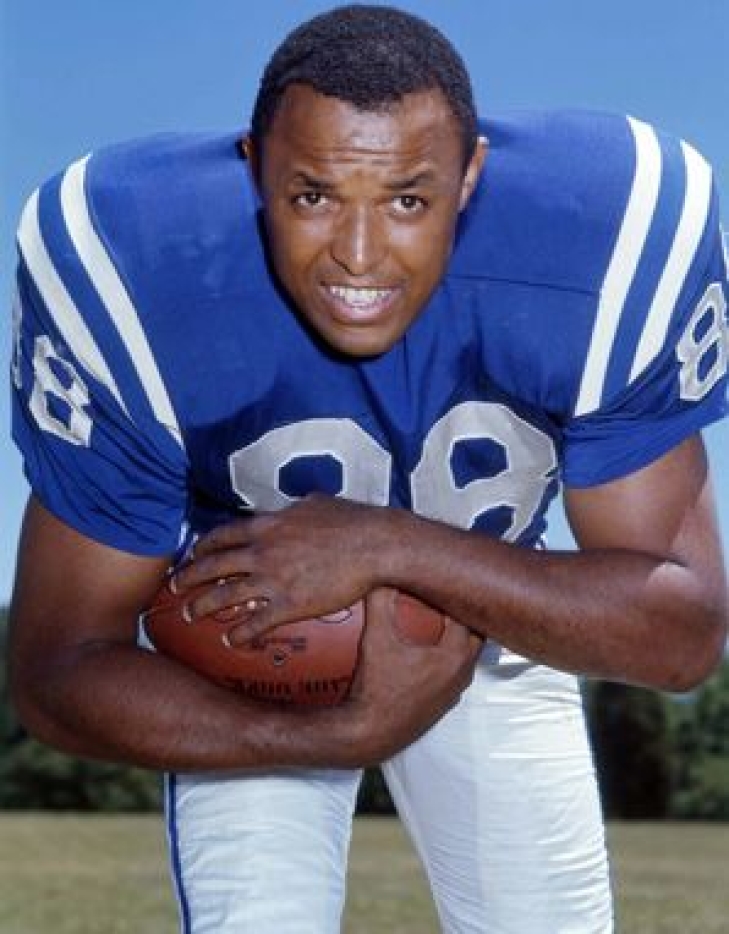
1978 Pro Football Hall of Fame Revisited Project Class.
Here we are! Again!!
If you have been following our Pro Football Hall of Fame Revisited Project, you know we have asked the rhetorical question: What if the PFHOF began in January 1946?
After soliciting and obtaining a passionate group of football fans and historians, we sent out a ballot for a Preliminary Vote, in which we asked each voter to give us 25 names as their semi-finalists and 5 in the Senior Pool. We then asked the group to vote for their 15 Finalists in the Modern Era and 3 in the Senior Category. The final stage was to vote for their five Modern Era inductee and one Senior inductee.
This is the result of the 33rd official class.
Below are the final results of this project based on 33 votes.
Remember that we have reverted back to the top five candidates entering the Hall in the Modern Era
This is for the “Modern Era”
*Bold indicates they have been elected to the Pro Football Hall of Fame Revisited Class of 1978:
|
Player |
Year of Eligibility |
Vote Total |
|
John Mackey TE |
1 |
26 |
|
Herb Adderly DB |
1 |
22 |
|
Lance Alworth FL-WR |
1 |
22 |
|
Ray Nitschke LB |
1 |
21 |
|
Mike Ditka TE |
1 |
18 |
|
Larry Wilson DB |
1 |
17 |
|
Pat Harder FB |
20 |
7 |
|
Eddie Meador DB |
3 |
7 |
|
Jimmy Patton DB |
7 |
6 |
|
Del Shofner E-DB |
6 |
5 |
|
Alan Ameche FB |
13 |
2 |
|
Billy Howton E-FL |
10 |
2 |
|
Joe Fortunato LB |
7 |
2 |
|
Tom Sestak DT |
5 |
2 |
|
Billy Shaw G |
4 |
2 |
This is for the “Senior Era”,
*Bold indicates they have been elected to the Pro Football Hall of Fame Revisited Class of 1978.
|
Whizzer White |
12 |
10 |
|
Buckets Goldenberg |
8 |
8 |
|
Woody Strode |
4 |
8 |
|
None of the Above |
N/A |
7 |
This is for the “Coaches/Contributors”,
*Bold indicates they have been elected to the Pro Football Hall of Fame Revisited Class of 1978.
|
Buddy Parker (COACH) |
9 |
23 |
|
Weeb Ewbank (COACH) |
2 |
8 |
|
Charles Bidwill (OWNER) |
9 |
2 |
|
None of the Above |
N/A |
0 |
About the 1978 Inductees:
John Mackey TE, BAL 1963-71 & SD 1972: Inducted in the Pro Football Hall of Fame Revisited Project in 1978 on his 1st Ballot. Inducted into the actual Pro Football Hall of Fame in 1992.
In the history of professional football, there have been multiple names that have been tagged as someone who “redefined the position”.
John Mackey is one of those guys.
Mackey was a superb athlete whose size and speed set him apart from other Tight Ends in the 1960s. As good a blocker as he was a receiver, Mackey would become a regular target of Johnny Unitas and would collect 5,126 Yards as a Colt. Mackey is best known in Baltimore for his 75-Yard catch in Super Bowl V, which swung the momentum of the game in the Colts’ favor.
Mackey accumulated 5,236 Receiving Yards with 38 Touchdowns, and was the second pure Tight End elected.
Herb Adderley, DB, GNB 1961-69 & DAL 1970-72: Inducted in the Pro Football Hall of Fame Revisited Project in 1978 on his 1st Ballot. Inducted into the actual Pro Football Hall of Fame in 1980.
A five-time Champion with the Green Bay Packers (and a sixth with the Dallas Cowboys), Herb Adderley intercepted 39 passes and twice led the NFL in Interception Return Yards. Adderley was a four-time First Team All-Pro and was also a star Kick Returner who produced over 3,000 Yards. He would tally nine touchdowns overall, an incredible number for someone who didn’t play offense.
Lance Alworth, FL-WR, SD 1962-70 & DAL 1971-72. Inducted in the Pro Football Hall of Fame Revisited Project in 1978 on his 1st Ballot. Inducted into the actual Pro Football Hall of Fame in 1978.
The San Francisco 49ers of the NFL and the Oakland Raiders of the AFL both drafted Lance Alworth, but it was the AFL where Alworth would join after his AFL rights were traded to the San Diego Chargers before his 1962 rookie season. The Chargers gave up three players for Alworth, and it still turned out to be a robbery in favor of the Bolts.
Alworth only played four Games as a rookie due to injuries, but in 1963 he began a seven-year streak where he had at least 1,000 Receiving Yards and was a First Team All-Pro in the first six. Alworth was the AFL's leader in Receiving Yards three times, was a three-time leader in Receiving Touchdowns, and was easily one of the most offensive skill players in the history of the AFL. Alworth helped the Chargers win the 1963 AFL Title, and his yardage from the air was so prolific that he also was a two-time league-leader in Yards From Scrimmage.
Alworth was traded to the Dallas Cowboys for three players before the 1971 season, and he played there for two final seasons before retiring, helping them win Super Bowl VI. With the Chargers, Alworth had 9,584 Receiving Yards, 81 Touchdowns, and an astounding 111 in Approximate Value in the same number of games.
Ray Nitschke, LB, GNB 1958-72. Inducted in the Pro Football Hall of Fame Revisited Project in 1978 on his 1st Ballot. Inducted into the actual Pro Football Hall of Fame in 1978.
Spending his entire professional career with the Green Bay Packers, Linebacker Ray Nitschke was the anchor for the Green Bay defense for fifteen seasons.
Nitschke would lead Green Bay to five Championships while becoming a first-ballot Hall of Famer.
When you think of Pro Football Hall of Famers from the defensive side of the ball, it is next to impossible to come up with a player who is held in higher regard than Ray Nitschke. Bart Starr was the best name ever for a Quarterback, but isn’t Ray Nitschke just as appropriate for a Linebacker?
Mike Ditka, TE, CHI 1961-66, PHI 1967-68 & DAL 1969-72. Inducted in the Pro Football Hall of Fame Revisited Project in 1978 on his 1st Ballot. Inducted into the actual Pro Football Hall of Fame in 1979.
Mike Ditka arguably achieved greater fame as Chicago’s Head Coach, but the generation before knew him as the man who evolved the Tight End position.
Taken from Pitt Fifth Overall in 1961, Ditka was the AP Rookie of the Year, and became the first ever Tight End to have a 1,000 Yard season, redefining what a Tight End could do at the professional level. Ditka never had a four-digit Receiving Yard year again, but Ditka remained the game’s top Tight End over the next four seasons, and he was a key component in Chicago’s 1963 NFL Championship win.
Ditka was traded to Philadelphia by the cost-conscious Bears in 1967, but his style of play caught up with him, and he never produced the same metrics he did as a Bear. Late in his career, Ditka won a Super Bowl with Dallas in Super Bowl XI.
A five-time Pro Bowl Selection, Ditka was the first Tight End to break 5,000 Yards.
Buddy Parker, Head Coach, CRD 1949, DET 1951-56 & PIT 1957-64. Inducted in the Pro Football Hall of Fame Revisited Project in 1978 on his 9th Coaches/Contributor Ballot. Was never inducted into the actual Pro Football Hall of Fame.
Buddy Parker is best known for his time as Detroit’s Head Coach, where he led the Lions to back-to-back NFL Championships in 1951 and 1952. Parker built a potent offense in Detroit, but was best known for his defensive mind. He popularized the 4-3 Defense and used an early version of zone and nickel defenses.
He left Detroit for the Pittsburgh Steelers in 1957, and although he was unable to bring them a championship, he did achieve a winning record, which was better than their previous incarnations.
Parker had an overall record of 104-75-9
6. Ray Nitschke
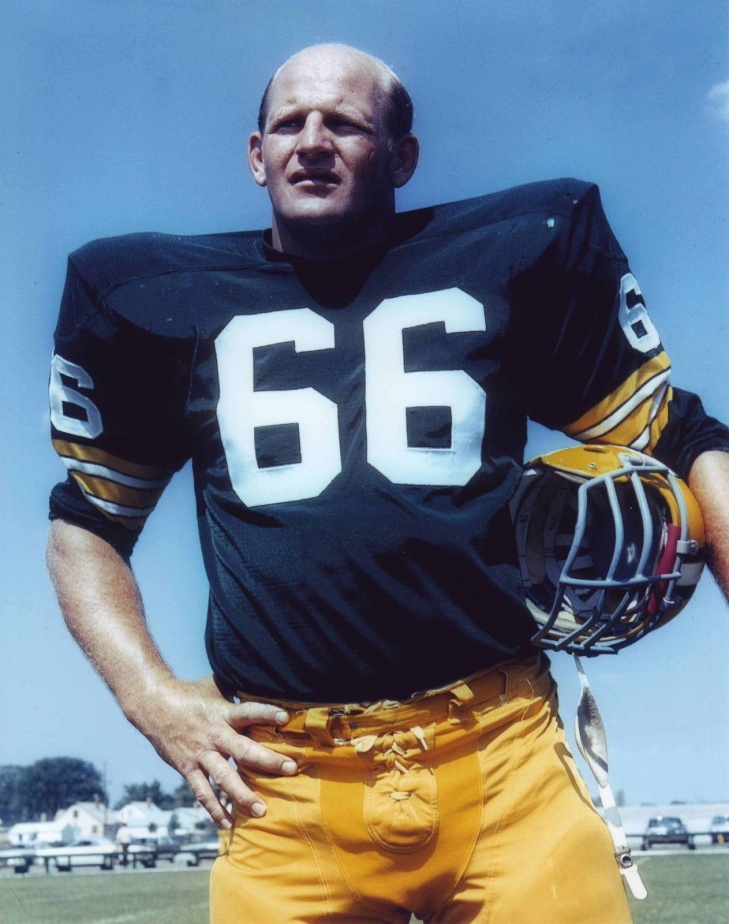
Missing teeth, a menacing glare, and an unyielding physical style turned Ray Nitschke into the undisputed heartbeat of Vince Lombardi’s defense. Arriving in 1958 as a third-round pick out of Illinois—where he played both full-time fullback and linebacker—Nitschke took full ownership of the middle linebacker position by 1962, transforming it into an art form of raw intimidation and tactical mastery.
Nitschke was the key figure for a Green Bay defense that won five NFL Championships (1961, 1962, 1965, 1966, 1967) and the first two Super Bowls. His talent shined brightly during major games; notably, in the harsh conditions of the 1962 NFL Championship against the New York Giants, Nitschke recovered two fumbles and deflected a pass leading to an interception, earning him MVP honors in the tough 16–7 win.
Between 1962 and 1969, Nitschke reached his career-defining peak, with Green Bay's defense consistently finishing no lower than fourth in total yards allowed. He was named All-Pro seven times over this eight-year period, with a standout 1964 season that included two interceptions, First-Team All-Pro honors, and his only Pro Bowl appearance. His most impressive stretch was in 1966, when he was again named First-Team All-Pro, accumulating tackles for loss and leading a defense that allowed just 11.7 points per game—a league low—and helped secure Super Bowl I.
While his bone-jarring tackles against the run defined his reputation, Nitschke was also exceptionally smooth dropping into pass coverage. He snared 25 career interceptions and recovered 23 fumbles, displaying soft hands and elite instincts that repeatedly snuffed out opposing drives. Though Pro Bowl voters inexplicably overlooked him for most of his career, his peers and sports writers recognized his true dominance, naming him to both the NFL’s 1960s All-Decade Team and the NFL 75th Anniversary All-Time Team.
He anchored the middle of the field in Green Bay for fifteen grueling seasons, retiring after the 1972 campaign as one of the most revered figures in franchise history.
Over his career, he accumulated 25 interceptions for 385 return yards, two pick-sixes, and 23 fumble recoveries, alongside five NFL Championship rings and two Super Bowl titles. A 1964 Pro Bowler, two-time First-Team All-Pro, seven-time overall All-Pro, and member of the Packers Hall of Fame, Nitschke was enshrined in the Pro Football Hall of Fame in 1978 before having his No. 66 officially retired by Green Bay in 1986.
