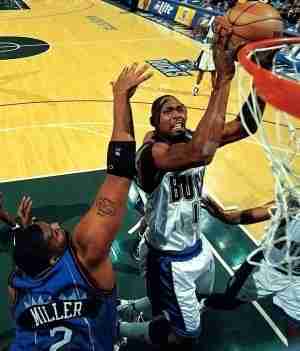
68. Terry Dischinger

Terry Dischinger was one of the most successful players in Purdue history. He set multiple Boilermaker records and averaged 28.3 Points and 14.3 Rebounds per Game in his three years in the NCAA. His amateur career also saw Dischinger win Olympic Gold for the United States in 1960, and his professional career was also exceptional.
Drafted by the Chicago Zephyrs in the Second Round in 1962, Dischinger brought his cerebral nature to the NBA. His efficient play garnered him three consecutive All-Star appearances, coinciding with his first three NBA years, though they were all in three different cities. The Zephyrys relocated to Baltimore, and in his third year, he was traded to the Detroit Pistons. The 1963 Rookie of the Year was not a dazzling scorer, but he averaged over 20 Points per Game in his first two seasons and 18.2 in his third.
Dischinger’s career was interrupted by military service, and when he came back in 1967, he was not the same player. He returned to the Pistons for five years, scoring less, but still leading by example. Dischinger was traded to Portland, where he played one final year before retiring.
300. Mel Gray
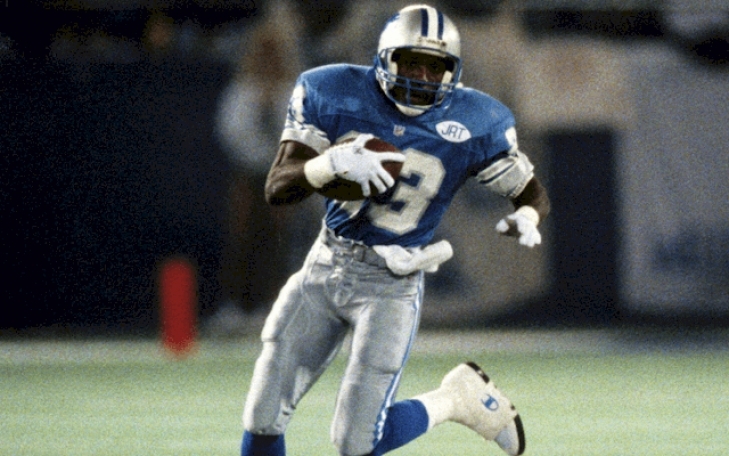
Mel Gray began his career in the USFL for two seasons, and after that league folded, he joined the New Orleans Saints, who had chosen him earlier in a supplemental draft of USFL players. Gray would later join the Detroit Lions, and it was there where he would be named a four-time Pro Bowl Selection and was regarded as one of the best Return Specialists in the NFL. Gray would accumulate 13,003 Return Yards, and was the league leader in that category in the first three seasons of the 1990s. He would also be named a three-time First Team All-Pro.
167. Mike Alstott
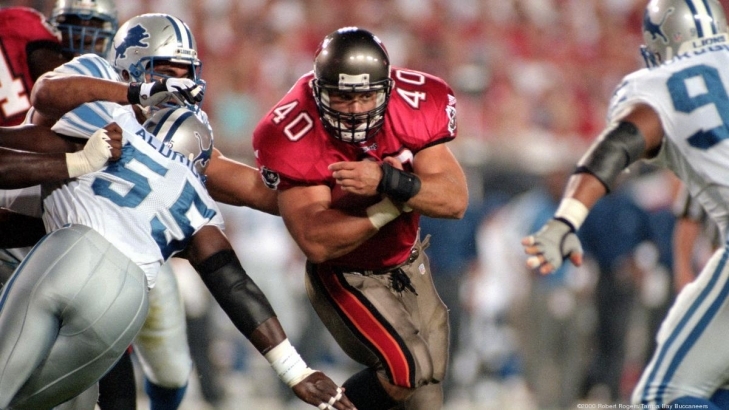
The Tampa Bay Buccaneers were loaded with defensive weapons when they won Super Bowl XXVII and were an excellent team before and after. The Bucs’ defense always gets the focus, and the offense is rarely discussed. When it is, Mike Alstott is usually the first name that comes to mind.
Alstott was a vital cog of that Buccaneers team, and perhaps one of the last great Full Backs in the history of the game. Alstott would go to six straight Pro Bowls (1997 to 2002) and was a First Team All-Pro in the first three. He played his entire career with the Bucs, and he would score 71 Touchdowns with 7,372 Yards from Scrimmage, and could be the last great yard-accumulating fullback.
176. Dick Barwegan
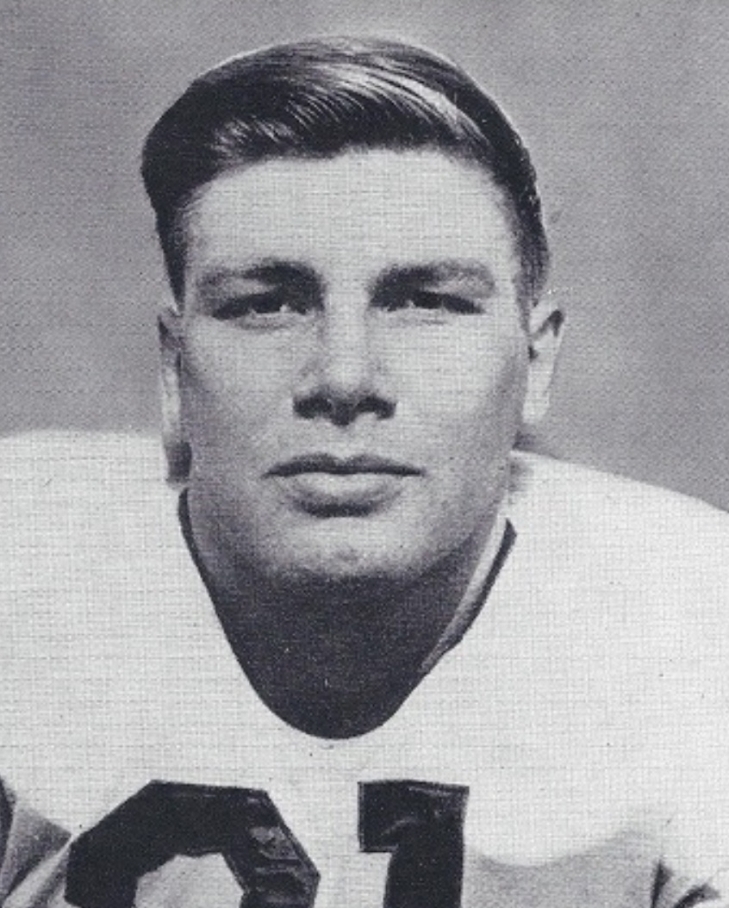
Dick Barwegan was an outstanding Pro Football player, but other than those who decided who should be on the 1950's All-Decade Team; he might be one of the most under the radar players in the history of the game.
It is easy to see why, as he was a late-round pick of the Brooklyn Tigers in 1945, but didn’t play pro ball until 1947, and that was with the New York Yankees of the AAFC. He played there only one year, then went to the first incarnation of the Baltimore Colts (again in the AAFC) and finally played in the NFL in 1950 with the Chicago Bears, where he played three seasons before finishing with the second incarnation of the Baltimore Colts for two years.
All of these factors led to Barwegan being lost in the annals of history, as he has no deep association with any team. Thus, we have a four-time First Team All-Pro who does not get his due.
114. Erich Barnes
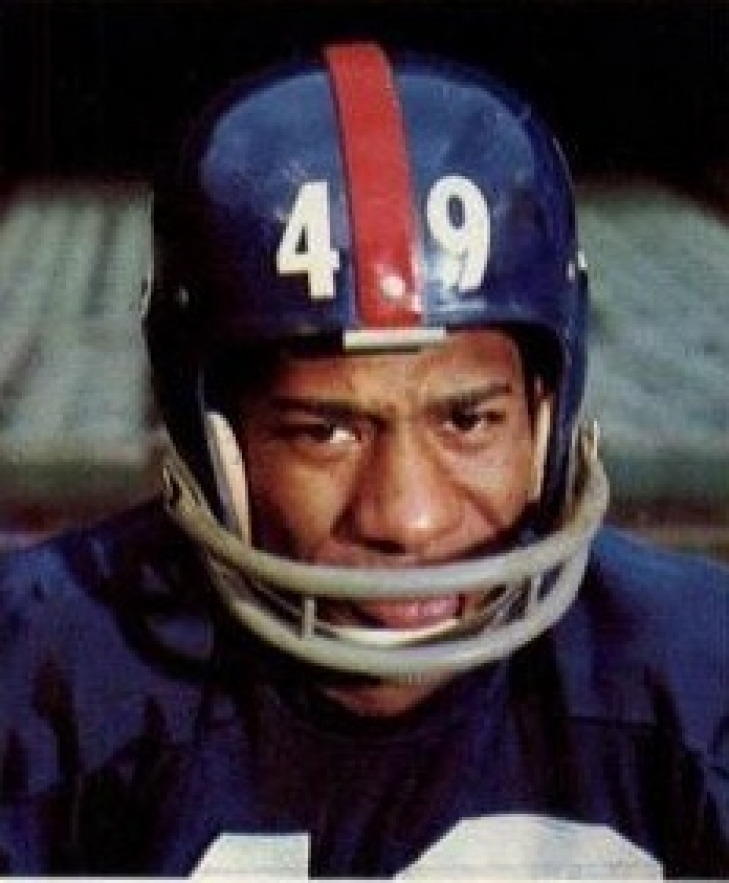
Erich Barnes came out of Purdue when the Chicago Bears drafted him in 1958. The Cornerback played there for three seasons and went to the Pro Bowl in 1959. After that, Barnes had the best run of his career: he played for the New York Giants for four years, earned Pro Bowl selections each year, and made First Team All-Pro in 1961. Barnes would later earn his sixth Pro Bowl with the Cleveland Browns. Barnes was known for his physical style of play and his ability to come back for run defense.
Overall, he would have 45 Interceptions in his career.
73. Cecil Isbell
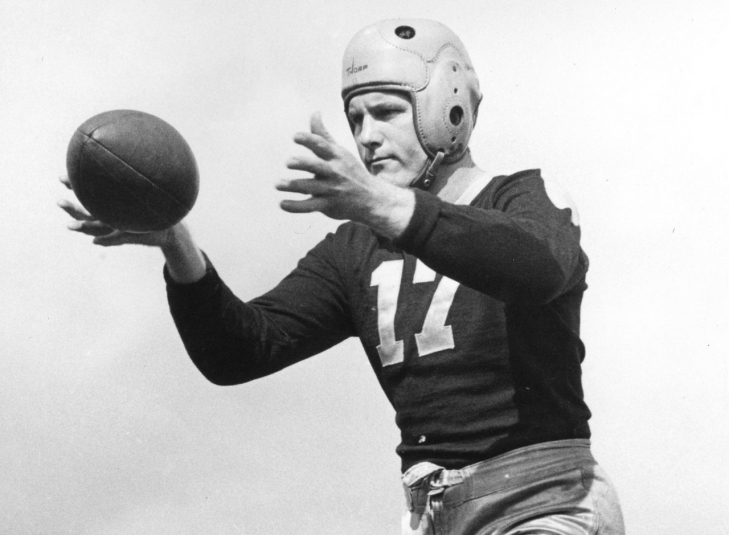
Usually, when you speak of a five-year career in any sport, you can't be talking about a great player. Few people have had a five-year run like Cecil Isbell.
Isbell was the 7th Overall Draft Pick by Green Bay in 1938, and as a rookie, he joined Arnie Herber in the Packers’ backfield. Isbell was rushing more in the first two years, and back in those days, Tailbacks were often passing and rushing with similar frequency. He later helped the Packers win the 1939 NFL Championship.
Isbell took on more of a passing role, and in 1941 and 1942, he led the NFL in Passing Yards and Passing Touchdowns, with 1942 marking the first time a passer threw for 2,000 Yards. He would set the then-broken record with 23 straight games with a Touchdown Pass. Isbell was also one of the first players who could throw deep, and he was exceptionally fast for his era. It is also important to recognize his defensive ability, as he also recorded nine Interceptions.
He retired after 1942, not due to injury but because he began a coaching career.
70. Glenn Robinson