
From Couch to Canon: Why Live Streamers Belong in the Pop Culture Hall of Fame Debate
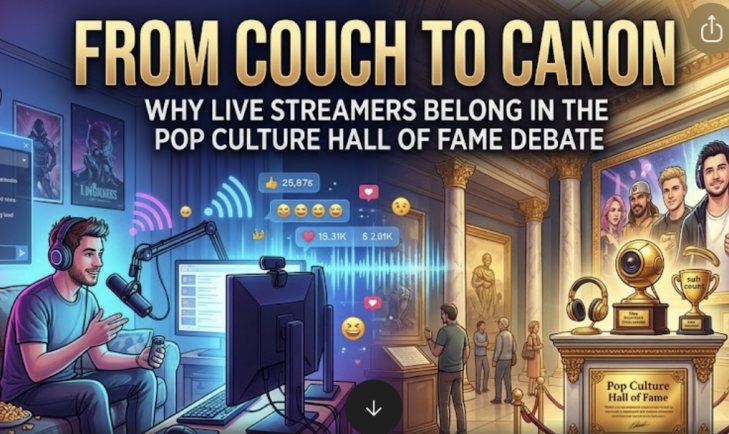
Every era of pop culture has a room where fame gets decided. For decades it was the stadium, the stage and the late night couch. Today a good share of it happens in a chat window next to a live video feed.
Live streamers now pull audiences that rival cable shows. Some of them have been on air, almost daily, for more than ten years. That is a longer run than most sitcoms. It is worth asking what that means for how we remember entertainers.
The new long career
Hall of fame debates usually reward longevity. A pitcher with twenty strong seasons. A band that kept filling arenas after its first hit faded.
Streaming has its own version of that. Creators who started on Justin.tv or early Twitch are still live in 2026, with audiences that grew up alongside them. Their viewers know the inside jokes, the old setups and the nights that went wrong.
That shared history is exactly what turns a performer into a cultural fixture. It is the same thing that keeps people arguing about classic rock bands on forums.
Sports and streaming are now one audience
The overlap between sports fans and stream viewers keeps growing. Athletes run their own channels. Watch along streams of big games draw hundreds of thousands of viewers who would rather hear a creator react than a TV booth.
Leagues have noticed. Clubs invite streamers to training grounds and draft nights. Music festivals give creators backstage access because one clip can travel further than a press release.
For fans, this changes what a memorable moment looks like. The play still matters. So does the reaction that went viral an hour later.
How brands follow the attention
Where audiences go, sponsors follow. Brand deals with streamers used to be simple banner placements. Now they look more like sports sponsorships: season long partnerships, custom segments and clear reporting on views and clicks.
Agencies such as 3Bet Media match brands with streamers and short form creators, then handle briefs, scheduling and results tracking. The goal is the same as any good sponsorship. Fit the brand into the show without breaking what the audience came for.
That last part is the real test. Viewers forgive an ad read. They do not forgive a creator who stops sounding like themselves.
What makes a streamer hall of fame worthy
If someone built a hall of fame for live creators, the ballot would probably weigh a few things:
- Longevity. Years on air, not just one huge month.
- Influence. Formats, phrases and styles that other creators copied.
- Moments. Broadcasts people still clip, quote and rewatch.
- Community. Audiences that stayed loyal through platform changes.
Those are not so different from the standards used for musicians or athletes. The medium changed. The way fans decide who matters did not.
The archive problem
There is one big gap. Classic albums and games are preserved. Many early streams are gone, deleted by platforms or never saved at all.
Fan communities have stepped in with clip archives and wikis. That grassroots record keeping looks a lot like the early days of sports statistics, when fans kept their own box scores.
Whether or not an official hall ever exists, the debate has already started. Ask any longtime viewer who belongs on the list, and you will get a strong opinion in seconds.
