

43. E.J. Junior
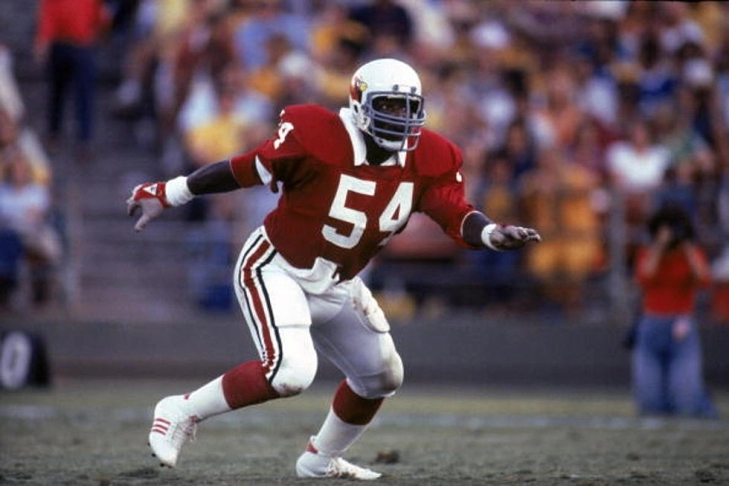
With the Fifth Overall Pick in the 1981 Draft, the St. Louis Cardinals selected E.J. Junior, who was the second Linebacker taken behind someone you may have heard of; Lawrence Taylor. Junior did not have Taylor’s career (who could?) but the Cardinals got a lot of good football from the eventual College Football Hall of Fame inductee.
Junior won the starting job during the season and, by the mid-80s, was one of the best interior Linebackers in the NFC. His best season was in 1984 when he was a First Team All-Pro and began a two-year run of Pro Bowls. From 183 to 1985, Junior had eight Interceptions and 19.0 Sacks, and though he tailed off afterward, he was still a solid NFL player.
He left the Cardinals behind in 1988, joining Miami as a Free Agent. The Cardinals were not significant in the 1980s, but this does not detract from Junior's work in St.Louis/Phoenix.
47. Freddie Joe Nunn
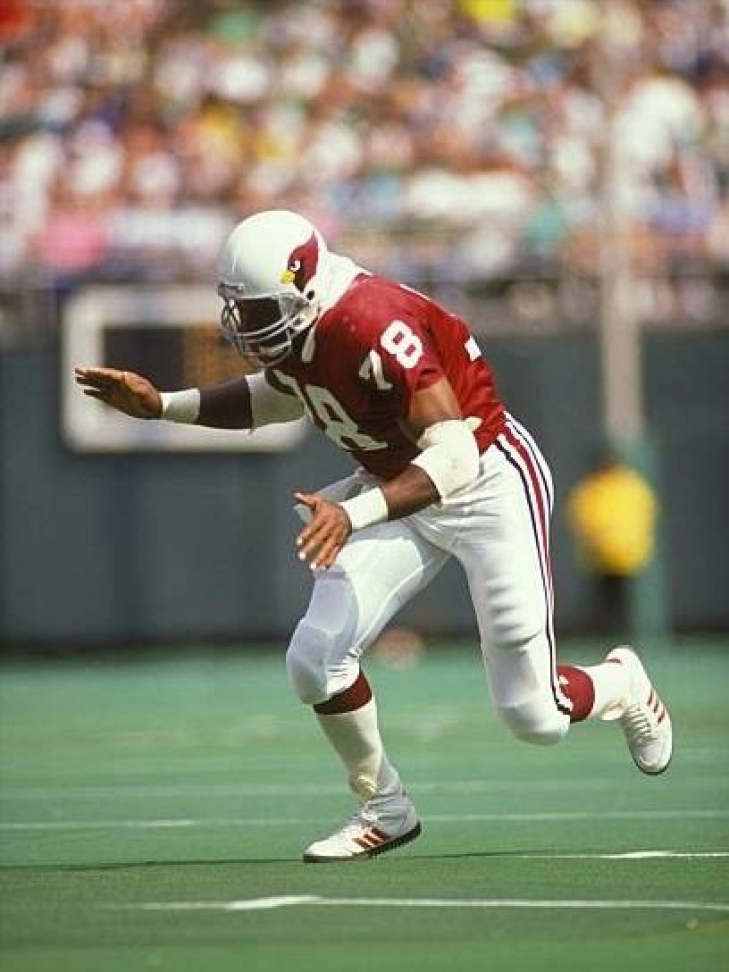
Freddie Joe Nunn was selected 18th overall from Ole Miss in the 1985 NFL Draft, bringing exceptional speed and athletic flexibility to St. Louis. During his nine seasons with the Cardinals, he was frequently moved between a traditional 4-3 defensive end and a stand-up outside linebacker. This constant position switching, along with playing for struggling teams in St. Louis and Phoenix, kept him out of the national spotlight. However, when allowed to pursue pass rushes, Nunn proved to be extremely effective.
Nunn demonstrated exceptional quickness right from the start, often leveraging a fast first step to consistently beat boundary tackles and turn the corner. Whether he was positioned with his hand in the dirt or in space, his pure speed enabled him to make impactful tackles early, often before the offensive pockets were fully formed.
Nunn reached his peak in 1988 as the franchise moved across the country. During a season focused solely on rushing the quarterback, he achieved a career-high 14.0 sacks in Arizona's first desert season. He then continued with two solid years, recording 11.0 sacks in 1989 and 9.5 in 1990, cementing his role as the defense’s main disruptor.
Despite off-field legal distractions and a roster that struggled to contend in the NFC East, Nunn’s back-to-back-to-back sack totals anchored the franchise's front seven through the late 1980s and early 1990s.
When Nunn departed for Indianapolis in 1994, he held the Cardinals' official franchise record with 66.5 career sacks—a mark that stood for nearly three decades before Chandler Jones finally surpassed it in 2021.
37. Tim McDonald
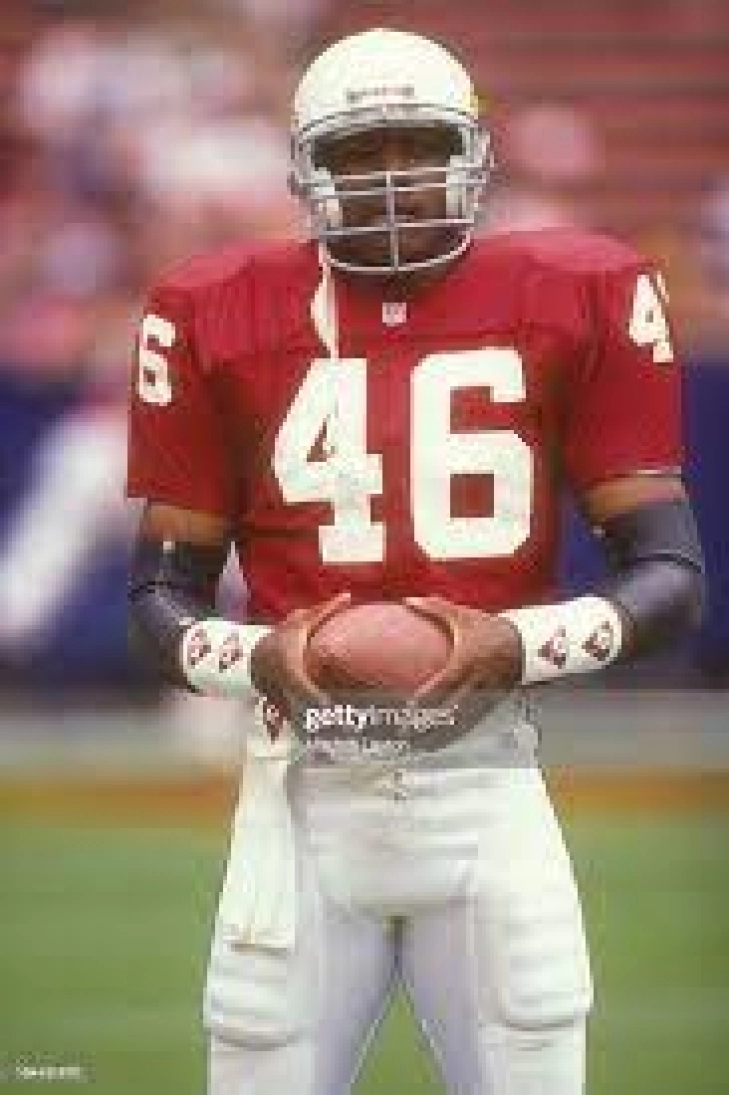
Following in a long line of elite defensive backs out of Southern California, Tim McDonald brought instantly noticeable hitting power and instincts to the professional ranks. Selected in the second round (34th overall) of the 1987 NFL Draft by St. Louis, the physical safety spent his rookie year learning the ropes before taking over the starter's role during the franchise's inaugural 1988 season in Phoenix.
McDonald set an uncompromising physical boundary in the secondary. Functioning virtually as an extra linebacker in run support, he patrolled the box with punishing tackling technique while possessing the range to shadow tight ends and slot receivers downfield. His bone-jarring hits forced opposing wideouts to think twice before crossing the middle.
After stepping into the starting lineup in 1988, McDonald made his mark by leading the NFL with four forced fumbles. His true breakout arrived during the 1989 campaign, when he put together a dominant, career-best statistical season: racking up 155 tackles alongside 7 interceptions (returning one for a touchdown) to capture his first First-Team All-Pro selection and Pro Bowl nod. In 1989, McDonald delivered one of the most complete single-season performances by an NFL safety, combining 155 tackles with 7 interceptions.
As quarterbacks grew increasingly reluctant to test his area of the field, McDonald remained a cornerstone of the secondary, earning consecutive Pro Bowl invitations in 1991 and 1992. Despite playing on roster builds that struggled to contend, his individual play consistently ranked among the gold standards for strong safeties across the league.
In 1993, McDonald joined San Francisco as a prominent free agent, aiming for a championship-level setup. He subsequently won Super Bowl XXIX with the 49ers and earned three additional Pro Bowl selections. Out of his 40 career interceptions, half (20) occurred during his six seasons with the Cardinals. With the squad (1987–1992), McDonald recorded 20 interceptions, 605 tackles, 3 Pro Bowl selections, and 1 First-Team All-Pro honor.
36. Neil Lomax
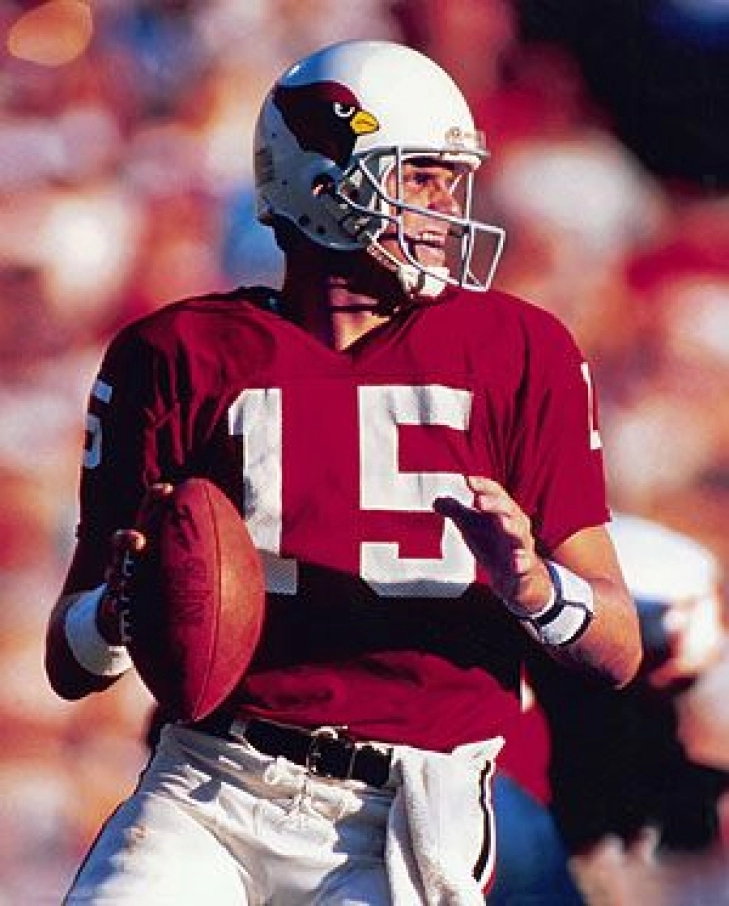
In the past, small-school quarterbacks often drew first-round draft attention, but a prolific passer from Portland State showed that strong arm talent can succeed anywhere. Neil Lomax set NCAA records in Mouse Davis’s renowned Run and Shoot offense, showcasing his arm strength. He entered the 1981 NFL Draft, where the St. Louis Cardinals picked him in the second round (33rd overall). With Jim Hart as a franchise legend in the locker room, Lomax was positioned as the heir and quickly proved that his quick release could uplift an entire team.
Lomax had a traditional drop-back frame, a quick release, and a knack for deep balls. In a tough, physical NFC East, he thrived by speeding up the game, confusing safeties, and allowing deep routes to unfold. With talented receivers like Roy Green and Pat Tilley, Lomax made St. Louis one of the most explosive passing teams in the league.
After earning PFWA All-Rookie honors and taking over late in his first 1981 season, Lomax officially became the starting quarterback in 1983. He had a standout 1984 season, setting a personal best with 4,614 passing yards and 28 touchdowns, which earned him his first Pro Bowl selection. His passing total that year was one of the most impressive single-season performances in league history at the time. Lomax's 4,614 yards in 1984 set a franchise record and marked a period when his deep throws were considered among the most dangerous in professional football.
Lomax delivered another masterclass during the strike-shortened 1987 season. Pacing the NFL with 3,387 passing yards and 275 completions, he threw 24 touchdown passes in just 12 games, earning his second Pro Bowl selection. He remained a steady presence under center as the franchise relocated to Phoenix in 1988, throwing for nearly 3,400 yards in his debut desert campaign.
Sadly, severe hip arthritis ended his career at his physical prime. The joint deterioration sidelined him for the entire 1989 season. Despite intense rehabilitation efforts, he couldn't overcome the pain, leading to his retirement in early 1990 at only 30 years old. Over his career, Lomax achieved 22,771 passing yards, 136 touchdown passes, and 10 rushing touchdowns in 108 regular-season games.
23. Luis Sharpe

Selected in the first round (16th overall) of the 1982 NFL Draft out of UCLA, Luis Sharpe was the second offensive tackle off the board behind future Hall of Famer Mike Munchak. That draft investment paid off immediately, as the Cuban-born edge protector stepped into the starting lineup and anchored the left side of the Cardinals' offensive line for 13 seasons (1982–1994).
Standing 6 feet 5 inches and weighing 295 pounds, Sharpe possessed exceptional long-arm extension and quick footwork, allowing him to neutralize pass rushers on the blindside. His physical durability was a constant staple during turbulent years for the franchise; he holds the rare distinction of starting all 189 regular-season games he played for the organization, bridging the team's geographical shifts across St. Louis, Phoenix, and Arizona.
Sharpe's individual reputation hit its stride in the late 1980s as he transformed into one of the premier left tackles in the NFC. He earned three consecutive Pro Bowl invitations (1987, 1988, 1989) and picked up Second-Team All-Pro honors in 1988 and 1990. Despite playing on rosters that rarely competed in January—appearing in just one career playoff game—Sharpe remained a trusted, reliable building block for over a decade.
Across 13 seasons in a Cardinals uniform, Sharpe started 189 games, earning 3 Pro Bowl selections and 2 Second-Team All-Pro honors.
6. Aeneas Williams
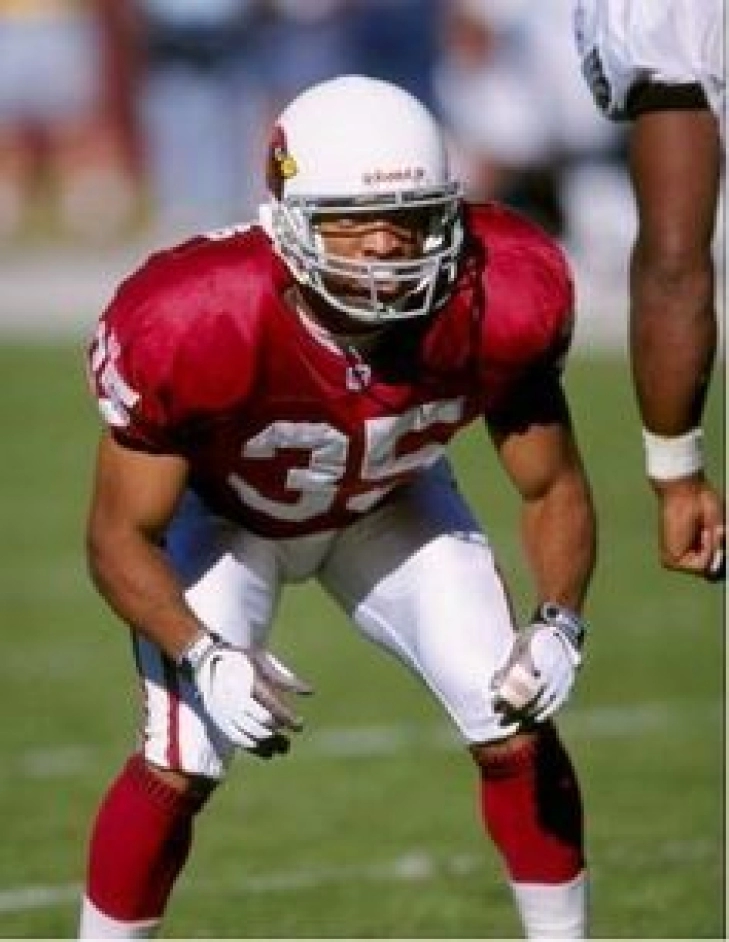
Aeneas Williams did not play competitive football during his first two years at Southern University. He only joined the team as a junior, but by his senior year, he led the nation in interceptions and quickly attracted the attention of the Phoenix Cardinals, who picked him in the third round of the 1991 NFL Draft. What began as a low-profile pick developed into an impressive fourteen-year career—marked by his exceptional coverage skills and legendary ball-hawking instincts—establishing him as one of the top boundary defenders of his time.
Williams relied not on sheer size to challenge wide receivers but on sharp route recognition and spatial advantage. He excelled at mirroring top wideouts closely, maintaining smooth footwork during his backpedal, and then using a powerful burst to intercept passes. His natural hands turned contested throws into turnovers, complemented by superb open-field tackling. His quick diagnostic skills kept him a constant scoring threat following turnovers, with an impressive 9 career interception return touchdowns—tying him for second in NFL history at retirement.
Williams's debut in the professional ranks in 1991 instantly transformed his scouting profile. He secured the starting right cornerback position right after training camp, delivering an exceptional rookie season by recording a league-high 6 interceptions, earning PFWA All-Rookie honors, and placing third in the AP NFL Defensive Rookie of the Year voting. When he moved to the left cornerback position under defensive coordinator Fritz Shurmur, his dominance over the boundary became even more evident. In 1994, Williams completely shut down opposing passing attacks, leading the NFL with a career-best 9 interceptions and earning his first Pro Bowl selection.
That exceptional campaign sparked a remarkable six-year period of dominance in the desert. From 1994 to 1999, Williams earned six straight Pro Bowl selections as the key defensive stalwart for the rebuilding Cardinals. His outstanding performance was clearly demonstrated in 1995 when he made 6 interceptions—returning two for touchdowns—earning his first first-team All-Pro honor. He maintained that elite coverage level in 1997, again intercepting 6 passes and earning his second consensus first-team All-Pro selection. Williams proved himself as the crucial game-changer during the 1998 postseason, intercepting two passes in a thrilling wild-card upset against the Dallas Cowboys, leading the franchise to its first playoff win in fifty years.
As the Cardinals embarked on a major rebuilding phase at the start of the 2000s, the experienced boundary cornerstone was traded to the St. Louis Rams in spring 2001. Williams smoothly brought his veteran leadership to the Rams' secondary, eventually transitioning to safety later on. He received two more Pro Bowl selections and a first-team All-Pro honor in St. Louis, playing a crucial role in leading the Rams to Super Bowl XXXVI. After retiring following the 2004 season, he totaled 55 career interceptions, of which 44 were while he played for the Cardinals.
Williams was named as a premier boundary selection to the NFL 1990s All-Decade Team, and his eternal connection to football immortality was finalized in 2014 when he was enshrined in the Pro Football Hall of Fame. The Cardinals honored him six years earlier by selecting Williams for their Ring of Honor.
3. Charley Trippi
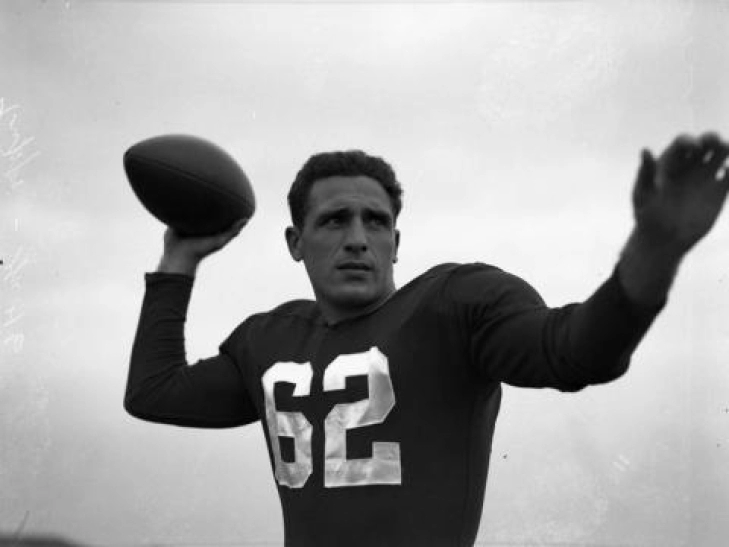
The Cardinals football team's long history can be traced back to a pivotal tug-of-war in winter 1947. Charley Trippi, a prominent college star from the University of Georgia who won the 1946 Maxwell Award and was the Heisman runner-up, became the center of a fierce bidding contest between the NFL and the rising All-America Football Conference. The AAFC’s New York Yankees thought they had secured the superstar, but Chicago Cardinals owner Charles Bidwill shifted the odds with a groundbreaking financial move. He signed the versatile rookie to a historic $100,000 four-year contract, completing a crucial piece of his championship plans.
Standing 6 feet tall and weighing 186 pounds, Trippi was a prototype for the versatile, positionless offensive weapon long before the term existed. As a runner, he had an explosive burst and elite open-field elasticity, slicing through defenses with a 5.1 yards per carry career average. His ability to execute at every skill position made him a tactical nightmare — a lethal passer on halfback options, a skilled route runner with soft hands, and a rugged blocker. When needed, his leg produced a 40.3-yard punting average, and later in his career, he flipped jerseys to become an elite, hard-hitting defensive back.
His arrival in 1947 sparked a legendary chapter in franchise history, as Trippi became the dynamic force behind Chicago’s renowned "Million Dollar Backfield." Playing alongside Paul Christman, Pat Harder, and Elmer Angsman, the rookie halfback immediately led the Cardinals to a remarkable 1947 NFL Championship. Trippi cemented his Chicago legacy with a stellar performance in the icy 1947 Title Game against the Philadelphia Eagles. Wearing basketball shoes to maneuver the icy Comiskey Park turf, he gained 206 all-purpose yards, scoring on a stunning 44-yard touchdown run and a historic 75-yard punt return, contributing to a 28-21 victory. His 206 yards and two long touchdowns in the extreme cold remain among the most clutch individual feats in NFL title game history.
He sustained that dizzying peak into the 1948 campaign, guiding the Cardinals back to the championship game while putting together a masterpiece of individual efficiency. Trippi dominated the league, leading the NFL with 1,485 all-purpose yards and a league-best 5.4 yards per carry, earning consensus first-team All-Pro honors. He replicated that dominance in 1949, again pacing the entire National Football League with 1,552 all-purpose yards while remaining the most feared kick and punt returner in the game.
As the franchise moved into the 1950s, Trippi's exceptional versatility became a crucial support for the coaching staff. During the 1951 and 1952 seasons, he almost entirely played quarterback, leading the offense from under center and earning Pro Bowl honors in 1952 and 1953. Demonstrating total disregard for personal stats or safety, he shifted to the defensive side for his last two seasons in 1954 and 1955, intercepting passes and chasing down opponents with the same fierce determination he showed on offense.
The arduous gridiron marathon culminated in a disappointing end during the 1955 season when a hard pre-season hit resulted in a fractured skull, leading to his retirement after 99 regular-season games. Trippi left Chicago with a legendary stats record, totaling 3,506 rushing yards, 1,321 receiving yards, 2,547 passing yards, and 37 touchdowns, along with 2,321 return yards. At his retirement moment, his remarkable versatility had set the record for the most total offense yards by a single player in NFL history.
Trippi was named to the NFL 1940s All-Decade Team, and his connection to the sport's elite was finalized in 1968 when he was inducted into the Pro Football Hall of Fame. In 2006, he was inducted into the Arizona Cardinals Ring of Honor as a founding member.
191. Tim McDonald
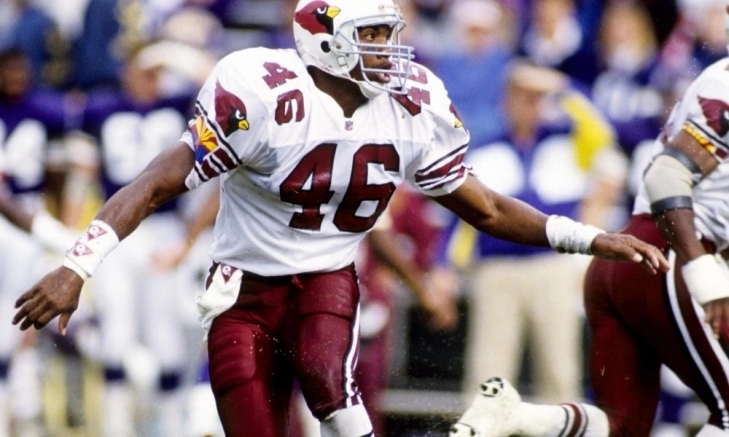
Tim McDonald split his career between the St. Louis Cardinals and San Francisco 49ers, where the Safety went to three Pro Bowls and earned two Second Team All-Pro selections with each team. McDonald would have four seasons where he went over 100 Tackles and would have 1,138 in total, along with 40 Interceptions over his career. He was a member of San Francisco's Super Bowl XXIX championship team and would have had a higher profile had he not been a Cardinal in the first half of his season and overshadowed by other 49ers defensive players in the second half of his career.
