

47. Mark Ellis
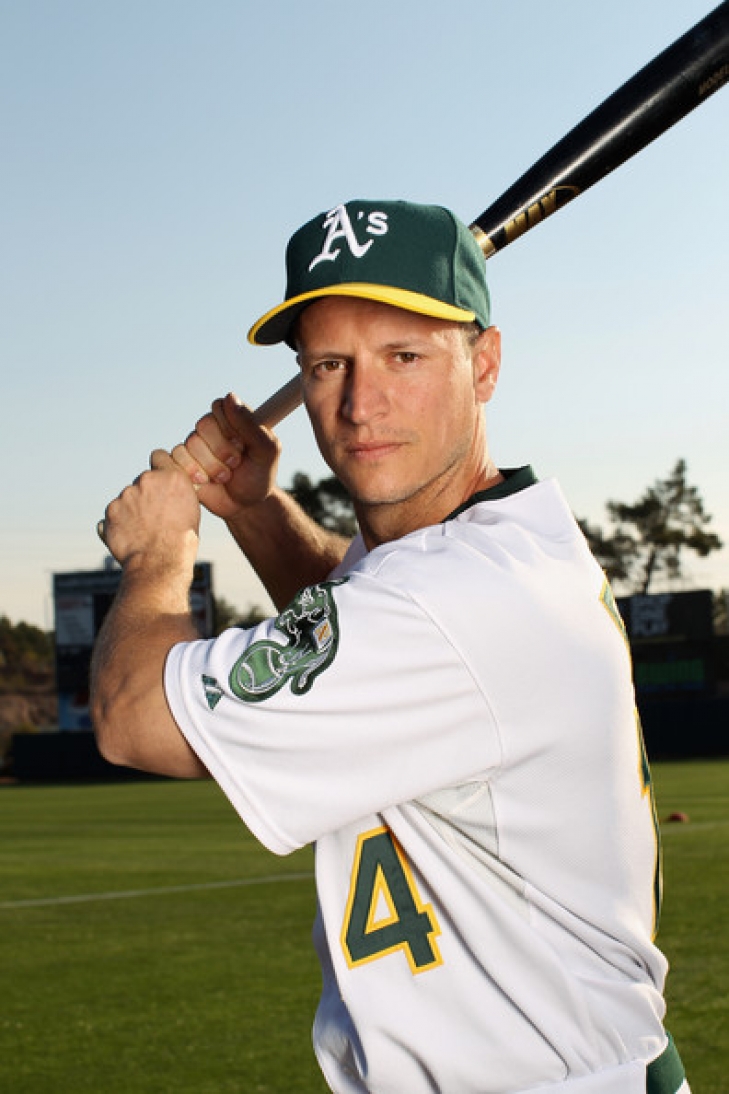
Mark Ellis is not the first name you come up with on a “best of” list, but the fact remains that he accumulated over 1,000 Hits with the team, which is an impressive feat for any franchise.
Casual baseball fans often recall the 2000s Oakland Athletics’ star pitchers and power hitters. Mark David Ellis, however, rarely made national headlines. Drafted by the Royals in 1999, a trade sent him to the East Bay before he pitched in the Midwest. By 2003, he earned the everyday second base role and compiled a steady decade of efficient play with 137 hits.
His rapid ascent encountered a significant setback in 2004 when a violent spring-training collision fractured his right shoulder, resulting in his absence from the entire regular season. Rather than allowing this debilitating injury to redirect his career path, Mr. Ellis demonstrated an exceptional resurgence during the 2005 season. He bewildered opposing pitchers with a swift, inside-out swing, achieving a remarkable career-high batting average of .316 and highlighting an offensive potential that complemented his consistent daily performance.
Although his offensive productivity exhibited some natural, low-variance fluctuations in the subsequent summers, his fundamental physical capabilities remained highly effective. In 2007, Ellis achieved a notable increase in power, hitting a career-high 19 home runs and accumulating 76 runs batted in, thereby adding significant depth to the Oakland batting lineup.
Nevertheless, evaluating his true value solely based on his offensive statistics fails to capture his genuine brilliance. Ellis transformed second base into an exemplary defensive position, showcasing exceptional fundamental footwork combined with superior internal timing. In 2006, he delivered a remarkable defensive display, establishing an American League single-season record for second basemen with an impressive .9968 fielding percentage, committing only two errors across 631 total chances.
That unwavering, flawless defensive foundation established him as an essential and reassuring security for a generation of young Oakland pitching staffs. He remained a fiercely loyal and stabilizing veteran presence through several roster overhauls until the front office formally began its subsequent rebuilding phase, trading him to the Colorado Rockies midway through the 2011 season.
With the Athletics, Ellis had 1,015 Hits.
.
39. Bobby Shantz
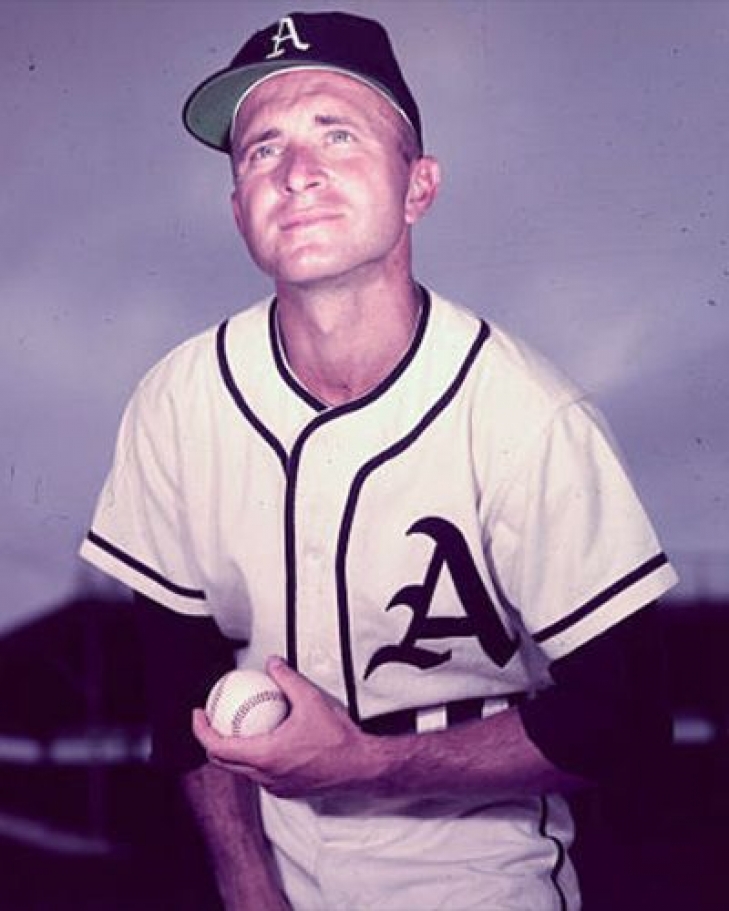
Back in the late 1940s, when Bobby Shantz was working his way through the semi-pro circuits of Pennsylvania, traditional baseball wisdom didn't see him as a future star. Scouts from major league teams mostly overlooked this little left-hander, thinking his 5-foot-6, 140-pound frame might be too small for the tough demands of a big-league starting pitcher. However, Connie Mack looked beyond his size, recognizing a quick, powerful arm and an impressive, fading changeup. The Philadelphia Athletics took a chance on him in 1948. After a few modest developmental summers, this undersized southpaw rose to unexpected heights, delivering a brief but stunning peak that captured the whole baseball world’s attention.
Shantz first discovered his frontline potential during the 1951 campaign. He amazed junior circuit hitters with his precise control and a sharp, biting curveball. His impressive performances earned him his first career All-Star selection, and he finished the season with a solid 18-12 record for a team going through changes in Philadelphia.
That breakout summer truly caught everyone's attention, but it was just the beginning of an incredible, award-winning season in 1952. Shantz became an unstoppable force on the mound, dominating the American League with an impressive 24 wins and only 7 losses. His efficiency was nothing short of spectacular, leading all of baseball with a tiny 1.048 WHIP, along with a stellar 2.0 walks per nine innings and a powerful 2.41 strikeout-to-walk ratio. The entire baseball world recognized his outstanding performance, overwhelmingly voting this small but mighty ace as the 1952 American League Most Valuable Player.
With the baseball world at his feet, tragedy unexpectedly struck the young lefty's delivery. Later in that fantastic 1952 season, Shantz suffered a serious, chronic shoulder injury that cost him his usual velocity and altered the course of his career. He spent the next four years courageously working on his mechanics and pushing through intense pain, but he simply wasn’t the same explosive pitcher anymore. From 1953 to 1956, a challenging period that included the franchise's move to Missouri, Shantz struggled with frustratingly poor records and rising ERAs. Recognizing that his days as a top starter were behind him, the financially struggling Kansas City front office finally made the tough decision to trade him to the powerful New York Yankees before the 1957 season.
With the Athletics, Shantz had a 69-65 record with a 3.80 ERA. Philadelphia later honored Shantz by placing him in their Baseball Wall of Fame in 1994.
43. George Earnshaw
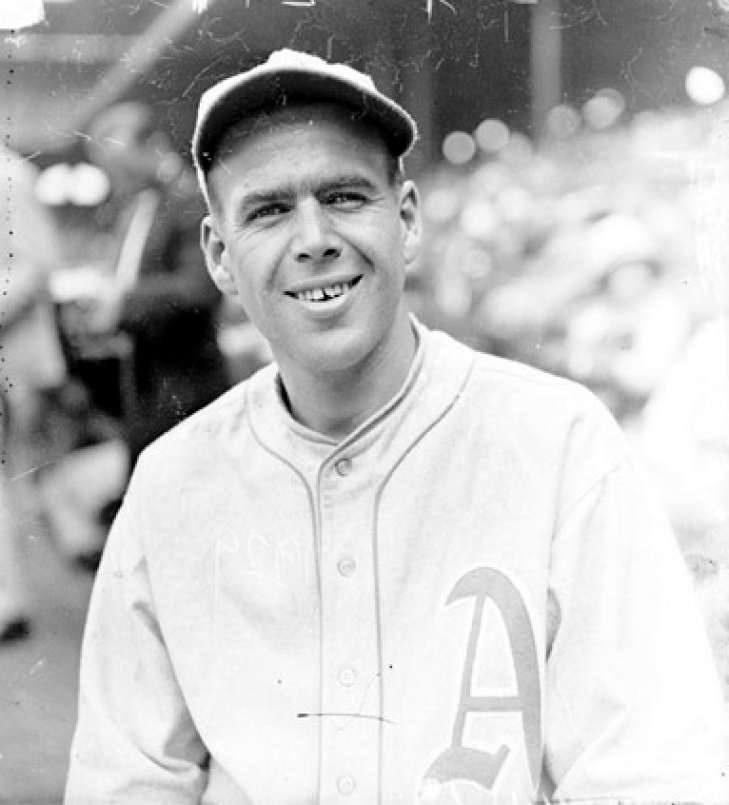
George Earnshaw took an unconventional path to major-league stardom. Because he prioritized finishing his college education and then spent several years refining his arsenal in the minor leagues, he didn't officially debut in the big leagues until he was 28 years old. But once the towering 6-foot-4 right-hander finally stepped onto a big-league mound, he wasted no time proving he belonged at the front of a rotation.
Connie Mack had personally scouted Earnshaw dominating hitters for the legendary Baltimore Orioles of the International League, and he aggressively pulled the trigger to secure his contract. Earning the nickname "Moose" due to his massive physical frame, Earnshaw joined the Philadelphia Athletics mid-season on June 1, 1928, turning in a respectable 7-7 introduction that merely hinted at the absolute dominance to come.
By the 1929 campaign, Mack had assembled an incredibly talented roster, with Earnshaw serving as its powerful, high-velocity engine. That summer, he dominated junior circuit lineups, leading the American League with an impressive 24-8 record and 21 complete games. He served as the key frontline pitcher alongside Lefty Grove, guiding the Athletics to the American League pennant and maintaining his strong performance into October, ultimately helping Philadelphia win the 1929 World Series against the Chicago Cubs.
Far from a single-season wonder, "Moose" proved to be an absolute workhorse over the next two individual campaigns, racking up 22 wins in 1930 and 21 victories in 1931 to form arguably the greatest one-two pitching punch of the era. The absolute peak of his baseball journey arrived during the 1930 postseason defense.
Earnshaw delivered an outstanding performance in the 1930 Fall Classic against the St. Louis Cardinals, participating in three games and pitching 25 impressive innings. He dominated the Cardinals' lineup, earning two complete-game wins, including a five-hit shutout in the pivotal Game 6, and achieved a remarkable 0.72 ERA to help secure consecutive world championships.
He pushed through to achieve yet another prolific 19-win season in 1932, but the heavy, continuous workload of innings eventually severely strained his right arm. Earnshaw experienced a sharp and sudden decline in 1933, finishing with a disappointing 5-10 record as his ERA rose to 5.97.
Due to the financial strain of the Great Depression, Mack had to break up his famous core team. After a tough 1933 season, Earnshaw was sold to the Chicago White Sox as a way to cut costs. As an Athletic, he had a 98-58 record and was later selected for the Philadelphia Baseball Wall of Fame in 2000.
44. Stuffy McInnis
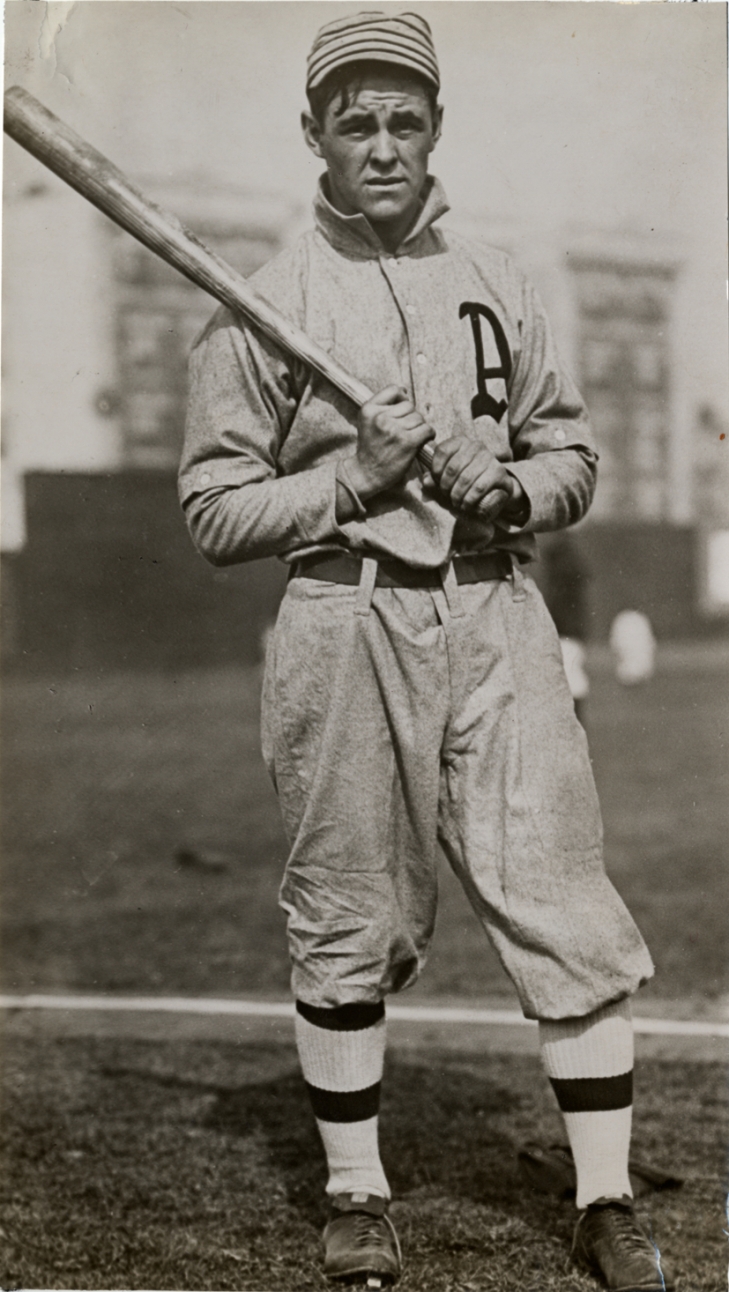
“Stuffy” McInnis first signed with the Philadelphia Athletics prior to the 1909 season, but his immediate path to the lineup was completely blocked. Connie Mack’s legendary infield was already crystallizing, forcing the versatile teenager to bide his time as a utility player, primarily logging reps at shortstop off the bench during his first two major league summers.
Mack saw a unique blend of contact ability and defensive instinct in the young player. When a vacancy at first base appeared before the 1911 season, McInnis quickly claimed the role, becoming the youngest and fiercest member of Philadelphia's renowned "$100,000 Infield,” joining Eddie Collins, Jack Barry, and Home Run Baker.
The structural shift transformed the Athletics into a buzzsaw. Standing just 5-foot-9, McInnis redefined dead-ball-era hitting mechanics by choking up significantly on his bat, wielding a short, compact swing that made him nearly strikeout-proof. He put on an offensive clinic from the moment he took over the bag, batting a spectacular .321 in 1911 and driving in 95 runs.
That breakout summer led to a remarkable, high-volume peak; McInnis would later surpass the .300 batting average in six of his seven seasons as Philadelphia's regular starter through 1917, just missing a perfect score when he posted a solid .295 in 1915.
Nevertheless, his lethal bat only conveyed half the narrative. On the baseball field, McInnis converted first base into an absolute vacuum, integrating exceptional agility with a distinctive, backhanded sweeping technique for fielding low throws from the dirt. He complemented his superior defensive range with rapid instincts on the basepaths, consistently stealing double-digit bases to exert continual pressure on opposing pitching staffs.
This relentless, multidimensional excellence was a vital cornerstone of the franchise's first golden era. McInnis anchored the infield, guiding the Athletics to three American League pennants in four years (1911, 1913, and 1914) and serving as a central catalyst for the historic World Series championships in 1911 and 1913.
When financial pressures eventually forced Mack to famously dismantle his high-priced powerhouse following the 1914 pennant, McInnis remained behind as the steady, veteran heartbeat of the rebuilding club, grinding through several tough seasons before finally being traded to the Boston Red Sox before the 1918 season.
McInnis would later win two more World Series Titles, one with Boston (1918) and another with Pittsburgh (1925). With the Athletics, he would accumulate 1,192 hits with a .313 batting average.
42. Gene Tenace
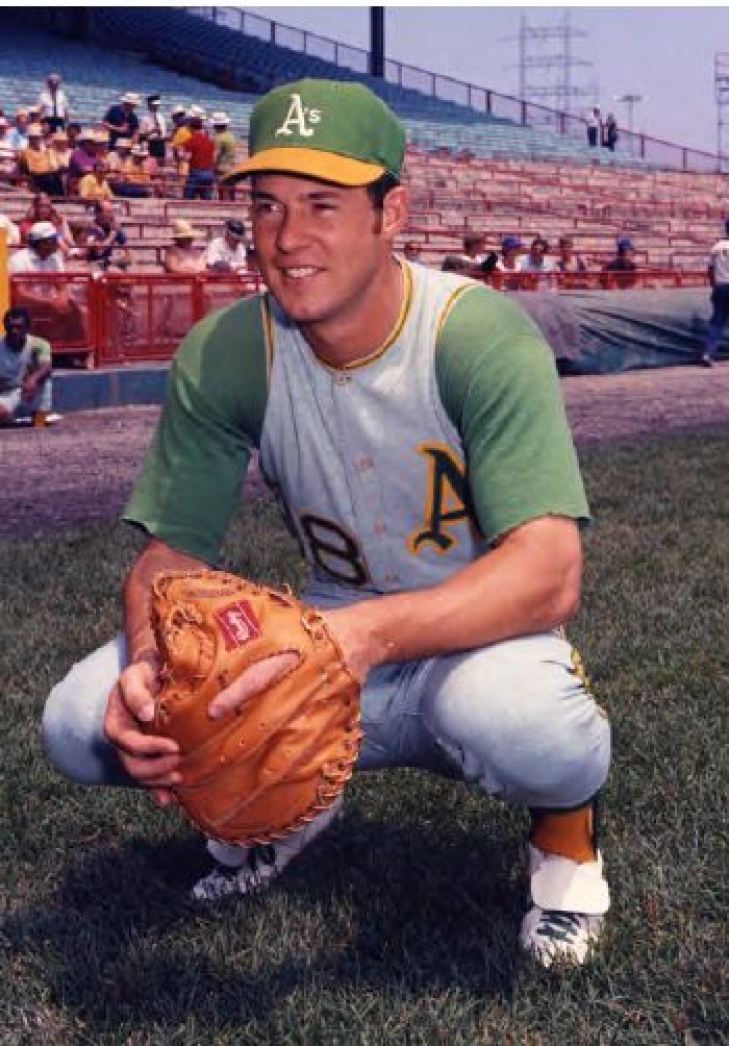
During his early years with the Oakland Athletics, Gene Tenace's distinctive offensive skills were largely neglected by conventional baseball evaluations. Selected in the second round of the 1965 draft, the resilient catcher made his debut in 1969 but initially spent several seasons in a part-time capacity, listed low on the depth chart. To contemporary observers, his modest batting averages indicated limited potential. However, Tenace possessed an exceptionally advanced and innovative approach to hitting—one that would eventually achieve national recognition on the sport's most prominent platform.
His permanent entry into baseball folklore occurred during the 1972 postseason. When manager Dick Williams included him in the starting lineup for the Fall Classic against the formidable Cincinnati Reds, Tenace delivered an exceptional display of high-pressure hitting. He single-handedly propelled the Oakland offense, becoming the first player in Major League Baseball history to hit home runs in each of his first two career World Series at-bats. He concluded that historic seven-game series with an impressive .348 batting average, four home runs, and nine RBIs, thereby earning the 1972 World Series Most Valuable Player award and securing the franchise's inaugural global championship on the West Coast.
That unforgettable October performance permanently changed his position within the organization, securing his role as the undisputed everyday backstop for the duration of the "Mustache Gang" era. Over the subsequent four individual seasons, Tenace contributed significantly to the lineup, achieving at least 22 home runs in each of these seasons.
Nevertheless, his true offensive brilliance was exemplified by his renowned, meticulous approach to the strike zone. Although conventional box scores frequently criticized his modest .240 batting average while playing for Oakland, Tenace regarded a walk as if it were a extra-base hit. Between 1973 and 1975, he demonstrated exceptional plate discipline, drawing at least 100 walks in three successive summers—including a league-leading 110 walks during the 1974 season. This unwavering capacity to generate offensive opportunities culminated in an impressive .374 on-base percentage, serving as a crucial catalyst for the consecutive World Series victories in 1973 and 1974.
His exceptional capacity to influence the game without dependence on conventional base hits earned him well-earned national recognition in 1975, when he achieved his inaugural career All-Star selection. He continued to serve as a notably resilient, low-variance asset for the small-market franchise, expertly transitioning between catcher and first base to maintain his potent batting presence in the daily lineup.
Nevertheless, the swift advent of the free-agent era ultimately necessitated an unavoidable separation. After the 1976 season, with the historic championship core disintegrating due to financial pressures, Tenace exercised his right to explore the open market, departing from the East Bay to secure a lucrative agreement with the San Diego Padres.
With the Athletics, Tenace accumulated 603 hits, 121 home runs, and a mountain of 548 walks.
41. Terry Steinbach
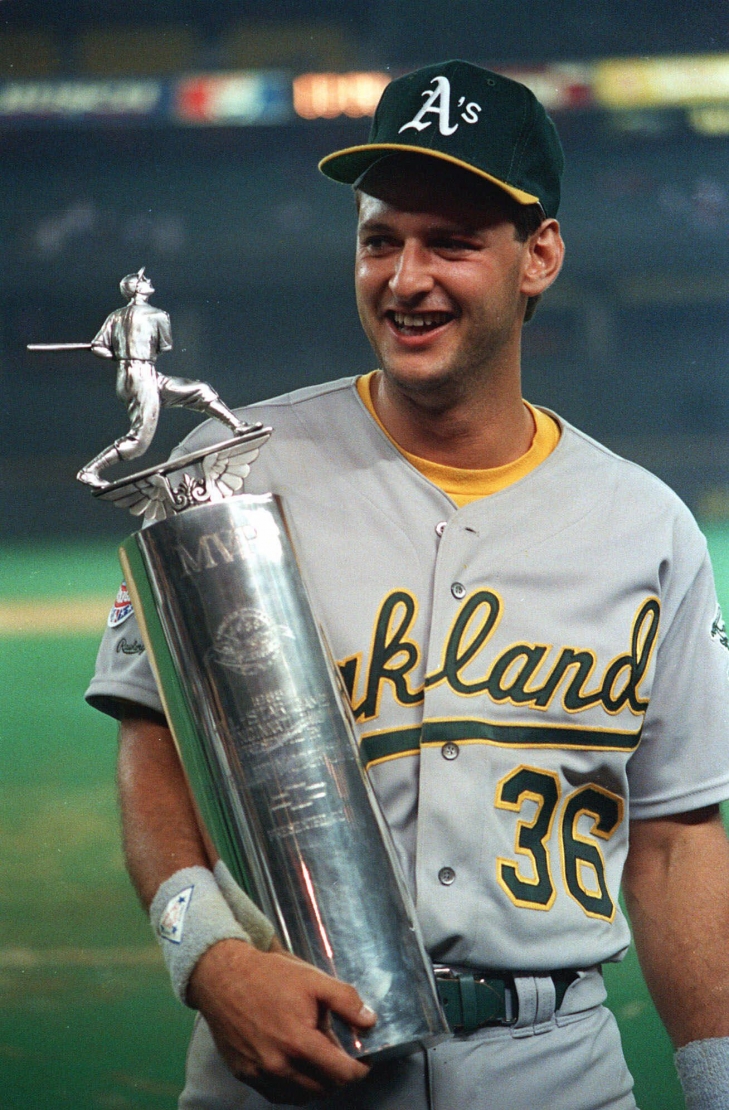
When looking back at the incredible rosters of the late 1980s and early 1990s Oakland Athletics, it’s natural to be drawn to the dazzling superstars, the thunderous home runs of the "Bash Brothers,” or Rickey Henderson’s exciting base running. But behind the scenes of those tense pennant races, manager Tony La Russa needed a smart, steady presence behind the plate. He found that in Terry Steinbach, a former infielder who proved over many years to be one of the most reliable, clutch-hitting catchers of his era.
Originally starting out as a third baseman from the University of Minnesota, Steinbach spent his early days in the minor leagues working on perfecting his swing. Thanks to the thoughtful efforts of the Oakland front office, he was then surprisingly switched to catcher. Transitioning to this new defensive role wasn't easy, but when he finally made his major league debut late in the 1986 season, and even hit a home run in his very first at-bat, it was obvious that his football-player build was ideal for the physical demands of catching. By 1987, he had taken on most of the catching responsibilities, balancing excellent game-calling skills with a strong arm to help stabilize a young and promising pitching staff.
Steinbach quickly developed into a leading offensive asset at a position typically low in offensive output. He recorded four seasons with at least 120 hits and demonstrated credible power in the middle of the lineup by surpassing ten home runs on six occasions in the green and gold.
His unwavering consistency garnered him extensive national recognition through three All-Star selections (1988, 1989, and 1993). He notably secured the Most Valuable Player (MVP) award at the 1988 Midsummer Classic by driving in both American League runs with a home run and a sacrifice fly, thereby establishing his reputation as a premier frontline athlete.
His true value, however, was established during the period when the autumn leaves began to change. Steinbach served as a crucial tactical component during Oakland's remarkable sequence of reaching three consecutive American League pennants from 1988 to 1990. He demonstrated consistent performance with minimal variance at the sport's most prestigious level, achieving a commendable batting average of .281 over 25 high-stakes postseason games. During the historic 1989 World Series sweep against the rival San Francisco Giants, Steinbach delivered an exemplary performance, driving in seven runs—including a decisive, game-changing three-run homer in Game 3—to contribute significantly to securing the world championship.
While the championship nucleus began to splinter, he saved his most explosive offensive performance for his final summer in Northern California. During 1996, a rejuvenated Steinbach terrorized American League pitching staffs, hitting a career-high 35 home runs and 100 RBIs to lead all major league catchers in power. After that peak, he tested free agency and returned home to finish with the Minnesota Twins.
With the A’s, Steinbach amassed 1,144 hits, 205 doubles, and 132 home runs over 1,199 games behind the plate.
That was his last season in Oakland, as he signed with the Minnesota Twins as a Free Agent afterward. He would have 132 Home Runs with 1,144 Hits with Oakland.
40. Eddie Joost
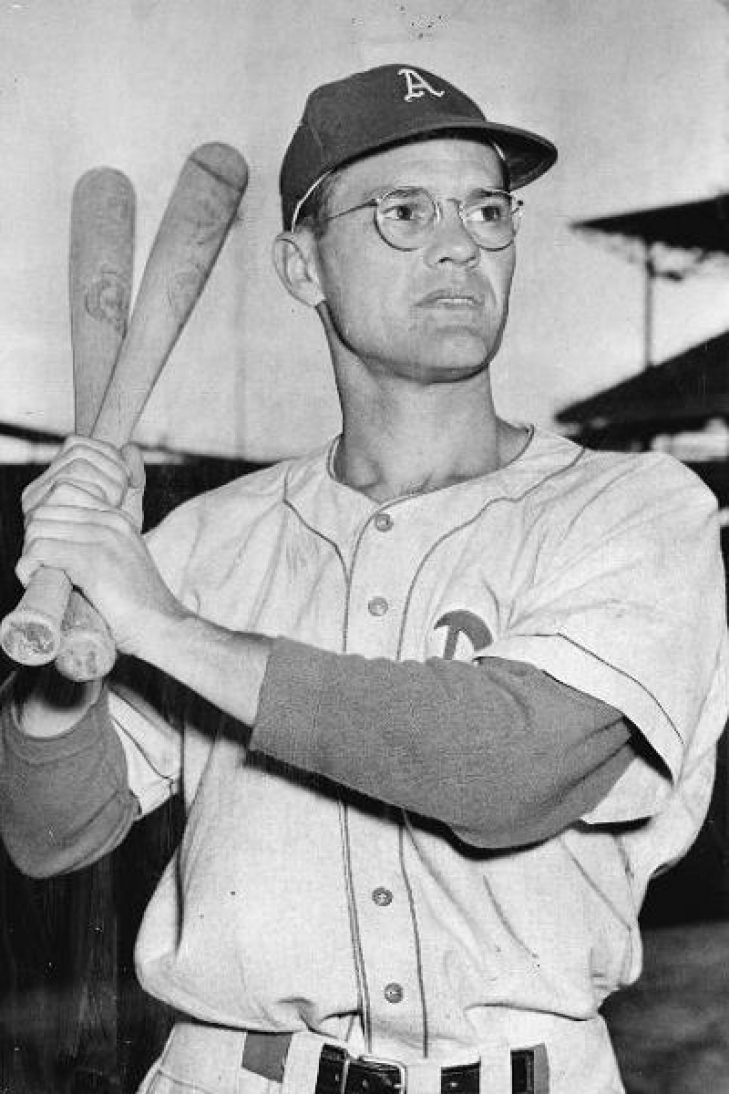
By the end of the 1946 season, the general consensus about Edwin Donald Joost was essentially settled. After a serious disagreement with Boston Braves management, the veteran infielder was banished to the minor leagues within the St. Louis Cardinals organization. At 31, his career seemed headed for a quiet conclusion. Most believed his best years were behind him, but Connie Mack dismissed this idea, offering Joost a chance to revive his career. This opportunity triggered an impressive late-career resurgence in Philadelphia.
When Joost first entered the Shibe Park infield in 1947, he appeared to be a textbook example of a glove-first, light-hitting shortstop. He demonstrated exceptional defensive skills, anchoring the middle of the diamond by leading all American League shortstops in both Range Factor per Game and total putouts.
On the other hand, his traditional offensive stats were disappointing; he posted a low .206 batting average and led the league with 110 strikeouts. However, behind that low average was a valuable asset aligned with Mack’s offensive approach: an exceptional, highly disciplined eye that resulted in 96 walks and boosted his on-base percentage to a solid .348.
That initial summer set the stage for a remarkable five-year peak from 1948 to 1952, during which Joost fully reinvented his hitting approach. He notably reduced his strikeouts and improved his contact rate, which boosted his batting average to much higher levels, reaching a career-high .289 in 1951.
He became a leading expert in driving traffic at the top of the lineup, finishing in the American League’s top ten for on-base percentage four times over five years, twice surpassing the elite .400 OBP mark. His impressive development gained him widespread national peer recognition, earning starting All-Star selections for the junior circuit in 1949 and 1952.
The inevitable effects of aging and accumulated physical wear ultimately impacted his performance during the 1953 season. After a significant decline in productivity, the front office entrusted him with managing the team for its final, bittersweet season in Philadelphia in 1954, before releasing him as the organization prepared to move to Kansas City.
Joost concluded his highly impactful eight-year stay with the Athletics, having collected 840 hits, 116 home runs, and a magnificent .392 on-base percentage. In 1995, he was inducted into the Philadelphia Baseball Wall of Fame.
36. Elmer Valo
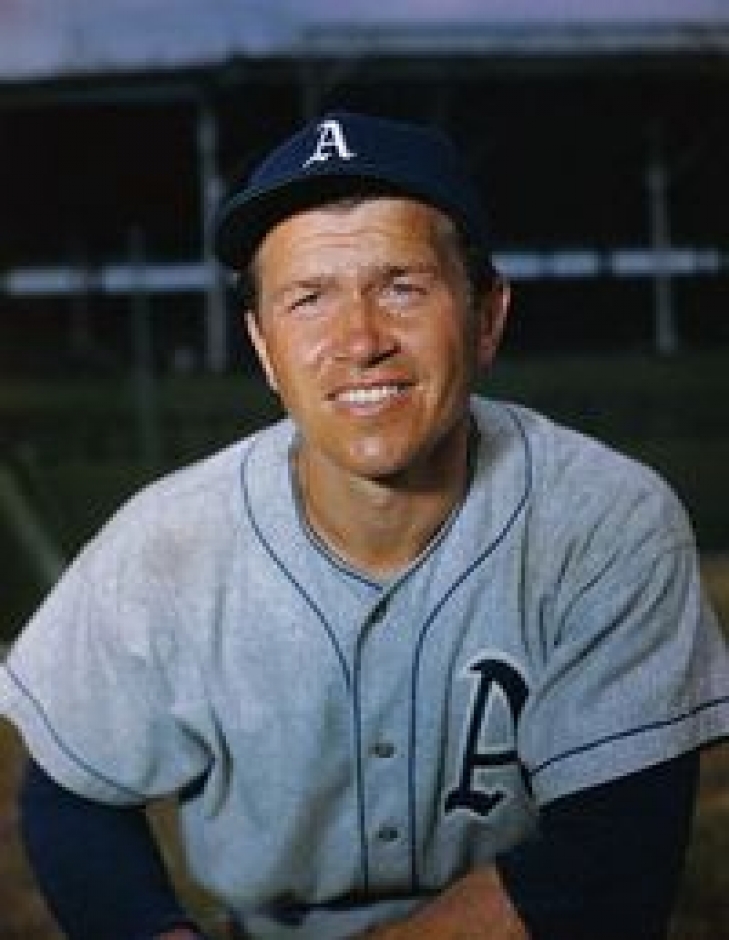
Born in Czechoslovakia, Imrich "Elmer" Valo moved to the U.S. at age six, settling in Pennsylvania. He embodied the American dream, channeling his athletic energy into a long MLB career. When he debuted with the Philadelphia Athletics in 1940, he brought a fierce, uninhibited style to Shibe Park that won him fans for generations.
Valo was far from a conventional, headline-grabbing superstar, yet he possessed an exceptionally keen baseball intellect and a legendary degree of physical resilience. He gained recognition throughout the junior circuit for his complete disregard for personal physical safety in the outfield. Long before stadiums were equipped with padded walls, Valo regularly collided at full speed with concrete barriers and chain-link fences to prevent extra-base hits by opposing batters. This unwavering intensity was complemented by an elite, notably sophisticated approach within the batter's box.
Although he did not have the raw power of the top sluggers of his time, Valo compensated by leveraging a tiny strike zone and a highly disciplined eye, resulting in high traffic. During his lengthy career with the organization, from 1940 to 1956, including a two-year military service during World War II, he recorded nine seasons with at least 100 hits.
His ability to draw walks and control the running game was truly exceptional; he achieved a remarkable .403 on-base percentage as an Athletic, finishing in the top ten of that important metric in the American League three times. This persistent blend of consistent on-base skill and fearless defense made him one of Connie Mack's most reliable players during a tough, transitional period for the team. Valo stayed deeply loyal to the organization, holding down the outfield as the team packed up and moved to Missouri for the 1955 season. He spent a year and a half as a veteran leader for the Kansas City Athletics before some roster changes led to his release. This paved the way for a highly successful second phase of his career, where he became one of the game's most formidable pinch-hitters for the Brooklyn Dodgers, Philadelphia Phillies, and New York Yankees.
Over 15 seasons as an Athletic, Valo compiled 1,229 hits, 218 doubles, and 595 walks. In 1990, he was honored with a spot on the Philadelphia Baseball Wall of Fame.
34. Carney Lansford
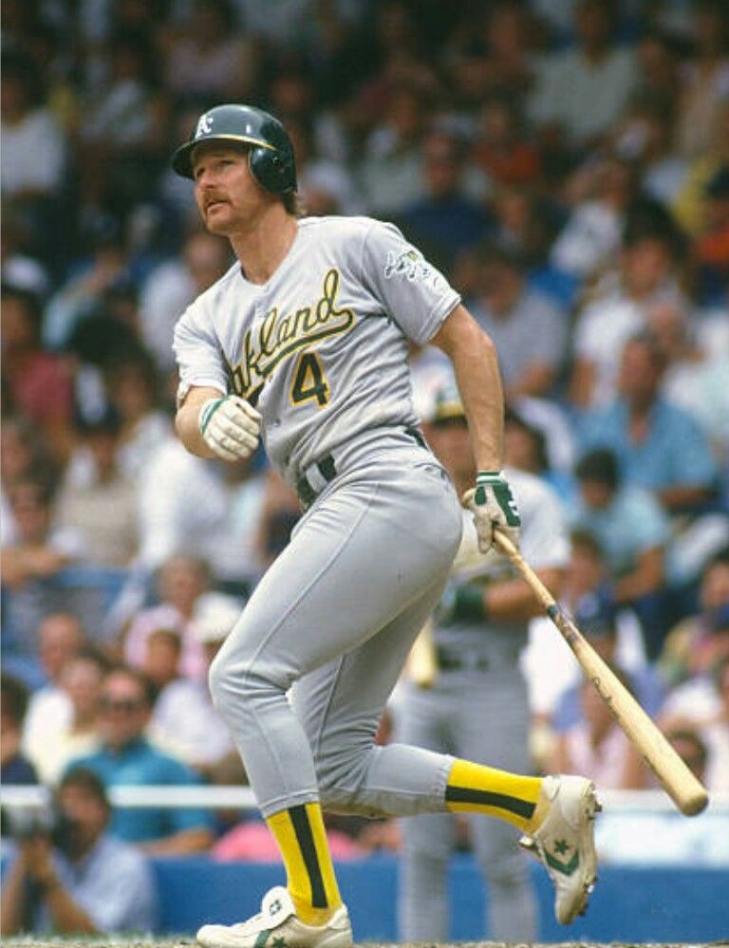
Carney Lansford joined Oakland before the 1983 season, instantly bringing credibility to the hot corner. Just two years after winning an American League batting title with the Boston Red Sox, he was traded to the Athletics to be a reliable, professional presence during a pivotal period for the franchise. Although he didn't earn another batting crown in Northern California, Lansford spent the following decade solidifying his role as the cornerstone of the infield and establishing himself as one of the premier all-around third basemen in baseball.
He instantly impressed East Bay fans by posting a consistent .300 average in his first two summers with the team. Lansford showcased a fluid, high-contact swing and a dependable glove at third base, quickly establishing himself as a clutch hitter known for line drives and rarely wasting an at-bat.
By the late 1980s, as Tony La Russa's dominant teams peaked, Lansford adapted his play to combine power and speed effectively. He became a key middle-of-the-order hitter, achieving five seasons with at least 10 home runs and hitting back-to-back 19-homer seasons in 1986 and 1987.
His sudden transformation on the basepaths was equally surprising. After four seasons without hitting double digits in stolen bases, Lansford displayed a new level of athleticism by stealing 16 or more bases in five consecutive summers from 1986 to 1990.
This versatile player was a crucial force when Oakland became the dominant team in the American League. Lansford led the lineup, helping the Athletics reach three straight World Series from 1988 to 1990. In the notable 1989 championship run, he delivered a standout offensive performance, batting .336 in the regular season and providing veteran stability after the Loma Prieta earthquake, ultimately helping the team secure the world championship.
Although he surprisingly received only one All-Star selection while in Oakland in 1988, his unmatched consistency and top-tier leadership establish him as one of the key architects of the franchise's modern golden era. The severe knee injury from a 1991 snowmobile accident slowed his career, but he fought back to finish playing on his terms. Lansford retired after 1992, ending a ten-year run with 1,317 hits and 219 doubles as an Athletic.
28. Rollie Fingers
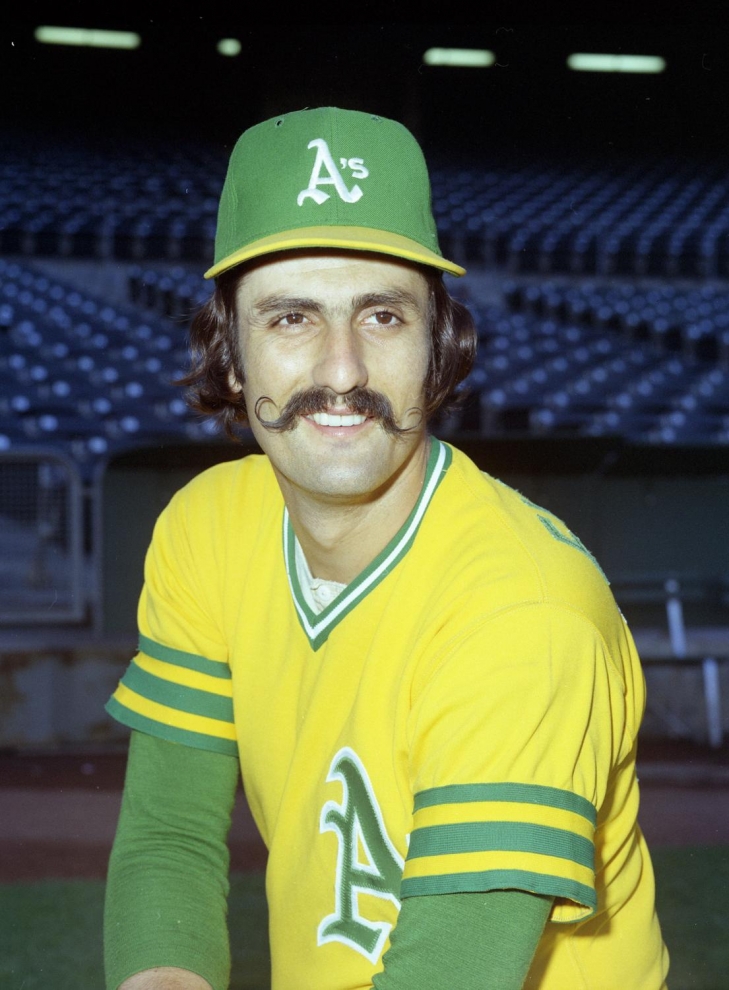
By the late 1960s, the idea of a relief pitcher wasn't new, but Rollie Fingers changed everything when he became the backbone of the Oakland Athletics’ bullpen. Before he stepped into the scene, relievers were often seen as either unsuccessful starters or veteran players nearing the end of their careers, fighting to stay on the team. Fingers broke those old stereotypes, turning the bullpen into an exciting and desirable role, and he was among the first relief pitchers to be celebrated as a true superstar in the sport.
Fingers operated predominantly as a starting pitcher during his tenure in the minor leagues. Upon his official debut in the Major Leagues with Oakland late in the 1968 season, manager Dick Williams ultimately acknowledged that his ability to throw a sharp, sinking fastball and his resilient character made him an ideal candidate for high-pressure, late-inning roles. By 1971, the transition to relief pitching had become permanent, a strategic decision that significantly influenced the course of baseball history.
He quickly became the charismatic face of the franchise’s unique identity, charming fans with his distinctive style. It all started when eccentric owner Charlie Finley encouraged him to grow a fabulous, waxed handlebar mustache. Finley even offered a $300 cash bonus to any player who could sport facial hair for a special promotion. That look, however, quickly became Fingers' signature style for life, endearing him even more to fans.
On the baseball field, he showcased incredible durability, often pitching multiple innings to secure victories long before the era of the single-inning save. From 1971 to 1976, Fingers was remarkably consistent, achieving at least 17 saves in six straight seasons while playing for the green and gold. His impressive rise to fame led to his first All-Star selection in 1973, starting a streak of four straight appearances in the Midsummer Classic as a key member of the renowned "Mustache Gang" team.
His real legacy was established when the regular season ended. Fingers became the ultimate high-pressure weapon for the historic team that won three straight World Series titles from 1972 to 1974; the only non-New York Yankees team to achieve a modern "three-peat." He was completely dominant on the sport's biggest stage, with 8 career postseason saves for the Athletics. The absolute apex of his playoff dominance arrived during the 1974 Fall Classic against the Los Angeles Dodgers. Fingers appeared in four of the five games, weaponizing his heavy sinker to earn a victory and two saves, single-handedly securing the 1974 World Series MVP honors.
Even as the historic core began to splinter under small-market financial strains, he remained a premier bullpen force, finishing third in the 1975 American League Cy Young balloting and eighth in 1976. That final summer in Oakland featured one of the most bizarre corporate episodes in baseball folklore: in June 1976, Finley abruptly sold Fingers and outfielder Joe Rudi to the Boston Red Sox for $1 million during a dramatic fire sale. However, baseball commissioner Bowie Kuhn intervened just three days later, voiding the transaction "in the best interests of baseball" and ordering both players back to Oakland.
Following the conclusion of the 1976 schedule, Fingers exercised his prerogative to evaluate the newly established free-agent market by departing from the East Bay to establish a lucrative contractual agreement with the San Diego Padres. Subsequently, he achieved significant accolades by securing both the American League Cy Young Award and the Most Valuable Player Award with the Milwaukee Brewers in 1981.
Fingers would be elected to the Baseball Hall of Fame in 1992, and was part of the first class of the Athletics Hall of Fame in 2018. With the Athletics, he had 136 saves, 67 victories, and a sharp 2.91 ERA in 502 appearances.
35. Jimmy Dykes
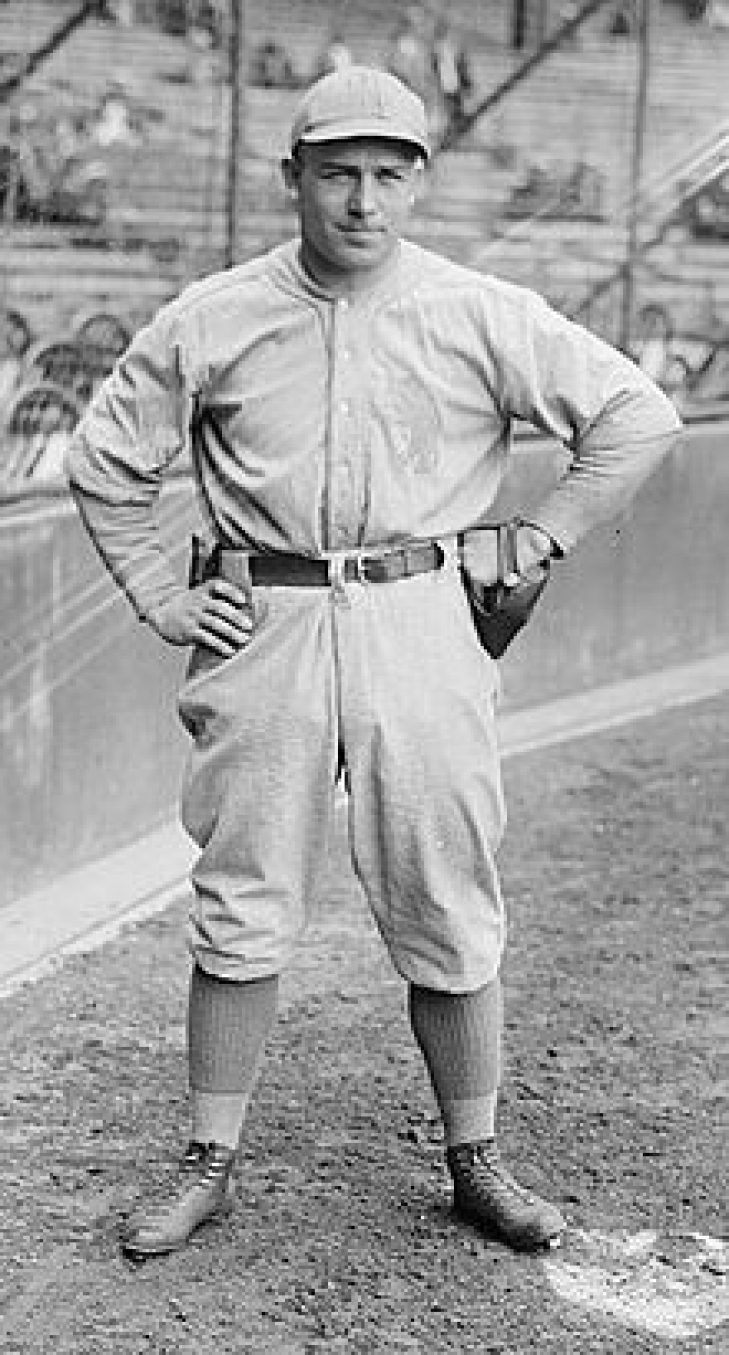
A Rule 5 Draft acquisition ahead of the 1918 season, expectations for Jimmy Dykes’s offensive production were incredibly low. Scouts widely regarded the gritty infielder as a premium glove-first prospect who possessed severe limitations at the plate. That scouting report looked entirely accurate during his first two brief tastes of the big leagues, as he slumped to a bleak, sub-.200 batting average that left many wondering if his bat would ever catch up to his defensive instincts. However, Connie Mack saw Dykes’ determination and baseball IQ despite a slow start. Given the second base job in 1920, Dykes transformed into a durable, respected franchise anchor.
His versatility became a crucial strategic asset for Mack as the roster evolved. Dykes managed second base flawlessly until the front office acquired additional middle-infield depth, prompting a smooth transition to third base. He secured the position with the same impeccable efficiency, employing an exceptional internal clock and a fast, accurate throwing arm to turn extra-base hits into routine outs.
As his defensive vacuum solidified the infield, his right-handed swing matured significantly. Dykes addressed his early critics by surpassing the .300 batting average threshold on four occasions while playing for Philadelphia, most notably by achieving a remarkable career-high .327 in 1929.
This exemplifies the ideal combination of superior defensive versatility and consistent, high-contact batting, which played a pivotal role in the organization’s development of its second legendary powerhouse dynasty. Dykes served as the cornerstone of the infield, leading the Athletics to secure three consecutive American League pennants from 1929 to 1931, including consecutive World Series titles in 1929 and 1930. He was an unwavering performer under high-pressure conditions at the sport's most significant events, notably driving in four runs during the remarkable eight-run rally in Game 4 of the 1929 Fall Classic against the Chicago Cubs.
While the roster remained an elite American League force into the early 1930s, the harsh financial realities of the Great Depression soon forced a painful institutional transition. With plummeting attendance threatening the franchise's solvency, a cash-strapped Mack was forced to liquidate his high-priced stars. Following the 1932 campaign, Dykes was packaged with legendary outfielder Al Simmons and Mule Haas and sold to the Chicago White Sox in a massive blockbuster deal designed to keep the Philadelphia front office afloat.
With the Athletics, Dykes accumulated 1,705 hits, 365 doubles, and gained entry into the Philadelphia Baseball Wall of Fame in 1984.
37. Socks Seybold
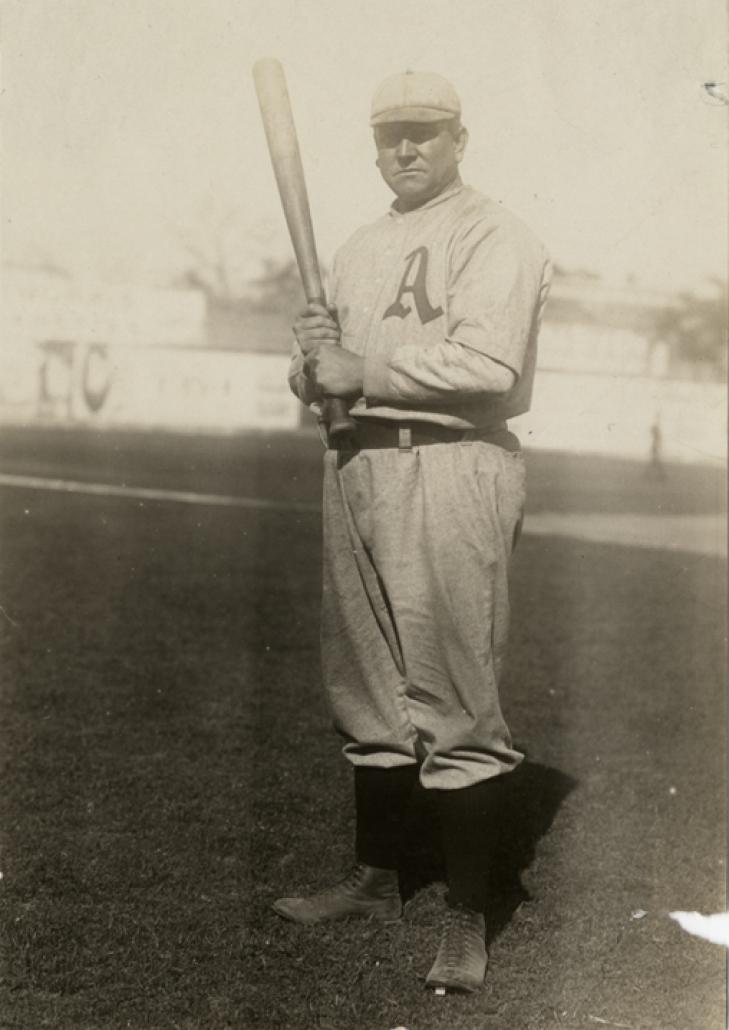
When baseball historians debate the greatest home run champions, Ralph "Socks" Seybold rarely comes up. His career is a collection of historical anomalies.
Seybold was an imposing, burly athlete of the dead-ball era, weighing approximately 200 pounds. Due to his persistent difficulty in maintaining optimal physical condition, he spent nearly his entire twenties performing in minor league teams. Most scouts had entirely dismissed his potential; however, Connie Mack recognized a raw, substantial power that had been overlooked by others. Consequently, he took a chance on the veteran slugger, positioning the 30-year-old "rookie" in left field during the inaugural season of the Philadelphia Athletics in 1901.
Seybold responded to his manager's trust with a stunning offensive breakout. He shut down his critics by posting an impressive .334 batting average, blending his powerful build with a surprisingly smooth swing, quickly earning him hero status among the Shibe Park fans.
The pinnacle of his major league career came in 1902. Seybold excelled in extra-base hits, winning the American League home run title with 16, a record that remained the league's single-season best until Babe Ruth broke it nearly 20 years later. That year, he also achieved a career-high 97 RBIs and maintained an impressive .316 batting average, helping the Athletics secure their first-ever American League pennant.
The natural effects of aging and his ongoing struggle with physical fitness quickly impacted his performance. During the 1908 season, Seybold's abilities declined sharply, and he soon left the major leagues, returning to finish his career in the minors.
He concluded his brilliant, compressed eight-year stay in Philadelphia with 1,066 hits, 51 home runs, and a strong .296 career batting average.
32. Dwayne Murphy
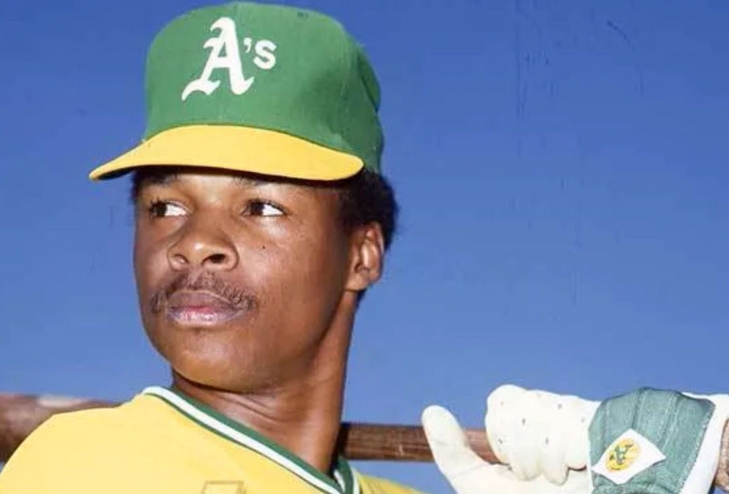
When Dwayne Murphy first appeared for the Oakland Athletics in 1978, his long-term MLB prospects seemed uncertain. Drafted in 1973 as a high school shortstop, he spent five years in the minors sharpening his outfield skills. His initial 60 games in the majors tested his patience, with a sub-.200 batting average that raised doubts about his bat catching up to his speed.
However, the front office persistently believed in his potential. Appointed as the regular starting center fielder in 1979, Murphy quickly developed into one of the most intellectually astute and defensively talented players of his time. His true legacy was built on the field at the Coliseum, where he transformed center field into an almost impenetrable zone for extra-base hits. Murphy exhibited remarkable, fearless athleticism in this position, famously intercepting passes with such speed and intensity that his cap was often blown off during complex plays. His defensive metrics were extraordinary; in 1980, he led all of baseball with an impressive 501 putouts, one of only six seasons in major league history where a center fielder recorded over 500 putouts. This outstanding achievement earned him his first Rawlings Gold Glove Award, beginning a remarkable streak of six consecutive Gold Gloves from 1980 to 1985.
Nonetheless, an exclusive focus on his elite defensive prowess overlooks the distinctly selfless role he fulfilled at the plate. Batsmen who consider only conventional metrics might dismiss his modest .247 career batting average with the Oakland team. However, Murphy demonstrated exceptional mastery of the strike zone, employing superior plate discipline to secure 102 walks in 1980 alone. Playing directly in the second position in the batting order, he functioned as the ultimate strategic protector for his renowned outfield colleague, Rickey Henderson. Murphy engaged in numerous close pitches, deliberately extending counts to afford Henderson the greatest possible space to steal bases and intimidate catchers. Henderson was so deeply appreciative of this strategic sacrifice that, after establishing a new single-season stolen base record with 130 steals in 1982, he publicly remarked that if he could break a base in half, he would give the other half to Dwayne Murphy.
When he was not taking pitches to advance Henderson, Murphy demonstrated an unexpectedly powerful stroke from the left side. He contributed significant middle-of-the-order power to the "BillyBall" era lineups, recording three separate seasons with at least 20 home runs, culminating in a remarkable, career-high 33-homer season during 1984. His tenure in the East Bay concluded quietly following the 1987 season, due to ongoing injuries and roster transitions within the small-market team, which led the front office to grant him free agency. Subsequently, he had brief concluding stints with the Detroit Tigers and Philadelphia Phillies.
He walked away from Oakland having accumulated 999 hits, 153 home runs, and a highly respectable .353 on-base percentage across his decade in the green and gold.
22. Danny Murphy
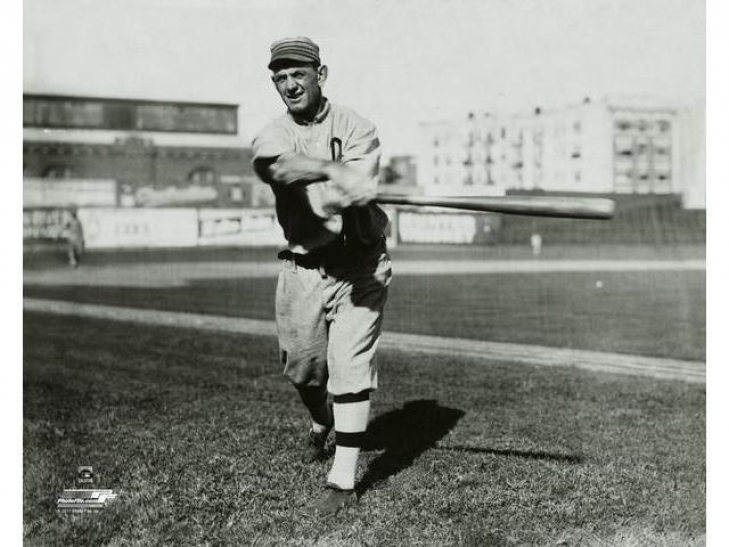
When Connie Mack established his pioneering Philadelphia Athletics dynasty at the beginning of the twentieth century, the team roster rapidly became filled with some of the most notable figures of the dead-ball era. Sharing the field with legendary players such as Home Run Baker, Chief Bender, and Eddie Plank, it was surprisingly easy for Danny Murphy to be neglected by history. Nevertheless, his adaptable, decade-long contribution served as the critical, high-impact offensive driver that contributed to the transformation of the early Athletics into a respected baseball empire.
Murphy arrived in Philadelphia during the midpoint of the 1902 season, initially establishing himself as the team's regular second baseman. He managed the position with consistent reliability until the emergence of a young, generational talent prompted a tactical adjustment. Acknowledging the exceptional defensive skills of future Hall of Famer Eddie Collins, Mack decided to reposition Murphy from the infield to the outfield. Rather than allowing the demotion to adversely affect his mindset, Murphy embraced the transition, demonstrating commendable selflessness and adaptability that maintained the elite defensive standard of the infield while ensuring his potent bat remained in the lineup.
That bat proved to be a highly potent weapon in an era defined by low-scoring, tactical baseball. Murphy was a remarkably aggressive, line-drive hitter who accumulated 1,489 hits during his pinstriped tenure. While his free-swinging approach resulted in a relatively low .336 on-base percentage, his raw, extra-base power was an absolute anomaly for the period. He possessed an uncanny ability to drive the ball deep into the gaps, twice finishing second in the American League in triples and placing inside the junior circuit's top ten in slugging percentage and overall OPS on six separate occasions.
His clutch, heavy-hitting style served as a critical catalyst when the franchise reached its absolute peak. Murphy acted as a driving force for the back-to-back 1910 and 1911 World Series Championship teams, routinely delivering high-leverage hits in the Fall Classic to help secure the organization's first tastes of global supremacy.
His extended tenure in Philadelphia ultimately concluded after the 1913 season. Similar to numerous undercompensated star athletes of his era who became increasingly dissatisfied with Mack's stringent financial policies, Murphy opted to switch leagues by signing a lucrative contract with the nascent Federal League's Brooklyn Tip-Tops. He ended his distinguished eleven-year tenure with the Athletics with a robust .290 batting average, leaving a legacy characterized by discreet, versatile excellence that laid the groundwork for the sport's inaugural significant American League dynasty.
30. Rube Walberg
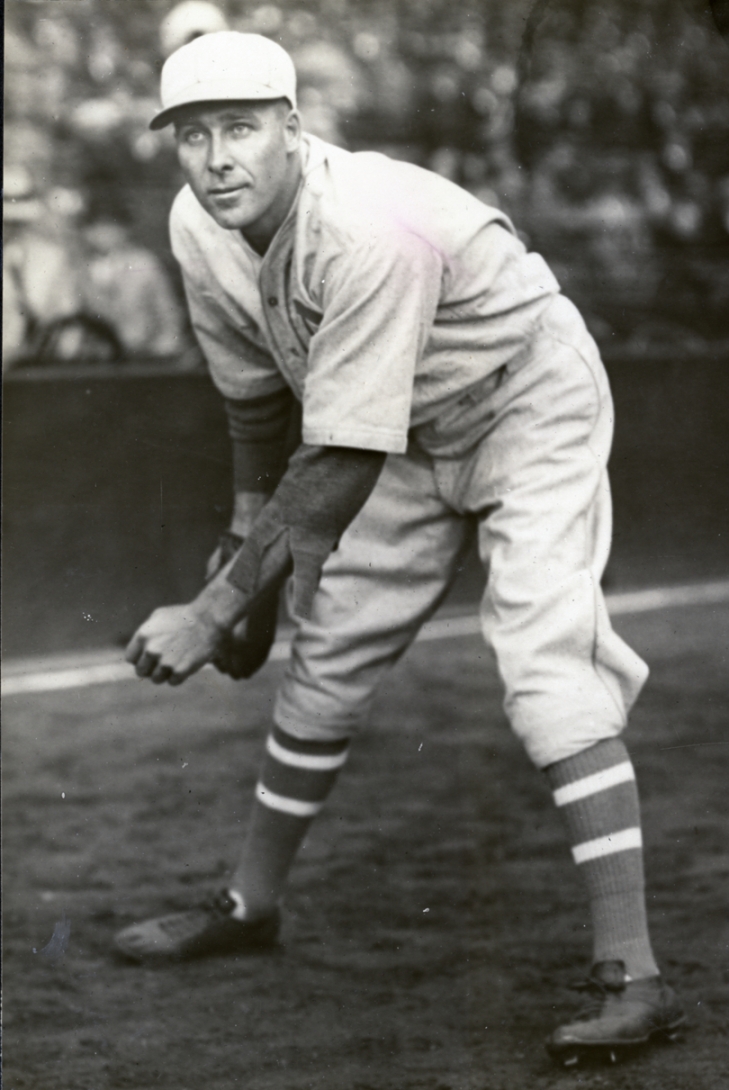
Rube Walberg holds the dubious distinction of serving up the most home runs to Babe Ruth with 17. That might seem like a strange way to open, but remember the Athletics thought enough of him to keep putting him on the mound.
31. Joe Rudi
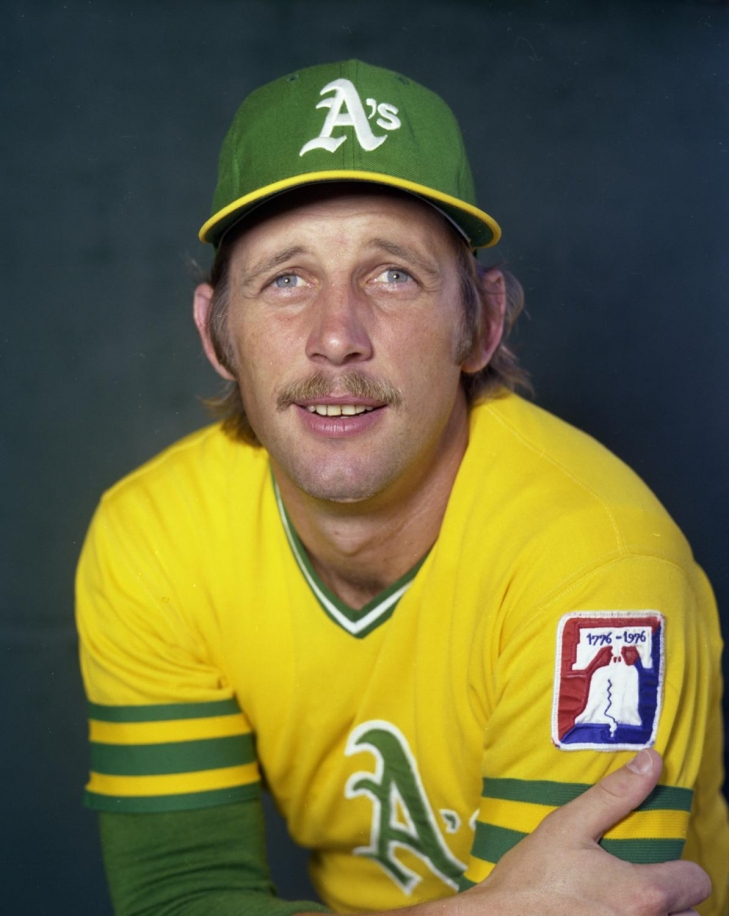
When Joe Rudi first donned the Athletics uniform, the franchise was preparing to relocate. He appeared in just 19 games in 1967 during its last summer in Kansas City, before moving west to California. His early years in Oakland were challenging; he was stuck in a part-time role and struggled to find his rhythm, with his batting average staying below .200.
Everything shifted in 1970. With a permanent starting position in left field for a quickly ascending, powerhouse team, Rudi finally found his rhythm at the plate, showcasing a smooth, line-drive swing to achieve an impressive .309 batting average and solidify his role as a vital core member.
By 1972, the Athletics were poised to establish one of the most dominant dynasties in modern baseball, with Rudi leading the charge. He showcased an exceptional offensive display that summer, leading the American League with 181 hits and 9 triples, while also hitting 19 home runs and maintaining a solid .305 batting average. This breakout year earned him his first All-Star selection and a close second place behind Dick Allen in the AL MVP voting.
More importantly, it laid the groundwork for October folklore. In Game 2 of the 1972 World Series versus Cincinnati, Rudi created a memorable franchise moment by leaping high against the left-field wall to make a stunning backhanded catch that saved the game and helped secure the first of three consecutive world titles.
Although his raw percentage metrics dipped slightly during his 1973 title defense, he rebounded strongly in 1974. Rudi dominated junior circuit pitchers, leading the league with 39 doubles, setting a career high with 22 home runs, and driving in 99 runs. For the second time in three years, he finished as a close runner-up in the AL MVP voting, narrowly behind Jeff Burroughs.
The historic 1974 season also saw a significant defensive achievement, as he earned his first of three straight Rawlings Gold Glove Awards, transforming left field into an impenetrable zone for the "Mustache Gang." He capped the year by hitting the decisive, World Series-winning home run in Game 5 against Los Angeles' Mike Marshall, securing the team's record-breaking “three-peat."
He achieved an additional highly productive season in 1975, with 21 home runs. However, the impending financial challenges associated with free agency soon resulted in widespread organizational disorder. In June 1976, owner Charlie Finley, facing financial difficulties, unexpectedly sold Rudi and relief pitcher Rollie Fingers to the Boston Red Sox for a substantial sum of money during a notable fire sale. This transaction garnered significant media attention; nevertheless, commissioner Bowie Kuhn intervened merely three days later, nullifying the deals and mandating the return of both players to Oakland.
Rudi finished out the summer in the green and gold, but with the reserve clause dissolved, he immediately exercised his right to test the open market at season's end, walking away to sign a lucrative contract with the California Angels.
After subsequent stops with the Angels and Red Sox, his baseball journey reached a beautiful, full-circle conclusion in 1982. Rudi returned to Oakland for one final, nostalgic season, closing out his playing days under the Coliseum sun.
Rudi would contribute 1,468 Hits with 179 Home Runs for the Athletics and was elected to the Athletics Hall of Fame in 2022.
33. Topsy Hartsel
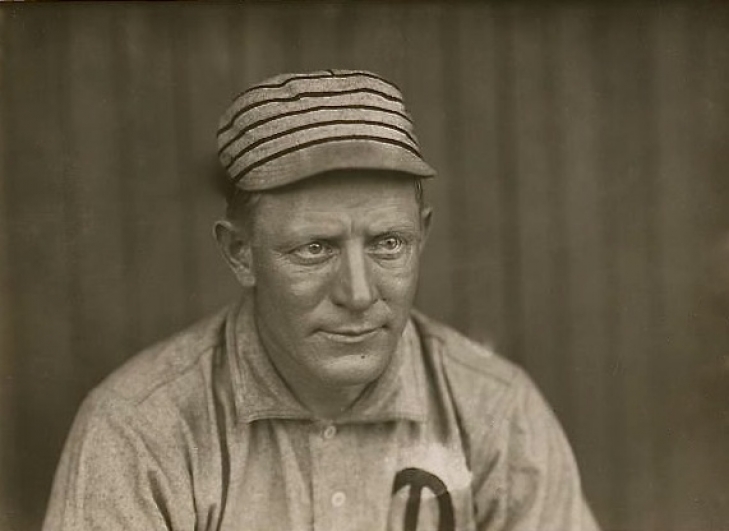
Connie Mack aimed to quickly turn his newly established Philadelphia Athletics into a dominant American League team. He sought a particular kind of player, one who was smart, disciplined, low-maintenance, and unaffected by a deep count. Tully Frederick "Topsy" Hartsel served as the ideal model for this approach.
After an impressive 1901 season with the Chicago Orphans in the National League, where he made 187 hits and maintained a .335 batting average, Hartsel decisively moved to the emerging junior circuit. Mack promptly placed the short, 5-foot-5 outfielder at the top of the batting order, establishing a leadoff strategy that would challenge opposing pitchers for the following decade.
Hartsel demonstrated exceptional proficiency as a leading offensive contributor from the moment he took to the field at Columbia Park. His debut season in 1902 with Philadelphia served as a distinguished example of excellence in the top of the batting order, as he led the American League in runs scored (109), walks (87), and stolen bases (47).
Although a severe hand injury and the inherent friction characteristic of the dead-ball era impeded his ability to attain that astronomical stolen base threshold again, his rapid baserunning continued to be remarkably effective, as he successfully stole double-digit bases in each successive summer through 1908.
Mainstream publications of the era occasionally mischaracterized Hartsel as a light hitter because he crossed the conventional .300 batting average threshold only once while wearing pinstripes, achieving a .309 batting average in 1903. However, evaluating his offensive prowess solely based on hits significantly underestimates his true skill. Possessing an exceptionally disciplined approach within a highly restricted strike zone, an advantage largely facilitated by his modest stature, Hartsel regarded a walk with the same respect as a line drive.
He demonstrated exceptional plate discipline from 1905 to 1908, leading the American League in walks for four consecutive seasons and winning the junior circuit's on-base percentage title twice. His consistent ability to generate traffic resulted in an impressive .402 on-base percentage during this peak period, ensuring that the power hitters batting behind him constantly received intentional bases on balls with runners in scoring position.
While his regular-season volume and sheer patience kept the Athletics in fierce contention throughout the 1900s, his role naturally evolved as Mack’s first great dynasty matured. During the historic 1910 championship run, the veteran outfielder was relegated to a part-time role, appearing in just one Fall Classic game as Philadelphia captured the world title. By the 1911 season, his transition away from the active roster was complete; he spent the summer as a highly respected player-coach under Mack rather than a daily lineup fixture, quietly securing his second World Series ring from the dugout steps before hanging up his cleats.
Hartsel concluded his brilliant ten-year run in Philadelphia with 1,087 hits, 725 walks, and a highly advanced .393 on-base percentage
25. Barry Zito
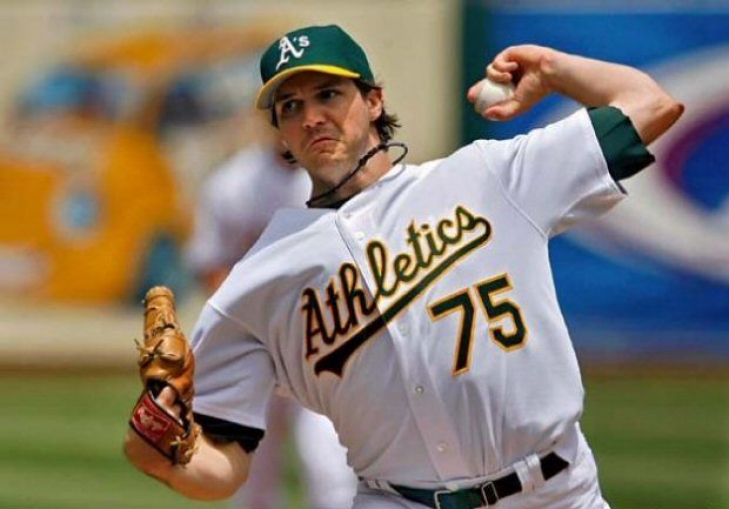
When Barry Zito was called up midway through the 2000 season, he provided the final, mesmerizing piece to a pitching puzzle that would captivate the baseball world. Joining forces with Tim Hudson and Mark Mulder, Zito completed the triumvirate of Oakland’s "Big Three" starting rotation. While his counterpart aces relied on explosive, sinking fastballs to dismantle hitters, Zito operated as a true aesthetic magician on the mound, carving up the junior circuit with a high-arching, 12-to-6 curveball that became the most visually stunning and widely feared weapon of its generation.
His ascent to the highest echelon of major league starting pitchers was remarkably swift. Following an impressive debut period, Zito solidified his status as a top-tier player during the 2001 season, achieving an excellent 17-win record to support the team's wild card pursuit.
The pinnacle of his career was reached during a historic 2002 season. As the leader of the renowned 20-game winning streak that characterized the "Moneyball" era, Zito delivered an exemplary pitching performance. He completely baffled opposing batters, achieving a league-leading 23 victories with only 5 defeats, complemented by 182 strikeouts and an impressive earned run average of 2.75 over 229.1 innings. The national baseball community recognized this outstanding achievement by voting Zito as the 2002 American League Cy Young Award recipient and selecting him for his first of three All-Star Games representing Oakland.
Rather than being a transient highlight, he demonstrated exceptional durability and productivity as the small-market franchise persistently advanced into October contention. Zito accumulated three additional 14-win seasons during his initial seven-year tenure in the East Bay, receiving further All-Star nominations in 2003 and 2006.
Nevertheless, the impending financial considerations of free agency ultimately compelled a geographic relocation across the Bay. After the 2006 season, Zito parted ways with the Athletics to sign a landmark, blockbuster contract with the San Francisco Giants, where he would experience significant postseason successes.
In 2015, following a year of absence from the sport, Zito re-entered professional baseball by signing a minor-league agreement with Oakland. Although he spent most of the summer mentoring prospects in Triple-A, the front office acknowledged his contributions by granting him a September call-up. He participated in only three Major League games during the concluding part of the season, but his final start in the league—a symbolic and emotional contest against his former "Big Three" teammate Tim Hudson provided an ideal, poetic conclusion to his career.
Zito would win 102 Games for Oakland against 63 Losses with 1,098 Strikeouts.
23. Tim Hudson
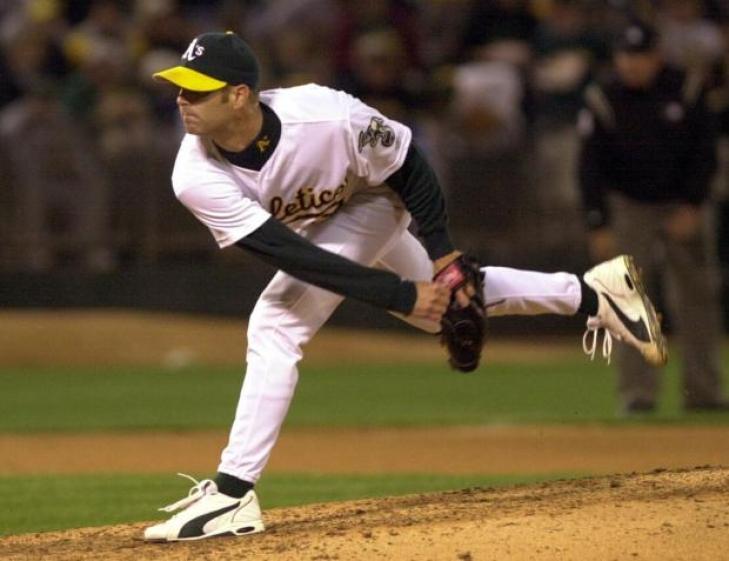
When Tim Hudson emerged in summer 1999, he quickly sparked a new era of baseball in the East Bay. Together with rising stars Barry Zito and Mark Mulder, Hudson led the legendary "Big Three" starting rotation, which would dominate the American League and become the pitching core of the renowned "Moneyball" teams of the early 2000s.
Hudson utilized a dynamic, explosive split-finger fastball and a powerful, biting sinker, establishing himself as a formidable competitor during his six years with Oakland. His skill in consistently producing weak ground balls and navigating high-pressure situations resulted in an impressive 92-39 record and a remarkable .702 winning percentage, making him one of the most efficient pitchers in the sport during that period.
His rapid ascent reached an elite national peak during his sophomore 2000 campaign. Putting on an absolute pitching clinic for the junior circuit, Hudson paced the American League by racking up a magnificent 20 victories against just 6 defeats, carrying a sharp 4.14 ERA over 202.1 intense innings. That dominant display earned him his first career All-Star selection and a brilliant, runner-up finish to Pedro Martinez for the 2000 AL Cy Young Award.
Far from a one-year wonder, he remained remarkably consistent as the franchise's frontline workhorse, anchoring a string of four consecutive postseason appearances for the Athletics from 2000 through 2003. He supplemented his resume with two additional top-six finishes in the Cy Young balloting, placing sixth in 2001 and fourth in 2003, before securing his second All-Star nod in an Oakland uniform during a stellar 2004 season that featured a microscopic 3.32 ERA.
However, as financial constraints in a small market and upcoming free-agent prospects affected the organization, the front office orchestrated a significant transition. In December 2004, Oakland transferred their leading pitcher to the Atlanta Braves as part of a multi-player deal, marking the conclusion of the best chapter in his career.
18. Jose Canseco
Let’s forget about some of the things that made Jose Canseco famous (or infamous). The steroid use. The admission of steroid use. Throwing other players under the bus by (accusing) discussing their steroid use. The boxing. Madonna. The baseball that bounced off his head for a Home Run.
All true.
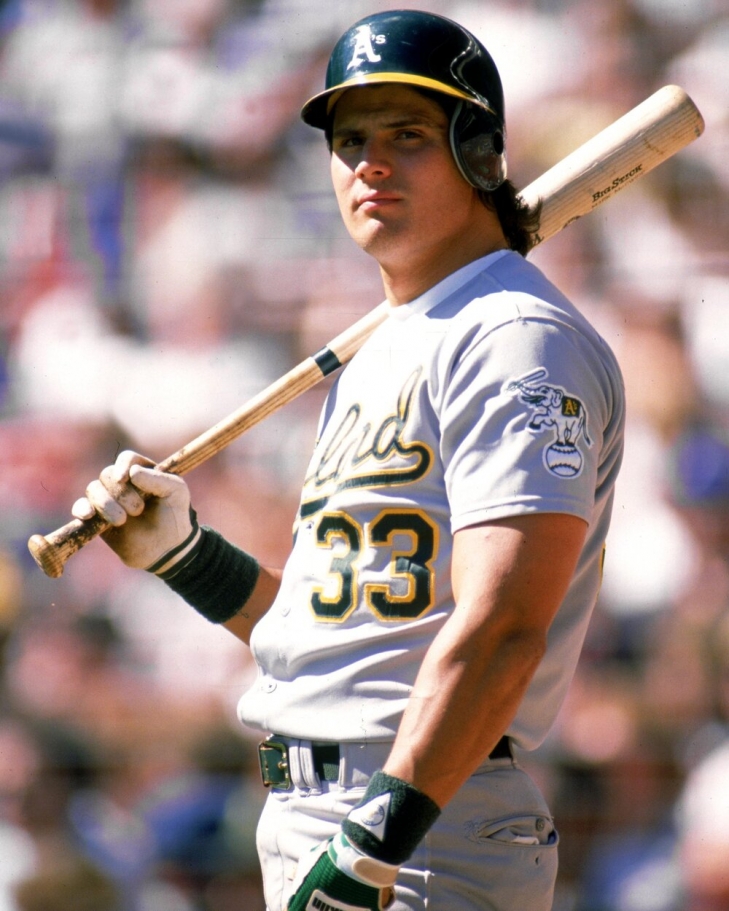
What is also true is that in the late 80s, Jose Canseco was among the most famous athletes in sports and an elite baseball player.
When the Oakland Athletics picked Jose Canseco in the 15th round of the 1982 draft, no one could have guessed they were discovering a powerful, pop-culture sensation who would change the game’s physical limits. He made a big impact during his first major appearance in late 1985 and truly took over the league in 1986. Canseco crushed American League pitching with 33 home runs and 117 RBIs, earning him Rookie of the Year honors. He repeated this impressive feat in 1987 with 31 home runs and 113 RBIs. These incredible power numbers were just the beginning, setting the stage for an extraordinary record-breaking career.
The 1988 campaign elevated Canseco to a nationally recognized figure and established him as the preeminent player in baseball. He crafted an MVP-caliber season that many traditionalists considered extraordinary, achieving the league’s first-ever 40-40 season by hitting 42 home runs and stealing 40 bases. This formidable combination of speed and power was complemented by a league-leading 124 RBIs and a slugging percentage of .569. Additionally, he significantly improved his batting average, increasing it by 50 points to .307. Together with his "Bash Brother" partner, Mark McGwire, Canseco acted as the driving force that propelled Oakland to secure the first of three consecutive American League pennants, ultimately winning a World Series title in 1989 despite missing a substantial portion of the regular season due to a fractured wrist.
He recovered fully in 1990, contributing significantly with a prolific 37 home runs and 101 RBIs, which were instrumental in leading the Athletics back to the postseason. His performance reached an even higher peak in 1991, a summer during which he secured his second American League home run title by hitting 44 home runs and driving in 122 runs, thus earning a fourth-place position in the MVP voting. He was a genuine icon in green and gold, combining remarkable distance on his pull-side home runs with a flamboyant style that captivated the entire fan base.
Then came the trade that shook the sport's foundation. On August 31, 1992, with Oakland sitting comfortably six games ahead in the AL West, general manager Sandy Alderson executed a midnight blockbuster, trading Canseco to the Texas Rangers while he was literally standing in the on-deck circle. Seeking starting pitching depth for the stretch run, management traded away the face of the franchise in what remains one of the most shocking transactions in baseball history.
A 1997 reunion marked the final chapter, allowing him to hit 23 more home runs for Oakland before ending his multi-stint tenure with 254 home runs, a.507 slugging percentage, five All-Star selections, and three Silver Sluggers. Decades after his powerful blasts shook the Coliseum, the franchise finally honored its superstar, inducting Canseco into the Athletics Hall of Fame in August 2024.
