

175. Noodles Hahn
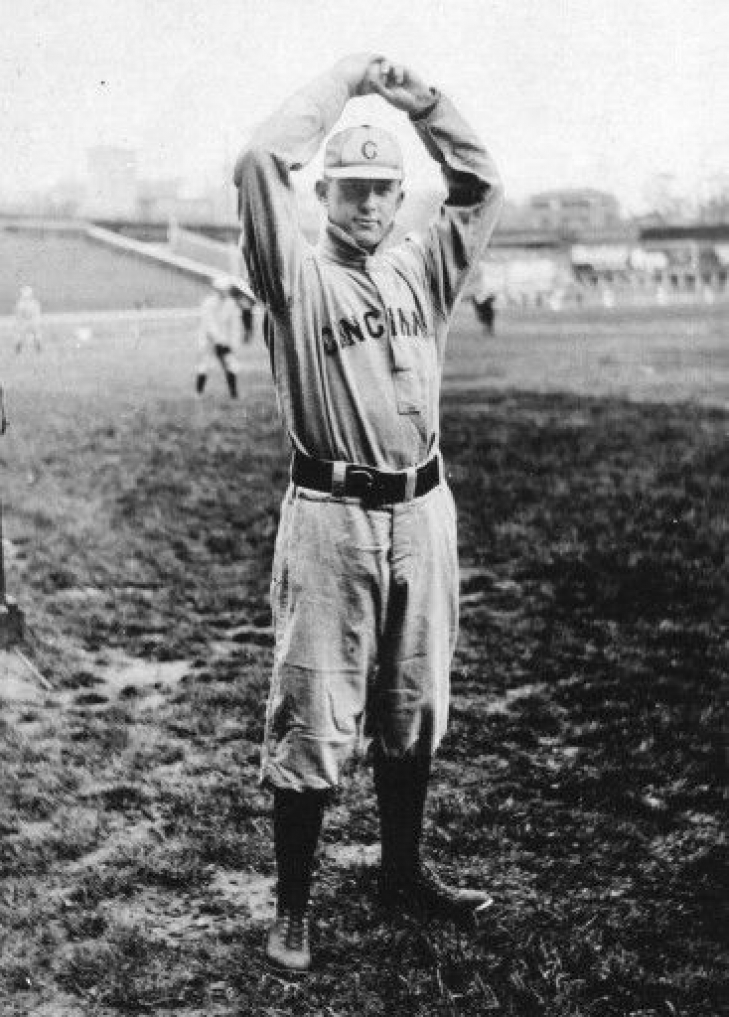
Frank “Noodles” Hahn may not have completed the necessary ten years in the Majors to be in the Baseball Hall of Fame, but that does not stop us from ranking him.
In 1899, Hahn made his Major League debut eleven days before his 20th birthday and, in his first five seasons were among the best by any Cincinnati Red Pitcher. Hahn didn't own a commanding fastball, but he did have excellent accuracy. He led the National League in Strikeouts in his first three seasons, and while Cincinnati was not that good, he had four 20 Win seasons over that time frame.
Hahn had arm trouble in 1905, and he was never the same, out of the Majors by age 27. Despite his short career, Hahn remains one of the best hurlers in Reds history.
11. Noodles Hahn
Cincinnati found a statistical titan in 1899 when a young Noodles Hahn debuted and immediately matured into the most feared strikeout artist in the National League. He arrived with a deceptive delivery and a relentless competitive streak, capturing the league's strikeout title in each of his first three seasons. His "Traditional Dominance" reached an iconic crescendo in 1901 when he etched his name into the history books by hurling the very first no-hitter of the 20th century. He wasn't just a part of the staff; he phenomenon who routinely shouldered a disproportionate share of the team's success.
The true weight of his is best seen through the lens of positional scarcity and efficiency. During an era where the Reds often struggled to field a competitive roster, Hahn remained a lighthouse of quality, frequently leading the league in innings pitched and complete games while maintaining a microscopic ERA. Hahn was a perennial leader in bWAR, proving that he was effectively providing Hall of Fame-level value in a vacuum. He was the rare pitcher who could dictate the pace of a game entirely on his own terms, regardless of the supporting cast behind him.
His legacy was built on this iron-man reputation. Hahn was the definition of a workhorse, often pitching on short rest to give his team their only reliable chance at a victory. He concluded his Cincinnati tenure with a resume that many modern analysts consider the most effective in the team’s long history, a legacy built on missing bats and finishing what he started. However, the sheer volume of his early-career usage eventually led to the inevitable.
The sun began to set on his career far too soon as the relentless toll on his arm became impossible to ignore. Like so many of the great "arms of iron" from the Deadball Era, his physical ceiling was reached well before he hit the age of 30. He moved on from the game before he could accumulate the massive career totals of some of his peers, but the quality of his peak was undeniable.
Recognition for his historic brilliance arrived in 1963 when he was rightfully inducted into the Cincinnati Reds Hall of Fame.
