

13. Ryan Miller
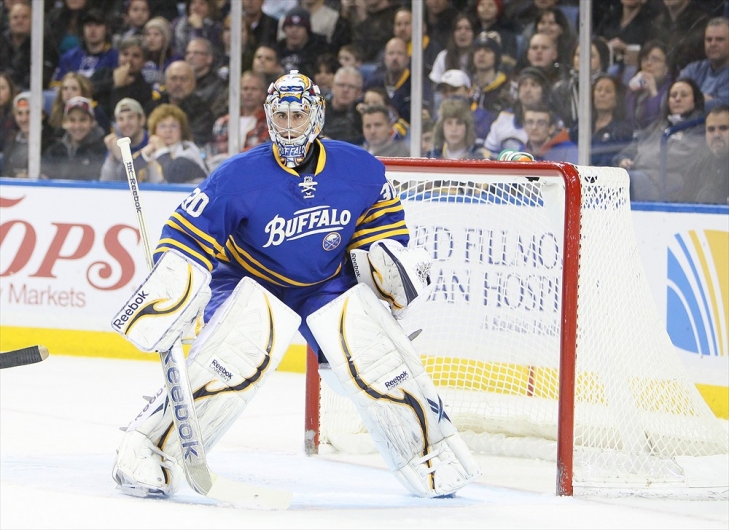
Because of the sheer greatness of Dominik Hasek, Ryan Miller was never going to be the best Goalie in Sabres history. That being said, we know that Miller was pretty damned good.
Miller joined the Sabres organization after three years at Michigan State, and in his fourth year of professional hockey, Miller became the primary netminder for Buffalo. He kept his GAA well under three, and finished sixth in Vezina voting in 2006-07, but Miller would have a banner year in 2009-10. That season, Miller led the NHL in Point Shares (16.8), winning the Vezina and was fourth in Hart Trophy voting. Miller would also post career-highs in Wins (41), GAA (2.22) and Save Percentage (.929). On top of everything, Miller was the prime Goalie for the United States in the Olympics, and while the Americans fell to Canada in the Gold Medal Game, it was widely believed that Miller was the best player of the tournament.
Miller could not match that year, but he remained a strong Goalie, later playing for St. Louis, Vancouver and Anaheim, finishing an 18-year career in 2021. He played in 540 Games, and had a 284-186-57 Record with a 2.58 GAA.
110. Zach Randolph
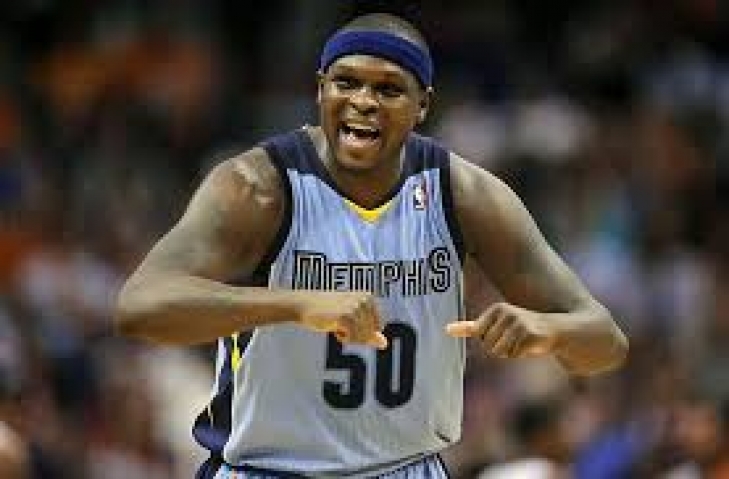
With the phenomenal nickname of "Z-Bo," Zach Randolph played one year at Michigan State before declaring for the NBA Draft. It was the Portland Trail Blazers who would take him 19th overall, and he became the starting Power Forward two years later. That season, Randolph won the Most Improved Player of the Year Award and had his first 20/10 year. He would accomplish the 20/10 feat again in 2006-07.
289. Rich Saul
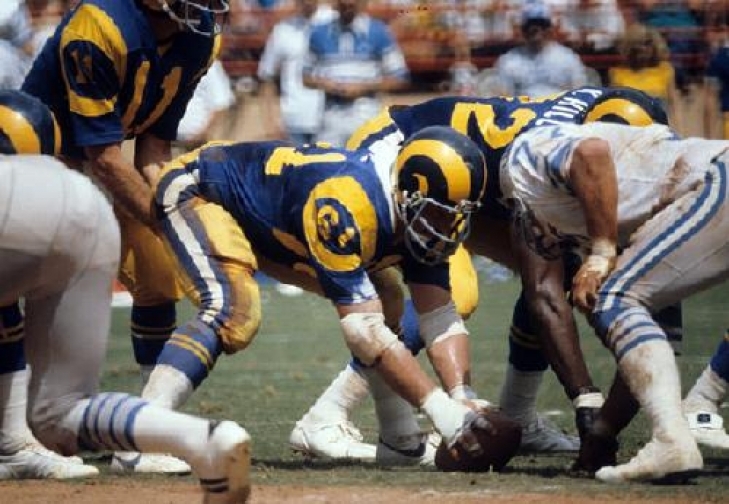
Rich Saul did not accomplish that much in the first half of his career, where he bounced around the Rams O-Line for the first five years, but there was definite value in the former Michigan State Spartan. Saul became the starting Center in 1975, and from 1976 to 1981, he made the Pro Bowl and was clearly among the upper echelon of Centers for the last half of the 70s. The Rams went to Super Bowl XIV, and he was part of the reason they succeeded during that time frame.
241. Carl Banks
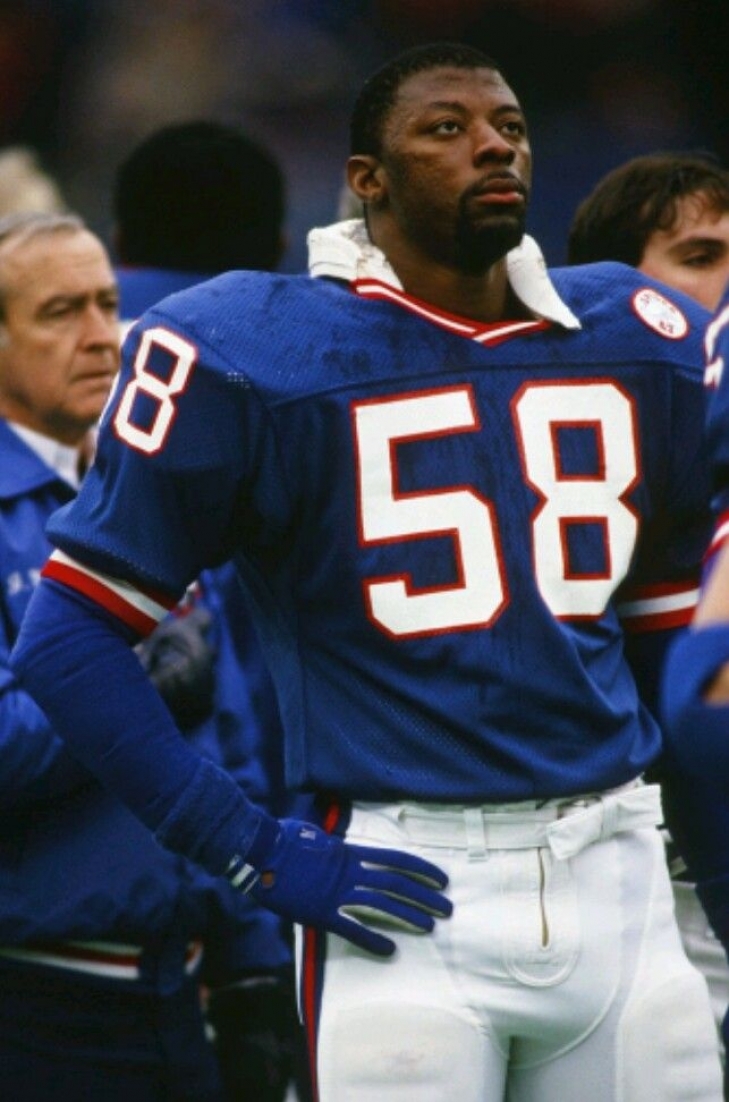
Drafted 3rd Overall in 1984 from Michigan State, the New York Giants would have a longtime fixture in their Linebacking corps in Carl Banks. Banks was an All-Rookie Selection, and he later earned Pro Bowl honors and First Team All-Pro honors in 1987, the year after he played a major role in their Super Bowl XXI win. Banks would again hoist the Lombardi Trophy high four years later in Super Bowl XXV.
Banks may have been only chosen for one Pro Bowl, but he was easily in contention for many others. A master at closing in on Tight Ends and eliminating them from plays, he was named to the 1980s All-Decade Second Team. Banks finished his career with Washington and later the Cleveland Browns.
252. George Saimes
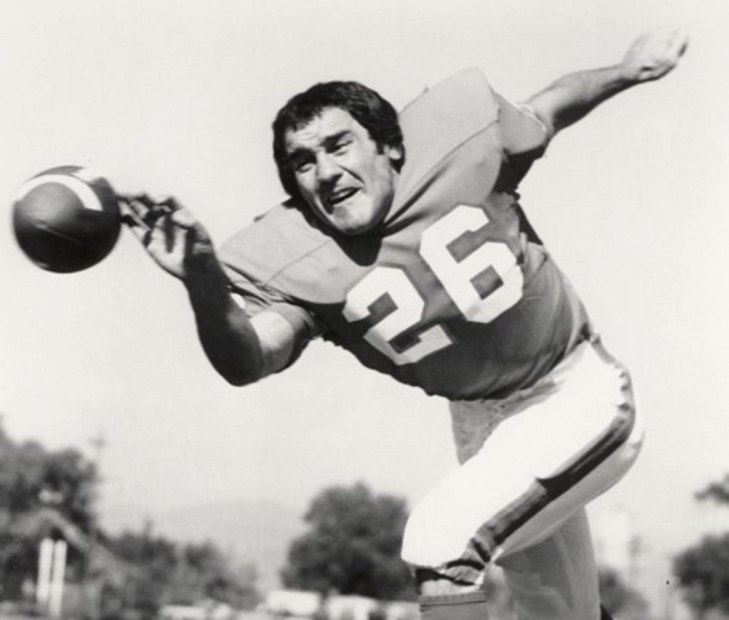
Born (and died) in the most football-like city on this planet, Earth (Canton, Ohio), George Saimes would sign with the Buffalo Bills in 1963 after playing collegiately at Michigan State.
Saimes wasted no time securing a starting Defensive Back job with Buffalo, and in his second season, he earned the first of three First All-Pro Selections (the others coming in 1965 and 1967). In 1964, Saimes also began a five-year streak of AFL All-Star Selections, though he treasured more that he and the Buffalo Bills won the AFL Championship that season and the year after.
Saimes would play for the Bills until 1969 and joined the Denver Broncos for three years after. He is a member of the AFL All-Time Team.
Writers of his day called him one of the best open-field tacklers, a skill that never goes out of style!
58. Ed Budde
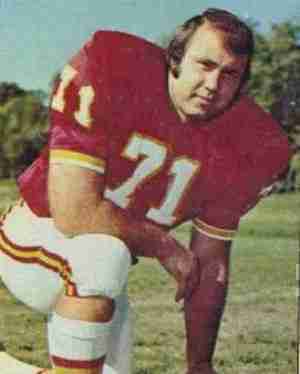
Len Dawson was one of the great quarterbacks in the American Football League, but a big reason he could do what he did was that Ed Budde helped him stay upright.
As the Left Guard during the first good run of the Kansas City Chiefs, Ed Budde was a punishing blocker who captained the Chiefs’ O-line. He was a multiple-time AFL All-Star and later earned two Pro Bowl selections. Powerful and agile, Budde helped Dawson and company win Super Bowl IV and was considered one of the best linemen in the AFL. He has a spot in the Kansas City Chiefs Hall of Fame, but without a previous nomination to the Football Hall of Fame, the trip from Kansas City to Canton seems long.
Should Ed Buddle be in the Hall of Fame?
92. Johnny Green
245. Derrick Mason
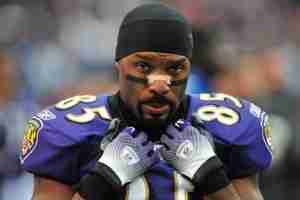
Although Derrick Mason produced strong career statistics and had multiple seasons tabulating over 1,000 Receiving Yards, it is hard to make a strong case for Mason to receive a Hall of Fame induction. Mason was the star receiver for both Tennessee and Baltimore, though he played in an era when the game opened up, and stars were perceived as superior at Wide Receiver. Only earning a trip to the Pro Bowl twice and one All-Pro Selection reflects that fact, though that was primarily from his Punt and Kick Returning. Still, that was the season (2000) in which he led the NFL in All-Purpose Yards.
