

Which Las Vegas Aces saw their Hall of Fame chances increase?
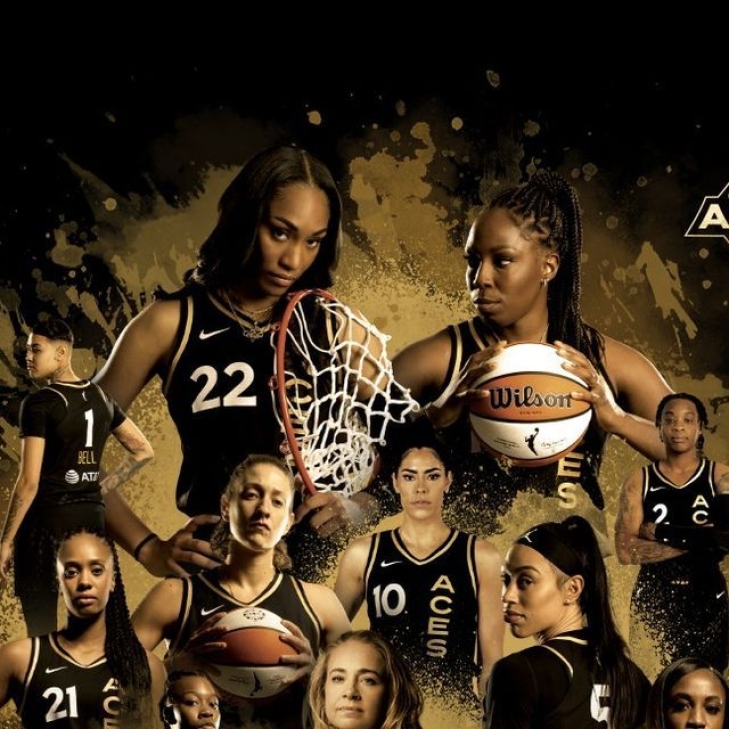
The Las Vegas Aces are a special team, having just won their second straight championship, and could be a squad that has a chance to be a WNBA dynasty.
Whenever a title is won, it naturally helps key players make their respective Halls of Fame, and this win could help bring five women closer to Springfield.
Despite not winning what would have been her third MVP (she finished third) A’Ja Wilson is the team’s star, leader, and arguably the new face of the league. She has only played six seasons, but the Basketball Hall does not have any minimum level of service. No eligible player in either the WNBA or NBA who is a two-time MVP and two-time Champion will fail to gain enshrinement. She might be well under 30, but Wilson is a first ballot entrant now!
Wilson is Las Vegas’ certifiable star, but one player can win a title alone. Chelsea Gray, who is a nine-year veteran, added a fifth All-Star this year, and is a three-time WNBA Champion, two with the Aces and her first with the Los Angeles Sparks in 2018.
Jackie Young, who arguably was Las Vegas’ second best player this season, is not a Hall of Famer yet, but the number two on a dynasty can walk into a Hall (see, Pippen, Scottie). At only 26, the best should be yet to come for Aces’ Guard.
Kelsey Plum, who is one of Vegas’ most popular stars, might be helped the most. Approaching 30, Plum has only been an All-Star two times, but like the others, is not a repeat champion. Her resume is already bolstered by her popularity (that shouldn’t matter, but it does), and the fact that she is the all-time NCAA scoring leader, and remember that the Hall looks at all aspects of a player’s career.
The Basketball Hall of Fame can reward people multiple times, and Becky Hammon is on her way to becoming a member of that elusive club. Hammon, who was already inducted into the Hall as a player, has now coached the Aces to two Titles, and was already. A successful Assistant Coach in the NBA with the Spurs for many years, proving that a woman could succeed in that role.
An honorable mention is Mark Davis, who bought the team in 2021, and has already won two titles. Under his watch, the Aces built the WNBA’s first state of the art training facility, rivaling that of any league. The Hall will not likely honor someone with such a short run, but no owner in the WNBA rivals Davis’ impact.
33. Mark Davis
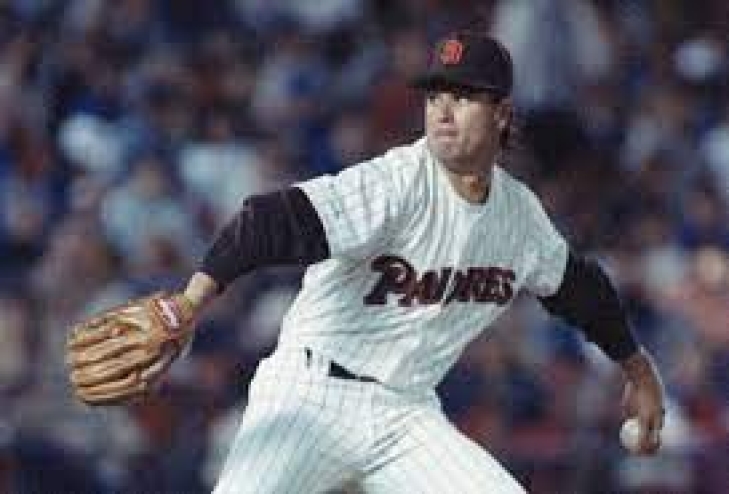
Mark Davis began his major league career as a starting pitcher, moving through Philadelphia and San Francisco without attracting much attention nationally. That unremarkable start changed during the 1987 midseason when the San Diego Padres acquired the left-hander in a blockbuster trade that sent Kevin Mitchell to the Giants. Although he finished that summer with respectable performances out of the San Diego bullpen, no one in Southern California could have foreseen the historic, award-winning peak that was about to unfold on the Jack Murphy Stadium field.
His major transformation happened before the 1988 campaign when manager Larry Bowa permanently appointed him as the closer. Davis developed a disciplined routine for closing out National League opponents, relying heavily on his exceptionally sharp, high-velocity breaking ball. That season, he recorded 28 saves with a remarkable 2.01 ERA, earned his first career All-Star selection, and ended the year without giving up a single extra-base hit in his last 22 appearances.
The peak of his hardware-certified legacy emerged during a remarkable summer in 1989, within a regular season distinguished by its breathtaking excellence. Simply put, Davis recorded one of the most dominant single-season performances by any relief pitcher in the history of the sport. During that summer, he treated the ninth inning as his personal isolation chamber, appearing in 70 games and destroying National League lineups. Davis led the senior circuit with 65 games finished and achieved a staggering, franchise-record 44 saves in 48 opportunities, maintaining an impressive 1.85 ERA and an elite 1.05 WHIP over 92.2 high-leverage innings. Advanced efficiency metrics further substantiated the exceptional quality of his dominance, as he led the league with a superb 5.8 Win Probability Added (WPA) and notably did not allow a single one of his 19 inherited runners to score during the final month of the pennant race.
Those numbers easily secured him a consecutive All-Star nod, a sixth-place finish in the National League MVP voting, and the ultimate crown: the 1989 National League Cy Young Award. He became just the fourth closer in baseball history to capture the honor, creating a peak so rare that no NL reliever would win the award again for another 14 years.
Following his Cy Young coronation, Davis' contract expired, and with his market value at an all-time high, the front office lacked the financial flexibility to retain him. He orchestrated a definitive business exit by signing a lucrative free-agent deal with the Kansas City Royals, but the transition proved catastrophic. His command completely deserted him on the Midwest turf, where his ERA ballooned past five, and he lost his closer job within months.
While he eventually returned to the Padres during the 1993 schedule in a highly nostalgic attempt to recapture old magic, the reunion yielded no results; he was highly ineffective over a brief span of frames before management initiated his final release early in 1994.
With the Padres, Davis had a 14-20 record, 78 saves with a 2.75 ERA over 230 games.
