

Missed Dialogue Can Ruin a Live Event Just as Fast as a Bad Performance
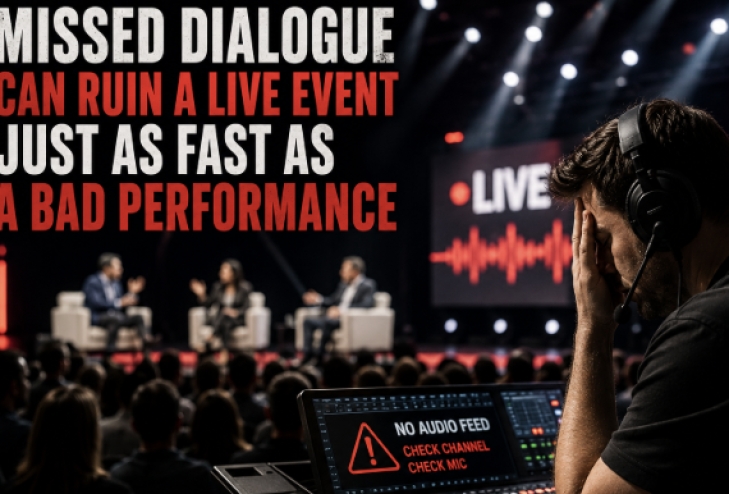
When attendees leave a live event, they rarely remember every song played or every slide shown. Instead, they carry away impressions formed by moments of genuine human connection, and often these moments hinge on what was said between the planned segments. A speaker who forgets to acknowledge the audience, an emcee who skips crucial transitions, or a panelist who fails to respond meaningfully to a question can deflate the energy in a room faster than a technical failure. The dialogue that happens during a live event is not filler material to be rushed through or overlooked. It is, in many ways, the glue that holds the entire experience together.
How Dialogue Shapes Audience Perception
The unscripted moments in live events carry enormous weight in how audiences perceive success or failure. When a speaker engages directly with the crowd, asks rhetorical questions, or acknowledges shared experiences, attendees feel seen and valued. Conversely, when these conversational elements are missing or poorly executed, the event feels hollow regardless of how polished the presentation might be otherwise. A performer could deliver flawless technical content while maintaining complete emotional distance from the room, and the audience will sense that disconnect. The absence of genuine dialogue transforms what should be a shared experience into something that feels transactional. This dynamic applies equally to corporate conferences, academic seminars, community gatherings, and entertainment venues.
The Cost of Poor Transitions and Missed Cues
Live events depend on smooth transitions between segments, and these transitions almost always involve spoken dialogue. When an emcee fails to properly introduce a speaker, the incoming performer must work harder to establish credibility and connection. When a moderator misses a cue to acknowledge a question from the audience, that questioner and those near them feel dismissed. These gaps create awkward silences that ripple outward, making other attendees uneasy and less likely to participate later. A single poorly handled handoff between presenters can undermine the momentum an event has built over hours. The cumulative effect of multiple missed dialogue moments can turn a potentially memorable experience into one that attendees actively forget or remember negatively.
Building Genuine Connection Through Prepared Flexibility
Successful live events require a paradoxical balance: speakers and facilitators must prepare their dialogue while remaining flexible enough to respond authentically to the room's energy. This means having a script or outline for key talking points, but not delivering every line in a robotic manner. For example, a conference speaker might prepare remarks about a new industry trend, but the most memorable moment may come when they pause to ask the audience how that trend has affected their specific work. This prepared flexibility also means training all event personnel to handle unexpected questions, technical delays, or audience reactions with grace and appropriate humor. When team members are empowered to improvise dialogue that maintains the event's tone and purpose, the experience feels natural rather than manufactured. The goal is to create space for genuine human interaction within a structured framework.
Why Silent Moments Feel Longer in Live Settings
Psychological research on human perception shows that silence or communication gaps create discomfort in shared spaces. During a live event, a ten-second pause while waiting for the next speaker feels substantially longer than ten seconds in a recorded video. When this silence occurs because of a missed dialogue cue, the discomfort multiplies because attendees sense something has gone wrong. The mind fills these gaps with self-doubt about whether they should applaud, whether the event is running on schedule, or whether something technical has failed. A seasoned event host knows that a brief, relevant comment, joke, or acknowledgment keeps the audience oriented and engaged during transitions. Even a simple statement such as "While we're getting our next speaker set up, I want to take a quick look at our earlier poll results" fills the void with purposeful content. This proactive dialogue prevents the mental friction that arises when attendees are left wondering what happens next.
Planning Dialogue as Carefully as You Plan Performance
Professional event planners recognize that the words spoken between main segments deserve as much attention as the featured performances or presentations themselves. This means creating a detailed runbook that outlines not just what happens, but what will be said and by whom at each transition point. It means rehearsing with emcees and hosts to ensure they understand the event's flow and can speak about it confidently. It means training speakers on how to handle audience questions even if those questions were not anticipated in advance. Providing accessible realtime captions for live events is one practical method organizers use to ensure that no spoken dialogue is lost on attendees with hearing differences or those seated far from the sound system. When dialogue is planned deliberately rather than left to chance, the event maintains its intended pacing and emotional arc, and that preparation creates a foundation from which genuine, responsive interaction can flourish.
Conclusion
The quality of dialogue in a live event carries as much weight as the quality of the performances and presentations. Audiences disconnect when speakers fail to engage them through meaningful communication, when transitions lack proper introduction or acknowledgment, or when the space between planned segments feels empty and uncertain. By recognizing dialogue as a critical component of event design rather than an afterthought, organizers can significantly improve the overall experience. This requires preparing key talking points for transitions, training team members to handle the unexpected with poise, and remaining flexible enough to respond authentically to audience energy. The most successful live events are not necessarily those with the flashiest production values, but rather those where every participant on stage and in the audience feels connected through thoughtful, purposeful dialogue. When this element is done well, attendees leave with memories that endure far longer than any single performance moment.
