
Notinhalloffame List Update: 301-325 on Football Revised
The problem with running a Hall of Fame-related website is that many of the big ones we cover all have announcements within months of each other. The backbone of what we do is list-related, resulting in a long push to revise what we already have, specifically now with our Football and Basketball Lists.
At present, we have a minor update as we have completed the next twenty-five of the 2024 Football List, which will expand to 400, and you can comment on and vote on:
The new 301 to 325:
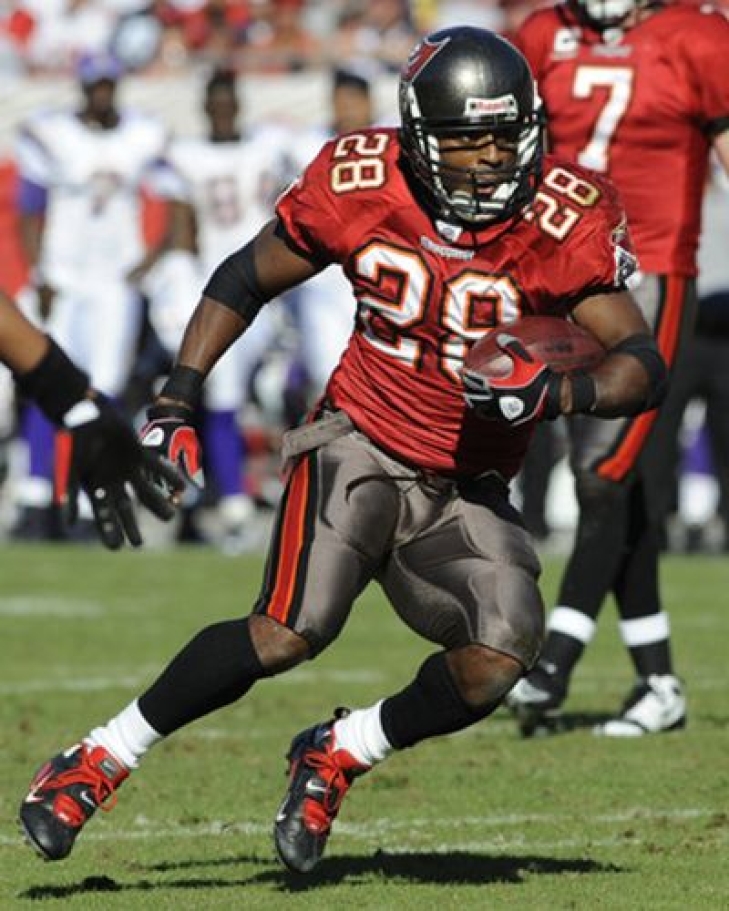
301. Warrick Dunn
302. Levon Kirkland
303. Roddy White
304. Lou Rymkus
305. Kyle Williams
306. Willie Galimore
307. Keith Lincoln
308. Jerry Norton
309. Bobby Walston
310. Sherrill Headrick
311. Wayne Walker
312. Ryan Kalil*
313. Julian Peterson
314. Casey Hampton
315. Vic Sears
316. Swede Youngstrom
317. Ron McDole
318. Daryl Johnston
319. Nnamdi Asomugha
320. Bob Talamini
321. Sam Madison
322. Wesley Walls
323. Gaynell Tinsley
324. Jack Ferrante
325. Bubba Baker
*Denotes First Year of Eligibility.
Rankings are impacted annually based on your comments and votes.
Thank you all for your patience. We will soon unveil more changes to the football, basketball and hockey lists.
39. Keith Lincoln

Keith Lincoln came out of Washington State and chose the Chargers over the Buffalo Bills, who had also drafted him in 1961, signing with San Diego as a second-round AFL pick. He saw limited action as a rookie, then became a regular the following year and earned AFL All-Star honors for the next four seasons. He was a tough, versatile back who could run between the tackles, catch passes out of the backfield, and even throw the occasional option pass, giving Sid Gillman’s offense another weapon who could move the chains or break a big play.
His peak arrived in 1963, when he rushed for 826 yards and earned First-Team All-AFL honors. That year the Chargers won the AFL championship, and Lincoln was named the game’s MVP after a dominant performance against the Boston Patriots. He carried 13 times for 206 yards (including a 67-yard touchdown), caught seven passes for 123 yards and a score, and even completed a 20-yard pass, finishing with a then-record 329 yards from scrimmage in the 51-10 rout. He repeated as a First-Team All-AFL selection in 1964 and remained a productive dual-threat through the mid-1960s, mixing power runs with receiving production that kept defenses from focusing solely on halfback Paul Lowe or the serious threats outside.
Lincoln stayed with the Chargers until he joined the Bills in 1967. Across his primary stretch in San Diego, he accumulated roughly 7,000 all-purpose yards, making him one of the more complete offensive contributors of the early Chargers era.In 1980, the franchise enshrined him in its Hall of Fame, recognizing the multi-purpose back whose championship-game performance remains one of the most memorable individual efforts in the franchise’s history.
314. Keith Lincoln

A member of the San Diego Chargers Hall of Fame, Keith Lincoln, was drafted in the 2nd Round by San Diego in 1961 (he was also a 5th Round Pick by the Chicago Bears of the NFL). It was an excellent choice for both parties, as it did not take long for Keith Lincoln to establish himself as one of the better running backs in the AFL.
Lincoln would become a four-time All-Star with the Chargers and was a two-time First Team All-Pro for the team and would accumulate 4,387 Yards From Scrimmage. In 1963, Lincoln helped the Chargers win the AFL Championship.
After his run with the Chargers ended, he would have a comeback of sorts with the Buffalo Bills in 1967, where he would earn his fifth and final AFL All-Star Selection. Lincoln would retire in 1968 after accumulating 6,993 All-Purpose Yards.
