

39. Bobby Shantz
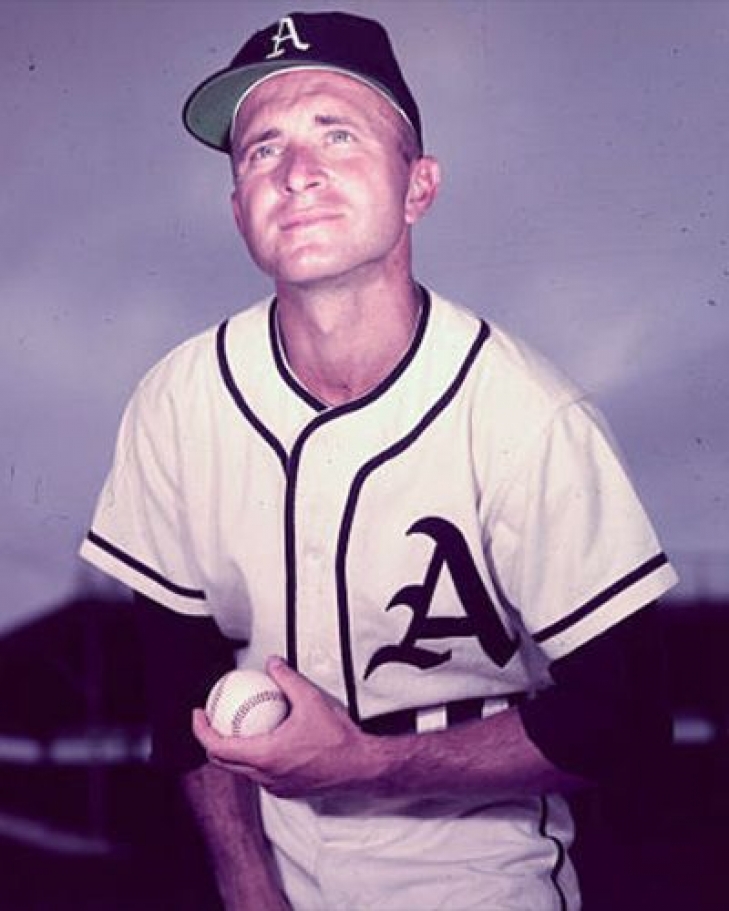
Back in the late 1940s, when Bobby Shantz was working his way through the semi-pro circuits of Pennsylvania, traditional baseball wisdom didn't see him as a future star. Scouts from major league teams mostly overlooked this little left-hander, thinking his 5-foot-6, 140-pound frame might be too small for the tough demands of a big-league starting pitcher. However, Connie Mack looked beyond his size, recognizing a quick, powerful arm and an impressive, fading changeup. The Philadelphia Athletics took a chance on him in 1948. After a few modest developmental summers, this undersized southpaw rose to unexpected heights, delivering a brief but stunning peak that captured the whole baseball world’s attention.
Shantz first discovered his frontline potential during the 1951 campaign. He amazed junior circuit hitters with his precise control and a sharp, biting curveball. His impressive performances earned him his first career All-Star selection, and he finished the season with a solid 18-12 record for a team going through changes in Philadelphia.
That breakout summer truly caught everyone's attention, but it was just the beginning of an incredible, award-winning season in 1952. Shantz became an unstoppable force on the mound, dominating the American League with an impressive 24 wins and only 7 losses. His efficiency was nothing short of spectacular, leading all of baseball with a tiny 1.048 WHIP, along with a stellar 2.0 walks per nine innings and a powerful 2.41 strikeout-to-walk ratio. The entire baseball world recognized his outstanding performance, overwhelmingly voting this small but mighty ace as the 1952 American League Most Valuable Player.
With the baseball world at his feet, tragedy unexpectedly struck the young lefty's delivery. Later in that fantastic 1952 season, Shantz suffered a serious, chronic shoulder injury that cost him his usual velocity and altered the course of his career. He spent the next four years courageously working on his mechanics and pushing through intense pain, but he simply wasn’t the same explosive pitcher anymore. From 1953 to 1956, a challenging period that included the franchise's move to Missouri, Shantz struggled with frustratingly poor records and rising ERAs. Recognizing that his days as a top starter were behind him, the financially struggling Kansas City front office finally made the tough decision to trade him to the powerful New York Yankees before the 1957 season.
With the Athletics, Shantz had a 69-65 record with a 3.80 ERA. Philadelphia later honored Shantz by placing him in their Baseball Wall of Fame in 1994.
36. Elmer Valo
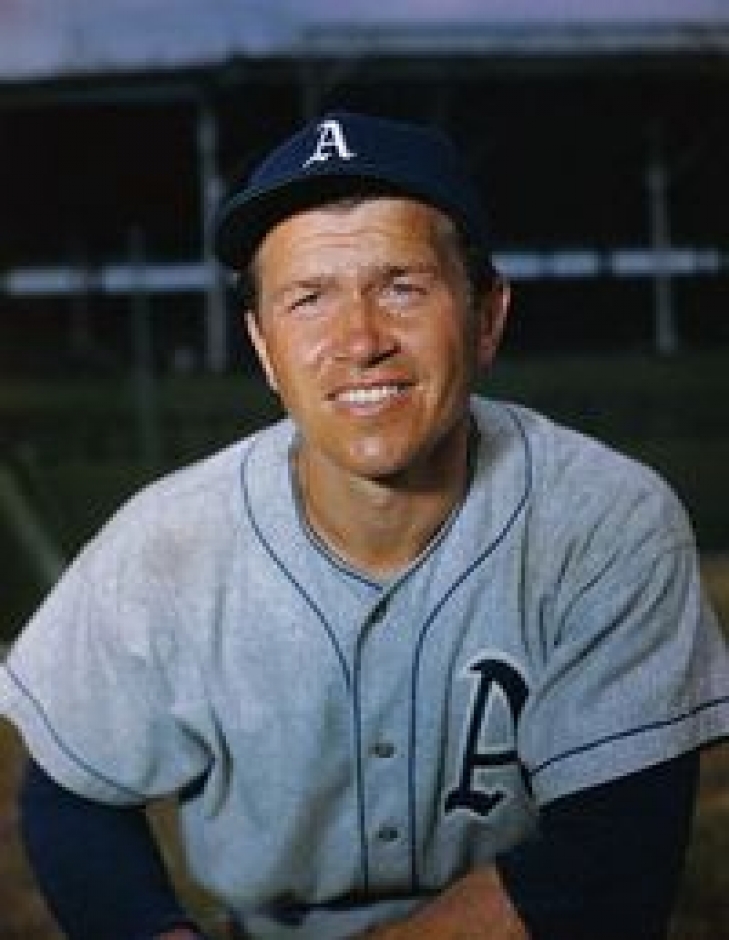
Born in Czechoslovakia, Imrich "Elmer" Valo moved to the U.S. at age six, settling in Pennsylvania. He embodied the American dream, channeling his athletic energy into a long MLB career. When he debuted with the Philadelphia Athletics in 1940, he brought a fierce, uninhibited style to Shibe Park that won him fans for generations.
Valo was far from a conventional, headline-grabbing superstar, yet he possessed an exceptionally keen baseball intellect and a legendary degree of physical resilience. He gained recognition throughout the junior circuit for his complete disregard for personal physical safety in the outfield. Long before stadiums were equipped with padded walls, Valo regularly collided at full speed with concrete barriers and chain-link fences to prevent extra-base hits by opposing batters. This unwavering intensity was complemented by an elite, notably sophisticated approach within the batter's box.
Although he did not have the raw power of the top sluggers of his time, Valo compensated by leveraging a tiny strike zone and a highly disciplined eye, resulting in high traffic. During his lengthy career with the organization, from 1940 to 1956, including a two-year military service during World War II, he recorded nine seasons with at least 100 hits.
His ability to draw walks and control the running game was truly exceptional; he achieved a remarkable .403 on-base percentage as an Athletic, finishing in the top ten of that important metric in the American League three times. This persistent blend of consistent on-base skill and fearless defense made him one of Connie Mack's most reliable players during a tough, transitional period for the team. Valo stayed deeply loyal to the organization, holding down the outfield as the team packed up and moved to Missouri for the 1955 season. He spent a year and a half as a veteran leader for the Kansas City Athletics before some roster changes led to his release. This paved the way for a highly successful second phase of his career, where he became one of the game's most formidable pinch-hitters for the Brooklyn Dodgers, Philadelphia Phillies, and New York Yankees.
Over 15 seasons as an Athletic, Valo compiled 1,229 hits, 218 doubles, and 595 walks. In 1990, he was honored with a spot on the Philadelphia Baseball Wall of Fame.
31. Joe Rudi
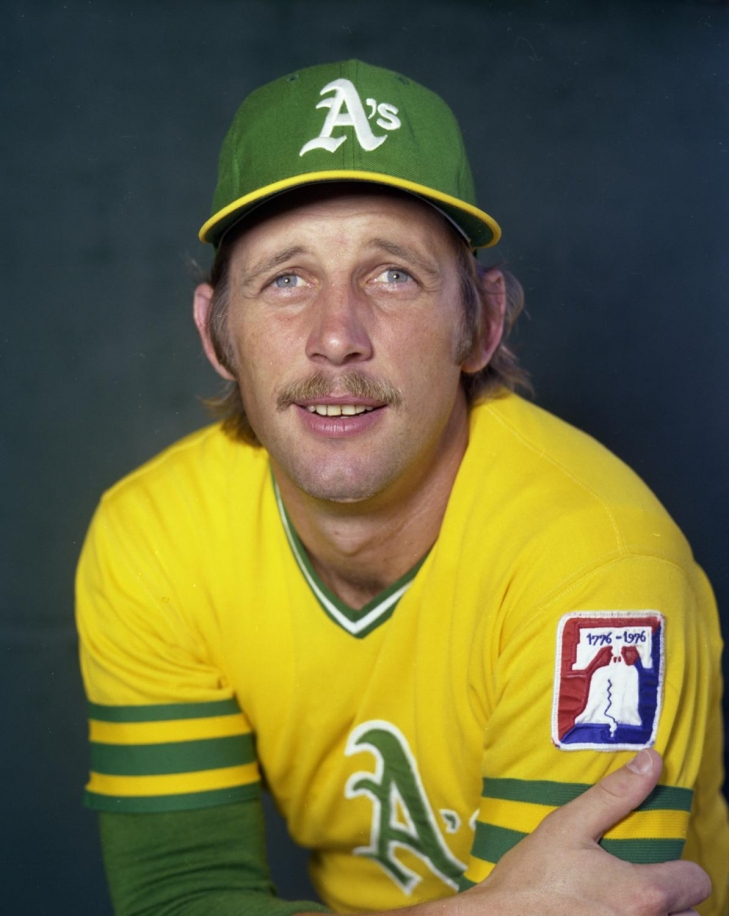
When Joe Rudi first donned the Athletics uniform, the franchise was preparing to relocate. He appeared in just 19 games in 1967 during its last summer in Kansas City, before moving west to California. His early years in Oakland were challenging; he was stuck in a part-time role and struggled to find his rhythm, with his batting average staying below .200.
Everything shifted in 1970. With a permanent starting position in left field for a quickly ascending, powerhouse team, Rudi finally found his rhythm at the plate, showcasing a smooth, line-drive swing to achieve an impressive .309 batting average and solidify his role as a vital core member.
By 1972, the Athletics were poised to establish one of the most dominant dynasties in modern baseball, with Rudi leading the charge. He showcased an exceptional offensive display that summer, leading the American League with 181 hits and 9 triples, while also hitting 19 home runs and maintaining a solid .305 batting average. This breakout year earned him his first All-Star selection and a close second place behind Dick Allen in the AL MVP voting.
More importantly, it laid the groundwork for October folklore. In Game 2 of the 1972 World Series versus Cincinnati, Rudi created a memorable franchise moment by leaping high against the left-field wall to make a stunning backhanded catch that saved the game and helped secure the first of three consecutive world titles.
Although his raw percentage metrics dipped slightly during his 1973 title defense, he rebounded strongly in 1974. Rudi dominated junior circuit pitchers, leading the league with 39 doubles, setting a career high with 22 home runs, and driving in 99 runs. For the second time in three years, he finished as a close runner-up in the AL MVP voting, narrowly behind Jeff Burroughs.
The historic 1974 season also saw a significant defensive achievement, as he earned his first of three straight Rawlings Gold Glove Awards, transforming left field into an impenetrable zone for the "Mustache Gang." He capped the year by hitting the decisive, World Series-winning home run in Game 5 against Los Angeles' Mike Marshall, securing the team's record-breaking “three-peat."
He achieved an additional highly productive season in 1975, with 21 home runs. However, the impending financial challenges associated with free agency soon resulted in widespread organizational disorder. In June 1976, owner Charlie Finley, facing financial difficulties, unexpectedly sold Rudi and relief pitcher Rollie Fingers to the Boston Red Sox for a substantial sum of money during a notable fire sale. This transaction garnered significant media attention; nevertheless, commissioner Bowie Kuhn intervened merely three days later, nullifying the deals and mandating the return of both players to Oakland.
Rudi finished out the summer in the green and gold, but with the reserve clause dissolved, he immediately exercised his right to test the open market at season's end, walking away to sign a lucrative contract with the California Angels.
After subsequent stops with the Angels and Red Sox, his baseball journey reached a beautiful, full-circle conclusion in 1982. Rudi returned to Oakland for one final, nostalgic season, closing out his playing days under the Coliseum sun.
Rudi would contribute 1,468 Hits with 179 Home Runs for the Athletics and was elected to the Athletics Hall of Fame in 2022.
17. Catfish Hunter
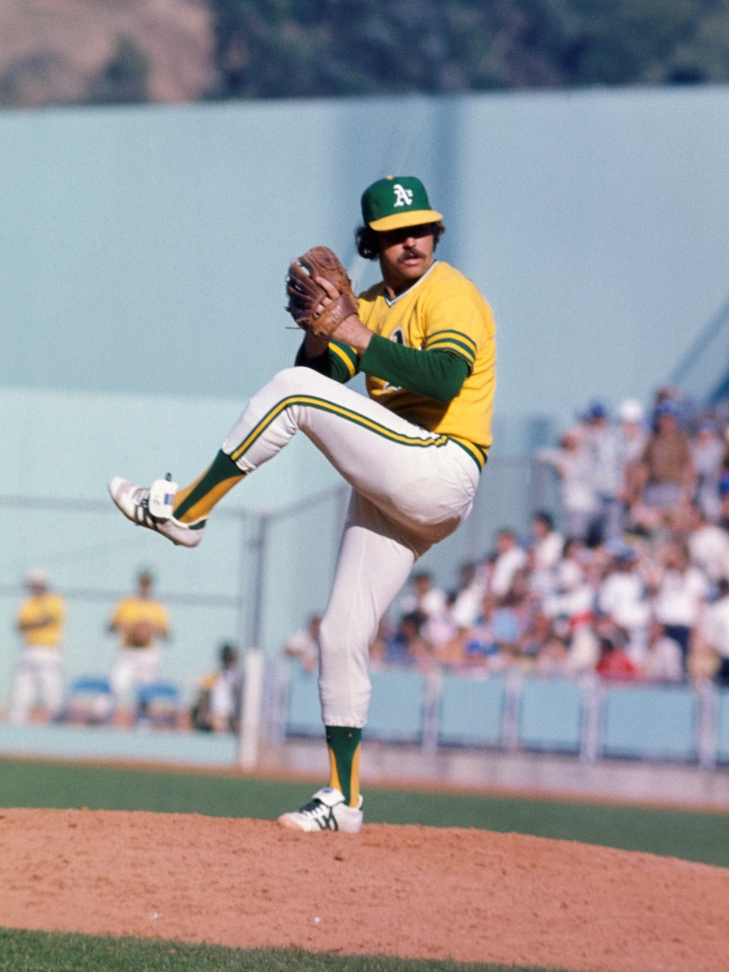
When Jim "Catfish" Hunter arrived in spring 1965, he had an interesting backstory and no minor league experience. Signed as an amateur free agent by Kansas City owner Charlie O. Finley, who quickly gave him the playful nickname because he thought the young pitcher lacked “character”, the 19-year-old right-hander didn't go through the usual farm system. Instead, he went straight to the big league mound, showing moments of precise control and steady confidence that would eventually make him a key player in a baseball dynasty.
He adapted so well to the heavy workload that he earned consecutive All-Star nods in 1966 and 1967 before the franchise moved to Oakland. It was in California that his journey truly changed, from a dependable young starter to a shining marquee star. On May 8, 1968, in front of a modest crowd at the newly opened Oakland Coliseum, Hunter pitched the ninth perfect game in baseball history against the Minnesota Twins, personally driving in three of the four runs in the game and forever making his mark in the record books.
That masterpiece set the stage for a wonderful era of strength and resilience. As the vibrant, mustache-wearing "Mustache Gang" grew into a formidable American League team, Hunter truly became the heartbeat of the rotation. Between 1971 and 1974, he proudly achieved four straight seasons with at least 21 wins, becoming the dependable leader for a tough, high-pressure team that won three consecutive World Series titles. His performance in October was almost perfect, with a 6-2 record and 49 strikeouts in the postseason for Oakland, as though he was simply relaxing and throwing rocks on his North Carolina farm during the sport’s biggest moments.
His regular-season performance really shined brightly in 1974. Hunter delivered an impressive display, leading the league with a personal best of 25 wins. He also took home the American League ERA title with an outstanding 2.49, along with a league-leading 0.986 WHIP. His remarkable skill against opposing lineups earned him the 1974 American League Cy Young Award, firmly establishing him as one of the top pitchers in pro sports.
Nonetheless, the victorious championship summer of 1974 signified the abrupt and dramatic conclusion of his tenure in green and gold. Following a decision by an arbitration panel that Finley had violated his contractual obligations by failing to make punctual payments on an annuity, Hunter was officially declared a free agent in December. This unprecedented ruling instigated a historic, high-stakes bidding war, which ultimately resulted in his transfer to the New York Yankees, representing one of the most significant structural transformations of the modern era.
He left the A's with a 161-113 record and 1,520 strikeouts over ten seasons. The franchise repeatedly honored him as the pitcher who taught them to win. Hunter was inducted into the Hall of Fame in 1987, and on June 9, 1991, they retired his No. 27 jersey, the first in team history. In 2018, he was named to the inaugural Athletics Hall of Fame.
7. Reggie Jackson
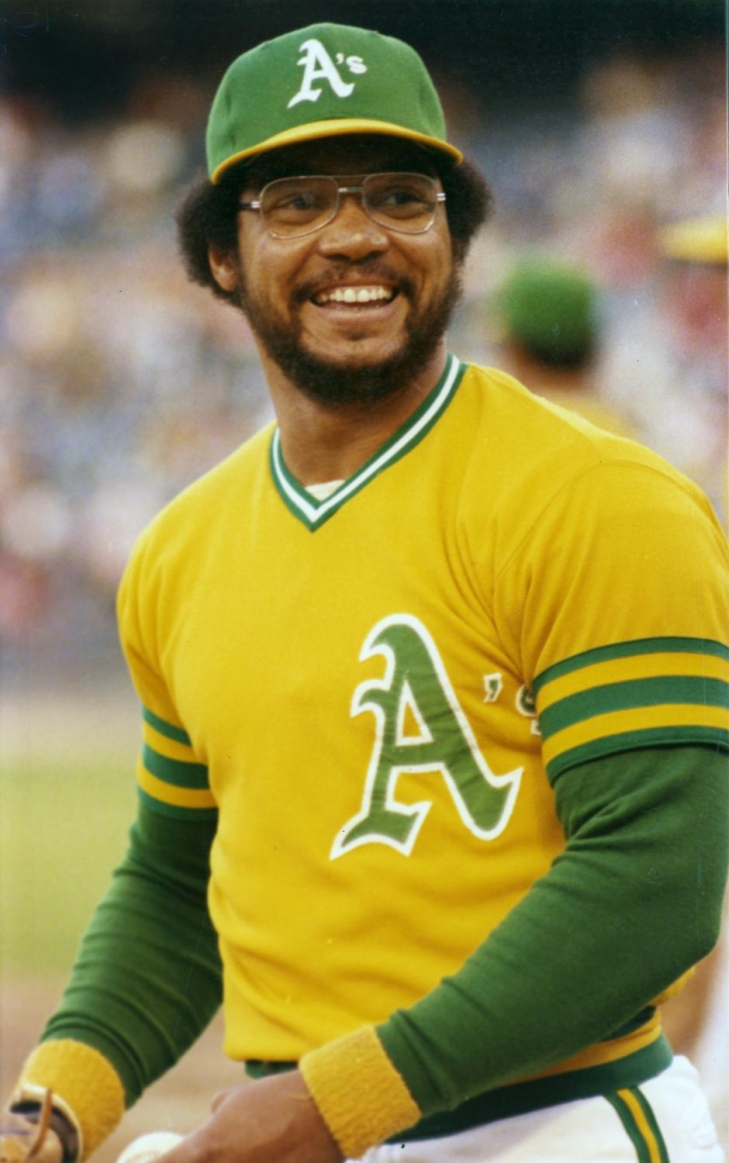
Reggie Jackson joined the organization in 1967, bringing incredible talent right from the start. He made his debut during the team’s last days in Kansas City and quickly became the heart of the lively "Swingin' A's" era in Oakland. Famous for his powerful, corkscrew swing that either sent the ball soaring for a home run or led to a strikeout, Reggie was truly one of the most captivating personalities in baseball.
Reggie Jackson came up with the A’s when they were still in Kansas City (1967), and he would become a starter the following year when the franchise relocated to Oakland. That year would show precisely what everyone should forever expect from Jackson. He went deep 29 times and led the AL in Strikeouts, but he was always a must-watch at bat.
In 1968, during the franchise's first year in Oakland, Jackson achieved a landmark by hitting 29 home runs, marking the arrival of a new kind of superstar who was not only a talented athlete but also a captivating showman. He continued to soar in 1969, delivering an impressive first-half performance that had him on track to challenge the all-time home run record, and he finished the year with 47 home runs and 118 RBIs.
Between 1970 and 1972, Jackson smoothly transitioned from a promising young slugger to a strategic leader guiding a rising powerhouse. Though he missed part of the 1972 postseason due to a high-stakes injury from stealing home in the ALCS, his outstanding regular-season performance, culminating in 25 home runs and 80 RBIs, was the key reason the Athletics made it to the Fall Classic and began their championship journey. By 1973, he had firmly established himself as a top run-producer, blending impressive power with a refined eye for drawing walks, paving the way for his unanimous MVP season.
Jackson achieved his peak in Oakland in 1973, giving us a season that still stands as a proud record for the franchise. He topped the American League in home runs (32), RBIs (117), and slugging percentage (.531), earning him the well-deserved title of American League MVP, chosen unanimously. Following this incredible season, he shone brightly in the playoffs, guiding Oakland to back-to-back championships and earning World Series MVP honors after hitting .310 and smashing a crucial home run in Game 7. He was a key figure in a team that celebrated a historic "three-peat" from 1972 to 1974, showing that his athletic talent was at its best when a championship was at stake.
His tenure in Oakland would end when he was due to become a Free Agent, and the A's Owner, Charlie Finley, arranged a trade to the Baltimore Orioles, believing he could not afford to sign him. Jackson’s overall numbers with the Athletics would see him blast 269 Home Runs with a .496 Slugging Percentage.
Jackson would enter the Baseball Hall of Fame in 1993, and in 2009, his number 9 was retired by the team. When the Athletics created their own Hall of Fame in 2018, he was inducted into the first class.
12. Bert Campaneris
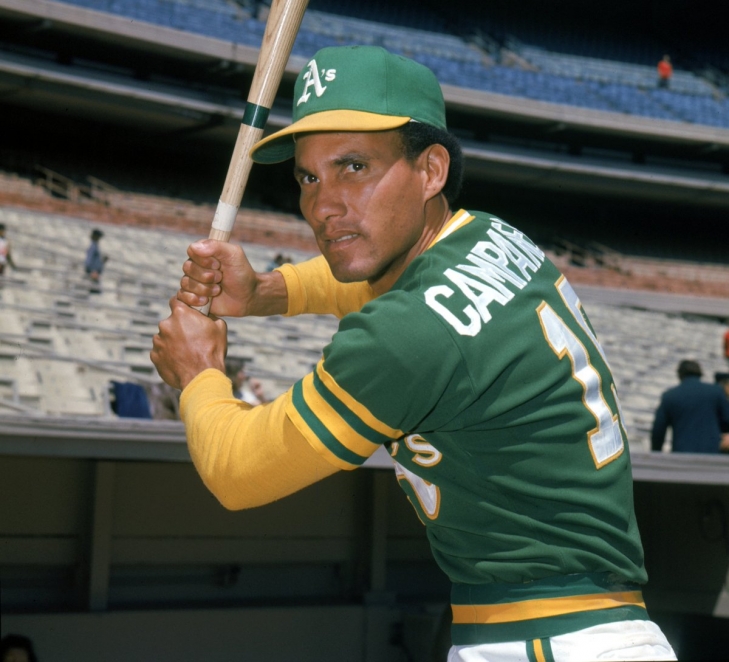
Bert Campaneris made his debut for the Kansas City Athletics in July 1964, providing an immediate boost to a team in trouble. At just 22, this Cuban shortstop announced his presence by hitting two home runs against Minnesota's Jim Kaat in his first game. While he showcased rare power early on, his main talent was in creating chaos with his speed and securing the infield with his glove.
By his first full season in 1965, "Campy" had truly harnessed his exceptional speed, leading the American League with 12 triples and 51 stolen bases. That September, owner Charlie Finley organized an exciting promotional event against the California Angels, showcasing Campaneris as the first player in modern major league history to play all nine positions in a single game, and even pitching a full inning on the mound. While this incredible feat highlighted his natural athletic talent, it was his consistent performance at shortstop that truly laid the foundation for the team's bright future.
When the franchise moved to Northern California in 1968, Campaneris became a key link between the cities and sparked the offense. That first summer in Oakland, he led the league with 177 hits and set a career high with 62 stolen bases, earning his first All-Star nod. While his focus on not walking limited his on-base percentage, his sharp baserunning skills made him incredibly dangerous once he got on base; he went on to win six American League stolen-base titles and was often among the most effective base stealers out there.
In the early 1970s, Campaneris became the key driver of the "Swingin' A's" modern dynasty. He was a top ten defender, combining range with a reliable arm to secure the left side of the infield alongside Sal Bando. His consistent performance helped Oakland secure five consecutive division titles and achieve their historic three-peat in the World Series from 1972 to 1974. Even during postseason tensions, like his infamous bat-throwing incident against Detroit in the 1972 ALCS, his situational hitting and threat on the bases remained crucial to winning those three championships.
After the 1976 season, Charlie Finley's long tenure came to an end. As free agency reshaped the league and dismantled Finley’s roster, Campaneris signed with the Texas Rangers. He left California holding franchise records for career games, hits, and at-bats, leaving a lasting legacy as the team’s key spark plug during the dynasty.
In 2019, the Athletics inducted Campeneris into their franchise Hall of Fame.
11. Sal Bando
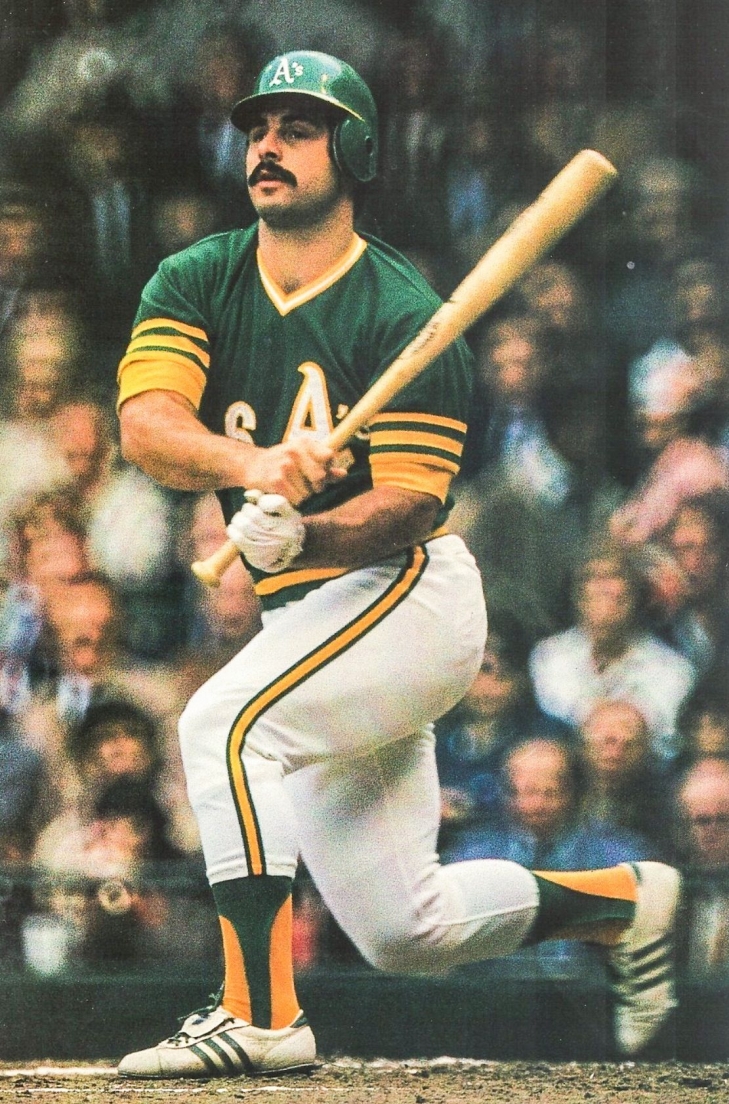
The Athletics’ move from Kansas City to Oakland in 1968 required a steady leadership. Sal Bando, picked in the sixth round of the 1965 draft from Arizona State, became that key figure. He secured the starting third baseman role just as the team settled in California, laying the groundwork for what would grow into one of the most formidable dynasties in modern baseball.
By May 1969, manager Hank Bauer acknowledged Bando's internal leadership, appointing him as team captain. This coincided with his rise to national prominence. That summer, Bando received his first All-Star selection, hitting a career-high 31 home runs and driving in 113 RBIs. He focused on consistent production rather than flashy style, leveraging a disciplined, power-hitter profile. He led by example through quiet leadership while more flamboyant stars made the headlines.
In the early 1970s, Bando was responsible for managing field operations for the renowned "Swingin' A's." Despite the team’s off-field turmoil, marked by roster chaos and public fights, Bando’s role at third base served as a stabilizing influence within the clubhouse. He achieved three straight top-five MVP rankings from 1971 to 1973, including finishing as a runner-up to teammate Vida Blue in 1971. Bando combined a dependable, slick glove with consistent power, surpassing 20 home runs six times during his career, and played a key role in Oakland's historic three-peat as World Series champions from 1972 to 1974.
The heavy workload and the abrasive management style of owner Charlie Finley eventually fractured the core roster. Following the 1976 season, Bando took advantage of the newly minted free-agency system, signing with the Milwaukee Brewers and leaving Northern California with 192 home runs and 1,311 hits in an A's uniform.
Bando was inducted into the Oakland Athletics Hall of Fame in 2022, which occurred just months before he passed away in January 2023.
