

30. Johnny Mize
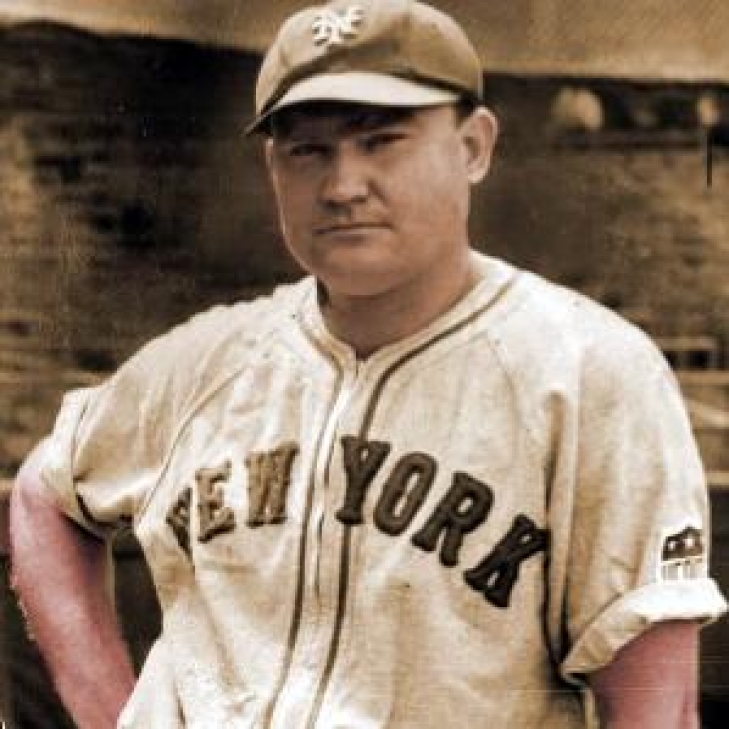
When the New York Giants found out their regular first baseman, Babe Young, was heading into military service, they quickly acted to secure the position. In December 1941, they completed a significant deal with the St. Louis Cardinals to acquire a top slugger's contract. John Robert Mize, already a star with a batting title and two MVP runner-up honors, was known as "The Big Cat" for his agile, graceful defensive footwork. The tall, left-handed hitter had a perfect, smooth swing at the Polo Grounds, combining immense power with excellent plate discipline.
In the 1942 campaign, he led the senior circuit with 110 RBIs and a strong .521 slugging percentage, while maintaining a solid .305 batting average and hitting 26 home runs to earn an All-Star selection. However, similar to his predecessor, his momentum was interrupted by the global conflict; Mize left for military service before the 1943 season, sacrificing three prime years of his athletic career to serve in the United States Navy.
Upon his eventual return to the active roster in 1946, any concerns that the extended hiatus had diminished his physical prowess were immediately dispelled. Although he was navigating his mid-30s, Mize reasserted himself as a formidable offensive threat, orchestrating a peak power performance that entirely transformed the franchise record books.
The absolute individual apex of his West Coast prelude erupted during a breathtaking 1947 regular-season masterpiece. That summer, The Big Cat put on an unadulterated clinic in elite bat control, lashing out a Major League-high 51 home runs while anchoring the senior circuit with 137 runs scored and 138 RBIs. Most historic of all, he achieved a feat that remains completely unmatched in the annals of modern baseball: Mize became the first and only player in major-league history to launch 50 or more home runs in a single season while striking out fewer than 50 times, fanning just 42 times all summer to secure a third-place finish in the National League MVP voting.
He proved his monumental output was no aberration by capturing a consecutive National League home run crown in 1948, mashing 40 round-trippers and driving in 125 runs.
Yet, because the Giants were eager to transition toward a younger, more dynamic core under management, a sudden transactional crossroads materialized midway through the 1949 schedule. In August of that year, the front office initiated a definitive business departure, trading their iconic veteran first baseman to the powerhouse New York Yankees across town in exchange for a cash package. While the trade closed the curtain on his time in a Giants uniform, it beautifully unlocked a golden late-career chapter in the American League, where Mize functioned as an elite pinch hitter and part-time weapon to help guide the Bronx Bombers to an unprecedented five consecutive World Series championships from 1949 to 1953.
As a Giant, Mize collected 673 hits, 157 home runs, and 475 runs batted in, completely validated by a stellar .299 batting average and a magnificent .390 on-base percentage. Mize was finally elected into the Baseball Hall of Fame in 1981 via the Veterans Committee.
13. Johnny Mize
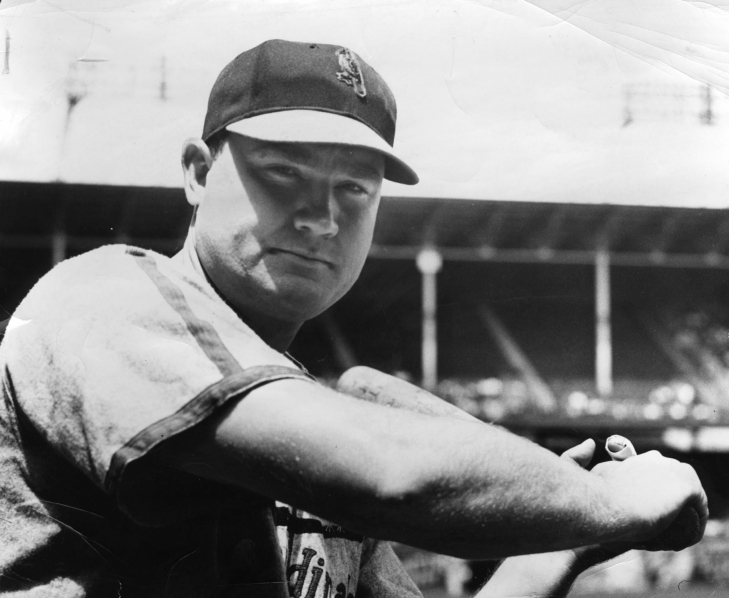
In chronicling the historic, multi-stage career of a baseball player, it is uncommon to encounter a legacy precisely segmented into three definitive acts of excellence. For John Robert Mize, his illustrious journey manifested through three distinct phases: as a structural powerhouse for the St. Louis Cardinals, as a prominent mid-career figure for the New York Giants, and as a distinguished late-career role player who contributed significantly to five consecutive World Series victories with the New York Yankees. However, an exclusive examination of his initial foundational act in eastern Missouri reveals an extraordinary peak of run production that exemplifies exemplary batting mechanics—a legendary apex that nearly diminished before it genuinely commenced.
The entire trajectory nearly shattered during a high-stakes transaction at a pivotal juncture in late 1934. While playing in the minor leagues for Rochester, the young first baseman attracted the interest of the Cincinnati Reds, who agreed to purchase his contract from the Cardinals for an astounding sum of $55,000—an exorbitant amount during the peak of the Great Depression. Nevertheless, Mize sustained a severe, incapacitating injury to his leg and groin, which restricted his mobility. Subsequent medical examinations revealed painful bone spurs, prompting the Reds to annul the agreement and return him to St. Louis. At merely 22 years of age, many commentators believed "The Big Cat" was at the end of his career.
Instead, Cardinals general manager Branch Rickey appointed a specialist to perform surgery, establishing a seminal technical shift. Due to his ongoing recovery, Mize was unable to cope with the routine demands of a minor-league schedule, which resulted in his promotion to the major-league roster in 1936 solely to serve as a part-time pinch hitter. He fundamentally defied expectations by achieving a remarkable .329 batting average over 126 games, thereby securing a regular position in the starting lineup.
By 1937, his iconic, picture-perfect left-handed swing became the most feared weapon in the National League. Mize turned punishing inside fastballs and maintaining supreme plate discipline into a strict daily routine. That summer, he lashed out a .364 batting average with 25 home runs, a .427 on-base percentage, and a commanding .595 slugging mark.
Rather than hitting a ceiling, he systematically unlocked even greater power leverage over the next three seasons, establishing an era of unadulterated dominance. He captured the National League batting title in 1939 with a brilliant .349 average while pacing the Senior Circuit with 28 home runs.
He beautifully backed that up during a magnificent 1940 campaign, hammering a league-high 43 round-trippers and driving in a spectacular 137 runs. His complete dominance is beautifully validated by advanced efficiency metrics; Mize led the National League in slugging percentage and total OPS for three consecutive summers from 1938 to 1940, capturing consecutive MVP runner-up finishes.
The final chapter of his initial run arrived following the 1941 schedule. Eager to transition toward a younger, more flexible roster, ownership executed a sudden business departure, trading their premier first baseman to the New York Giants.
Mize walked away from Sportsman's Park, leaving behind a concentrated statistical fortress that commands profound reverence from modern purists. Across his six seasons strictly representing the Redbirds, he accumulated an astonishing localized slash line of .336/.419/.600, hammering 158 home runs and driving in 531 runs over 854 games.
His immortal contributions were formally immortalized when the Veterans Committee officially punched his first-class ticket to Cooperstown in 1981. Decades later, the organization added the final, beautiful punctuation to his legacy, triumphantly enshrining Johnny Mize as a member of the inaugural St. Louis Cardinals Hall of Fame class in 2014.
