

45. Jimmy Collins
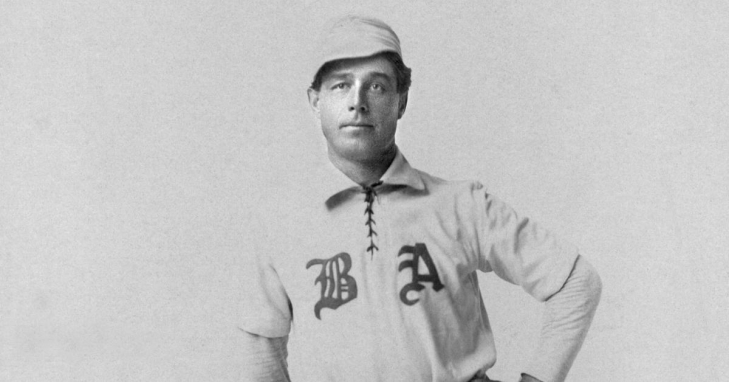
When the American League emerged as a "rebel" circuit in 1901, it needed a face to prove it was more than just an upstart hobby. They found it in Jimmy Collins. By walking away from the established Boston Beaneaters to join the brand-new Boston Americans, Collins didn't just switch uniforms; he shifted the power dynamic of baseball in New England.
He arrived not just as a player, but as a statement. Those first two years were a defensive and offensive masterclass, with Collins batting over .322 and proving that the "newer" Boston team was the one to watch. The climax of this first act came in 1903, when he led the Americans over the Pirates to claim the first-ever World Series title, cementing the American League's legitimacy forever.
While his bat was the engine, his glove was the foundation. In that inaugural 1901 season, Collins was the premier defensive force in the league, leading all players in Defensive bWAR. He remained a vacuum at third base for the next half-decade, consistently ranking among the game's elite even as the miles began to show on his legs.
By 1907, the "founding father" era of the Americans was beginning to fade. As his production dipped with age, the inevitable trade to Philadelphia signaled the end of the franchise's first great chapter. He left Boston with 881 hits and a .296 average, but his true legacy was far larger than a stat line. When the "Old Timers Committee" sent him to Cooperstown in 1945, it was a delayed acknowledgment of what Boston fans already knew: without Jimmy Collins jumping ship in 1901, the Red Sox Hall of Fame might not have a first class at all.
42. Jimmy Collins
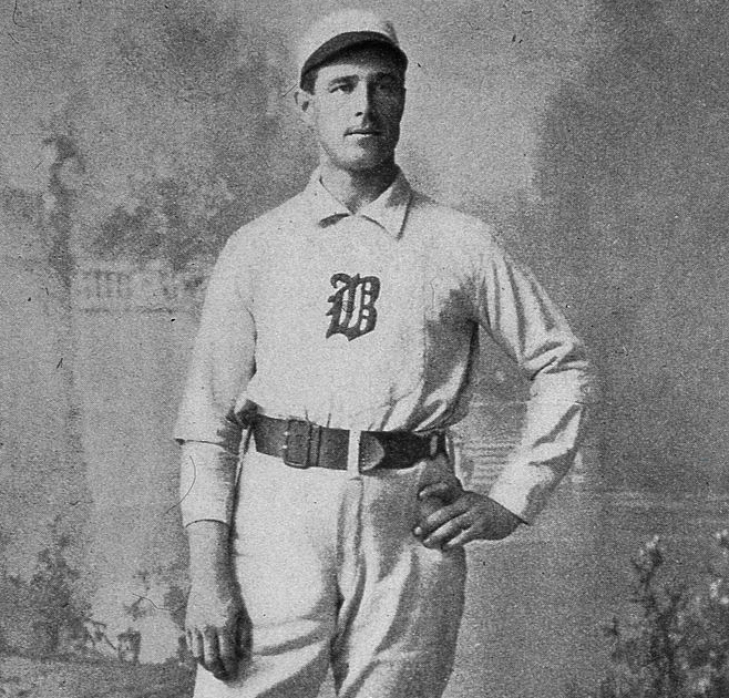
Jimmy Collins did a lot of things beautifully on the baseball diamond that may not be considered sexy, but they went unnoticed, and he generated a Hall of Fame career out of it, which included five seasons with the Boston Beaneaters.
After debuting for Boston in 1895, he was loaned to Louisville, only to return before the 1896 Season. Collins would win the starting Third Base job, and he was considered to be one of the better defensive players at that position, which he showed by leading the NL in Defensive bWAR in 1899 and was in the top five as a Boston Beaneater three other times. He was also very capable with the bat, an expert bunter, and led the NL in Home Runs (albeit with only 15) in 1898. That year, he was seventh in Batting Average and second in Slugging Percentage. His overall numbers with the team would see him generate 821 Hits with a .309 Batting Average. His run with the Beaneaters ended when he jumped to the Boston Americans of the American League in 1901.
Collins would enter the Baseball Hall of Fame in 1945 when he was chosen by the Old Timers Committee.
