

29. Jesse Haines
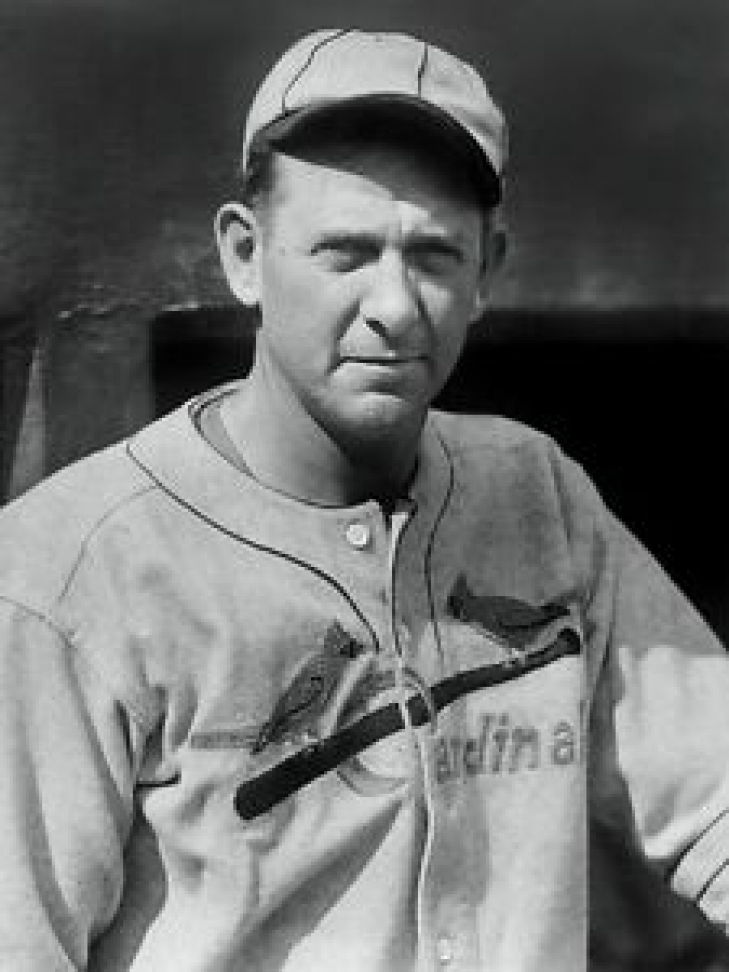
Before the St. Louis Cardinals became a consistent Powerhouse of the National League, they needed a strong, determined leader to elevate their pitching staff from obscurity. Jesse "Pop" Haines offered exactly that endurance as a foundation. Acquired from Kansas City of the American Association in 1920 for $10,000—almost draining the young franchise's funds—the durable right-hander joined the starting rotation. Over 18 seasons, Haines was the organization's reliable workhorse, helping them rise from a struggling second-division team to World Series champions.
Haines’ rise to historical prominence was largely due to his elite, powerful knuckleball, which he threw with much higher velocity than today's versions. Instead of employing it as a slow, fluttering pitch, he grasped it firmly with his knuckles, producing a sharp, downward movement that frequently shattered bats of his era.
His personal breakthrough happened swiftly, but his first major professional masterpiece came on July 17, 1924. Playing against the Boston Braves at Sportsman's Park, Haines completely shut down the opposition to throw a historic 5–0 no-hitter—the first solo no-hit game in the franchise's modern era.
Haines attained his peak as the key player of the "Gashouse Gang" predecessors in the late 1920s. In the notable 1927 season, he delivered an outstanding performance, pitching 300.2 innings and achieving a 24–10 record with a 2.72 ERA and 25 complete games.
Haines didn't merely amass regular-season stats; he excelled on the biggest stages. He was instrumental in leading St. Louis to its first modern world championship in 1926, notably defeating the New York Yankees with two complete-game wins in the Fall Classic, including a vital shutout in Game 3—even while dealing with badly blistered fingers. He later earned two more World Series rings with the team in 1931 and 1934.
As the physical toll of compiling nearly 1,000 career innings caught up to his arm, his availability decreased to a valuable long-relief and spot-starting role in the mid-1930s. He endured his final MLB appearances at age 43 in 1937, ending a nearly two-decade career in a single uniform.
He finished his St. Louis residency with a 210–158 record, 3.64 ERA, and 981 strikeouts in 555 appearances, ranking high on franchise leaderboards with 209 complete games and 24 shutouts. His contributions were validated in 1970 when the Veterans Committee inducted him into the Baseball Hall of Fame, and posthumously in 2014 as part of the Cardinals' first Hall of Fame class.
