

43. Jake Beckley
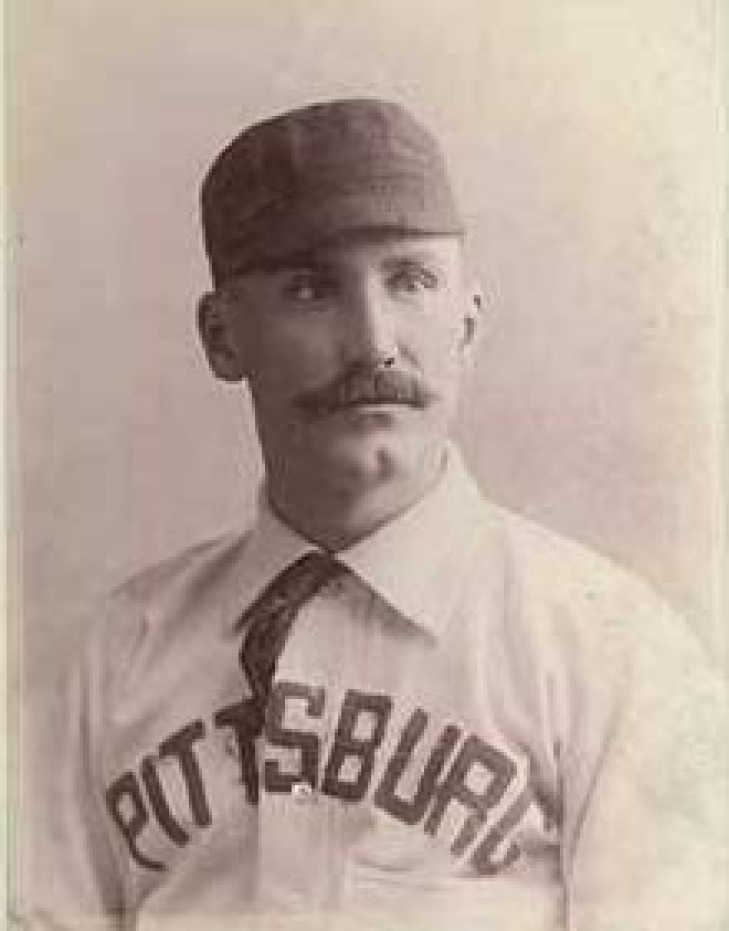
The modern Major League Baseball has a history of labor battles, but the pioneer of player autonomy, Jake Beckley—known as "Eagle Eye" for his strike zone judgment—was a foundational figure in late-19th-century baseball. Purchased by the Pittsburgh Alleghenys in 1888, the left-handed first baseman quickly became a star in Western Pennsylvania. Beckley was known for his low-variance hitting and durability, leaving a legacy of hitting milestones and challenging the sport's financial hierarchy.
His debut appearance after arriving in town during the 1888 season showcased top-tier talent, with the 20-year-old rookie posting an impressive .343 batting average over 71 games. He quickly established contact hitting and run production as a consistent part of his game, surpassing the 300 batting average again in 1889 and driving in 97 RBIs.
Beckley’s consistent rise in the National League was abruptly interrupted in 1890 by the emergence of the Players’ League. While many stars left the traditional league with lofty rhetoric, Beckley was notably honest about his motives, telling reporters he was "only in this game for the money’ when he joined the Pittsburgh Burghers. Despite the league's brief existence, Beckley performed exceptionally well, leading with 22 triples and driving in 123 runs, showcasing his talent during this short stint.
After stabilizing financially, Beckley rejoined the National League team, now known as the Pirates, for the 1891 season. Following a highly successful comeback, he experienced a difficult slump in 1892, with his batting average dropping to .236. Showing the intense internal resilience that earned him his famous nickname, "Eagle Eye,” he launched an impressive multi-year recovery. Over the next three summers, he greatly improved his performance, achieving batting averages of .303, .345, and .328, and driving in more than 100 runs each season, becoming a key player in the Steel City offense.
Tragically, after he limped out of the gate to a highly disappointing start during the 1896 schedule, the front office moved aggressively to reshape the core. In a landscape-shifting mid-season deal, management traded the franchise icon to the New York Giants for Harry Davis and cash, drawing a sudden curtain on his historic tenure in Pittsburgh.
With Pittsburgh, Beckley smacked 1,140 of his 2,938 career Hits while batting .300. The Baseball Hall of Fame inducted Beckley via the Veterans Committee in 1971.
48. Jake Beckley
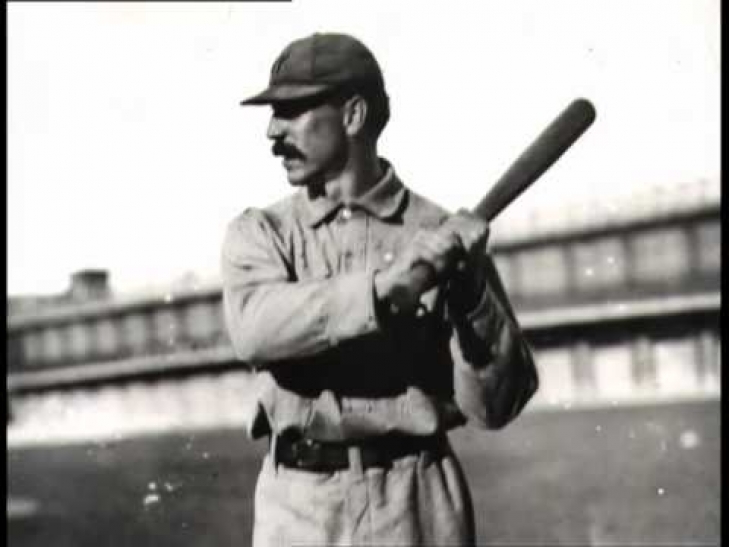
When Jake Beckley arrived in Cincinnati in the middle of the 1897 season, many observers believed the veteran first baseman was a spent force. After a decade of excellence in Pittsburgh, a significant slump and a subsequent release by the New York Giants had left his career in jeopardy. However, the man known as "Eagle Eye" found a second life in Cincy, transforming a potential decline into a masterclass of professional resilience.
Beckley’s tenure with the Reds was defined by a remarkable statistical surge that defied the traditional aging curve of the nineteenth century. He established a level of specialized efficiency that surpassed his younger years, authoring five seasons with a batting average well north of .300. His craftsmanship was punctuated by a spectacular .325 overall average during his stay in Cincinnati, a significant jump over his previous career marks. He was a model of steady-state production, providing the high-leverage hits required to anchor the middle of the order and serving as the tactical engine of the offense through the turn of the century.
The most impressive aspect of his game was his surprising versatility, which complemented his elite contact skills. While Beckley was not known as a pure speedster, he possessed a specialized athleticism that allowed him to record three seasons with at least 20 stolen bases in a Reds uniform. He was a high-frequency producer of extra-base hits, utilizing his "Eagle Eye" to lace 77 triples during his six full seasons with the club. This combination of power and savvy made him a high-leverage threat every time he stepped into the box, proving that his release by the Giants had been a premature judgment.
In 1904, when his contract was sold to St. Louis, he left behind a legacy that includes 1,126 hits in a Reds uniform, nearly matching the total from his entire decade in Pittsburgh in almost half the time. He departed as one of the most respected hitters of his generation, a man who arrived as a castoff and left as a statistical titan.
