

31. Eric Davis
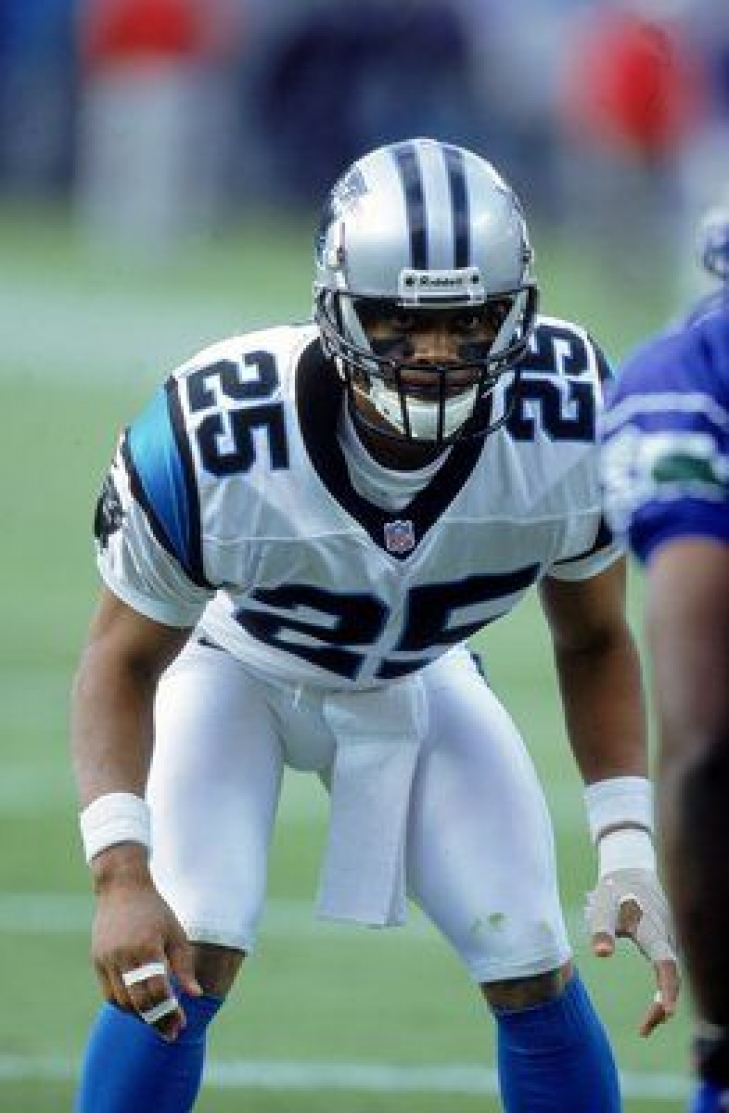
One of the best early signings in franchise history was Eric Davis, who was fresh off a Super Bowl championship and First-Team All-Pro season in San Francisco. He became one of the immediate defensive leaders for the second-year expansion franchise. Anchoring the secondary, Davis provided the perimeter lockdown ability that fueled Carolina's historic run to the NFC Championship Game in just their second year of existence.
Davis relied on elite route recognition, loose hip mechanics, and dynamic ball skills. Operating primarily as a boundary press and off-man cornerback, his primary strength on film was anticipating breaks; he routinely jumped intermediate routes and used smooth transition speed to close on the football, turning defensive stops into game-changing turnovers.
Davis made a remarkable impact in his first season in 1996, earning his second Pro Bowl nod after leading the defense with five interceptions and 13 pass defenses. His boundary play contributed to Dom Capers' defense finishing as the NFL's second-best in scoring, helping Carolina achieve a 12–4 record, secure the NFC West title, and reach the NFC Championship Game within just their second season.
Remarkably, Davis displayed clockwork consistency over his five-year run in Charlotte (1996–2000), recording exactly five interceptions in every single season as a Panther.
After the 2000 season, Davis played for Denver, Detroit, then ended his career. With the Panthers, he started 78 of 79 regular games and both playoffs, with 25 interceptions, 226 tackles, seven forced fumbles, four recoveries, and two defensive TDs.
26. Eric Davis
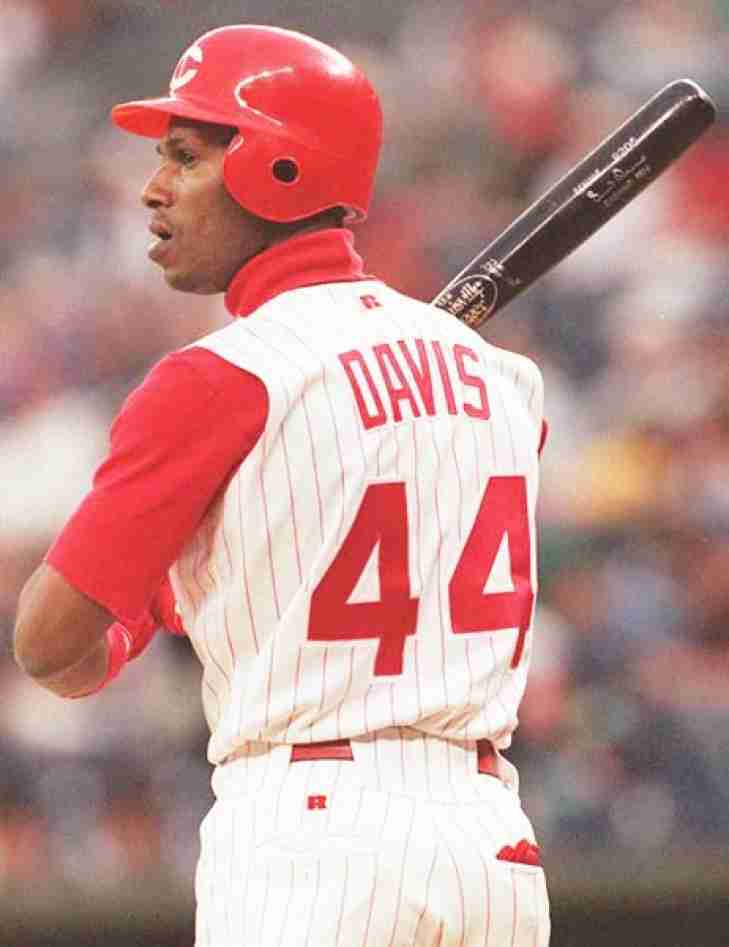
In 1984, Eric Davis arrived in the Cincinnati lineup and rapidly matured into a premier force in the National League. He emerged with a specialized, upright batting stance and hands that moved with terrifying quickness, embarking on a four-year stretch where he hammered at least 25 home runs annually. He was a model of explosive efficiency, most notably in 1987 when he authored a season for the ages, clubbing 37 home runs and swiping 50 bases. He wasn't just a power threat; he was a tactical nightmare for opposing batteries, proving that he could dismantle a team with his bat, his legs, or a towering leap at the wall.
The most impressive aspect of his tenure was the rare, high-stakes hardware he collected during his athletic prime. Davis was a master of the all-around game, securing two Silver Slugger Awards and three consecutive Gold Gloves between 1987 and 1989. While his defensive metrics fluctuated over the course of his stay, his ability to track down fly balls and take away home runs became a signature of the era. His craftsmanship was officially recognized with two All-Star selections, and he served as the primary engine for the 1990 "Wire-to-Wire" World Series champions, providing the veteran poise and power that anchored the middle of the order.
Davis remained a cornerstone of the franchise through the early 90s, navigating a series of injuries with a resilient spirit that made him a local immortal. Whether he was hitting a home run in his first World Series at-bat or diving to make a catch, he competed with a grace that few in the history of the game have ever matched.
After the 1991 season, Davis was traded to the Los Angeles Dodgers, though he would eventually return for a final emotional stint in 1996. He left the organization as a statistical titan, standing in the elite company of players who have recorded both 200 home runs and 250 stolen bases in a single uniform.
