

211. Ellis Burks
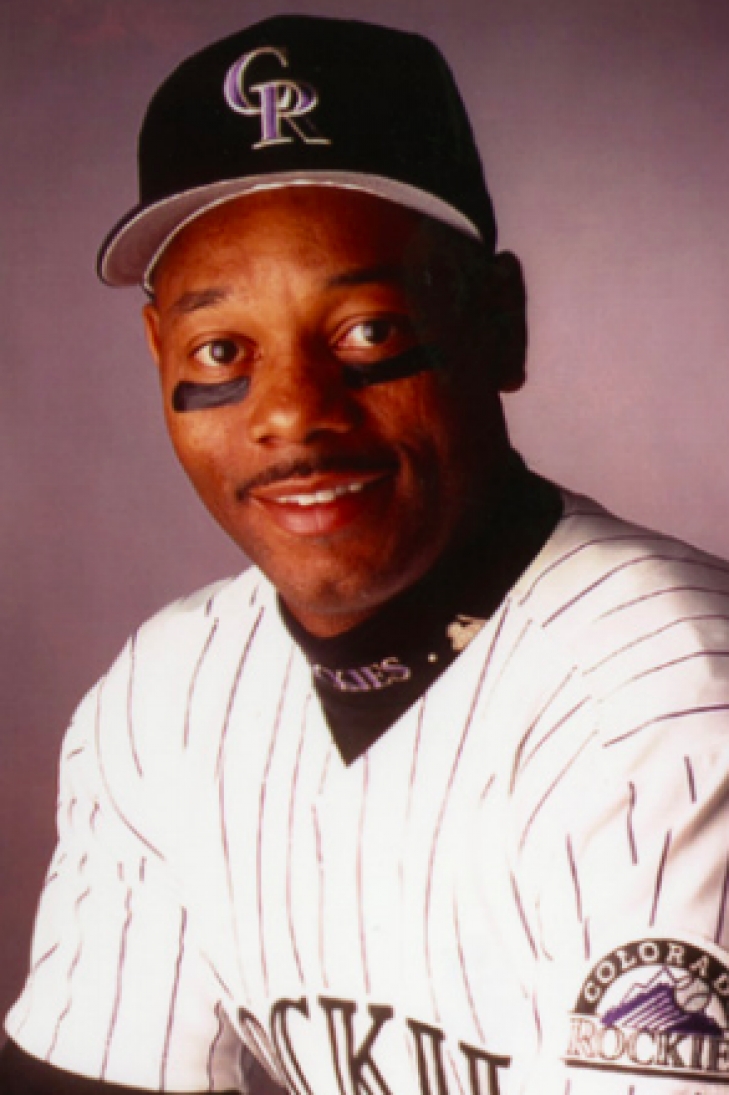
Ellis Burks compiled a much better career than you might initially realize.
Beginning with the Boston Red Sox in 1987, Burks became their starting Centerfielder and, as a rookie, was a 20-20 player. As a member of the Red Sox, Burks had his best year in 1990, when he went to his first All-Star Game and was a Gold Glove and Silver Slugger recipient. Burks hit 21 Home Runs that year and finished 13th in MVP voting.
After an injury-plagued 1992 season, he signed with the Chicago White Sox for one season and joined the Colorado Rockies the year after. In the mountains, he had his best season in baseball, albeit after two more years of missing a plethora of games. In 1996, he was third in MVP voting, was an All-Star, and led the National League in Runs Scored (142) with career-highs in Home Runs (40), Runs Batted In (128), Stolen Bases (32), and the Slash Line (.344/.408/.639).
Burks couldn't replicate that year, but he had six more 20-HR seasons and would play for San Francisco and Cleveland, and had one final stop in Boston in 2004. He retired with 2,107 Hits, 352 Home Runs, 1,206 RBIs, and a Slugging Percentage of .510.
16. Ellis Burks

The Colorado Rockies signed Ellis Burks as a high-profile free agent to stabilize their young lineup in 1994. Though his tenure was sometimes interrupted by the physical toll of high-altitude conditions on his knees, his craftsmanship reached a level of pure dominance during a historic 1996 campaign. That summer, he authored a masterpiece of hitting, launching 40 home runs and lacing 211 hits while maintaining a staggering .344 average. He wasn't just a power threat; he was a model of specialized efficiency, leading the National League in runs scored (142) and total bases (392).
The most impressive aspect of his time in Denver was how he refined his approach to maximize the park's unique geometry. Burks was a master of the "extra-base" mindset, becoming a member of the elite 30-30 club in 1996 by pairing his 40 homers with 32 stolen bases. This performance earned him a Silver Slugger, an All-Star nod, and a third-place finish in the MVP voting, the highest of his eighteen-year career. He served as the tactical link between the raw power of Bichette and Galarraga and the speed of the leadoff spot, providing the high-leverage at-bats that defined the most feared offensive unit of the mid-90s.
Burks was traded to the San Francisco Giants in 1998, but he left the organization as a statistical titan of its formative decade. He departed Colorado with a career .306 average and an OPS just shy of 1.000, having established an offensive standard for veteran acquisitions that has rarely been equaled.
