

32. Dwayne Murphy
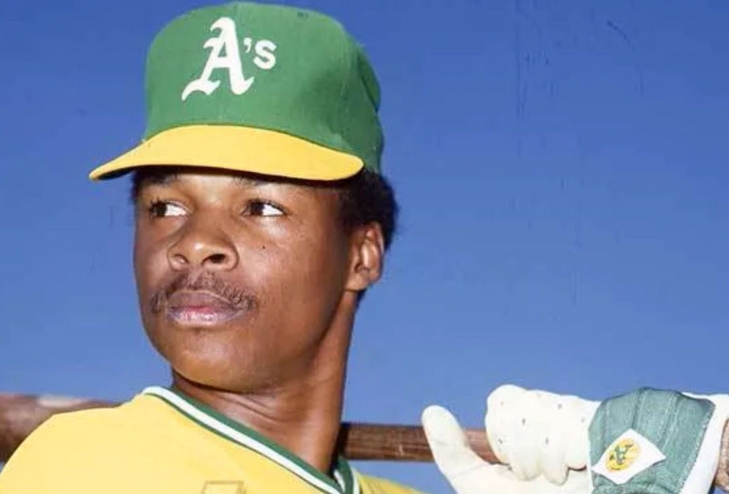
When Dwayne Murphy first appeared for the Oakland Athletics in 1978, his long-term MLB prospects seemed uncertain. Drafted in 1973 as a high school shortstop, he spent five years in the minors sharpening his outfield skills. His initial 60 games in the majors tested his patience, with a sub-.200 batting average that raised doubts about his bat catching up to his speed.
However, the front office persistently believed in his potential. Appointed as the regular starting center fielder in 1979, Murphy quickly developed into one of the most intellectually astute and defensively talented players of his time. His true legacy was built on the field at the Coliseum, where he transformed center field into an almost impenetrable zone for extra-base hits. Murphy exhibited remarkable, fearless athleticism in this position, famously intercepting passes with such speed and intensity that his cap was often blown off during complex plays. His defensive metrics were extraordinary; in 1980, he led all of baseball with an impressive 501 putouts, one of only six seasons in major league history where a center fielder recorded over 500 putouts. This outstanding achievement earned him his first Rawlings Gold Glove Award, beginning a remarkable streak of six consecutive Gold Gloves from 1980 to 1985.
Nonetheless, an exclusive focus on his elite defensive prowess overlooks the distinctly selfless role he fulfilled at the plate. Batsmen who consider only conventional metrics might dismiss his modest .247 career batting average with the Oakland team. However, Murphy demonstrated exceptional mastery of the strike zone, employing superior plate discipline to secure 102 walks in 1980 alone. Playing directly in the second position in the batting order, he functioned as the ultimate strategic protector for his renowned outfield colleague, Rickey Henderson. Murphy engaged in numerous close pitches, deliberately extending counts to afford Henderson the greatest possible space to steal bases and intimidate catchers. Henderson was so deeply appreciative of this strategic sacrifice that, after establishing a new single-season stolen base record with 130 steals in 1982, he publicly remarked that if he could break a base in half, he would give the other half to Dwayne Murphy.
When he was not taking pitches to advance Henderson, Murphy demonstrated an unexpectedly powerful stroke from the left side. He contributed significant middle-of-the-order power to the "BillyBall" era lineups, recording three separate seasons with at least 20 home runs, culminating in a remarkable, career-high 33-homer season during 1984. His tenure in the East Bay concluded quietly following the 1987 season, due to ongoing injuries and roster transitions within the small-market team, which led the front office to grant him free agency. Subsequently, he had brief concluding stints with the Detroit Tigers and Philadelphia Phillies.
He walked away from Oakland having accumulated 999 hits, 153 home runs, and a highly respectable .353 on-base percentage across his decade in the green and gold.
