
The Pro Football Hall of Fame announces its five Contributor Semi-Finalists
The Pro Football Hall of Fame…made a choice.
Months ago, the Canton-based institution announced sweeping changes that cut the voting pool from 50 to 25, largely in response to Bill Belichick’s snub last year. Jim Porter, the Chairman and CEO, was openly upset and promised changes to ensure that “the voters are selecting the absolute best candidates who are on the ballot.”
Translation: the voters did not pick who they should have.
The first move was gutting the committee, and by October, we were waiting for the preliminary lists, which usually dropped in September. After Halloween and the start of November, it was widely assumed the prelims likely wouldn't be released, and today that was confirmed when the Pro Football Hall announced five Contributors who advanced from a group of 42. On Nov 17, the sub-committee will put forth their Contributor Finalist, who will be one of 15 in the final round.
For reference, the sub-committee members are Howard Balzer (CardsWire, SiriusXM NFL Radio), David Birkett (Detroit Free Press), Mike Chappell (CBS4/FOX59TV), Jeff Duncan (Times-Picayune), Vahe Gregorian (Kansas City Star), Lindsay Jones (The Ringer), Ross Ketover (NFL Films), Jeff Legwold (ESPN), Gary Myers (New York Author), Dan Pomei (The Athletic), Will Shields (NFL Hall of Famer), Calvin Watkins (Dallas Morning News), Eric Williams (FOX Sports).
Who were the other 37 candidates who did not make it?
Don’t know!
But we do know the five who did advance, and if these are “the absolute best candidates who are on the ballot,” then perhaps they misunderstood Porter.
Nevertheless, here are the five.
Ralph Hay. Hay’s stay in professional football was brief, but incredibly impactful. He owned the Canton Bulldogs from 1918 to 1922, and he orchestrated the 1920 meeting of team owners at his car dealership that created what would become the National Football League. He has been a finalist twice.
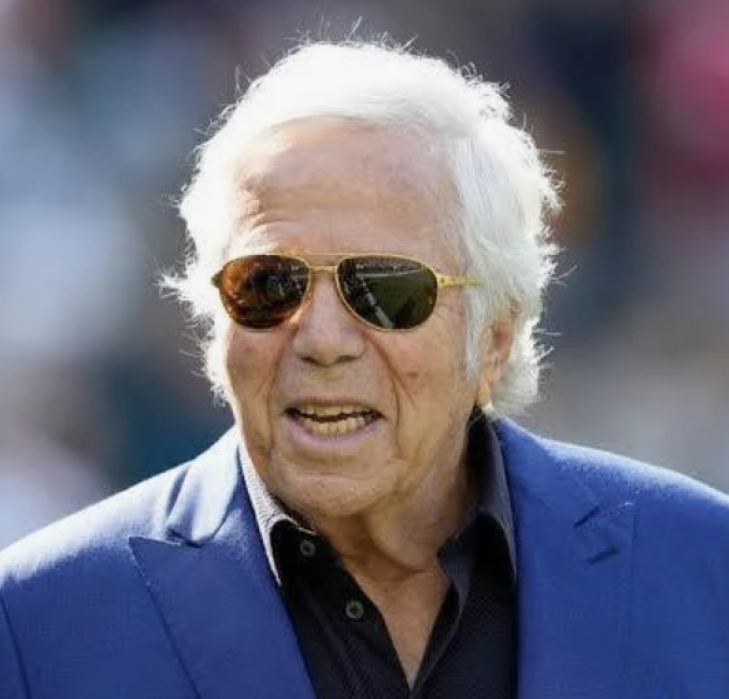
Robert Kraft. Kraft has also been a finalist, and without him, the New England Patriots would not have become a dynasty and arguably would not even exist in New England. Seriously, that was on the table. Kraft has since become one of the most influential owners in sports, and under his ownership, the team has won six Super Bowls.
Virginia McCaskey. George Halas's daughter, Virginia McCaskey, took ownership of the Chicago Bears after “Papa Bear’s” death in 1983 and owned the team until her death last year. The Bears won their only Super Bowl (1986) under her, but she was a hands-off owner who is best known for firing her own son, Michael McCaskey, as team President in 1999 and eliminating the cheerleading squad. We will be blunt: that is not a Hall of Fame career.
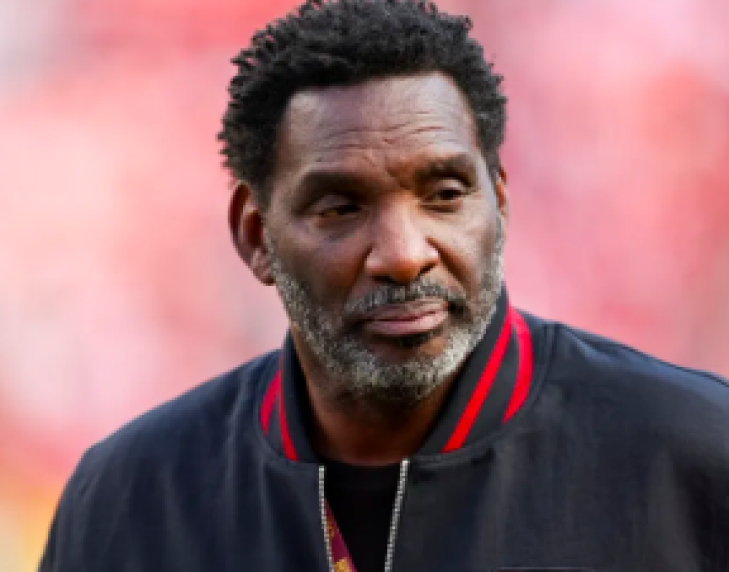
Doug Williams. This is where it gets interesting. Part of Porter’s mandate is for the Hall to look at a candidate's complete career, and with Williams, you have that. Best known for becoming the first Black quarterback to win a Super Bowl, when he led the Washington Redskins to victory, Williams has been a key executive for Jacksonville, Tampa Bay, and now Washington. His shattering of the expected norm for Black athletes in football makes him worthy of that as a “contributor.”
John Wooten. Like Williams, Wooten's complete career is incredible. An offensive lineman for ten seasons, Wooten later had roles in player personnel with the Dallas Cowboys, Philadelphia Eagles, and Baltimore Ravens.
We can’t wait to see who the Pro Football Hall of Fame will put forth!
The Pro Football Hall of Fame Names its nine Contributor Semi-Finalists
Can we again tell you how much we love this time of year?
The Pro Football Hall of Fame has announced the Semi-Finals from a field of 25 compiled from a recent reduction vote. The Committee will meet virtually on November 12 and select one Finalist who will put forth one finalist for the full Selection Committee.
The names considered are:
Bud Adams. Adams was the owner and founder of the Houston Oilers, where his team won the first two AFL Championships. Instrumental in forming the AFL, he was Adams was also impactful in the AFL’s merger with the NFL. He owned the team for 54 years until he died in 2013.
Ralph Hay: Hay owned the Canton Bulldogs from 1918 to 1922 and catalyzed the National Football League in 1920 when he organized multiple clubs to meet at his car dealership in Canton, Ohio.
Bucko Kilroy: Kilroy worked in player personnel and scouted for Philadelphia, Washington, and Dallas. He would later be an executive for New England, where he was their General Manager (1979 to 1982) and Vice President (1983 to 1993).
Robert Kraft: Kraft has owned and run the New England Patriots since he bought the team in 1994. His teams have won six Super Bowls, and he has served on multiple owner’s committees.
Art Modell: Modell owned the Cleveland Browns from 1961 to 1995 and relocated the team to Baltimore, where the Ravens won a Super Bowl.
Art Rooney Jr.: Rooney Jr. has worked for the Pittsburgh Steelers in some capacity since 1961 and is currently their Vice President.
Seymour Siwoff: Siwoff was the Owner and President of Elias Sports Bureau, the official statistician of the NFL.
Doug Williams: Williams made history as the first black Quarterback to start and win a Super Bowl, and he is credited for creating opportunities for other black QBs. He also was the co-creator of the Black College Football Hall of Fame.
John Wooten: Wooten was the Director of Pro Scouting for Dallas from 1975 to 1991 and would later work in similar capacities for Philadelphia and Baltimore. He has two Super Bowl rings.
Roone Arledge, Chris Berman, Howard Cosell, Otho Davis, John Facenda, Mike Giddings, Don Klosterman, Eddie Kotal, Virginia McCaskey, Rich McKay, John McVay, Leo Remmel, Eddie Robinson, Jerry Seeman, Amy Trask and Jim Tunney.
We congratulate the candidates who have made it to this stage.
