

40. Charlie Buffinton
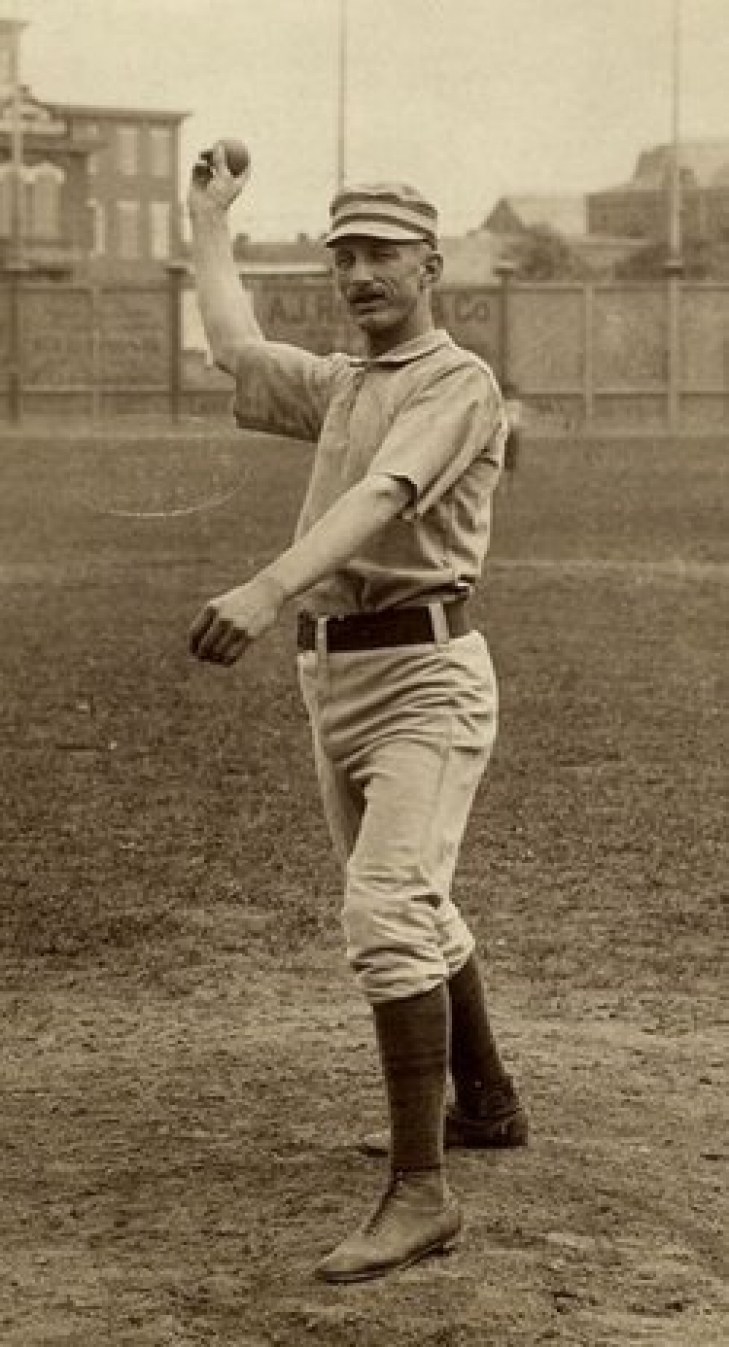
Although it may seem unlikely to rank a player with just three summers in red pinstripes above long-established franchise legends, advanced metrics reveal why Charlie Buffinton occupies such a notable position on the all-time leaderboard. To casual fans, his name has mainly faded into 19th-century baseball history, eclipsed by his outstanding 48-win season and 15.0 bWAR with the 1884 Boston Beaneaters. Yet, when the solidly built right-hander joined the Philadelphia Quakers from 1887 to 1889, he provided a concentrated, high-velocity burst of frontline dominance, marking one of the most efficient and productive pitching eras in the team's history.
Buffinton made winning a consistent part of his routine from the moment he joined the Philadelphia team, surpassing 20 victories in every season he played for the franchise. He managed a transitional 1887 schedule, achieving 21 wins over 35 complete games. However, it was his two-year peak afterward that established him as a leading, era-defining outlier in the sport.
During those consecutive summers, he consistently became a true workhorse, handling more than 780 demanding frames while spearheading the rotation to two identical, high-volume 28-win achievements.
The highlight of his local stay was during a remarkable 1888 regular season game. Buffinton delivered an exceptionally controlled pitching performance, finishing with a 28-17 record and maintaining an impressive 1.91 ERA over 43 complete games. Equipped with a powerful overhand curveball, commonly called a "drop pitch” in the 1880s, he dominated National League batters and achieved a career-best WHIP of 0.957.
From an accumulated value perspective, Buffinton was performing at a level that would have made him a perennial Cy Young Award contender if such awards had existed. Expert analysts note that he carried the entire team on his shoulders, posting an impressive 12.1 bWAR in 1888 and a remarkable 11.3 bWAR in 1889, ranking first and second among all National League pitchers in those years.
The reality behind his box scores is that his win-loss record could have been much better if he had received consistent run support from a generally average Quakers lineup that often wasted his best performances.
He ultimately left the organization after the 1889 season, moving to the briefly existing Players' League to end his notable major league career with 233 wins. During his 133-game stint in Philadelphia, he accumulated an impressive 27.2 total bWAR, 77 wins, and 115 complete games.
