93. Mel Hutchins
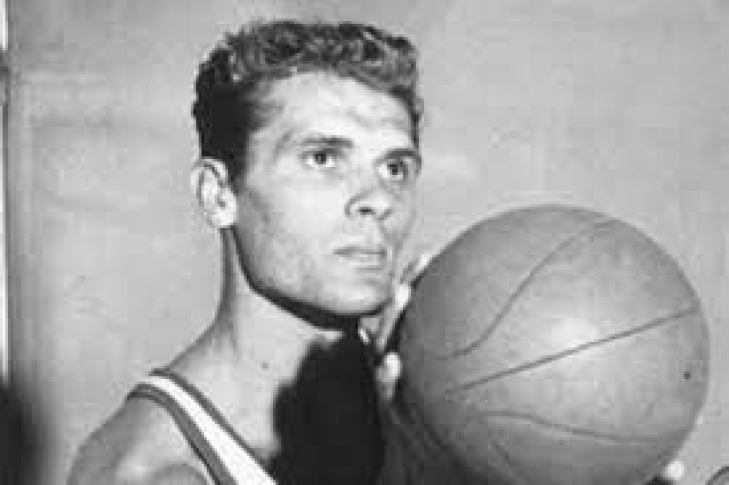
Mel Hutchins led BYU to an NIT Title in 1951, and the Second Team All-American was drafted Second Overall the year after by the Tri-Cities Hawks, who moved to Milwaukee right after.
Hutchins was incredible in his first pro year, where he became the first rookie to lead the NBA in rebounds. Named by the sportswriters as their Rookie of the Year, Hutchins became a more balanced player, averaging a double-double as a sophomore (11.7 Points and 11.2 Rebounds) and was an All-Star for the first time.
The struggling Hawks sold his rights to the Fort Wayne Pistons, where he was on a much better team. Hutchins went to three more All-Stars and helped them reach back-to-back Finals in 1955 and 1956. He was also fourth and eighth, respectively, in MVP voting in those seasons. Hutchins was dealt to New York in the 1957 off-season, but a devastating knee injury ended his career. He only played 18 Games that year and never competed again.
The staunch defender is a “what might have been” in a sport littered with them, but there were many accolades in that brief career.
287. Bart Oates
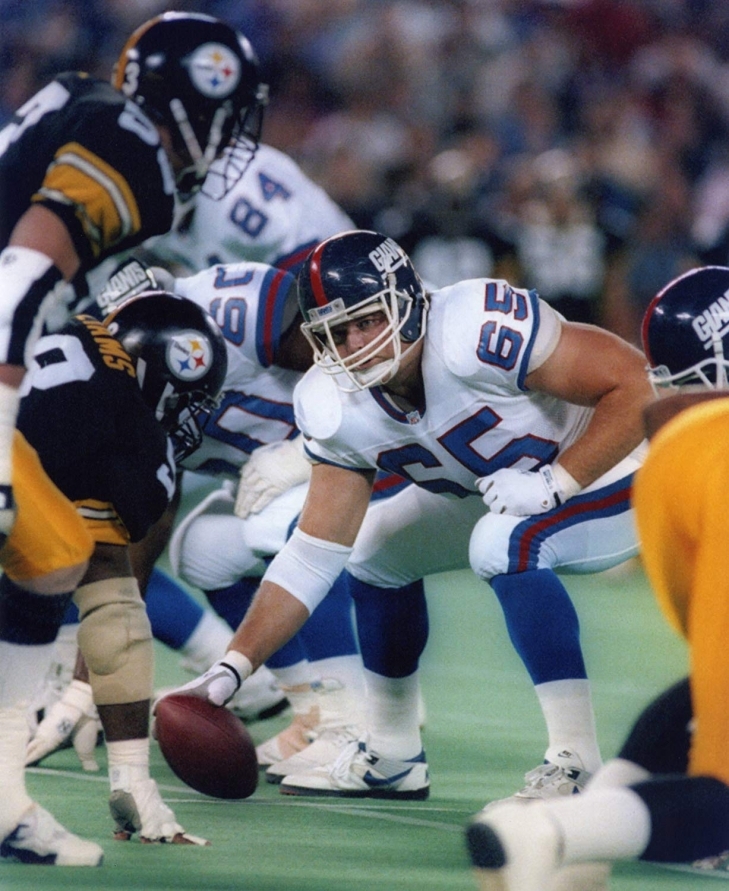
In terms of Centers, there are few Professional Football players who can say that they are as successful as Bart Oates.
After being undrafted at BYU in 1983, Oates would join the Philadelphia Stars of the USFL, and he would win championships with them in 1984 and 1985. When the USFL folded, he signed with the New York Giants, where he would become their starting Center, and was named an All-Rookie. The following season would see Oates win another title, this time a Super Bowl Ring when the Giants won Super Bowl XXI. In 1990, Oates and the Giants won another Super Bowl (XXV), but for the first time, he was named to the Pro Bowl.
63. Todd Christensen
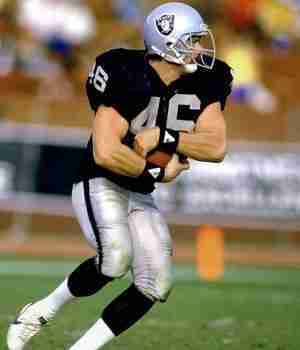
Considering that Todd Christensen was drafted as a Running Back, it is impressive that he developed into one of the most successful Tight Ends of the 1980s.
The transition to Tight End was not a quick one, and it was not until his fifth year in the NFL that Christensen was productive. He would then embark on a five-year stretch that would see him set (then) records for receptions for the position. The Raider would twice lead the league in receptions, which is still unheard of for a Tight End. The five-time Pro Bowler may not have been the Raiders’ most explosive weapon, but he was their most consistent.
It could be imagined how many totals Todd Christensen could have put up had he learned the Tight End position earlier in his career. Regardless, with two Super Bowl Rings and his early 80’s exploits, he has a legacy in Raiderland that few can match.
Should Todd Christensen be in the Hall of Fame?
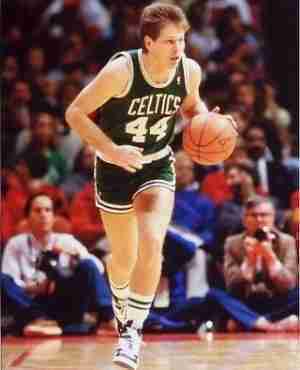
74. Danny Ainge