

50. Bobo Newsom

Bobo Newsom joined the Tigers in May 1939 as the centerpiece of a massive ten-player trade with the St. Louis Browns, a move that finally placed the league's most colorful right-hander on a team that could match his talent. A high-velocity workhorse with a personality as large as his delivery, he quickly transitioned from a nomadic star into the definitive ace of the Detroit rotation. For three seasons in a Detroit uniform, he provided a specialized brand of durability and big-game bravado, proving that "Old Bobo" could carry a franchise to the brink of a world championship through sheer force of will.
In 1940, he emerged as one of the most dominant arms in the American League, posting a career-best 21-5 record with a 2.83 ERA. He demonstrated a specialized ability to shoulder a massive workload, finishing second in the league in bWAR for pitchers with a 6.8 mark and winning 13 consecutive decisions at one point. He showed the organization that he was a foundational winner, leading the staff to an American League Pennant and earning the first of two consecutive All-Star selections as a Tiger.
Everything culminated in a 1940 World Series performance that stands as one of the most heroic and bittersweet chapters in franchise history. Just hours after his father passed away following Game 1, Newsom returned to the mound to pitch a legendary three-hit shutout in Game 5. Across 26 innings in that seven-game classic, he maintained a staggering 1.38 ERA and a 0.846 WHIP, throwing three complete games and out-dueling the best the National League had to offer. He possessed a focused intensity that saw him nearly single-handedly deliver a title to Detroit, famously coming within a few outs of a Game 7 victory before falling in a 2-1 heartbreaker.
In 1941, despite a league-leading 20 losses that reflected the team's overall regression, he still finished third in strikeouts and second in bWAR among pitchers, with a 5.8 mark, proving his stuff remained top-tier. However, his eccentric personality and a high-stakes contract dispute—which famously involved him mailing a loaf of bread and a butcher knife to the general manager- led to his trade to Washington in early 1942. He left behind a statistical footprint that reflected his status as the premier "big-game" starter of his era, amassing 41 wins and 351 strikeouts in just over 800 innings for the club.
It was a brief run, but it was spectacular.
173. Bobo Newsom
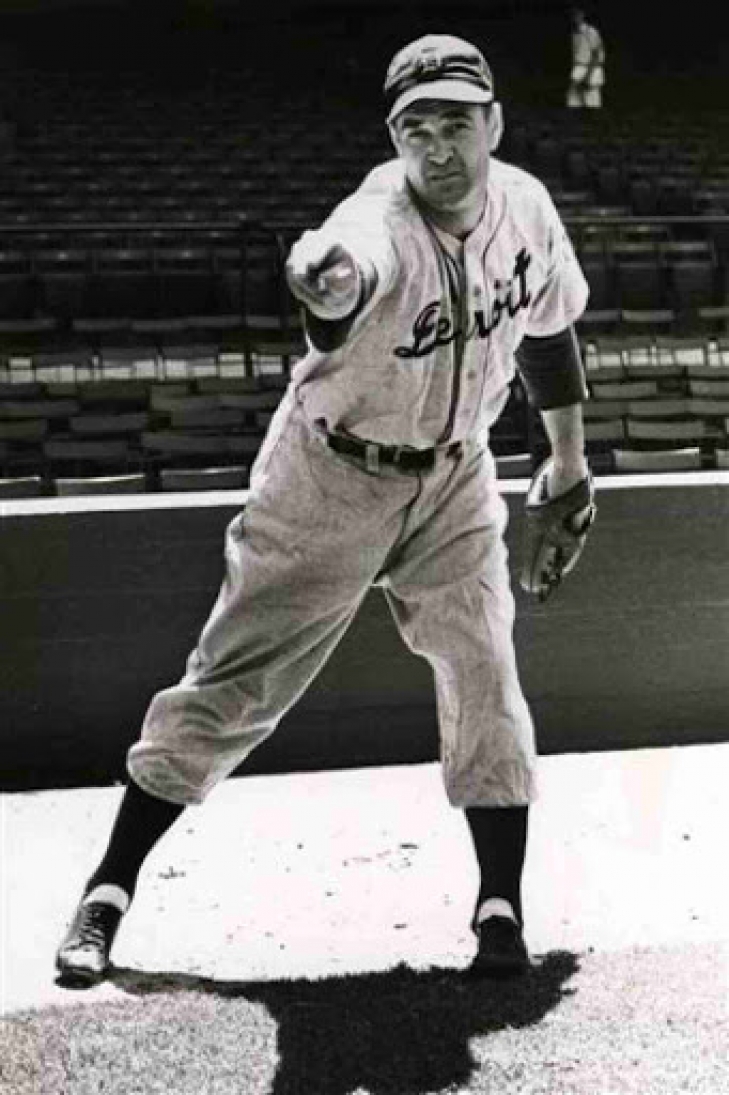
When you are named Bobo Newsom, you have to assume that the possessor is a colorful character. He was, but there was a period where Newsom was also an excellent Pitcher.
Looking at Newsom's career, the first thing you notice is that he had a losing record of 211-222 and led his league in losses four times. You also see that he was a vagabond pitcher who played for eight different teams, some of which he played for on multiple occasions. Yet, this is a guy who stuck around a lot and struck out a ton of batters, so the value of Newsom is definitely there.
On three occasions, Newsom was a 20 Game winner, and he was an All-Star in all of those years. Newson won the Strikeout Title in 1942 (113), and in the five seasons leading up to that, he was the runner-up. Newson would end up with a nice number of 2,082 Strikeouts over his career.
While Newson was not known for having a great ERA, he did have four top-ten finishes in that stat, and regarding overall efficiency, he also had six top-seven ranks in bWAR for Pitchers. Newsom also won a World Series Ring with the New York Yankees in 1947.
