

41. Bobby Murcer
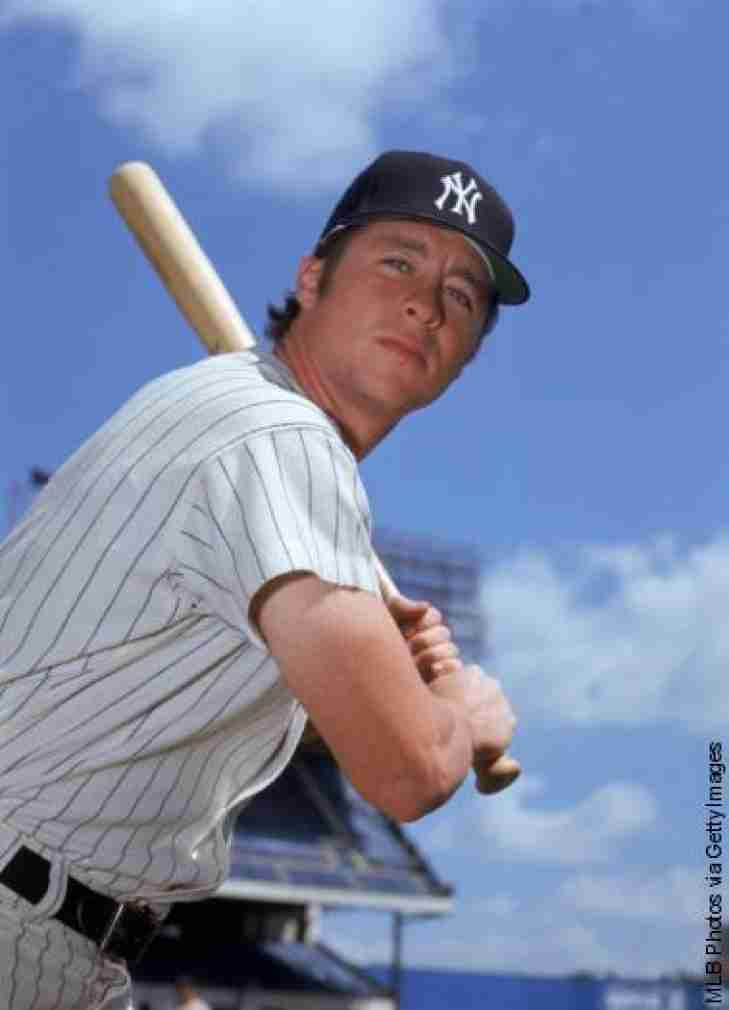
When New York called up Bobby Murcer as a teenager in the 1960s, the team saw him not just as a promising player but as the direct heir to Mickey Mantle, placing an unfair burden on him. Both proud Oklahoma natives, signed by legendary scout Tom Greenwade, they shared athletic, left-handed swings that inevitably drew comparisons. Murcer even took over Mantle’s locker and his role in center field. While living up to the mythical status of such a legendary figure was impossible, Murcer forged his own significant legacy, becoming the franchise’s emotional core during some of its toughest years.
After a mandatory two-year stint serving in the United States Army during the peak of the Vietnam War, Murcer returned in 1969 to take a central role in a transforming pinstriped batting lineup. He adopted a patient stance at the plate, effectively combining a keen visual sense with a smooth pull swing that was ideally suited to target the short right-field porch at Yankee Stadium. He achieved five straight summers with over 20 home runs early in his full-time career, peaking in 1971 when he led the American League with a remarkable .427 on-base percentage and a .969 OPS. The following year, he delivered an outstanding 1972 season, leading the league in runs scored (102) and total bases (314), while hitting a personal best of 33 home runs and driving in 96 RBIs. His consistent performance earned widespread recognition nationwide, securing four consecutive All-Star selections and four top finishes in the American League MVP voting, including a notable fifth-place finish in 1972.
On the grass, his defensive skills set a remarkable standard for outfield security. He moved with a swift first step, taking careful routes to the ball and earning a Gold Glove Award in 1972. His excellent throwing mechanics made him a formidable player; throughout the 1970s, Murcer recorded 119 outfield assists, leading all major league outfielders for the decade and making aggressive baserunners think twice. Yet, just as the front office began constructing a championship roster around him, Murcer was abruptly traded to San Francisco for Bobby Bonds in a stunning November 1974 deal. The trade meant he painfully missed out on the team's late-1970s world championship resurgence.
In June 1979, the Yankees reacquired their star from the Chicago Cubs, placing him in a veteran role. His return included a memorable moment on August 6, 1979, just hours after eulogizing his close friend and captain Thurman Munson. Murcer rallied the Yankees emotionally, driving home all five runs—including a game-winning two-run single in the bottom of the ninth—to beat Baltimore 5–4.
He spent four summers in a supporting leadership role before moving to the broadcast booth mid-season in 1983. Murcer ended his career with 1,238 hits, 192 doubles, 177 home runs, and 692 RBIs in 1,261 games.
