The Pro Football Hall of Fame Revisited Project: 1974 Final VOTE
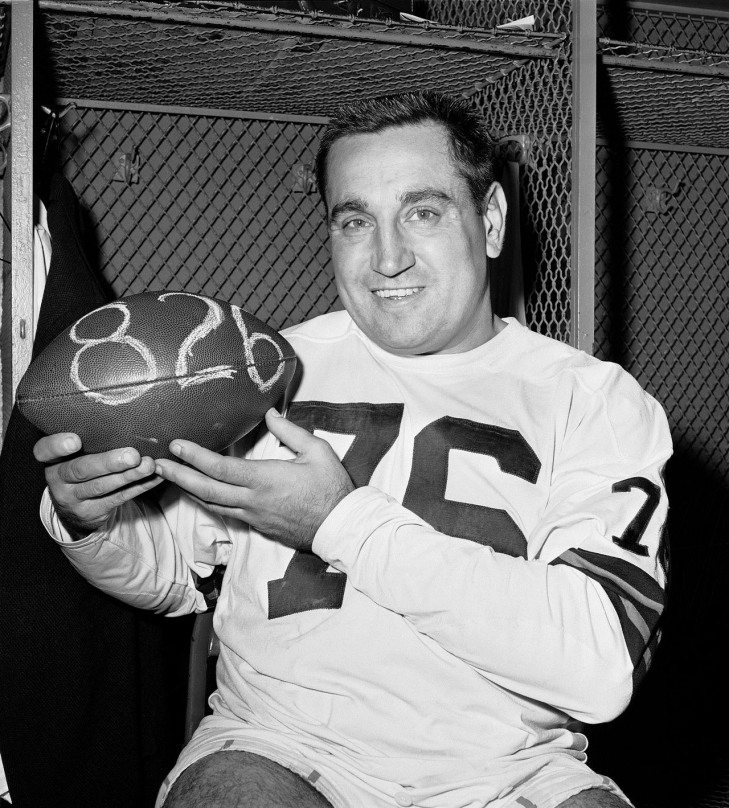
1974 Pro Football Hall of Fame Revisited Project Class.
Here we are! Again!!
If you have been following our Pro Football Hall of Fame Revisited Project, you know we have asked the rhetorical question: What if the PFHOF began in January 1946?
After soliciting and obtaining a passionate group of football fans and historians, we sent out a ballot for a Preliminary Vote, in which we asked each voter to give us 25 names as their semi-finalists and 5 in the Senior Pool. We then asked the group to vote for their 15 Finalists in the Modern Era and 3 in the Senior Category. The final stage was to vote for their five Modern Era inductee and one Senior inductee.
This is the result of the 30th official class;
Below are the final results of this project based on 31 votes.
Remember that the group took a vote in “1970”, and we have reverted to the top five candidates entering the Hall, PROVIDING THEY MAKE 50% of the vote. This will be put to a vote again in “1976”.
This is for the “Modern Era”
*Bold indicates they have been elected to the Pro Football Hall of Fame Revisited Class of 1974:
|
Player |
Year of Eligibility |
Vote Total |
|
Lou Groza T-PK |
2 |
28 |
|
Bobby Mitchell FL-HB-WR |
1 |
21 |
|
Mike McCormack T-G |
7 |
17 |
|
John Henry Johnson FB-HB |
3 |
14 |
|
Jerry Kramer G |
1 |
12 |
|
Stan Jones G-DT-T |
3 |
11 |
|
Tommy McDonald FL-WR |
1 |
10 |
|
Paul Hornung HB |
3 |
8 |
|
Pat Harder FB |
16 |
7 |
|
Del Shofner E-DB |
2 |
6 |
|
Alan Ameche FB |
9 |
5 |
|
Joe Fortunato LB |
3 |
5 |
|
Tom Sestak DT |
1 |
5 |
|
Gene Lipscomb DT |
7 |
4 |
|
Billy Howton E-FL |
6 |
1 |
This is for the “Senior Era”,
*Bold indicates they have been elected to the Pro Football Hall of Fame Revisited Class of 1974.
|
Marshall Goldberg |
1 |
11 |
|
Ward Cuff |
2 |
9 |
|
Buckets Goldenberg |
4 |
7 |
|
None of the Above |
N/A |
4 |
This is for the “Coaches/Contributors”,
*Bold indicates they have been elected to the Pro Football Hall of Fame Revisited Class of 1974.
|
Buddy Parker |
5 |
14 |
|
Clark Shaughnessy |
5 |
14 |
|
Charles Bidwill |
5 |
3 |
About the 1974 Inductees:
Lou Groza T-C-DT-K, CLE 1946-59 & 1961-67: Inducted in the Pro Football Hall of Fame Revisited Project in 1974 on his 2nd Ballot. Inducted into the actual Pro Football Hall of Fame in 1974.
An original Cleveland Brown, Lou Groza was recruited by Paul Brown, primarily to act as the Browns’ Place Kicker. Groza led the AAFC in Points in his rookie year, and after two seasons, Groza also helped out on Cleveland’s Offensive Line, and he would perform a dual-role for the next twelve seasons.
The Browns won the first four AAFC Championships, and Groza helped them win the 1950, 1954, and 1955 NFL Titles. Groza evolved into an above-average Left Tackle, but his kicking talents were ahead of its time. "The Toe" was one of the first Kickers who could regularly get it through the uprights in further distances. Before Groza, Field Goals beyond 40 Yards were rarely attempted, but a new dynamic was added to the game with Groza as a weapon. He would be named a First Team All-Pro four years in a row (1952-55) with nine Pro Bowl appearances. Back issues compounded, and he retired after the 1959 Season, though he returned as a pure kicker from 1961 to 1967.
Bobby Mitchell, FL-HB-WR, CLE 1958-61 & WAS 1962-68: Inducted in the Pro Football Hall of Fame Revisited Project in 1974 on his 1st Ballot. Inducted into the actual Pro Football Hall of Fame in 1983.
The Washington Redskins owner, George Preston Marshall, did not want to integrate his team, but the team was forced to do so by the National Football League. In 1961, under pressure from the NFL and the Federal Government, Marshall drafted Ernie Davis, the first ever African American Heisman winner.
Fearful of what he might have had to pay Davis, Marshall traded him to Cleveland for Bobby Mitchell and Leroy Jackson, who would become the first two black players on the Redskins. Mitchell had been playing at Halfback for four years with the Browns, was moved to Flanker, and he would lead the NFL in Receiving Yards in his first two seasons in Washington, with his third year seeing him top the leaderboard in Receiving Touchdowns. Named a First Team All-Pro in 1962, Mitchell was also a Pro Bowler in 1962, 1963, and 1964.
Mitchell had three more good years but declined in 1968 and retired shortly after. With the Redskins, he would have 6,930 Yards From Scrimmage with 51 TDs.
After his playing career ended, Mitchell became an executive with Washington for decades to come and was at one time the team’s Assistant General Manager.
Mike McCormack, T-DG-DT, NYY 1951 & CLE 1954-62. Inducted in the Pro Football Hall of Fame Revisited Project in 1974 on his 7th Ballot. Inducted into the actual Pro Football Hall of Fame in 1984.
Mike McCormack played for the New York Yanks as a rookie, but he would leave them to serve his country in the Korean War. When he returned, the Yanks had folded, and the Baltimore Colts were created to replace them. McCormack signed with the Colts, but Cleveland Browns Head Coach, Paul Brown, remembered the Lineman and traded for him before he played for the Colts.
McCormack started at Middle Guard and then Right Tackle, helping Cleveland win the NFL Championship in both 1954 and 1955. The Browns were a very competitive team for McCormack's duration (until 1962), and he was named to five Pro Bowls and three Second Team All-Pros. Brown had referred to McCormack as the best Lineman that he ever coached, and that is as high praise as you can get. The Browns agreed and named him to their Ring of Honor in 2010.
31. Bobby Mitchell
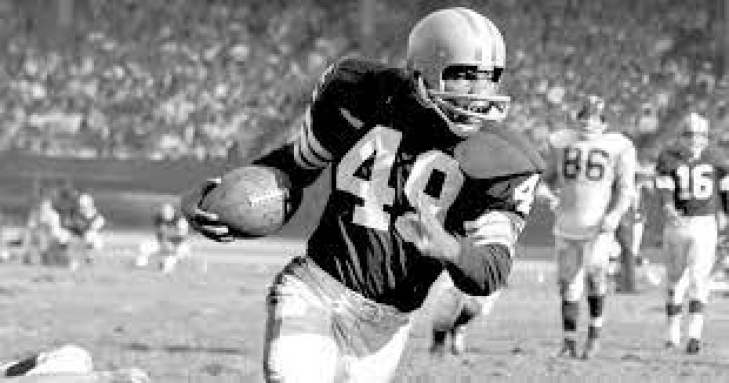
Selected in the seventh round of the 1958 NFL Draft out of Illinois, Bobby Mitchell became another iconic discovery by head coach Paul Brown. Boasting electric 9.5-second 100-yard-dash speed, Mitchell immediately stepped into the Cleveland backfield alongside Jim Brown, creating one of the most explosive, dynamic rushing duos in football history.
Cleveland utilized Mitchell as a versatile and multifaceted player. Capable of scoring at any moment he possessed the ball, he positioned himself at halfback, extended out wide as a pass receiver, and served as the team's primary kick and punt return specialist. During his four seasons in Ohio, Mitchell accumulated an impressive total of 5,916 all-purpose yards, consistently ranking within the top six league-wide in all-purpose yards each season. His exceptional speed on the periphery complemented Jim Brown's formidable interior power, propelling the Browns' offense to consecutive winning seasons and securing a place in the 1957 NFL Championship Game.
Despite his significant productivity and popularity, Mitchell was traded after the 1961 season. In pursuit of a formidable full-time fullback to complement Jim Brown, Cleveland exchanged Mitchell to Washington for the rights to Heisman Trophy recipient Ernie Davis. Tragically, Davis was diagnosed with leukemia shortly after the trade, which prevented him from ever participating in an NFL game. Concurrently, the transaction bore substantial historical significance: Washington was the last remaining segregated team in the NFL, and owner George Preston Marshall faced substantial pressure from the federal government to desegregate. Mitchell thus became the first African American star in the history of the Washington franchise.
Switching to a full-time flanker in his new environment, Mitchell achieved a Hall of Fame level, leading the league in receiving yards twice and earning four Pro Bowl selections. Over four seasons with Cleveland (1958–1961), he played 48 games, totaling 2,297 rushing yards, 1,462 receiving yards, and 38 touchdowns.
14. Bobby Mitchell
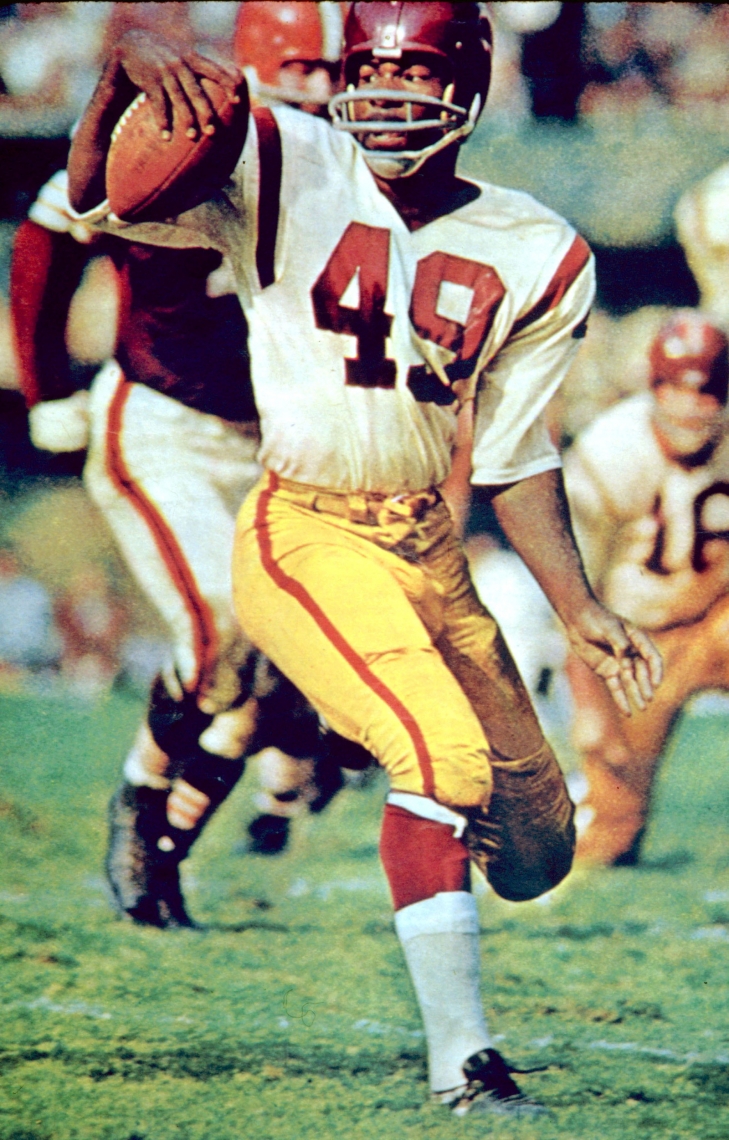
The Washington Redskins owner, George Preston Marshall, did not want to integrate his team, but the team was forced to do so by the National Football League. In 1961, under pressure from the NFL and the Federal Government, Marshall drafted Ernie Davis, the first ever African American Heisman winner.
The Washington Redskins to retire Bobby Mitchell's number 49.
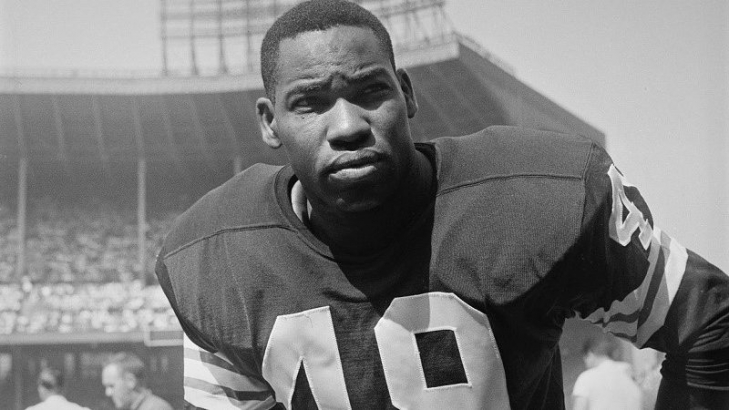
Regular visitors of Notinhalloffame.com know that we are slowly working on the top 50 of every major team in the NHL, NBA, NFL and MLB. Once that is done, we intend to look at how each team honor their past players, coaches and executives. Eventually, we plan to do that for the major colleges in the NCAA. As such, it is news to us that the Washington Redskins will retired the number #49 of Bobby Mitchell, the team’s first black player.
The timing comes one day after the statue of former Redskins’ owner, George Preston Marshall, who owned the franchise from 1932, until he passed away in 1969. Marshall was the last NFL owner to integrate his team, and only did so under immense pressure from the Secretary of the Interior, Stewart Udall, who threatened that he would pull the lease on RFK Stadium, which was on federal land.
Mitchell arrived in Washington via a trade from the Cleveland Browns, where he played for four seasons. The Flanker played for the Redskins until he retired in 1968, and with the team, he was a three-time Pro Bowl Selection, and he led the NFL in Rushing Yards his first two seasons. Mitchell’s overall production for Washington was 8,162 All-Purpose Yards with 53 Touchdowns.
After Mitchell retired as a player, he remained with the Redskins in a front office capacity, and would overall spend 41 years with the organization.
He entered the Pro Football Hall of Fame in 1983, and he is a member of both the Cleveland Browns and Washington Redskins Ring of Honor.
Mitchell passed earlier this year at the age of 84.
The retirement of Mitchell’s #49 marks only the second time that the Redskins retired a number, the first being Sammy Baugh’s #33.
We here at Notinhalloffame.com would like congratulate the family of Bobby Mitchell at this time, and again reiterate that this should have happened earlier.
The Buck Stops Here -- Hall of Fame News -- Season 1 Episode 14