

The Pro Football Hall of Fame Revisited Project: 1968 Final VOTE
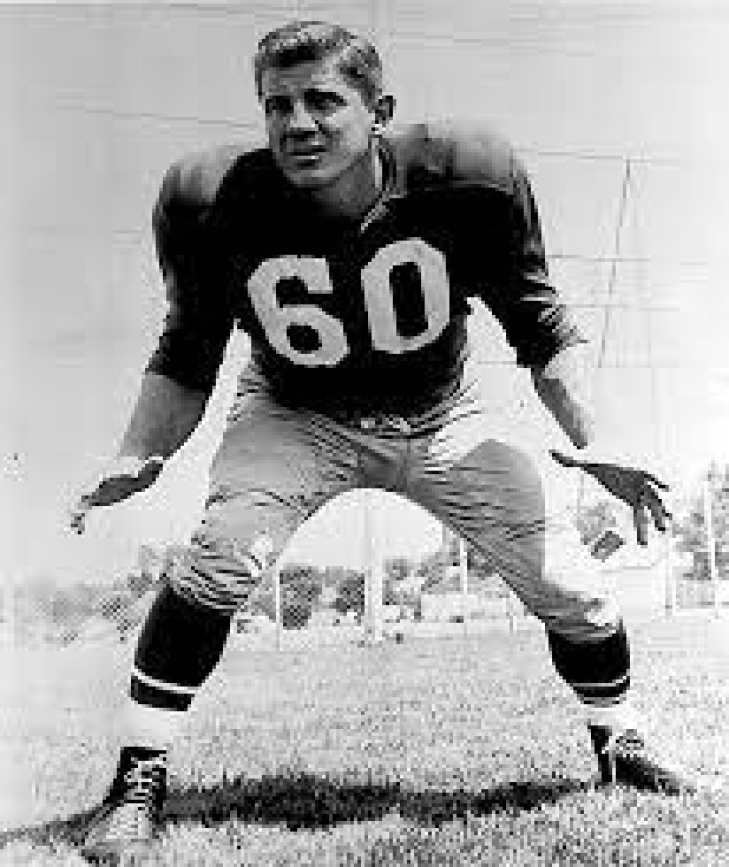
1968 Pro Football Hall of Fame Revisited Project Class.
Here we are! Again!!
If you have been following our Pro Football Hall of Fame Revisited Project, you know we have asked the rhetorical question: What if the PFHOF began in January 1946?
After soliciting and obtaining a passionate group of football fans and historians, we sent out a ballot for a Preliminary Vote, in which we asked each voter to give us 25 names as their semi-finalists and 5 in the Senior Pool. We then asked the group to vote for their 15 Finalists in the Modern Era and 3 in the Senior Category. The final stage was to vote for their five Modern Era inductee and one Senior inductee.
This is the result of the 23rd official class;
Below are the final results of this project based on 32 votes,
Remember that the group took a vote in “1966”, and we have reverted back to the top five candidates entering the Hall PROVIDING THEY MAKE 50% of the vote. This will be put to a vote again in “1969”.
This is for the “Modern Era”
*Bold indicates they have been elected to the Pro Football Hall of Fame Revisited Class of 1968:
|
Player |
Year of Eligibility |
Vote Total |
|
Chuck Bednarik LB-C |
1 |
28 |
|
Bobby Layne QB |
1 |
24 |
|
Bobby Dillon S |
4 |
17 |
|
Billy Wilson E-FL |
3 |
11 |
|
Alan Ameche FB |
2 |
10 |
|
Charlie Conerly QB |
2 |
9 |
|
Ward Cuff WB-QB-HB |
16 |
8 |
|
Mike McCormack |
1 |
8 |
|
Bill Osmanski FB |
16 |
6 |
|
Marshall Goldberg FB |
15 |
5 |
|
Pat Harder FB |
10 |
5 |
|
Buckets Goldenberg G-BB |
18 |
4 |
|
Gene Lipscomb DT |
1 |
4 |
|
Tank Younger FB-LB-HB |
5 |
2 |
|
Bruno Banduccii G |
9 |
1 |
This is for the “Senior Era”,
*Bold indicates they have been elected to the Pro Football Hall of Fame Revisited Class of 1968.
|
George Christensen |
5 |
10 |
|
Ace Gutkowski |
4 |
8 |
|
Al Nesser |
11 |
6 |
|
None of the Above |
N/A |
7 |
About the 1968 Inductees:
Chuck Bednarik LB-C, PHI 1949-62: Inducted in the Pro Football Hall of Fame Revisited Project in 1968 on his 1st Ballot. Inducted into the actual Pro Football Hall of Fame in 1967.
The first name that should come to the mind in Philadelphia when it comes to football legends has to be Chuck Bednarik, who was considered the last Ironman of football as he played both ways, Center and Linebacker, and was among the best in the 1950s at both.
Bednarik was the first overall pick in the 1949 Draft, and he did not have to travel far, as he was a two-time All-American from Penn. Bednarik, who was exemplary at Center, made his mark at Linebacker with hits that rocked opponents to their core and struck fear in any offensive player. The six-time First Team All-Pro was the heart and soul of the Philadelphia Eagles team (the only team he ever played for) that won the 1960 NFL Championship.
Amusingly, Bednarik’s nickname of “Concrete Charlie” came from his off-season job as a concrete salesman and not from his hits. That moniker proved to be one of the most appropriate ones in football.
Bobby Layne QB, CHI 1948, NYB 1949, DET 1950-58 & PIT 1958-62: Inducted in the Pro Football Hall of Fame Revisited Project in 1968 on his first Ballot. Inducted into the actual Pro Football Hall of Fame in 1967.
A bust for both the Chicago Bears and New York Yankees, Bobby Layne quarterbacked the Lions to three NFL Championships in the 1950s and is currently the only pure QB from the Lions in the Pro Football Hall of Fame. A two-time Passing Yards leader, Layne was known for his grit, being one of the last players to wear face bars on his helmet.
Detroit was never the same after he traded, and many older fans likely still claim the trade of Bobby Layne took them to the decades-long slump they are only now coming out of.
Bobby Dillon, DB, GNB 1952-59. Inducted into the Pro Football Hall of Fame Revisited Project in 1968 on his 4th Ballot. Inducted into the actual Pro Football Hall of Fame in 2020.
Bobby Dillon’s career spanned only eight years, but they were all spent with the Green Bay Packers. The 94 games he put on the cleats with Green Bay were enough for him to set (and still hold) the franchise record for interceptions. Dillon would also be named a First Team All-Pro in four of his eight seasons.
It's not a bad career for someone alleged to have only one working eye.
26. Bobby Dillon
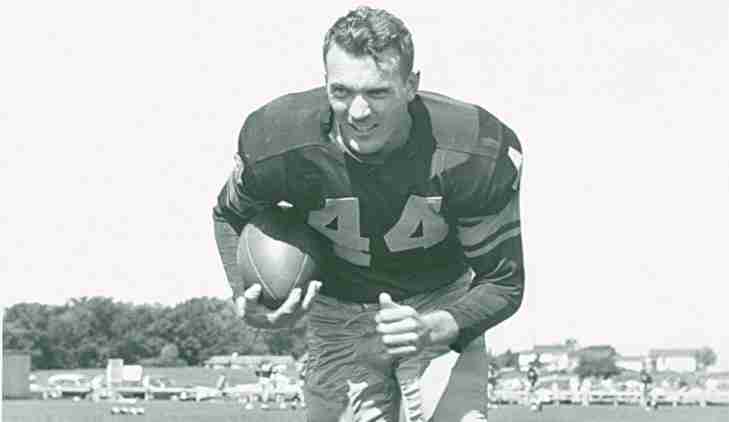
Selected in the third round (28th overall) of the 1952 NFL Draft out of the University of Texas, Bobby Dillon arrived in Green Bay with very little fanfare, but he immediately transformed into a defensive terror. What made his legendary playmaking ability truly astounding was a severe childhood accident that left him with a glass eye; playing his entire career with vision in only one eye, "The Hawk" neutralized passing attacks through sheer anticipation, razor-sharp instincts, and world-class closing speed.
Dillon wasted no time establishing his territory in the Packers' secondary, leading the team with four interceptions as a rookie. That debut performance kicked off an unprecedented seven-year run in which he finished as Green Bay's primary interception leader every season through 1958. He hit the nine-interception threshold on three separate occasions (1953, 1955, and 1957), highlighted by a Thanksgiving Day showcase against Detroit in 1953 where he intercepted four passes in a single game—a feat that remains tied for the NFL single-game record.
Dillon's dominance spanned 1954 to 1958, a five-year stretch in which he established himself as arguably the premier safety in professional football. He was named a First-Team AP All-Pro in four of those five seasons (1954, 1955, 1957, and 1958) while earning four consecutive Pro Bowl selections from 1955 through 1958. Opposing quarterbacks quickly learned that throwing anywhere near his side of the field was an invitation for a game-changing takeaway.
Intending to retire following the 1958 campaign, Dillon was persuaded by first-year head coach Vince Lombardi to return for one final run in 1959. Though injuries curtailed his final season, he helped instill the defensive standard that laid the foundation for Green Bay's 1960s dynasty. Over his eight years in Titletown, Dillon picked off 52 passes and returned them for 976 yards and five touchdowns—a franchise interception record that has stood untouched for nearly seven decades.
Dillon was enshrined in the Green Bay Packers Hall of Fame in 1974. Ultimate national recognition finally arrived in 2020 when he was posthumously elected to the Pro Football Hall of Fame as part of the NFL's Centennial Slate,
