

199. Bill Nicholson
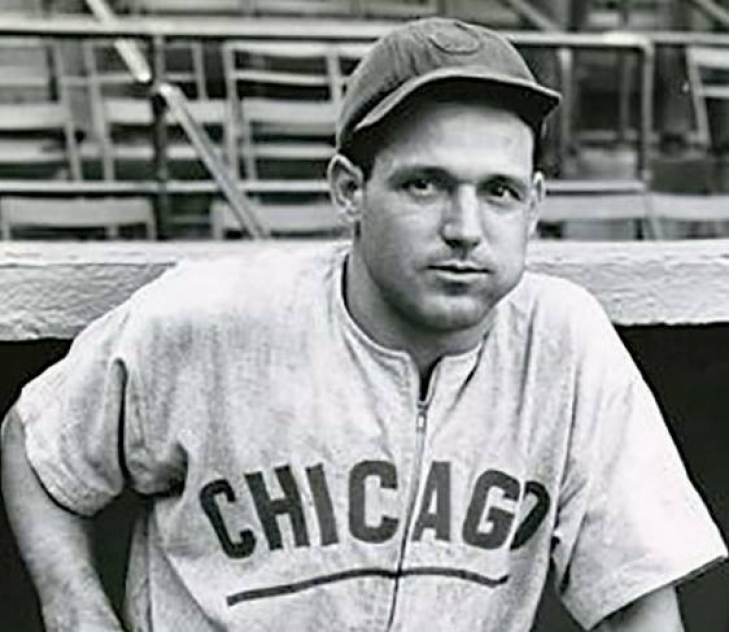
Bill Nicholson had a cup of coffee with the Philadelphia Athletics in 1936, but it was with the Chicago Cubs, a team he returned to the Majors with in 1939, where he became a star in baseball.
Nicholson was an All-Star in both 1940 and 1941, as the Cubs’ starting Rightfielder, and his powerful swing (he was nicknamed "Swish") generated fear from National League Pitchers. Nicholson belted at least 20 or more Home Runs annually from 1940 to 1944, and in those last two seasons, he was the NL leader in Home Runs and Runs Batted In.
Nicholson did not receive full credit during his two Home Run Title years (1943 & 1944) as World War II had taken many baseball players away from the game. Nevertheless, he was the leader in those metrics, which are the sexiest in Baseball.
In 1945, he was injured for most of the year but still helped the Cubs win the National League Pennant. He returned to have two more good power years (26 and 19 HR, respectively), but Nicholson was traded to Philadelphia afterward, where he finished his career over five years in a bench role.
Nicholson exited the game with 235 career Home Runs.
17. Bill Nicholson
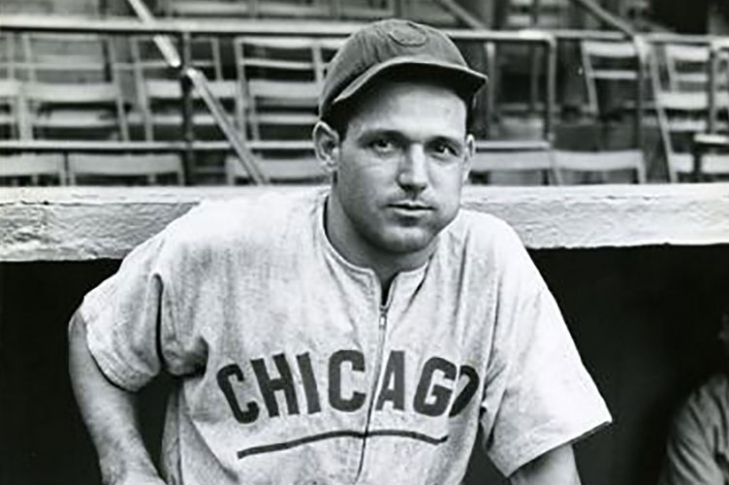
When Bill Nicholson joined the Cubs in late 1939, he arrived as a raw, 205-pound specimen with a swing designed for the cavernous gaps of Wrigley Field. He didn't just step into the box; he commanded it, performing a signature ritual of elongated practice swings, each one ending with his bat pointed like a bayonet at the pitcher. To the Brooklyn fans who mocked him, he was "Swish," but to the Chicago faithful, he was "Big Bill," the most reliable source of lightning on the North Side.
His trajectory reached a historic peak during the height of World War II. While many of the game's elite stars were in uniform overseas, Nicholson remained in a Cubs jersey (deferred from service due to colorblindness) and proceeded to terrorize National League pitching. In 1943 and 1944, he put together a back-to-back campaign that remains the gold standard for wartime production, leading the league in both home runs and RBIs in consecutive years. His 1944 season was his masterwork: 33 home runs, 122 RBIs, and a league-high 116 runs scored, a performance that saw him miss the MVP award by a single agonizing vote. He was so respected and feared that he was once intentionally walked with the bases loaded, a rare tribute to his game-breaking power.
However, the final chapter of his Chicago run was a steady, frustrated descent. As the soldiers returned from the front and the league’s talent pool deepened, Nicholson began a quiet battle with failing eyesight and a persistent kidney infection. The "Swish" that once echoed with authority began to lose its timing. By 1948, the Cubs’ most popular player of the decade was seeing less time on the field and more time on the bench. He was eventually traded to the Philadelphia Phillies after the '48 season, leaving Chicago with 205 home runs and 833 RBIs.
Nicholson departed the North Side as a five-time All-Star and a two-time home run champion who had anchored the team's 1945 pennant-winning squad. While he eventually found a second act as a "Whiz Kid" in Philly, his heart and his history belonged to Wrigley. He arrived as a prospect with a mighty swing and left as a franchise icon, finally taking his place in the inaugural class of the Cubs Hall of Fame in 2021.
