

8. Sherry Magee
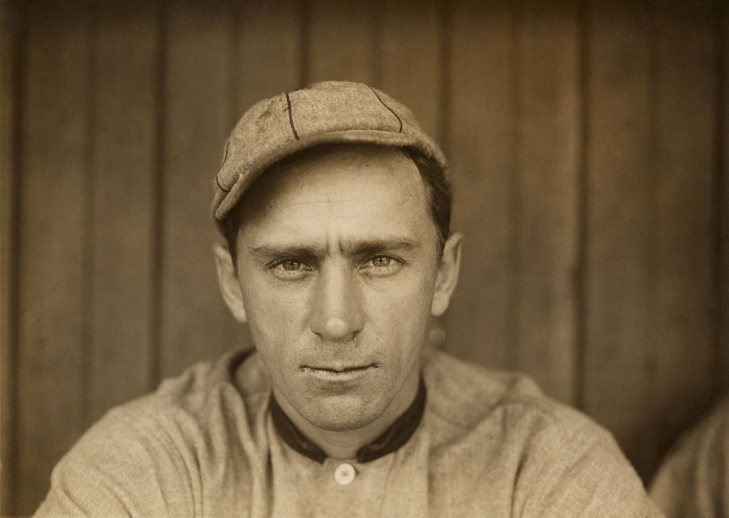
When Sherry Magee emerged as a 19-year-old rookie during the summer of 1904, the Philadelphia Phillies quickly recognized they had discovered a rare, energetic talent. Coming directly from the minor leagues, the right-handed outfielder made an immediate impact, establishing himself as a leading offensive powerhouse of the dead-ball era. In an era when offense was suppressed by heavily scuffed baseballs and large ballparks, Magee leveraged a unique combination of sharp line-drive hitting and exceptional speed on the bases.
Magee was a mainstay in Philadelphia for over ten years, consistently near the top of the National League leaderboards. During his eleven seasons with the team, he surpassed a .300 batting average five times, demonstrating both excellent contact skills and a talent for accumulating numerous extra-base hits. Six times, he ranked in the league’s top five for total hits, often frustrating pitchers at Baker Bowl by hitting doubles and triples into the gaps. In 1914, he led the National League in doubles and recorded five straight second-place finishes from 1906 to 1910. He also finished second three times in triples. Once on base, Magee was a formidable threat, finishing in the top five for stolen bases six times, including consecutive second-place finishes in 1906 and 1907.
Magee’s offensive peak was demonstrated in a historic 1910 showcase, where he would have easily won the modern MVP award. He dominated the senior circuit by leading in slash line categories and winning the National League batting title with a .331 average. Additionally, he led the league in runs scored (110) and RBIs (123), making him a formidable force for the Philadelphia offense.
All of this is impressive but it wasn’t all roses for Sherry Magee.
Yet, for all his undeniable brilliance on the diamond, Magee’s legacy carries some of the darkest, most volatile chapters in early baseball lore. He was a notoriously miserable, hot-tempered individual who seemed perpetually trapped under a dark cloud, entirely incapable of finding joy in his own success. That explosive fuse detonated permanently on July 10, 1911. Furious over a called third strike, Magee turned on umpire Bill Finneran and leveled him with a single, vicious punch, knocking the official completely unconscious on the field. The league initially handed down a severe season-ending suspension, though it was eventually scaled back to just over a month following a frantic appeal. In an era predating 24-hour media scrutiny, his toxic reputation was a constant headache for management; under modern social media floodlights, it would have been an absolute firestorm.
The organization traded the volatile star to the Boston Braves before the 1915 season, just a summer before Grover Cleveland Alexander led the team to the pennant. He left Philadelphia with 2,068 hits, 75 home runs, 430 stolen bases, 886 RBIs, and a .299 batting average.
Regardless of that, Magee was one of the greatest Philadelphia Phillies of all time. Not that he would have smiled about it. The organization placed Magee's name on the Philadelphia Baseball Wall of Fame in 2002.
42. Sherry Magee

Luckily for Sherry Magee, there was no YouTube in 1911; otherwise, all that would ever be replayed of him was the time he decked an umpire with one punch after a called third strike. Of course, he played in the 1900s and 1910s, so there isn’t any footage of him on YouTube at all.
Magee should not be remembered for that moment; his intensity led to moments like that. Magee was a rare star of the deadball era and, for ten years, made multiple appearances at the top of every offensive category imaginable. Magee was also stellar in the outfield and hunted down fly balls the same way we hunted pitches with his bat. Magee’s intensity was matched by his unwavering principles. At the age of 34 (and still more than capable of playing in the Majors), Sherry Magee would finish out his playing career in the Minors to avoid playing for owners he despised. His legacy and wallet would have been enriched playing in the bigs, but his principles would not allow it.
Magee might have had more impressive career numbers had he stayed in the Majors, but he had great numbers for the number of seasons he played. He may have let his temper get the best of him often, but he always wanted to win. Most great athletes do.
