

Our All Time Top 50 Arizona Cardinals have been revised to reflect the 2025 Season
Yes, we know that this is taking a while!
As many of you know, we at Notinhalloffame.com are slowly generating the top 50 of each major North American sports team. That being said, we maintain and update our existing Top 50 lists annually. We are pleased to present our pre-2026 revision of our top 50 Arizona Cardinals.
As for all of our top 50 players in baseball, we look at the following:
1. Duration and Impact.
2. Traditional statistics and how they finished in the National Football League.
3. Advanced Statistics.
4. Playoff performance.
5. Their respective legacy on the team.
6. How successful the team was when he was there.
7. Respecting the era in which they played.
Criteria 1-4 will make up the lion’s share of the algorithm. Please note that we have implemented this for the first time. This has changed the rankings all throughout the board.
Last year, the Arizona Cardinals were awful, winning only three games. As this team's origins date back over a century, it takes a lot to enter this list, or even move up within it. As such, there was only one elevation in this list.
As always, we present our top five, which saw no changes.
1. Larry Fitzgerald
2. Larry Wilson
3. Charley Trippi
4. Roger Wehrli
5. Dan Dierdorf
You can find the complete list here:
Eight-time Pro Bowl Safety Budda Baker moved to #12 from #17.
Of note, now a Minnesota Viking, Quarterback Kyler Murray remained at #49.
We thank you for your continued support of our lists on Notinhalloffame.com.
Our All-Time Top 50 Arizona Cardinals have been revised to reflect the 2025 Season

Yes, we know that this is taking a while!
As many of you know, we at Notinhalloffame.com are slowly generating the top 50 of each major North American sports team. That being said, we maintain and update our existing Top 50 lists annually. As such, we are delighted to present our post-2024 revision of our top 50 Arizona Cardinals.
As for all of our top 50 players in baseball, we look at the following:
1. Advanced Statistics.
2. Traditional statistics and how they finished in the National Football League.
3. Playoff accomplishments.
4. Their overall impact on the team and other intangibles that are not reflected in a stat sheet.
Last year, the Cardinals finished 8-9 and missed the playoffs. As the franchise is one of the oldest in the league, there was little movement and only one new entrant.
As always, we present our top five, which remain unchanged.
1. Larry Wilson
4. Roger Wehrli
5. Dan Dierdorf
You can find the entire list here.
The only new entrant is two-time Pro Bowl Quarterback Kyler Murray. He debuts at #49.
We thank you for your continued support of our lists on Notinhalloffame.com.
49. Kyler Murray
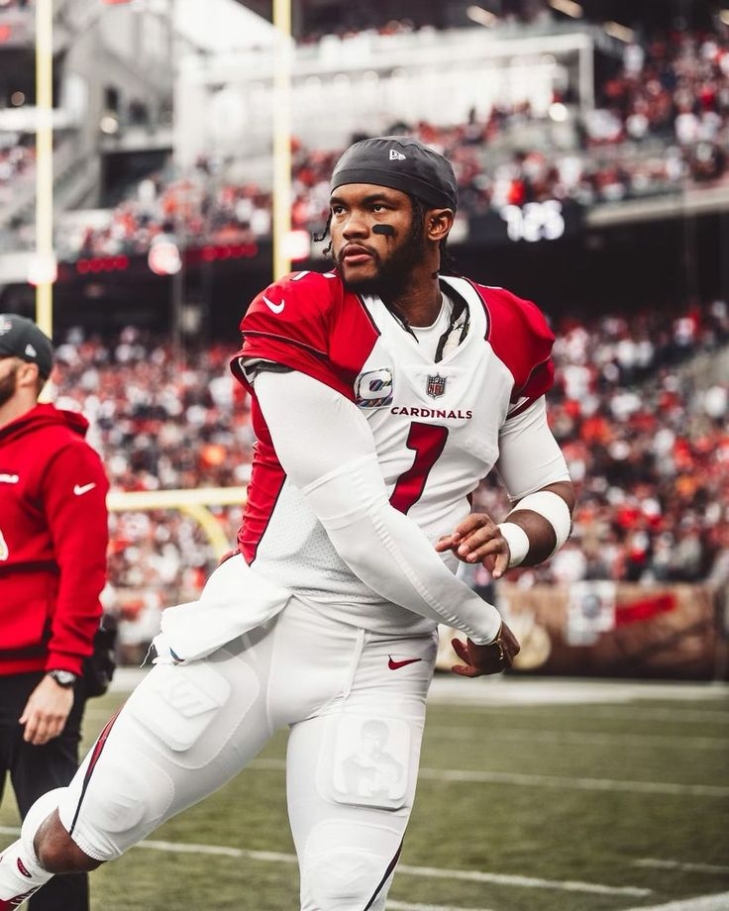
Selected first overall in the 2019 NFL Draft out of Oklahoma after capturing the 2018 Heisman Trophy, Kyler Murray arrived in the desert as the ultimate franchise reset button. Armed with explosive track speed and a lightning-quick release, the dual-threat phenom spent seven years in Arizona defining the outer limits of modern backfield dynamism—a thrilling yet erratic era that ultimately gave way to injuries, structural regression, and a March 2026 release.
Standing 5 feet 10 inches tall and weighing 207 pounds, Murray challenged traditional quarterback standards with his highly flexible arm strength and exceptional lateral agility. Working from spread formations, he had the unique skill to manipulate boundary defenders using his eyes, while making on-the-move throws appear seamless. When the pocket collapsed, his quick acceleration enabled him to shorten pursuit routes and turn broken plays into significant gains.
Murray lived up to the pre-draft hype as a rookie in 2019, throwing for 3,722 yards with 20 touchdowns while adding 544 yards and four scores on the ground. His instant splash earned him AP NFL Offensive Rookie of the Year honors and signaled a bright new era for Arizona football.
He improved his performance over the next two seasons, earning back-to-back Pro Bowl selections in 2020 and 2021. In 2020, he threw nearly 4,000 passing yards, gained 819 rushing yards, and scored 11 rushing touchdowns. The following fall, he achieved a career-high 69.2% completion rate and led the Cardinals to an 11-6 record— their first playoff appearance in six years. However, a poor wild-card loss to the Rams overshadowed his playoff debut.
The trajectory flattened under the weight of contract negotiations, offensive stagnation, and poor health. Murray struggled in 2022 before tearing his ACL in Week 14. He spent the first half of 2023 in grueling rehabilitation before making his midseason return.
Healthy once again in 2024, Murray staged a strong bounce-back campaign, passing for 3,851 yards and 21 touchdowns while guiding the offense with renewed efficiency.
However, his 2025 crossroads season turned into a breaking point. A nagging foot injury limited Murray to just five starts (962 passing yards, 6 touchdowns), and the offense operated with noticeably more consistency under veteran backup Jacoby Brissett.
With the franchise opting to reset its culture and cap structure, the Cardinals released Murray in March 2026. Shortly after, Murray signed a one-year reclamation deal with the Minnesota Vikings, closing his Arizona chapter with 20,460 passing yards, 121 touchdown passes, 3,193 rushing yards, and 32 rushing touchdowns.
12. Budda Baker
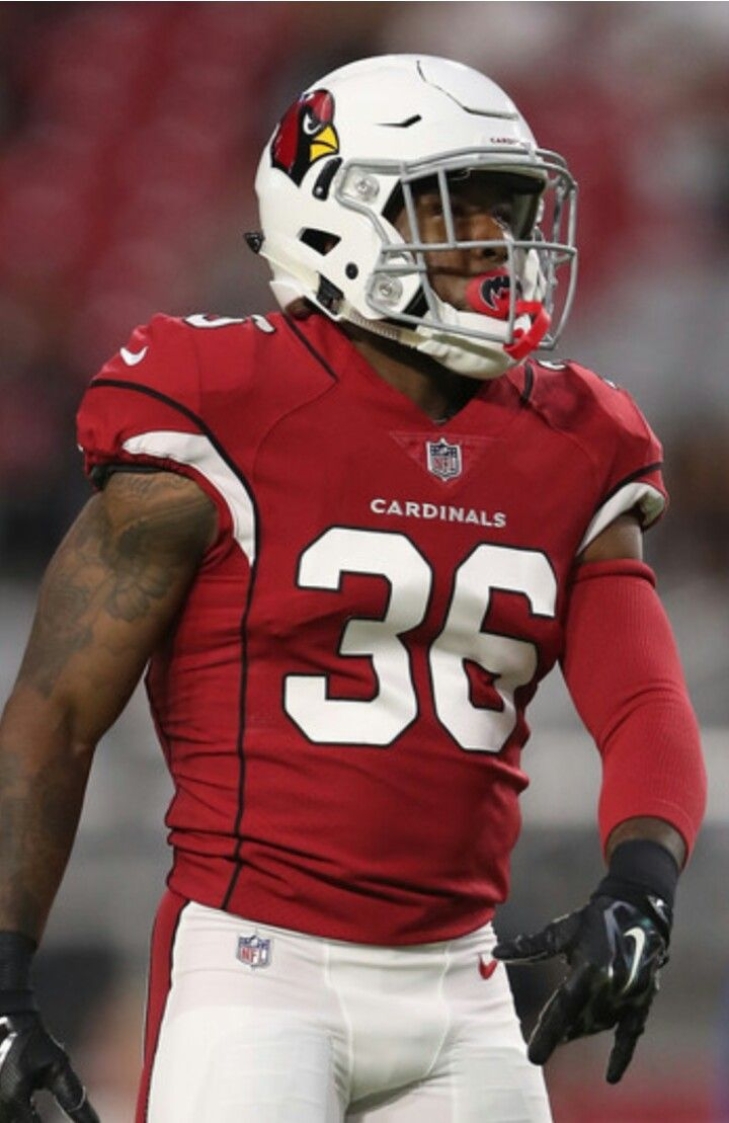
Coming out of the University of Washington as a consensus All-American and Pac-12 standout, Bishard "Budda" Baker slid out of the first round of the 2017 NFL Draft almost exclusively because he measured just under 5 feet 10 inches tall. Recognizing his elite athletic engine and relentless closing motor, the Arizona Cardinals traded up in the second round (36th overall) to secure his services. It required very little time for the rest of the league to realize the Cardinals had walked away with one of the premier draft steals of the decade.
Baker exhibits a relentless, sideline-to-sideline drive that completely eliminates geometric angles in the run game. What sets him apart as an elite modern defensive back is his exceptional tactical flexibility; he has the smooth hips and quick diagnostic speed to cover slot receivers as a nickel corner, the ability to shut down deep seams as a free safety, and the crushing power to engage and shed blockers in the box as a hybrid linebacker. His rapid closing speed makes him a nightmare for offensive coordinators trying to exploit space.
In 2017, his quick entry into the professional scene immediately highlighted his dynamic presence. Baker gained national attention as an All-Rookie pick and a Pro Bowl special-teams gunner, topping the NFL in special teams tackles and smoothly transitioning into a starting defensive role later that season.
Once he permanently inherited the starting strong safety role, Baker blossomed into one of the most dominant defensive anchors in football. During his 2019 campaign, he completely dominated the defensive leaderboard by pacing the entire National Football League with 104 solo tackles (147 total stops), capturing his first First-Team All-Pro nod at safety. He replicated that supreme standard during the 2020 season, generating 118 total tackles, 2 interceptions, and 2.0 sacks to earn his second First-Team All-Pro selection while leading Arizona's defense back into playoff contention.
Baker became just the second defensive back in Cardinals franchise history to record over 100 solo tackles in a single season, establishing a standard of downhill run support rarely seen from the safety position.
That high-leverage dominance kicked off a historic run of individual peer recognition. Baker rattled off seven consecutive Pro Bowl selections at safety (2019–2025), bringing his total to eight Pro Bowls overall when including his rookie special teams nod. He maintained that relentless standard right through the 2025 season, recording another 120 total tackles, crossing the 1,000 career tackle threshold, and earning yet another NFC Pro Bowl nod to lead the defense.
Baker has amassed over 1,000 career tackles, 8.0 sacks, 8 interceptions, 7 forced fumbles, and 8 Pro Bowl selections in a Cardinals uniform.
Patrick Peterson Retires. Hall of Fame bound?
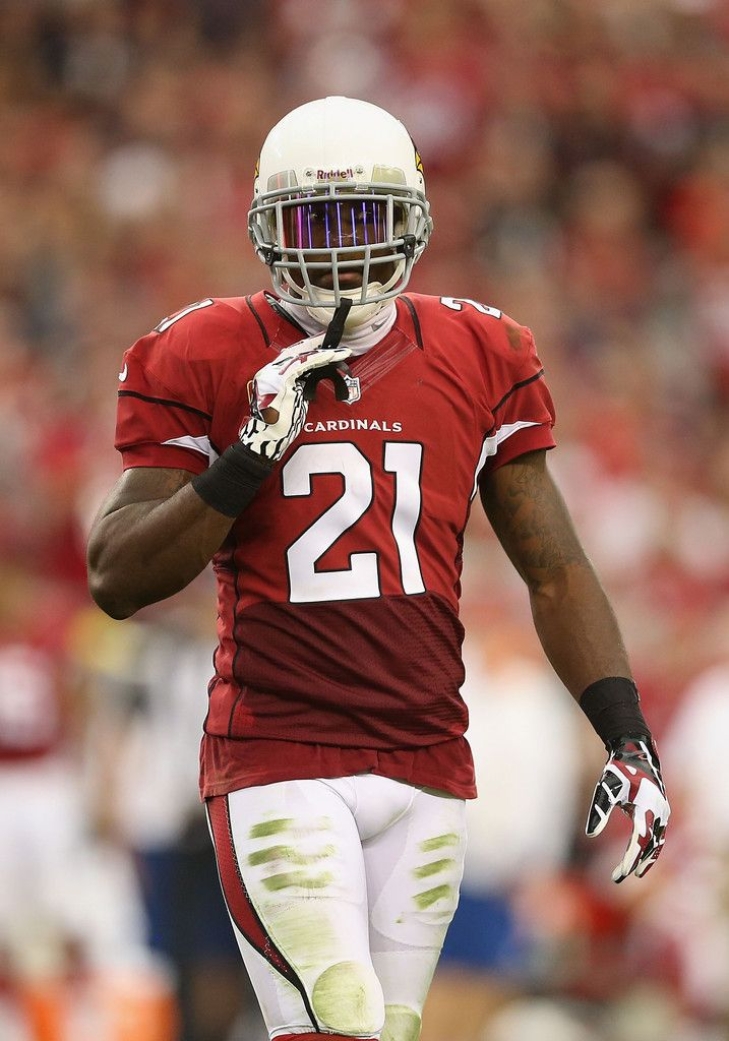
We have another significant retirement in the NFL, as it has been revealed that Defensive Back Patrick Peterson will be retiring on Monday.
A superstar at LSU, Peterson won the 2010 Chuck Bednarik Award, the Jim Thorpe Award, and the Jack Tatum Award, which vaulted him to the number five pick overall in the following draft. The Arizona Cardinals were the fortunate organization to land Peterson, who brought a sweet blend of size, speed, and football IQ, which made him one of the most versatile Defensive Backs of the 2010s.
Peterson wasted no time in establishing himself in the NFL. A starting Cornerback from day one, Peterson began his career with eight straight Pro Bowls, earning three First Team All-Pros along the way. The former LSU Tiger was so dominant in the 2010s that he was selected to the 2010s All-Decade Team. He finished his career with two years in Minnesota and one in Pittsburgh and compiled 36 Interceptions and 652 Combined Tackles.
Peterson last played in 2023, which makes him eligible for the Pro Football Hall of Fame in 2029, and in our pre-2024 Notinhalloffame Football monitor, he was ranked #13.
We here at notinhalloffame.com would wish Patrick Peterson the best in his post-playing career.
Our All-Time Top 50 Arizona Cardinals are now up

Yes, we know that this is taking a while!
As many of you know, we at Notinhalloffame.com are slowly generating the top 50 of each major North American sports team. We have another one ready, with our Top 50 Arizona Cardinals.
As for all of our top 50 players in football, we look at the following:
1. Advanced Statistics.
2. Traditional statistics and how they finished in the National Football League.
3. Playoff accomplishments.
4. Their overall impact on the team and other intangibles that are not reflected in a stat sheet.
The most tenured team in the National Football League, the Arizona Cardinals have taken a long road, traversed multiple cities, and seen more hard times than good.
Formed in 1898 as the Morgan Athletic Club, they would be renamed the Racine Normals for two years before becoming the Racing Cardinals. Twenty years later, they were charter members of the National Football League as the Chicago Cardinals.
In the Windy City, the franchise won two titles, the first in 1925, disputed by the Pottsville Maroons, but there was no NFL Championship Game back then. The second title is undisputed, as with their "Million Dollar Backfield," they won the Championship Game in 1947, the last title they have won.
Taking a backseat to the Bears in Chicago, the Cardinals relocated to St. Louis in 1961. They only made the playoffs thrice in St. Louis and relocated again in 1987, becoming the Phoenix Cardinals. That name would change again to the Arizona Cardinals, and with Kurt Warner as their Quarterback, they made it to their first Super Bowl in the 2008 Season. They did not win but appear to have a permanent home in the desert.
Here is the inaugural top five:
1. Larry Wilson
2. Larry Fitzgerald
3. Charley Trippi
4. Roger Wehrli
5. Dan DIerdo
You can find the entire list here.
We thank you for your continued support of our lists on Notinhalloffame.com.
41. Pat Fischer
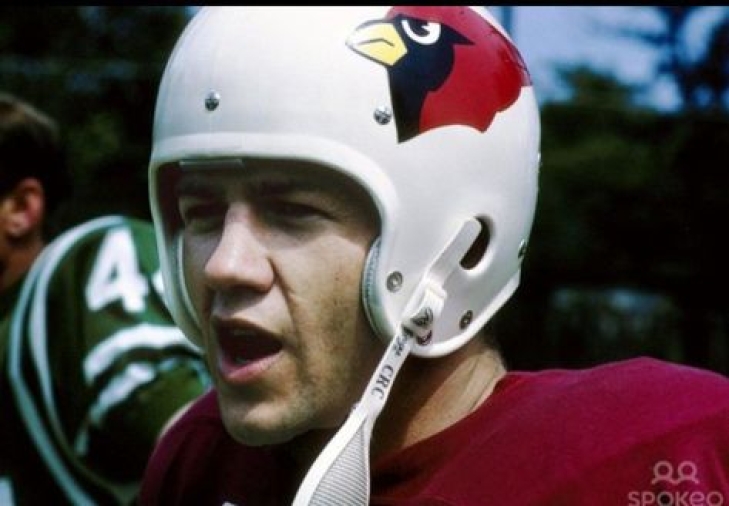
As good as Pat Fischer was at Nebraska, he stood at only 5' 9" and fell all the way to the 17th Round (232nd Overall) in the 1961 Draft. Fischer was barely expected to make the team, let alone win a starting job, but once he did, he would become one of the most seasoned Cornerbacks in NFL history.
Fischer saw more time as a Returner as a rookie, but by his third season, he was a full-time starter at Left Cornerback, pioneering the bump and run coverage and picking eight interceptions in 1963. Fischer had a career-best 10 Interceptions the season after, returning two for Touchdowns. The voters named him a First Team All-Pro, the first and only time that would happen in his career. Fischer would add a second Pro Bowl in 1965, but he was targeted far less after his explosive 1964 campaign, thus seeing his Interceptions drop.
Fischer signed with the Redskins after the 1967 Season and achieved far greater fame. Twenty-nine of his 57 Interceptions were as a Cardinal, though he is best remembered as a Redskin.
45. John David Crow
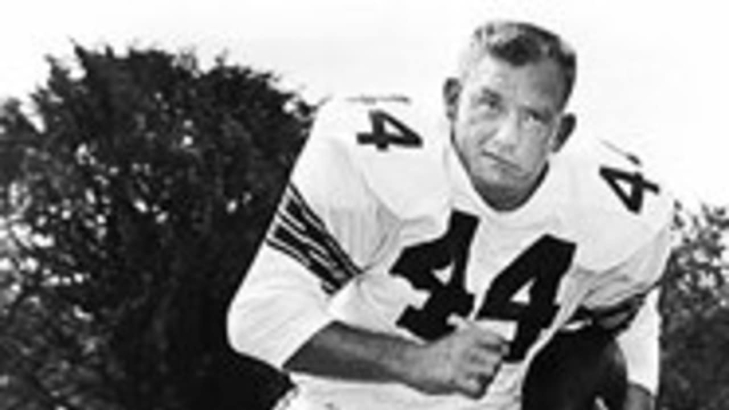
When Bear Bryant famously remarked that if voters didn't award John David Crow the 1957 Heisman Trophy, "they ought to do away with the thing," the college football landscape took notice. The Chicago Cardinals certainly did, selecting the Texas A&M star second overall in the 1958 NFL Draft. After a knee injury limited his rookie campaign to seven games, Crow quickly validated the hype, evolving into one of the most versatile backfield threats of his era.
At 6 feet 2 inches and 220 pounds, Crow possessed rare size and functional power for a 1960s halfback, combining a bruising inside running style with smooth hands out of the backfield and elite blocking ability. Beyond his primary duties, he stood as one of the most lethal halfback-passers in league history, completing 33 career passes for 759 yards and five touchdowns.
His initial breakout arrived in 1959, when he generated 994 scrimmage yards and seven touchdowns to secure his first Pro Bowl selection. However, his game reached legendary status during the franchise's inaugural season in St. Louis in 1960. Crow spearheaded the offense by rushing for a career-high 1,071 yards, averaging an astounding 5.9 yards per carry—while adding 462 receiving yards. His 1,533 yards from scrimmage led the entire NFL, earning him Second-Team All-Pro honors and his second Pro Bowl invitation.
Crow’s physical, violent running style frequently exposed him to severe injuries. He was restricted to eight games in 1961, but responded with a monster rebound in 1962. Pounding the rock in goal-line sets, Crow scored a league-leading 17 total touchdowns (14 rushing, 3 receiving) while racking up nearly 1,000 yards from scrimmage to capture his third Pro Bowl selection in St. Louis.
Crow’s 14 rushing touchdowns in 1962 set a single-season Cardinals record, showcasing the punishing goal-line efficiency that defined his prime years.
Plagued by a knee injury that limited him to three games in 1963 and a quiet 1964 season, Crow departed for San Francisco in 1965. He made one final Pro Bowl as a 49er before retiring in 1968. In seven years wearing the Big Red jersey, Crow compiled 5,450 scrimmage yards and 50 total touchdowns (33 rushing, 17 receiving), earning a spot on the NFL 1960s All-Decade Team.
50. Irv Goode
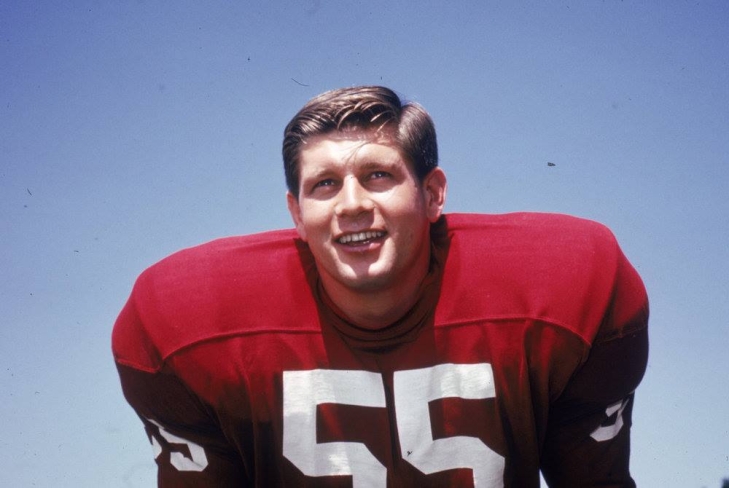
Irv Goode was a beast at the University of Kentucky, which led to his high selection by the St. Louis Cardinals, who nabbed him 12th Overall in 1961. Goode accomplished a rare feat as a rookie, earning Rookie of the Year votes (4th), and though St. Louis was not impressive in the 1960s, the versatile lineman (he played at Left Tackle, Left Guard, and Center) won Pro Bowl honors in both 1964 and 1967.
He would later win a Super Bowl in a reserve capacity with the Miami Dolphins at SB VIII.
46. Charley Johnson
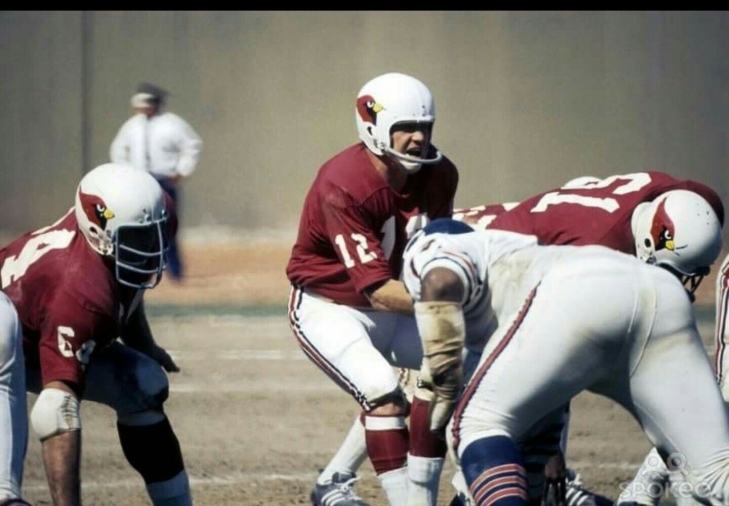
Before ever taking his first NFL snap, Charley Johnson had already etched his name into college football history. A tenth-round draft choice in 1960 out of New Mexico State, Johnson remains the only player to win back-to-back Sun Bowl MVP awards (1959, 1960) and became the first athlete in NMSU history to have his jersey number retired. After serving as a reserve during his 1961 rookie season, he inherited the starting job in 1962 and quickly proved that his intellect matched his arm talent.
Johnson brought a cerebral approach to the quarterback position. In fact, his off-field intellect was literally academic: while serving as the Big Red's starting signal-caller, he earned both a master's degree and a doctorate in chemical engineering from Washington University in St. Louis. On the field, he weaponized deep vertical routes to receivers like Sonny Randle and Bobby Joe Conrad, establishing St. Louis as one of the NFC's premier big-play offenses.
Johnson hit his absolute peak during the 1963 season. Guiding the Cardinals to a 9-5 record, he led the entire NFL in both completions (223) and passing yards (3,045) while throwing 21 touchdown passes to earn his first career Pro Bowl selection. He followed that performance up in 1964 by leading the Big Red to another 9-3-2 record—just missing the postseason—while throwing for 3,045 yards and 21 touchdowns. In 1963 and 1964, Johnson posted back-to-back 3,000-yard passing seasons, leading the NFL in yardage in '63 and anchoring the franchise's highest-scoring era of the decade.
Johnson's tenure in St. Louis was also marked by unique military service; while actively playing for the Cardinals, he fulfilled a two-year commitment in the U.S. Army Reserve working as a second lieutenant with NASA.
As injuries caught up to him and youngster Jim Hart emerged under center, Johnson was traded to the Houston Oilers in 1970. He later capped his 15-year NFL career by leading the Denver Broncos to their first-ever winning season in 1973. Across nine seasons in a Cardinals uniform, Johnson threw for 14,928 yards and 108 touchdowns in 105 regular-season games.
43. E.J. Junior
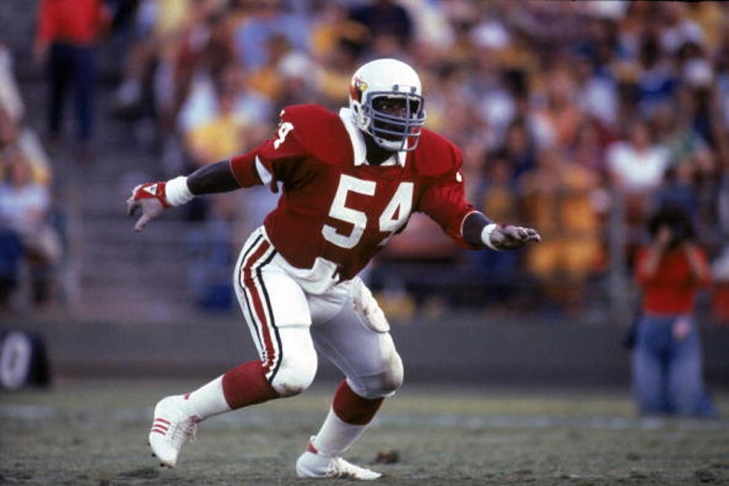
With the Fifth Overall Pick in the 1981 Draft, the St. Louis Cardinals selected E.J. Junior, who was the second Linebacker taken behind someone you may have heard of; Lawrence Taylor. Junior did not have Taylor’s career (who could?) but the Cardinals got a lot of good football from the eventual College Football Hall of Fame inductee.
Junior won the starting job during the season and, by the mid-80s, was one of the best interior Linebackers in the NFC. His best season was in 1984 when he was a First Team All-Pro and began a two-year run of Pro Bowls. From 183 to 1985, Junior had eight Interceptions and 19.0 Sacks, and though he tailed off afterward, he was still a solid NFL player.
He left the Cardinals behind in 1988, joining Miami as a Free Agent. The Cardinals were not significant in the 1980s, but this does not detract from Junior's work in St.Louis/Phoenix.
47. Freddie Joe Nunn

Freddie Joe Nunn was selected 18th overall from Ole Miss in the 1985 NFL Draft, bringing exceptional speed and athletic flexibility to St. Louis. During his nine seasons with the Cardinals, he was frequently moved between a traditional 4-3 defensive end and a stand-up outside linebacker. This constant position switching, along with playing for struggling teams in St. Louis and Phoenix, kept him out of the national spotlight. However, when allowed to pursue pass rushes, Nunn proved to be extremely effective.
Nunn demonstrated exceptional quickness right from the start, often leveraging a fast first step to consistently beat boundary tackles and turn the corner. Whether he was positioned with his hand in the dirt or in space, his pure speed enabled him to make impactful tackles early, often before the offensive pockets were fully formed.
Nunn reached his peak in 1988 as the franchise moved across the country. During a season focused solely on rushing the quarterback, he achieved a career-high 14.0 sacks in Arizona's first desert season. He then continued with two solid years, recording 11.0 sacks in 1989 and 9.5 in 1990, cementing his role as the defense’s main disruptor.
Despite off-field legal distractions and a roster that struggled to contend in the NFC East, Nunn’s back-to-back-to-back sack totals anchored the franchise's front seven through the late 1980s and early 1990s.
When Nunn departed for Indianapolis in 1994, he held the Cardinals' official franchise record with 66.5 career sacks—a mark that stood for nearly three decades before Chandler Jones finally surpassed it in 2021.
48. Conrad Dobler
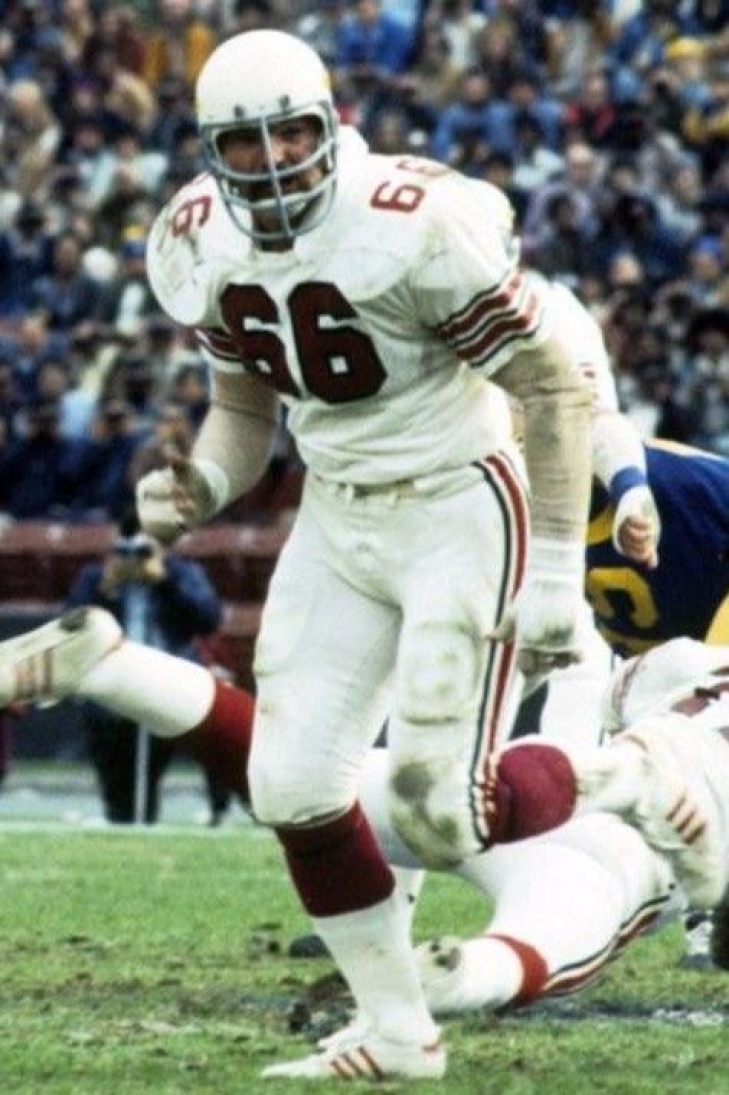
Selected in the fifth round of the 1972 NFL Draft out of Wyoming, Conrad Dobler entered the league as a defensive lineman before transitioning to right guard. Lined up alongside future Hall of Fame tackle Dan Dierdorf, Dobler weaponized mind games, brutal hand placement, and pure physical punishment to become the undisputed psychological villain of 1970s professional football.
Standing 6 feet 3 inches tall and weighing 255 pounds, Dobler approached offensive line play with the aggressive mentality typical of a linebacker. Opponents often accused him of biting, leg-whipping, twisting facemasks, and punching defenders in the pile. His intimidating reputation peaked on the July 25, 1977 cover of Sports Illustrated, which called him "Pro Football's Dirtiest Player.” Despite the controversy, Dobler was also one of the most technically skilled and fierce pass protectors of his time. He was the emotional driving force of the "Air Coryell" line that led St. Louis to consecutive NFC East titles in 1974 and 1975. In 1975, his unit set a then-NFL record by allowing only eight sacks in a 14-game season.
His outstanding performance on the field led to three straight Pro Bowl selections from 1975 to 1977, culminating in Second-Team All-Pro in 1977. Despite some beliefs that his teams faced difficulties, Dobler was a key contributor to the Big Red's impressive 31-11 record during their peak in the mid-70s.
Contract disputes and roster turnover led to a 1978 trade to New Orleans, followed by a final stint in Buffalo, after which he retired following the 1981 season. In six seasons with St. Louis, Dobler appeared in 77 games (73 starts), serving as the unyielding, mean-spirited anchor of the franchise's greatest offensive line.
40. Bill Koman
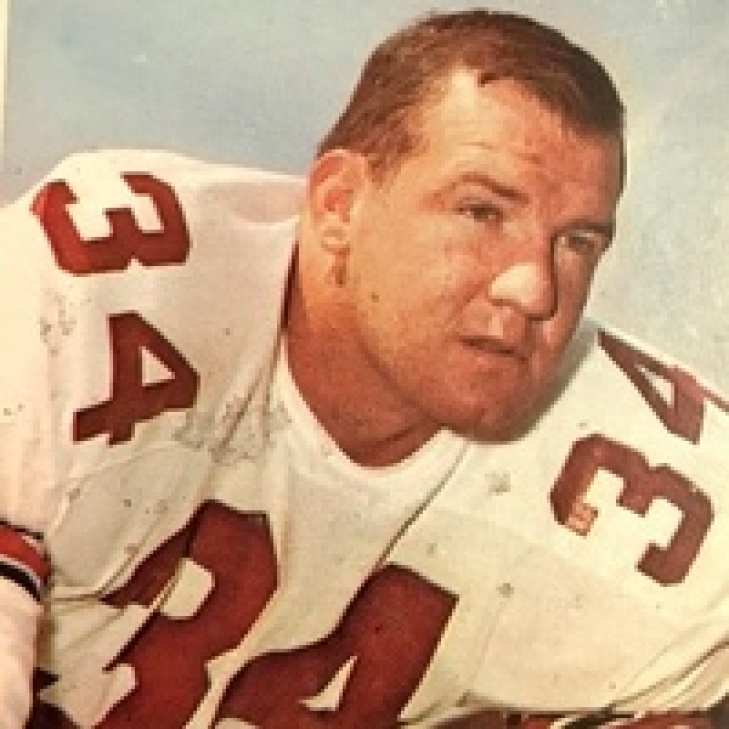
Acquired in a 1959 trade with the Philadelphia Eagles after an earlier stint in Baltimore, Bill Koman entered the Cardinals organization with little fanfare. What the franchise received in return was the physical heartbeat of their defense for nearly a decade. Sliding in at outside linebacker, the University of North Carolina product spent nine seasons with the Big Red (1959–1967), establishing a standard of hitting and durability that set the defensive tone throughout the 1960s.
Koman was an aggressive, downhill defender who relied on raw power, violent shed-and-tackle mechanics, and exceptional durability. Operating through bad knees that required constant wrap and treatment, Koman rarely missed action; he played in 120 consecutive regular-season games for the Cardinals, missing just a single contest over his nine-year tenure with the team.
Following the team’s move from Chicago to St. Louis in 1960, Koman's relentless tackling earned him widespread recognition. He reached his individual peak during the 1962 season, earning his first Pro Bowl invitation after recording 3.5 sacks, two interceptions, and three fumble recoveries.
He repeated that elite standard in 1964, garnering a second Pro Bowl selection as the operational leader of an aggressive front seven. In 1965, he was awarded the Old Pro Award by the St. Louis Quarterback Club, cementing his status as one of the most respected figures in the locker room. Battling through constant knee issues, Koman suited up for 120 consecutive games for the Cardinals, missing only one game across his entire nine-year run with the organization.
Koman retired following the 1967 season. In a Cardinals uniform, he appeared in 121 games, making 121 starts, while accumulating 24.5 unofficial sacks, 6 interceptions, and 16 fumble recoveries.
38. Terry Metcalf
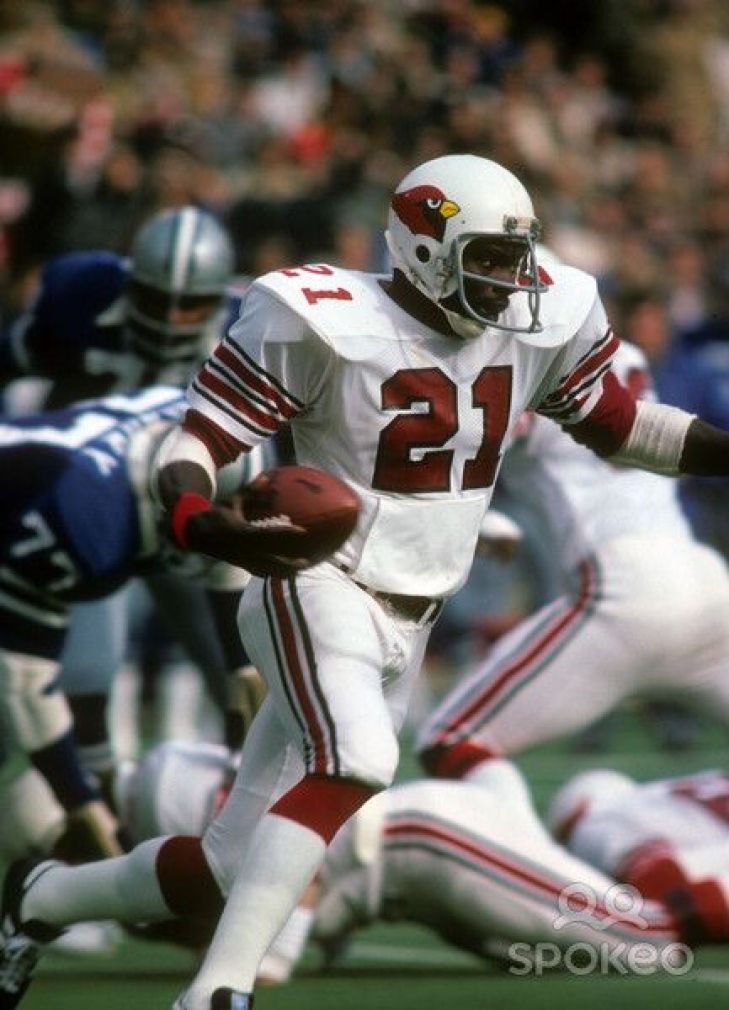
Long Beach State was hardly known as a hotbed for NFL superstars, but when the St. Louis Cardinals selected Terry Metcalf in the third round of the 1973 NFL Draft, they landed one of the most explosive, dynamic playmakers in football history. Nicknamed "The Franchise," Metcalf arrived in St. Louis and immediately revolutionized the all-purpose running back role under head coach Don Coryell.
Metcalf depended on his quick lateral movements, explosive speed, and a distinctive jump-cut running style that made him almost impossible to stop in the open field. He was a versatile threat before the term was even common, lining up in the backfield, playing wide receiver, and always poised to score on kickoff or punt returns.
After making brief appearances as a rookie in 1973, Metcalf dramatically improved in 1974, accumulating over 2,000 all-purpose yards. He averaged an impressive 31.2 yards per kickoff return and 13.1 yards per punt return. His outstanding performance earned him his first Pro Bowl selection and a second-place finish for the NFL Most Valuable Player award.
His 1975 campaign was his masterpiece. Metcalf set an NFL single-season record with 2,462 all-purpose yards over a 14-game season, a remarkable achievement that included 816 rushing yards, 378 receiving yards, 960 kickoff return yards, and 285 punt return yards. He scored 13 total touchdowns, including a pass, a run, a catch, a punt return, and a kickoff return, finishing third in NFL MVP voting and earning his second Pro Bowl selection. His 2,462 all-purpose yards that year remained an NFL record for nearly a decade, highlighting an exceptional workload in rushing, receiving, and returning.
However, Metcalf’s dynamic playing style was marred by a significant weakness: ball security. His tendency to carry the ball loosely in the open field led to a high number of fumbles, with him leading the league twice: 14 fumbles in 1974 and 15 in 1976.
Following his third Pro Bowl selection in 1977, contractual disputes and frustration with the local fanbase led Metcalf to make a shockwave decision: he jumped to the Canadian Football League, signing a lucrative deal with the Toronto Argonauts in 1978. Though his NFL peak was brief, his five years in St. Louis produced 9,048 all-purpose yards and 36 total touchdowns.
37. Tim McDonald
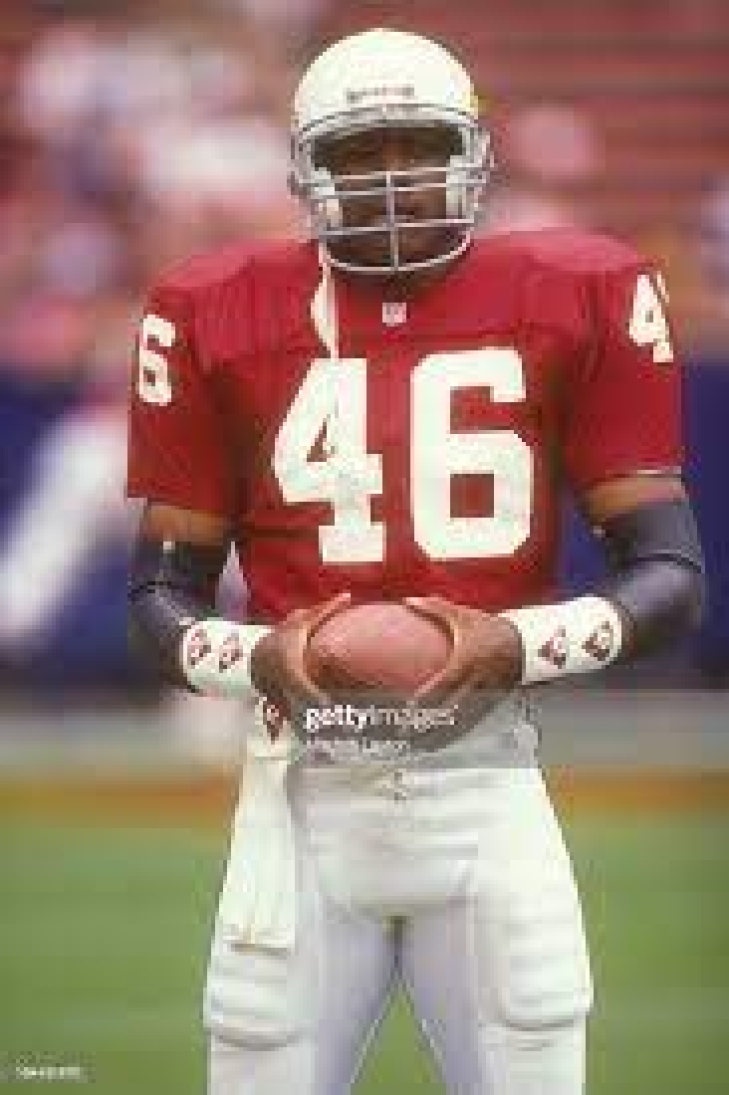
Following in a long line of elite defensive backs out of Southern California, Tim McDonald brought instantly noticeable hitting power and instincts to the professional ranks. Selected in the second round (34th overall) of the 1987 NFL Draft by St. Louis, the physical safety spent his rookie year learning the ropes before taking over the starter's role during the franchise's inaugural 1988 season in Phoenix.
McDonald set an uncompromising physical boundary in the secondary. Functioning virtually as an extra linebacker in run support, he patrolled the box with punishing tackling technique while possessing the range to shadow tight ends and slot receivers downfield. His bone-jarring hits forced opposing wideouts to think twice before crossing the middle.
After stepping into the starting lineup in 1988, McDonald made his mark by leading the NFL with four forced fumbles. His true breakout arrived during the 1989 campaign, when he put together a dominant, career-best statistical season: racking up 155 tackles alongside 7 interceptions (returning one for a touchdown) to capture his first First-Team All-Pro selection and Pro Bowl nod. In 1989, McDonald delivered one of the most complete single-season performances by an NFL safety, combining 155 tackles with 7 interceptions.
As quarterbacks grew increasingly reluctant to test his area of the field, McDonald remained a cornerstone of the secondary, earning consecutive Pro Bowl invitations in 1991 and 1992. Despite playing on roster builds that struggled to contend, his individual play consistently ranked among the gold standards for strong safeties across the league.
In 1993, McDonald joined San Francisco as a prominent free agent, aiming for a championship-level setup. He subsequently won Super Bowl XXIX with the 49ers and earned three additional Pro Bowl selections. Out of his 40 career interceptions, half (20) occurred during his six seasons with the Cardinals. With the squad (1987–1992), McDonald recorded 20 interceptions, 605 tackles, 3 Pro Bowl selections, and 1 First-Team All-Pro honor.
34. Larry Stallings
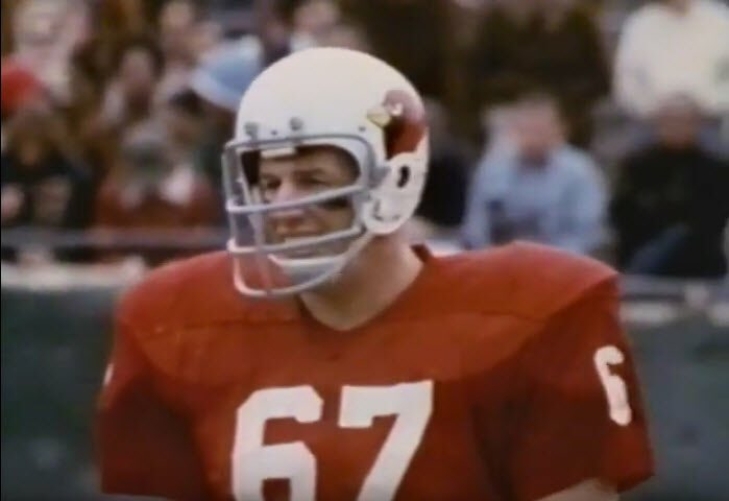
Securing a genuine defensive cornerstone in the 18th round of the NFL Draft is extremely rare, but in 1963, the St. Louis Cardinals achieved this by choosing Georgia Tech’s Larry Stallings as the 241st pick overall. Despite never playing linebacker in college, Stallings was inserted into the starting lineup as a rookie and rapidly adapted, holding the left outside linebacker position for fourteen seasons straight (1963–1976).
Stallings applied a tough, blue-collar mentality to the second level of the Big Red defense. He excelled at setting the edge against the run, strongly resisting being pushed out by pulling guards, and had the agility to drop into boundary coverage. Despite facing early-career knee surgeries in 1964 and 1965, Stallings returned as a full-time starter in 1966 and demonstrated remarkable durability. From 1966 until the end of his career, he played all but two games over an eleven-year period.
His consistent performance earned him early recognition from his teammates, who named him the Cardinals Team MVP after the 1969 season. Stallings hit his career peak in 1970, achieving his best season with 4.0 sacks, two fumble recoveries, an interception, and earning First-Team All-NFC honors from UPI, along with his first Pro Bowl selection. From 1966 to 1976, Stallings was a mainstay at left linebacker, starting 149 of 151 regular-season games.
Stallings served as the defensive team's core through the mid-1970s, offering veteran leadership for the back-to-back NFC East division champions under Don Coryell in 1974 and 1975. When he retired after the 1976 season, he had played all 181 games with the Cardinals, starting 175 of them, and recording 9 interceptions, 13 fumble recoveries, 3 defensive touchdowns, and 27.5 unofficial sacks.
He retired following the 1976 season, finishing with 9 interceptions, 13 fumble recoveries, and 3 defensive touchdowns.
42. Carson Palmer
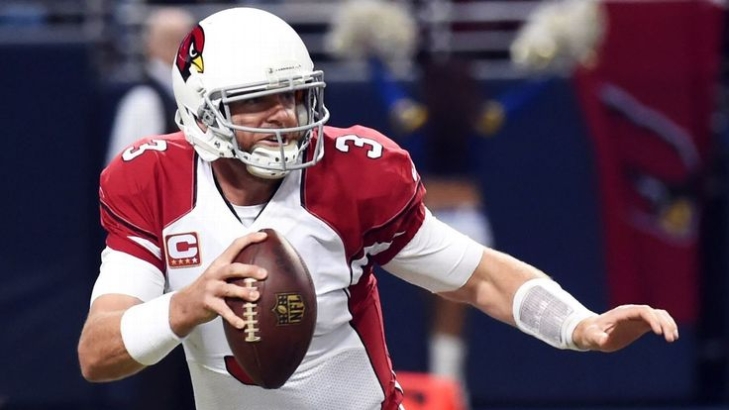
When Carson Palmer arrived in Arizona via a trade with Oakland in 2013, the Heisman Trophy winner and former No. 1 overall pick was widely regarded as a player in the twilight of his career. Yet, under the tutelage of head coach Bruce Arians, Palmer orchestrated one of the most remarkable late-career revivals in modern NFL history, elevating the Cardinals offense into a downfield powerhouse.
Palmer was the archetypal pocket passer, possessing rare arm strength, field vision, and the willingness to take hits while standing tall in the pocket. In Arians’ "no risk, no biscuit" system, Palmer excelled at pushing the football into high-degree-of-difficulty windows, driving outer-third boundary routes and vertical seams with exceptional velocity and touch.
His debut season in 2013 saw him pass for 4,274 yards and 24 touchdowns, making him the first quarterback in NFL history to post a 4,000-yard passing season for three different franchises. Though a torn ACL cut short a promising 6-0 start in 2014, Palmer returned in 2015 to put together a single-season masterpiece.
At 36 years old, Palmer set single-season franchise records with 4,671 passing yards and 35 touchdown passes. He led the entire NFL in total QBR (76.4), yards per attempt (8.7), and yards per completion (13.7) while guiding Arizona to a 13–3 record and an NFC Championship Game appearance. That performance earned him a Pro Bowl selection, Second-Team All-Pro honors, and a top finish in AP NFL MVP voting behind winner Cam Newton. Palmer's 2015 campaign remains the golden standard for Cardinals quarterbacks, setting untouched franchise records with 4,671 passing yards, 35 touchdowns, and a 104.6 passer rating.
Palmer backed up his MVP candidate campaign with another heavy-volume year in 2016, throwing for 4,233 yards and 26 touchdowns. After a broken arm prematurely ended his 2017 season in Week 7, he officially announced his retirement in early 2018. Across 60 games in an Arizona uniform, Palmer posted a 38-21-1 record—the highest winning percentage by any starting quarterback in franchise history.
He finished his desert tenure with 16,782 passing yards and 105 touchdown passes, earning induction into the Arizona Cardinals Ring of Honor in September 2019.
33. Sonny Randle
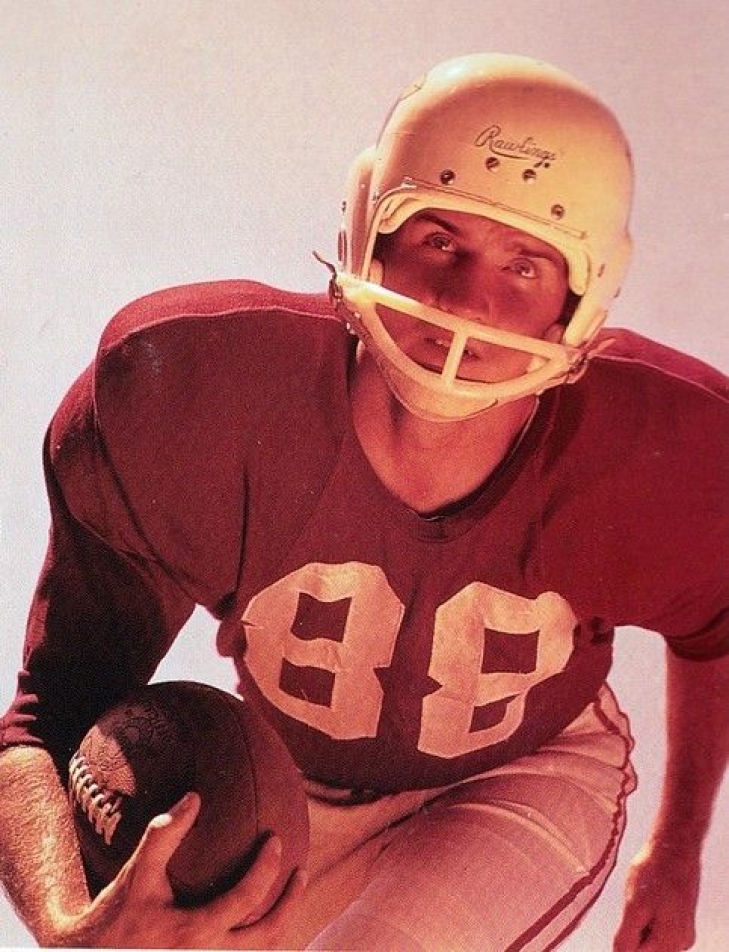
Sonny Randle was selected in the 19th round (218th overall) of the 1958 NFL Draft as a "futures" pick from Virginia. During his final college year, he focused on improving his track speed before joining the Chicago team in 1959. As a rookie, his playing time was limited, but he dedicated the offseason to refining his route running, practicing against teammates Dick "Night Train" Lane and Jimmy Hill. This effort helped convert his raw vertical speed into a highly developed skill. When the franchise relocated to St. Louis in 1960, Randle became a key player, leading the Big Red's passing attack and gaining national recognition.
Randle had explosive long strides that often outpaced coverage. His precise head fakes and quick breaks made him nearly unstoppable on double moves. In the red zone, his tracking ability and body position made him a top goal-line threat of his time.
His breakout season in 1960 showcased exceptional scoring efficiency. Randle led the NFL with 15 receiving touchdowns, setting a franchise record for a single season, and also recorded 62 receptions for 893 yards. His outstanding performance earned him First-Team All-Pro honors and initiated a three-year streak of Pro Bowl appearances from 1960 to 1962.
In the 1962 season, he achieved a career-high in yardage, with 63 receptions for 1,158 yards and 7 touchdowns, earning Second-Team All-Pro honors. The season’s highlight was a remarkable game at Yankee Stadium on November 4, 1962, when Randle set franchise records with 16 catches and 256 receiving yards against the New York Giants, records that remain unbroken.
Randle proved equally lethal in 1963, catching 51 passes for 1,014 yards and 12 touchdowns. After a shoulder injury shortened his 1964 campaign, he returned to peak form in 1965 with 845 receiving yards and 9 touchdowns, earning his fourth career Pro Bowl invitation.
Randle's 15 touchdown catches in 1960 remain the single-season Cardinals benchmark, and his 16 receptions for 256 yards against the Giants in 1962 stand as the team's untouched single-game records. Randle departed for San Francisco in 1967, leaving St. Louis with an extraordinary legacy. Across eight seasons in a Cardinals uniform, he accumulated 328 receptions, 5,438 receiving yards, and 60 touchdown catches.
32. Dale Meinert
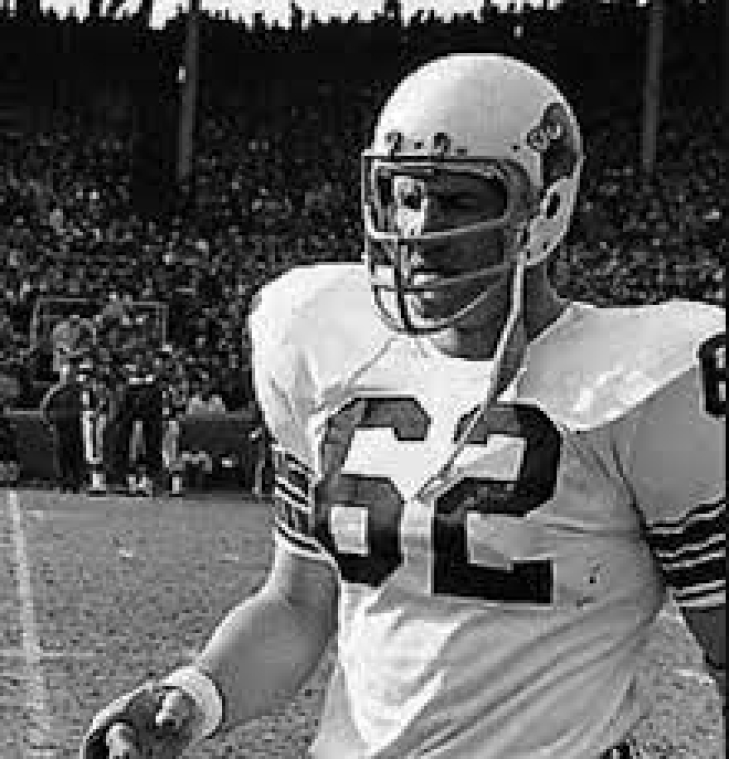
Drafted in the eighth round of the 1955 NFL Draft by the Baltimore Colts from Oklahoma A&M, Dale Meinert originally took a different route to professional football. He moved north to Canada, playing three seasons with the Edmonton Eskimos under coach Pop Ivy and earning two Grey Cups as an offensive lineman. When Ivy became head coach of the Chicago Cardinals in 1958, Meinert followed him to the United States, beginning as a guard for his first two NFL seasons before a positional change significantly altered his career.
Meinert was initially seen as undersized for interior offensive line positions. Switching permanently to middle linebacker in 1960 turned out to be an excellent decision. With sharp instincts, quick lateral pursuit, and a tough, downhill tackling approach, he soon became the strategic leader of the defense. Meinert assumed pre-snap play-calling responsibilities, often using a laid-back Oklahoma voice and sometimes tapping his defensive tackles on the buttocks to shift the defensive front into the correct position.
Following the franchise's move to St. Louis in 1960, Meinert's defensive impact was immediate. He picked off a pass in his very first start at linebacker and earned St. Louis Cardinals Team MVP honors in 1961. Over the next several seasons, he anchored the middle of the field against the run while dropping efficiently into pass coverage, picking up three Pro Bowl selections (1963, 1965, 1967). His pinnacle individual campaign arrived in 1967, when his leadership and field vision earned him Second-Team All-Pro honors alongside his third Pro Bowl invitation. Teammates frequently compared Meinert's impact directly to Hall of Fame contemporaries like Ray Nitschke and Dick Butkus, noting that his play-calling speed and range made him the heartbeat of the Big Red defense.
After capping off his career with that 1967 All-Pro campaign, Meinert decided it was time to step away from the game ahead of the 1968 training camp. It wasn't a spur-of-the-moment choice; after a decade of grinding collisions in the NFL trenches, he felt it was the right time to hang up his cleats and return to his home state of Oklahoma. He transitioned seamlessly into life after football, farming, teaching junior high math, and coaching eight-man high school football at Lone Wolf High School for 15 years.
Over his ten-year NFL career (all as a Cardinal), Meinert recorded 9 interceptions, 13 fumble recoveries, 12 unofficial sacks, and a defensive touchdown in 125 games.
